Golden chicken breasts in a mushroom wine sauce earn their place on the table because the sauce tastes like it took much longer than it did. The chicken sears first, so you get a deep browned crust before it ever meets the cream and wine. Then the mushrooms cook in the same pan until their moisture is gone and their edges turn dark, which is what gives the sauce that savory, almost restaurant-style depth.
The trick is not crowding the skillet and not rushing the mushrooms. If the pan is too cool, they steam. If the wine goes in before the browned bits are properly developed, the sauce tastes flat. This version leans on those browned bits, a little Dijon for lift, and just enough cream to turn the reduction silky without muting the wine.
Below, I’ll walk through the sear, the sauce, and the little timing details that keep the chicken juicy. I’ve also included a few smart swaps and the reheating method that keeps the sauce smooth instead of greasy.
The sauce turned glossy and thick in the exact amount of time you said, and the mushrooms picked up all that wine flavor without getting soggy. I served it over mashed potatoes and my husband asked if I could put this on repeat.
Skillet Chicken and Mushroom Wine Sauce is the kind of dinner that earns its keep with a deep, silky pan sauce and barely any cleanup.
The Sear Is the Difference Between Silk and Soup
The biggest mistake in a skillet chicken dish is starting with a pale pan and hoping the sauce will carry everything. It won’t. The chicken needs a proper sear so the skillet collects browned bits, and those bits become the backbone of the wine reduction. If the breasts stick a little at first, leave them alone until they release cleanly; forcing them early tears the crust and leaves flavor in the pan.
Once the chicken comes out, the mushrooms need enough heat to give up their moisture and then start browning. That second stage matters more than most people think. Mushrooms that stay wet dilute the sauce, while mushrooms that get deep color give it a richer, meatier edge.
What Each Ingredient Is Actually Doing in the Pan
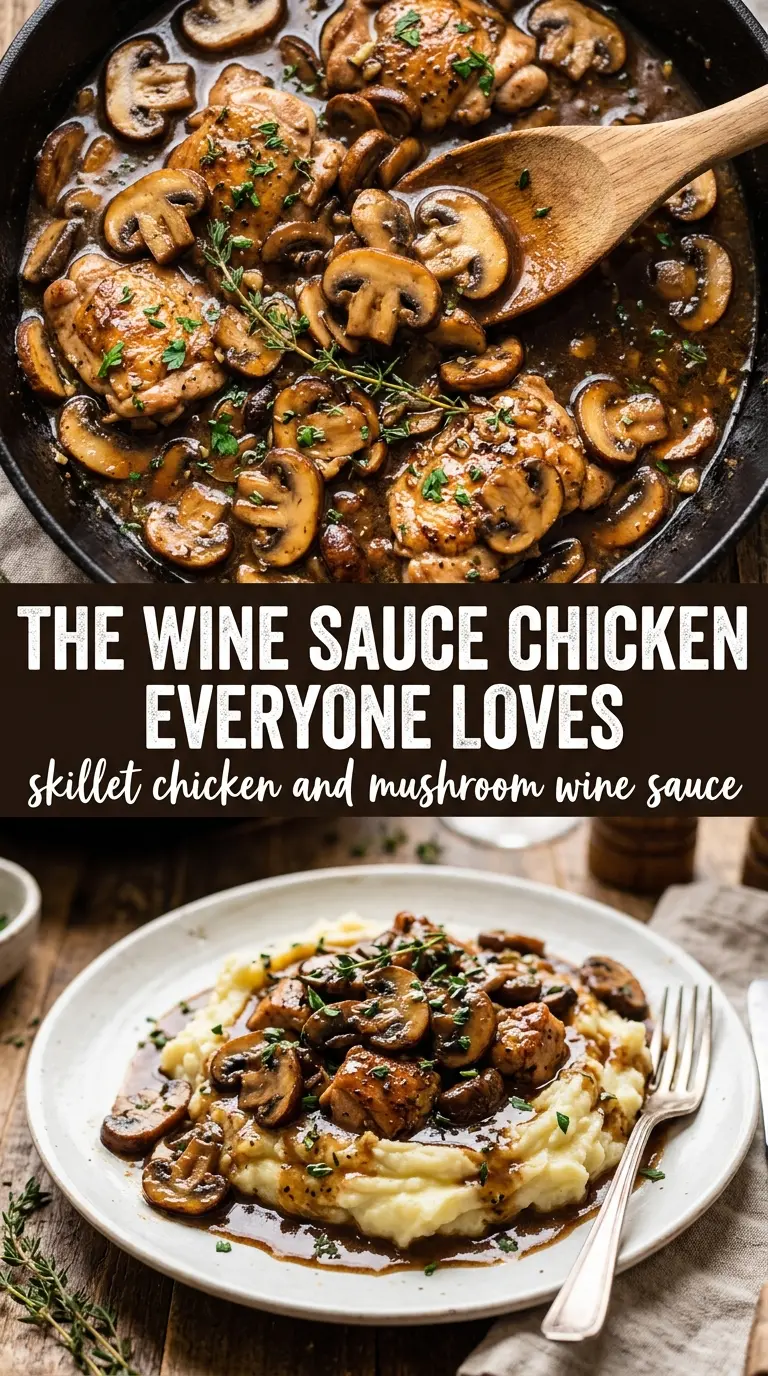
- Chicken breasts — Boneless, skinless breasts work well here because they sear fast and slice cleanly for serving. Pound thicker ends lightly if one side is much broader than the other so they cook evenly and don’t dry out before the middle is done.
- Cremini mushrooms — These bring the earthy, browned flavor that makes the sauce taste finished. White button mushrooms will work, but they won’t give the same depth, so use the best cremini you can find if that mushroom flavor matters to you.
- Dry red wine — This is the sharp, savory note that keeps the sauce from tasting heavy. Use a wine you’d drink, even if it’s not expensive; bad wine stays bad after it reduces. If you want a milder sauce, a dry white wine works, but the result will be lighter and less intense.
- Heavy cream — This smooths the reduction and gives the sauce body without needing flour. Half-and-half can work in a pinch, but it won’t thicken as cleanly and it can look thinner by the time it reaches the table.
- Dijon mustard — You don’t taste mustard in a loud way. What you get is a little acidity and backbone, which helps the cream and wine stay balanced instead of flat.
- Fresh thyme — Dried thyme seasons the chicken, but fresh thyme in the sauce keeps the herb flavor bright. Strip the leaves from the stems for the pan and save the sprigs for garnish so the finished dish looks as good as it tastes.
Building the Sauce in the Same Skillet Without Losing the Good Stuff
Seasoning and Searing the Chicken
Season the chicken generously on both sides before it hits the pan. The oil should shimmer before the chicken goes in, and the first side should cook undisturbed until it lifts with a deep golden crust. If your heat is too high, the outside will darken before the center cooks through, so keep the burner at medium-high and judge by color as much as time.
Turning the Mushrooms Deep Brown
After the chicken comes out, add the butter and mushrooms to the same skillet. At first they’ll release moisture and look crowded; that’s normal. Keep cooking until the liquid evaporates and the mushrooms stop looking glossy and start taking on browned edges, because that’s when they stop watering down the sauce and start adding body to it.
Deglazing With Wine
Pour in the wine and scrape the bottom of the skillet immediately. Those browned bits dissolve into the liquid and give the sauce its dark color and concentrated flavor. Let the wine bubble until it no longer smells sharp and the liquid looks reduced by about half; if you move on too soon, the sauce can taste raw and thin.
Finishing the Cream Sauce
Add the broth, cream, Dijon, and thyme, then let the sauce simmer gently until it coats a spoon. Keep the heat low enough that it blips softly instead of boiling hard, because cream can split if you rush it. Return the chicken to the pan and spoon sauce over the top so the meat warms through without overcooking.
How to Adjust This Without Losing the Character of the Dish
Use white wine for a lighter sauce
A dry white wine gives the dish a brighter, cleaner finish and softens the earthy mushroom notes. It won’t taste as deep as red wine, but it works well if you want the sauce to lean more delicate than bold.
Make it dairy-free without breaking the sauce
Swap the butter for more olive oil and use full-fat coconut cream or an unsweetened dairy-free cooking cream in place of heavy cream. The sauce will still thicken, but it will taste a little less rich and a little more neutral, so keep the Dijon and thyme in place for balance.
Turn it into a mushroom-only vegetarian main
Skip the chicken and use thick slices of seared cauliflower steaks or pan-seared tofu as the base. You’ll want a little extra salt and a longer mushroom cook time to keep the sauce from feeling too soft without the chicken drippings underneath.
Stretch it for a bigger dinner
Double the sauce ingredients and keep the chicken in a single layer when you return it to the skillet. If you crowd the pan at that point, the sauce won’t cling the same way and the chicken will steam instead of soaking up the reduction.
Storage and Reheating
- Refrigerator: Store leftovers in an airtight container for up to 3 days. The sauce will thicken as it chills, which is normal.
- Freezer: This dish can be frozen, but the cream sauce may separate a bit when thawed. If you freeze it, cool it completely first and rewarm gently so the sauce has the best chance of coming back together.
- Reheating: Warm it slowly in a covered skillet over low heat with a splash of broth or water. High heat is the fastest way to make the cream grainy and push the chicken past juicy.
Questions I Get Asked About This Recipe
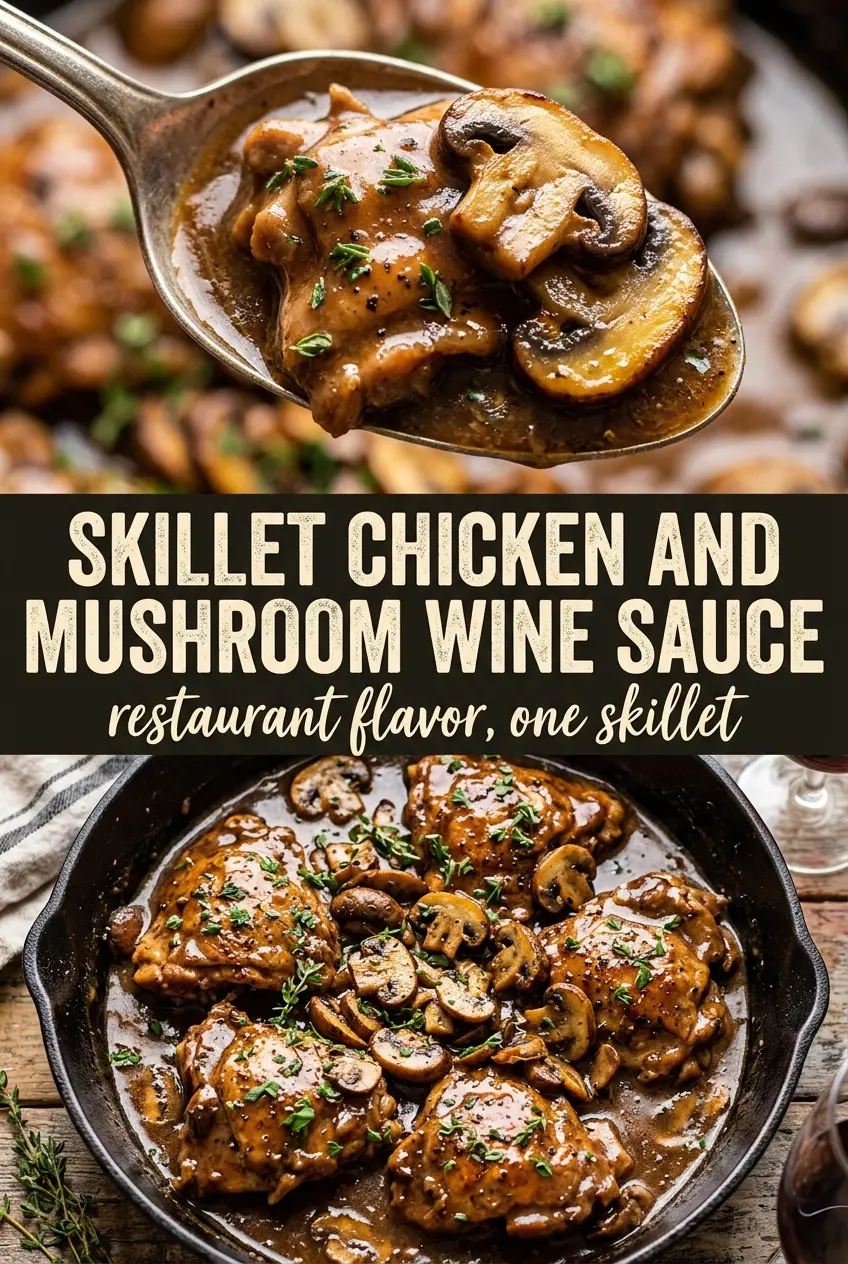
Skillet Chicken and Mushroom Wine Sauce
Ingredients
Equipment
Method
- Season the chicken generously with salt, pepper, garlic powder, and dried thyme. Heat olive oil in a large skillet over medium-high heat until hot, then sear the chicken 5-6 minutes per side until golden and cooked through to 165°F, and remove.
- Melt butter in the same pan, then cook sliced cremini mushrooms over medium-high heat for 5-6 minutes until deeply golden. Stir in minced garlic and cook for 1 minute.
- Pour in the dry red wine and deglaze the pan, scraping up all browned bits. Simmer for 3 minutes.
- Add chicken broth, heavy cream, Dijon mustard, and fresh thyme leaves. Simmer for 5-6 minutes until the sauce thickens.
- Return the chicken to the pan and spoon the mushroom wine sauce over each breast. Garnish with fresh thyme sprigs and serve.