Ingredients
Equipment
Method
Cook the custard
- In a saucepan, heat the heavy cream and whole milk until steaming, not boiling, then remove from heat. Visual cue: tiny steam wisps should rise from the surface.
- In a bowl, whisk the egg yolks with the granulated sugar until smooth and slightly thickened. Visual cue: the mixture should look glossy and pale.
- Slowly whisk the steaming cream mixture into the egg yolks to temper, pouring in a thin stream while whisking. Visual cue: keep whisking until no streaks remain.
- Return the mixture to the saucepan and cook over medium-low heat, stirring constantly, until the custard reaches 175F. Visual cue: it will coat the back of a spoon and look lightly thickened.
Chill the base
- Strain the custard through a fine mesh sieve into a clean container. Visual cue: you should remove any cooked egg bits for a smooth texture.
- Stir in the vanilla extract and salt, then cool completely at room temperature for about 30 minutes. Visual cue: the surface should look smooth and uniform.
- Cover and refrigerate at least 4 hours until fully chilled. Visual cue: the custard should be cold throughout with a thicker, pudding-like feel.
Churn and freeze
- Churn the chilled custard in an ice cream maker according to the manufacturer’s instructions. Visual cue: it should thicken to the consistency of soft-serve as it churns.
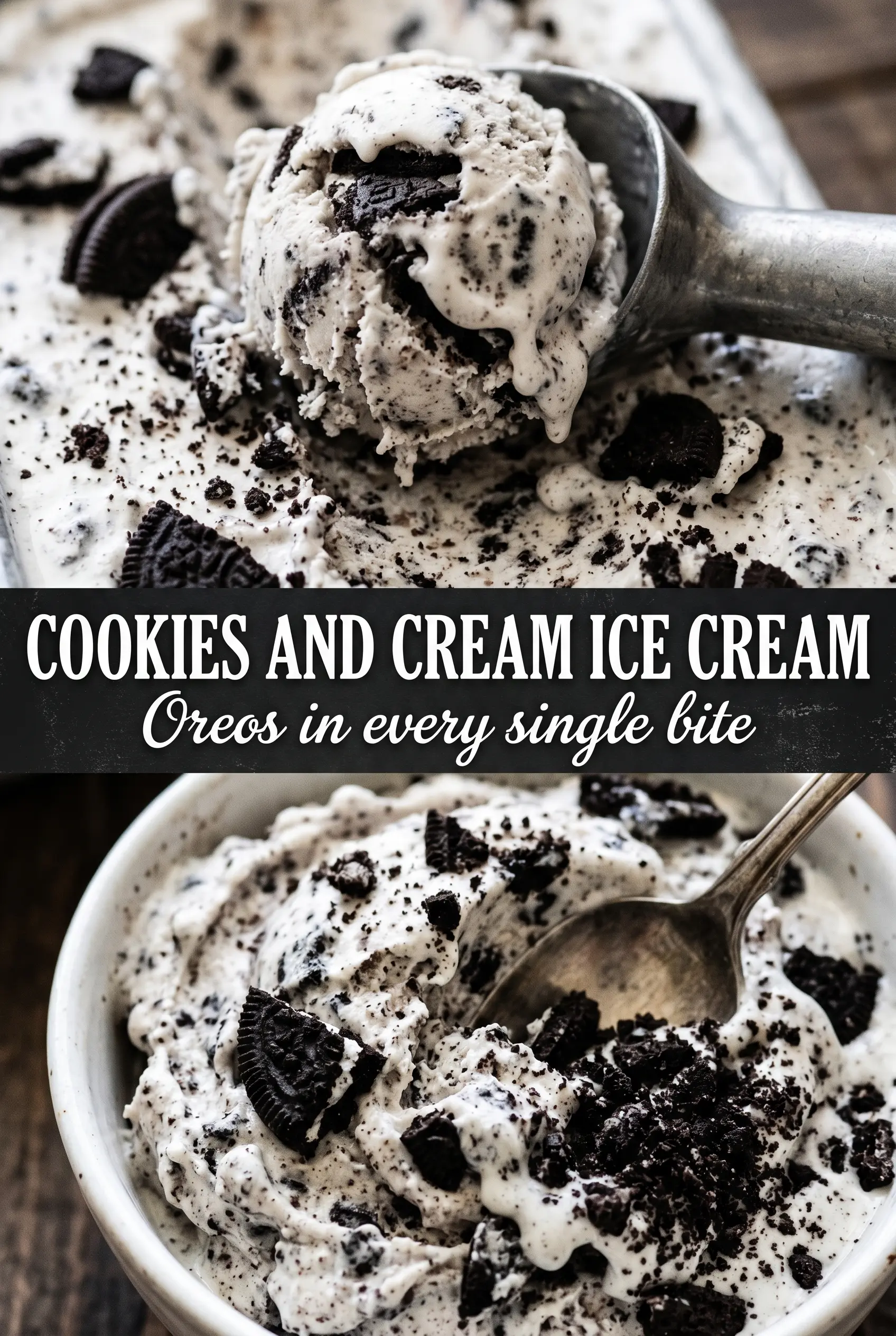
- In the last 2 minutes of churning, add the roughly crushed chocolate sandwich cookies. Visual cue: you’ll see some chunks remain dark and intact while some soften into a lighter cookies-and-cream swirl.
- Transfer to a container and freeze until firm. Visual cue: the ice cream should scoop cleanly with minimal melting at the edges.
Notes
Pro tip: keep the heat at medium-low and stir constantly—pull the custard as soon as it hits 175F to avoid curdling. Refrigerate leftovers up to 3 days; freeze up to 2 months for best texture (thaw 5–10 minutes before scooping). Dietary swap: use lactose-free milk and lactose-free cream if desired for a similar texture and flavor.