Warm potatoes and wilted spinach make this salad feel hearty enough to sit next to grilled chicken, roast pork, or a simple fried egg and call it dinner. The hot bacon vinaigrette does the heavy lifting here: it softens the spinach just enough, coats every potato slice, and brings a sharp, smoky edge that keeps the whole bowl from tasting flat.
The trick is timing. The potatoes need to stay warm when they meet the dressing, and the dressing needs to go over the spinach while it’s still hot enough to collapse the leaves slightly. If either one cools off too much, you end up with a salad that tastes separate instead of unified. Red potatoes hold their shape better than starchy varieties, and that matters because you want slices that stay intact after tossing, not a bowl of mash.
Below, I’ve broken down the part that matters most: how to keep the vinaigrette glossy instead of greasy, plus a few swaps for making this work with what’s already in your kitchen.
The dressing came together fast and coated the potatoes without turning oily. I loved how the spinach wilted just enough from the heat, and the bacon stayed crisp on top.
Save this warm spinach potato salad with bacon vinaigrette for the nights when you want a side that lands somewhere between salad and comfort food.
The Hot Dressing Has to Hit While the Potatoes Are Still Steaming
Most warm potato salads go wrong because the dressing and potatoes are both lukewarm by the time they meet. Bacon vinaigrette needs heat to loosen up, thin slightly, and coat the potatoes in a clean sheen instead of clumping on the onions or pooling at the bottom of the bowl. The spinach also needs that heat; if the potatoes cool too much, the leaves stay too sharp and the whole dish feels disjointed.
The other failure point is overcooked potatoes. Red potatoes should be tender all the way through, but they still need enough structure to hold a slice. If they start breaking apart in the pot, they’ll absorb too much dressing and turn heavy instead of balanced.
- Keep the potatoes warm. Drain them well and move fast. A covered bowl holds heat long enough to finish the salad properly.
- Cook the onion in the drippings, not in oil. Bacon fat carries the smoky base note in the dressing, and it gives the vinegar something richer to cling to.
- Balance the vinegar with mustard and sugar. The mustard helps the dressing emulsify, while the sugar smooths the sharpness of the vinegar without making the salad sweet.
- Add the spinach at the last second. The residual heat is enough to wilt it. If it cooks too long, it turns muddy and loses its fresh bite.
What Each Ingredient Is Actually Doing in This Bowl
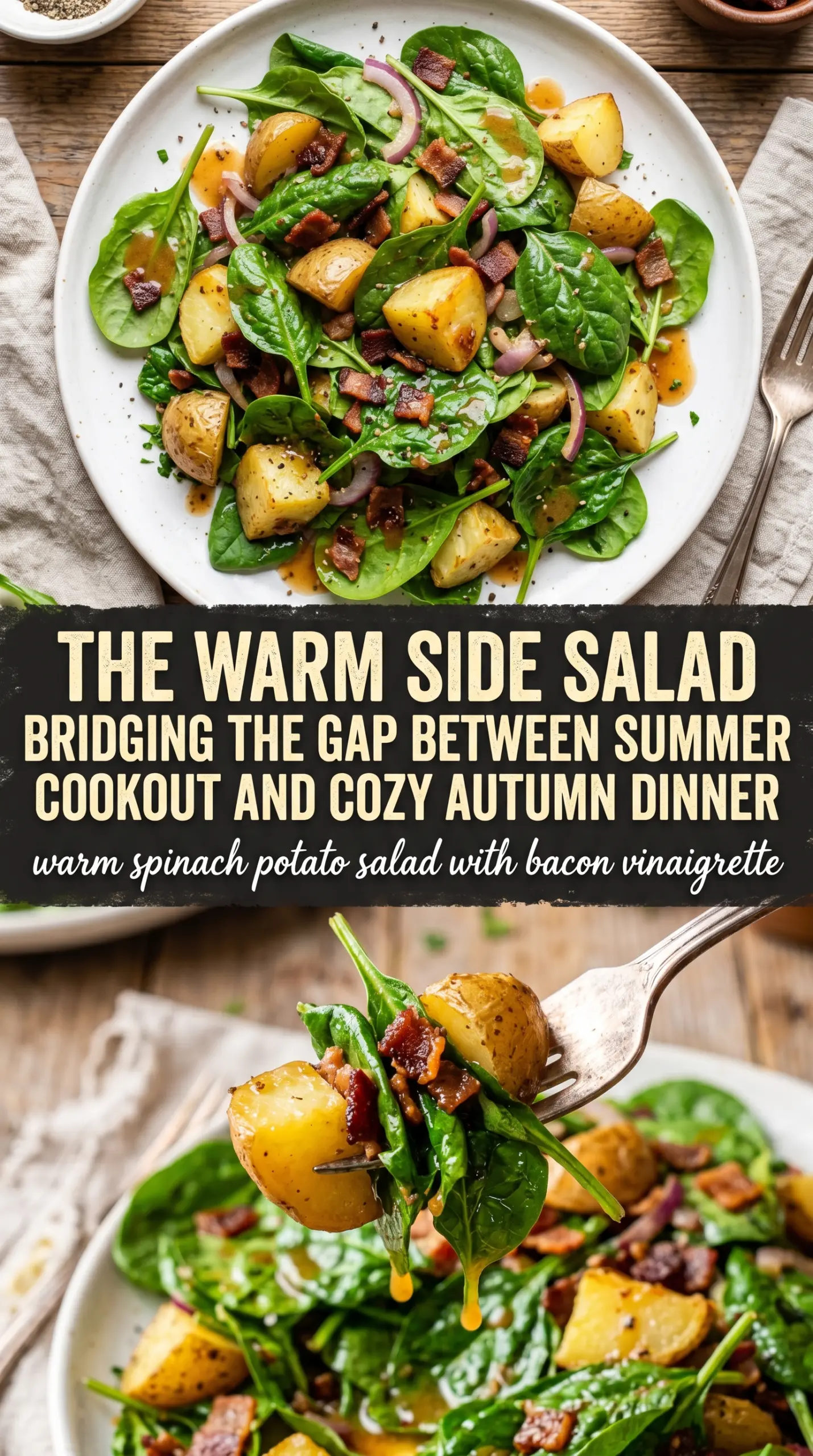
- Red potatoes — These are the right potato for the job because they hold their shape after boiling. Waxy potatoes stay sliceable and give the salad a clean bite; russets tend to fall apart and turn the bowl starchy.
- Spinach — Fresh spinach is the point here. It softens from the hot dressing but still keeps some structure. Baby spinach works best because the leaves wilt evenly and don’t need extra chopping.
- Bacon and drippings — The bacon adds crunch at the end, but the drippings are what build the vinaigrette. Don’t discard them unless you have to; that fat is carrying most of the flavor in the dish.
- Red wine vinegar and Dijon mustard — Together they make the dressing sharp, tangy, and stable enough to coat the potatoes. If you swap the vinegar, keep the acidity clean and bright rather than sweet.
- Sugar — Just enough to round out the vinegar. It doesn’t make the dressing sweet; it keeps it from tasting harsh once it hits the warm potatoes and spinach.
Building the Salad So the Spinach Wilts Instead of Collapses
Boiling the Potatoes Just to Tender
Start the potatoes in salted water and cook them until a knife slides in without resistance, but the slices still hold their edges. Drain them well so they don’t dilute the dressing. If you overboil them, they’ll fall apart when tossed and the whole salad turns soft fast.
Rendering the Bacon and Softening the Onion
Cook the bacon until crisp, then pull it out and leave the drippings in the pan. Add the onion and cook it in that fat until it turns translucent and just starts to take on color at the edges. If the pan is too hot, the onion browns before it softens, and the dressing tastes scorched instead of savory.
Finishing the Vinaigrette
Stir in the vinegar, Dijon, sugar, salt, and pepper, then bring everything just to a simmer. The dressing should look glossy and slightly thickened, not greasy or broken. If the mixture separates, the heat was too high or the mustard didn’t get whisked in well enough; lower the heat and stir until it comes back together.
Tossing and Serving at the Right Moment
Put the spinach in a large bowl, add the warm potatoes, then pour the hot dressing over the top and toss gently. The spinach should wilt immediately, but still look vibrant green rather than collapsed. Crumble the bacon over the finished salad and serve it right away while the potatoes are still warm and the dressing is active.
How to Adapt It When You Need to Work With What’s in the Kitchen
Make It Dairy-Free Without Changing the Texture
This recipe is naturally dairy-free as written, which is part of why it works so well. The bacon fat gives the dressing body without needing cream or butter, so you get a rich finish with no extra substitutions needed.
Skip the Bacon and Keep the Vinaigrette Sharp
For a vegetarian version, cook the onion in olive oil instead of bacon drippings and add a pinch of smoked paprika for depth. You’ll lose the salty crunch from the bacon, but the spinach and potatoes still soak up the tangy dressing beautifully.
Use Yukon Golds for a Softer, Butterier Salad
Yukon Gold potatoes work if you want a creamier bite, but they’re more delicate than red potatoes, so stir even more gently. They’ll pick up the dressing well, though the finished salad will feel a little richer and less firm.
Change the Vinegar When You’re Out of Red Wine Vinegar
Apple cider vinegar will work, but it brings a softer, fruitier edge. White wine vinegar gives the closest clean swap, while balsamic is too sweet and dark for this style of salad.
Storage and Reheating
- Refrigerator: Store leftovers up to 2 days. The spinach will soften more as it sits, and the potatoes absorb the dressing.
- Freezer: Don’t freeze this salad. The potatoes and spinach both break down after thawing, and the vinaigrette loses its clean texture.
- Reheating: Warm leftovers gently in a skillet over low heat or eat them at room temperature. High heat will wilt the spinach completely and can make the potatoes mealy.
Answers to the Questions Worth Asking
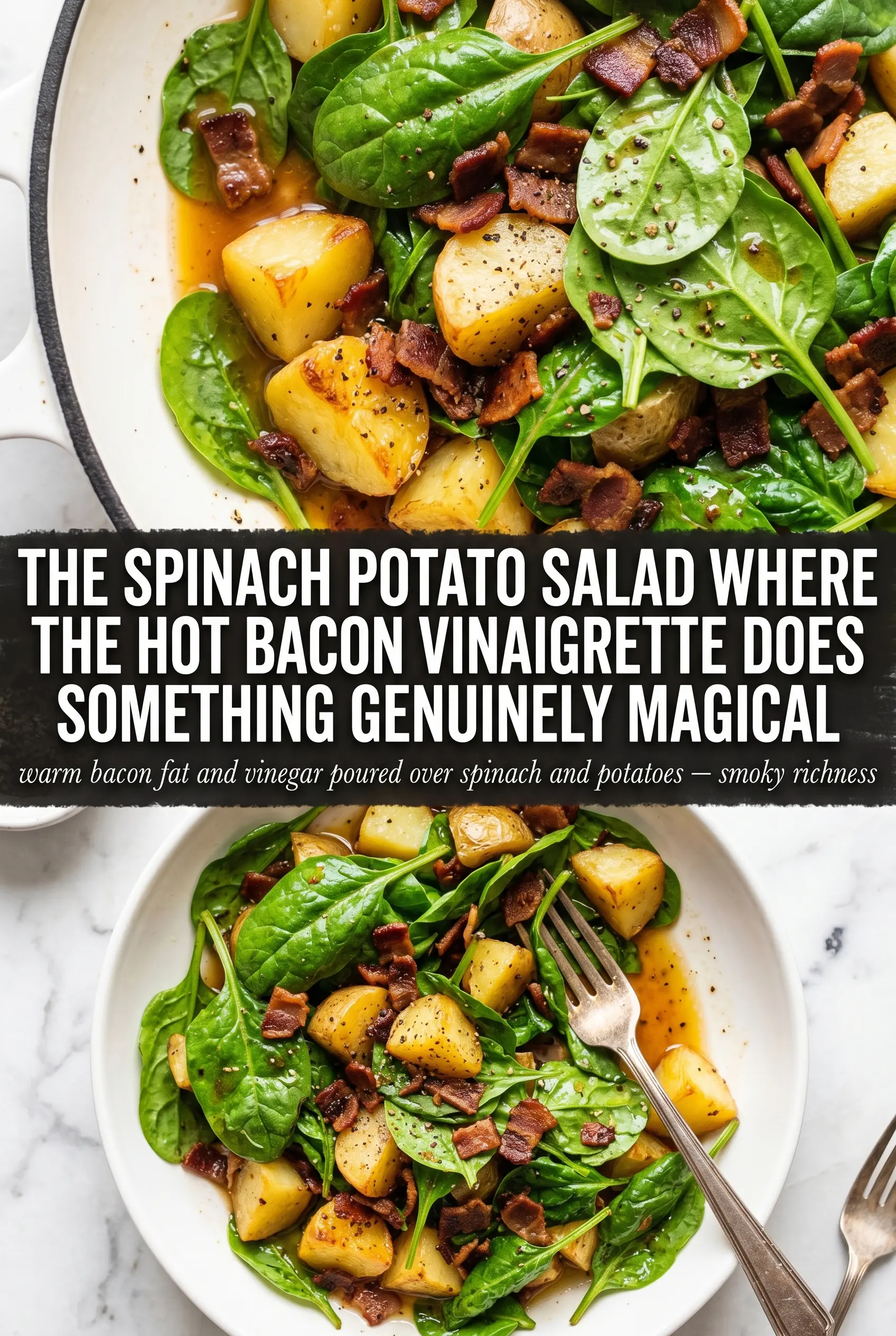
Warm Spinach Potato Salad with Bacon Vinaigrette
Ingredients
Equipment
Method
- Boil the sliced red potatoes until tender, about 15-20 minutes. You want a knife to slide in easily, then drain and keep them warm.
- Cook the bacon in a cast iron skillet until crispy, about 8-10 minutes, then reserve the drippings. Keep the bacon aside for crumbling later.
- Sauté the diced onion in the reserved bacon drippings until softened, about 3-5 minutes. Stir often so the onion doesn’t brown too much.
- Add red wine vinegar, Dijon mustard, sugar, salt, and pepper to the skillet and bring to a simmer for 2-3 minutes. Reduce just slightly so it coats the potatoes.
- Place the fresh spinach in a large bowl, then add the warm potatoes. Toss lightly so the heat starts wilting the greens.
- Pour the hot bacon vinaigrette over the spinach and potatoes and toss to wilt the spinach, 1-2 minutes. Stop when the spinach is glossy and just wilted.
- Crumble the crispy bacon on top and toss once more. Serve immediately while everything is warm.