Warm German potato salad lands with the kind of contrast that keeps people going back for another spoonful: tender potatoes, crisp bacon, and a sharp-sweet dressing that clings instead of pooling at the bottom of the bowl. It’s the side dish that cuts through rich mains and still feels comforting enough to steal attention from everything else on the table.
What makes this version work is timing. The potatoes are dressed while they’re still warm, which helps them soak up the vinegar-mustard mixture instead of turning bland after they cool. Bacon drippings do double duty here, carrying the onion flavor and giving the dressing a deeper, rounder taste than plain oil ever could. The sugar isn’t there to make it sweet; it just softens the vinegar enough to keep the salad balanced.
Below, I’ve included the little details that matter most: how to keep the potatoes intact, why red potatoes are the best fit, and what to do if you want to make it ahead without losing that glossy finish.
The dressing soaked into the potatoes perfectly, and the bacon stayed crisp enough to give every bite texture. I made it 20 minutes ahead and it was still warm and glossy when we served it.
Save this warm German potato salad for the nights when you want tangy potatoes, crispy bacon, and a warm bacon-vinegar dressing that clings to every slice.
The Part That Makes the Dressing Sink In Instead of Sliding Off
Warm German potato salad fails in a predictable way when the potatoes cool too much before they meet the dressing. Cold potatoes stay a little sealed up on the surface, which means the vinegar mixture just coats them instead of getting into the flesh. Warm potatoes absorb the dressing as they sit, and that’s what gives this salad its signature flavor from the inside out.
Red potatoes are the right choice because they hold their shape while still becoming tender. Waxy potatoes don’t collapse into mush, so the slices stay intact after tossing. If you use a starchy potato instead, the edges break down faster and the salad turns heavier and more pasty than it should.
- Warm potatoes — This is the whole trick. Drain them well, then dress them right away while they’re still steaming a bit.
- Red potatoes — Their skin and texture hold up through boiling and tossing. You can peel them, but I leave the skins on for structure.
- Bacon drippings — They carry the onion and vinegar beautifully. If you swap in oil, the salad still works, but it loses that smoky depth.
- Apple cider vinegar — It brings the tang this dish needs without tasting harsh. White vinegar is sharper; use it only if that’s all you have, and start with a little less.
What Each Ingredient Is Doing in the Bowl
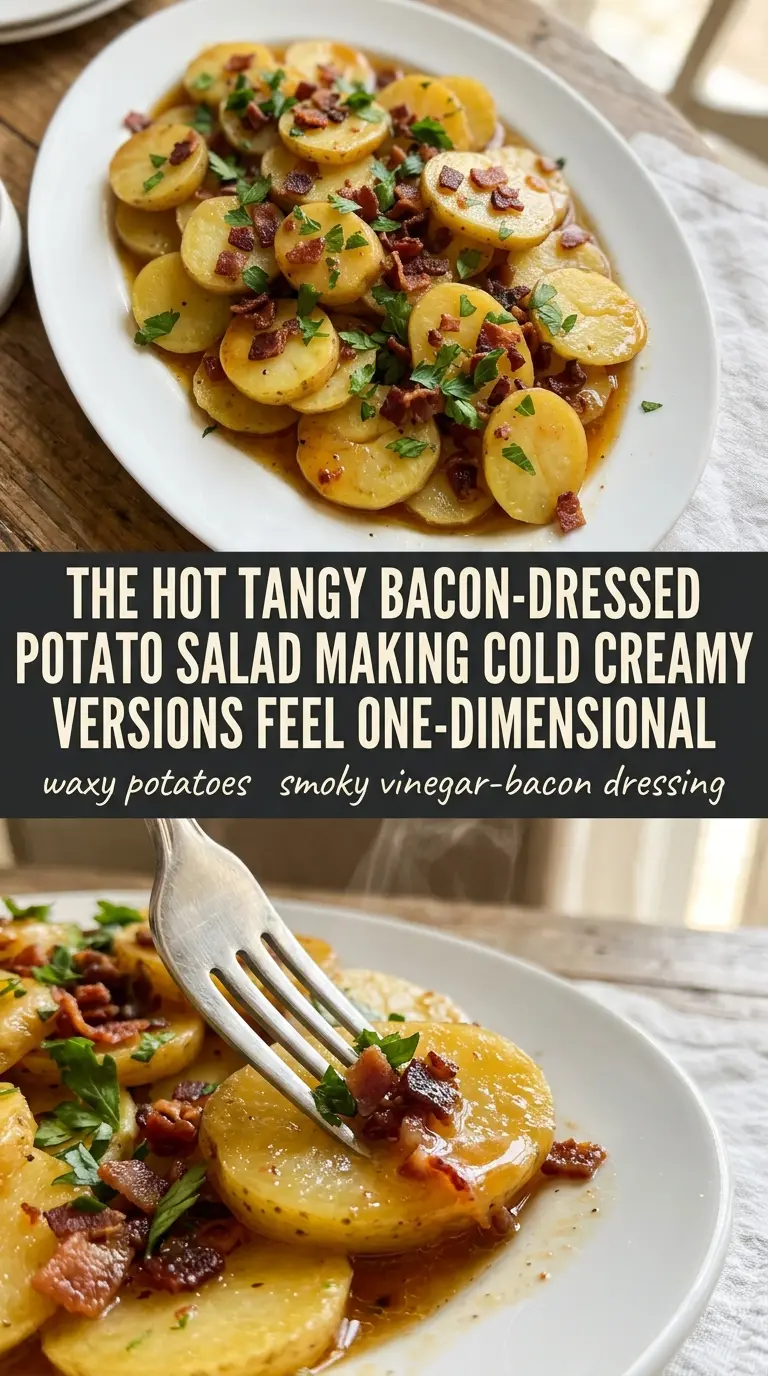
- Red potatoes — Slice them before boiling so the dressing can coat more surface area. Thick coins hold together better than tiny chunks.
- Bacon — Use it for both the crisp bits and the drippings. The salad depends on that rendered fat for flavor, so don’t rush it or drain the pan completely.
- Onion — It softens in the bacon drippings and takes the raw edge off before the vinegar goes in. Dice it small so it melts into the salad instead of standing out in hard pieces.
- Apple cider vinegar, sugar, Dijon, and broth — This is the balance point. Vinegar gives lift, sugar rounds the sharpness, Dijon adds body, and broth keeps the dressing from tasting like straight acid.
- Parsley — Add it at the end so it stays fresh and green. It cuts through the richness and keeps the bowl from looking heavy.
Building the Warm Bacon Dressing at the Right Moment
Boiling the Potatoes
Start the potatoes in salted water and cook them until just tender when pierced with a fork, about 15 minutes depending on thickness. They should hold their shape and not split apart when you lift them out. Drain them well so the dressing doesn’t get diluted by extra water, which is the fastest way to end up with flat flavor.
Rendering the Bacon
Cook the bacon until crisp, then move it to a paper towel-lined plate and keep three tablespoons of the drippings in the pan. That amount gives the dressing enough richness without making it greasy. If the bacon burns before it crisps, the drippings will taste bitter, so keep the heat at medium and let it happen gradually.
Finishing the Dressing and Tossing
Sauté the onion until soft, then add the vinegar, sugar, mustard, and broth and bring it just to a simmer. Pour that hot dressing over the warm potatoes while the bowl is still steamy, then add the bacon and parsley and toss gently. If you stir too hard, the slices will break and the salad will lose its clean, dressed-but-still-intact look.
Three Ways to Make It Fit the Meal You’re Serving
Dairy-Free and Naturally Gluten-Free
This recipe already lands naturally in both lanes as written, which is one reason it works so well for a crowd. Just check that your broth is gluten-free if that matters for your table, and you’re set. The texture and tang stay exactly where they should be.
Make It a Little Lighter
Use six slices of bacon instead of eight and add an extra spoonful of broth to keep the dressing loose enough to coat. You’ll lose some smoky richness, but the vinegar and mustard still keep the salad bright and balanced.
For a Sharper, More German-Style Finish
Swap half the apple cider vinegar for white wine vinegar if you want a cleaner, sharper bite. It tastes a little brighter and less round, which some people prefer with sausages or richer roasts.
Storage and Reheating
- Refrigerator: Store leftovers in an airtight container for up to 4 days. The potatoes will absorb more dressing as they sit, so the salad gets a little deeper in flavor.
- Freezer: I don’t recommend freezing this one. The potatoes turn mealy and the dressing separates after thawing.
- Reheating: Warm it gently in a skillet over low heat or in the microwave at short intervals until just heated through. High heat dries out the potatoes and can make the bacon rubbery, so keep it gentle.
Answers to the Questions Worth Asking
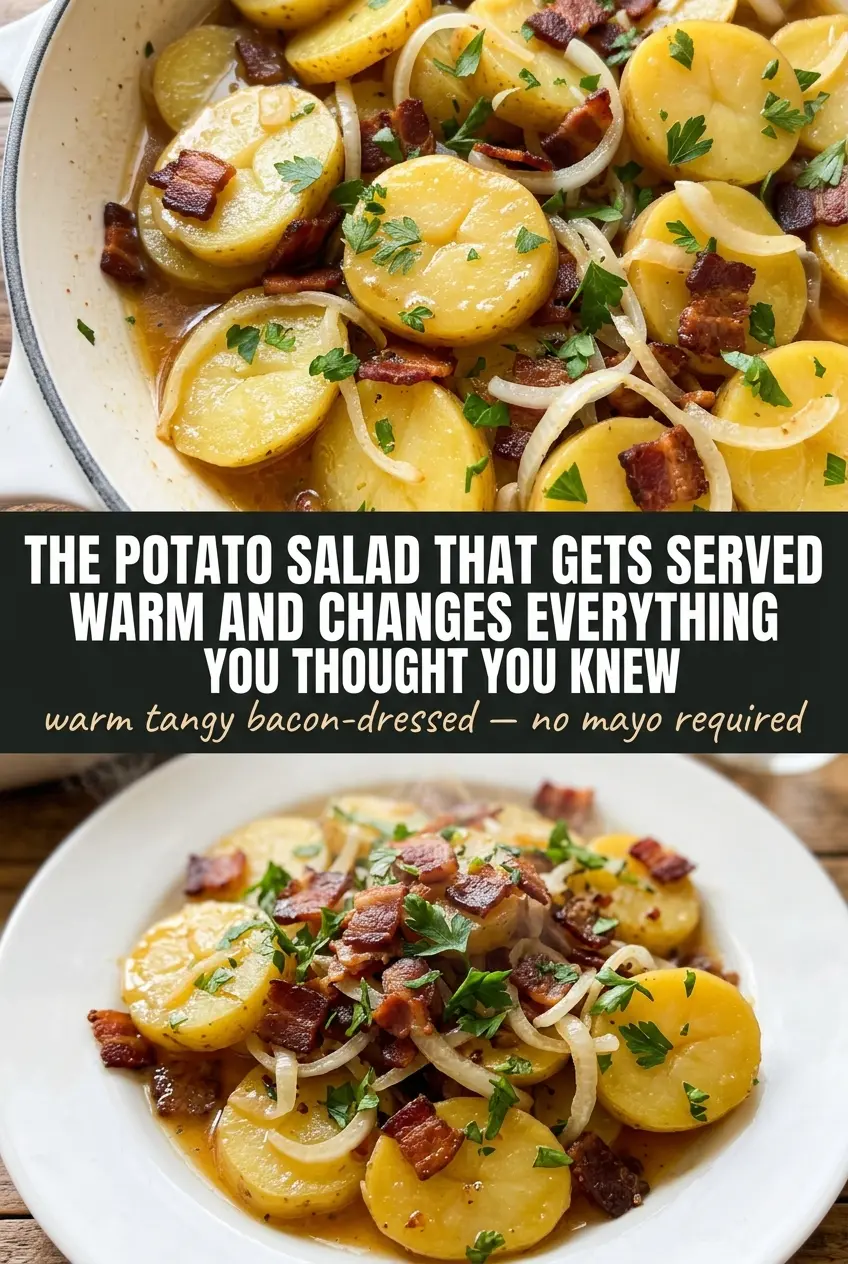
Warm German Potato Salad
Ingredients
Equipment
Method
- Bring a pot of salted water to a boil in a Dutch oven, then add sliced red potatoes and cook until tender, about 15 minutes. You should be able to pierce a slice easily with a fork.
- Drain the potatoes well after boiling. Let them sit briefly so excess water doesn’t thin the dressing.
- Cook bacon in a cast iron skillet over medium heat until crispy, about 8 to 10 minutes. Drain and crumble the bacon, then reserve 3 tablespoons drippings in the pan.
- Sauté diced onion in the reserved bacon drippings until soft, about 4 to 6 minutes. Stir occasionally so it turns translucent and fragrant.
- Add apple cider vinegar, sugar, Dijon mustard, and chicken broth to the skillet, then bring to a simmer over medium heat. Keep it at a gentle simmer so the sugar dissolves and the sauce looks glossy.
- Pour the hot dressing over the warm drained potatoes in a large bowl. Make sure the slices are coated so the surface looks glistening.
- Add crumbled bacon and chopped fresh parsley, then toss gently to combine. Stop as soon as everything is evenly distributed so the potatoes stay tender.
- Serve warm immediately. The salad is best when the potatoes are still hot and the bacon vinaigrette clings to the slices.