Broken-down feta turns into a salty, creamy sauce that clings to every ridge of the pasta, while the roasted tomatoes and vegetables bring sweetness, char, and enough body that the dish never tastes flat. The whole thing lands somewhere between cozy and bright: glossy sauce, tender vegetables, and little bursts of tomato that cut through the richness.
What makes this version work is the way the feta bakes alongside the vegetables instead of being stirred in raw. In the oven, the edges of the cheese soften and pick up a little color, the tomatoes collapse into their juices, and the zucchini, pepper, and onion roast instead of steaming. That combination gives you a sauce with actual depth, not just melted cheese and pasta.
Below you’ll find the timing that keeps the vegetables from going mushy, the small splash of pasta water that helps the sauce come together, and a few smart swaps if you want to make it dairy-free or stretch it for a bigger dinner.
The feta melted into the tomatoes exactly the way you described, and the pasta water made the sauce silky instead of thick and clumpy. My husband went back for seconds before I even sat down.
Love the bubbling feta and roasted vegetables in this pasta? Save it to Pinterest for the nights when you want a creamy vegetarian dinner with almost no cleanup.
The Trick to Keeping Baked Feta Creamy, Not Grainy
Baked feta can go from lush to tight if it gets blasted too hard or baked too long. The goal here is soft and spreadable, with a few browned spots at the edges and enough structure left that it mashes into the tomatoes instead of disappearing into oily puddles. That’s why the oven heat is moderate and the feta sits right in the center of the dish, where it can warm evenly while the vegetables roast around it.
The other piece people miss is moisture management. Tomatoes need time to burst and release their juices, but the vegetables around them shouldn’t be buried in liquid or they’ll steam. If your feta looks done before the tomatoes have fully collapsed, keep baking for a few more minutes until the pan looks glossy and the tomato skins are wrinkled and split.
What Each Ingredient Is Actually Doing in This Pasta
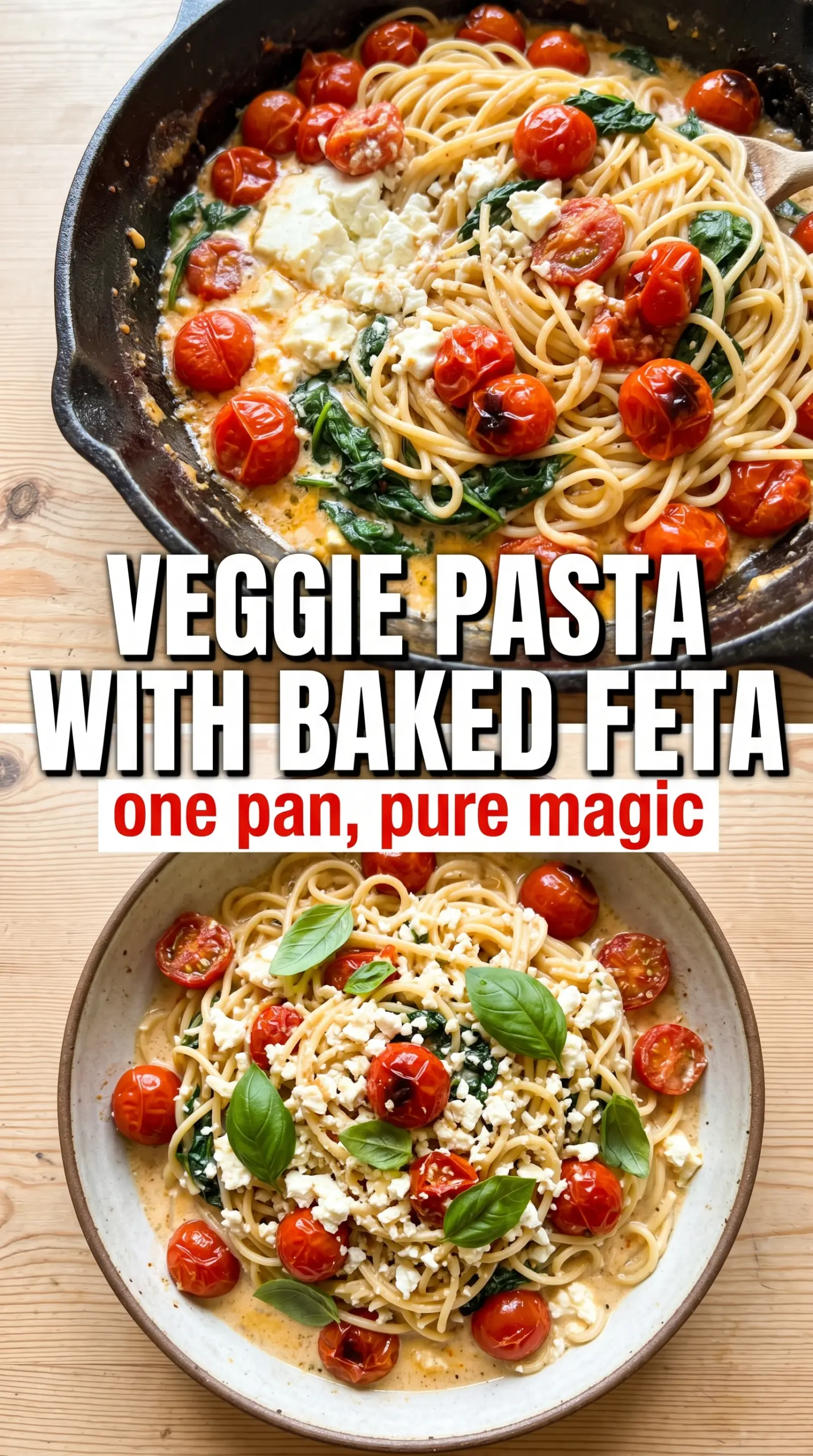
- Feta — This is the base of the sauce, so buy a block if you can. Crumbled feta often contains anti-caking agents and doesn’t soften the same way. A full-fat sheep’s milk or sheep-and-goat blend gives the best creamy, tangy finish.
- Cherry tomatoes — They bring the acidity and the juicy part of the sauce. Once they burst, their sweetness balances the salt in the feta. Grape tomatoes work too, but cherry tomatoes usually roast down a little more deeply.
- Zucchini, bell pepper, and red onion — These give the dish bulk and keep it firmly in vegetable-pasta territory. Cut them into pieces that are close in size so they roast at the same pace. If the zucchini is diced too small, it turns soft before the feta is ready.
- Whole garlic cloves — Whole cloves turn sweet and spreadable in the oven. Minced garlic would brown too fast and can taste sharp or bitter by the time the vegetables are done. If your cloves are large, give them a light smash so they cook through.
- Olive oil — This is what helps everything roast instead of dry out. Use a decent one here because you taste it in the finished sauce. If you only have a lighter olive oil, it still works; just don’t cut back too much or the pasta will feel dry.
- Pasta water — The starch helps the feta and tomato juices turn into a sauce that coats instead of pooling. Add it a splash at a time. Too much will thin the dish and wash out the roasted flavor.
Building the Sauce From the Pan Up
Roasting the Vegetables Around the Feta
Set the feta block in the middle of the baking dish and scatter the vegetables in a loose ring around it. Drizzle everything with olive oil so the cut sides of the zucchini and onion can brown instead of drying out. The vegetables are done when the tomatoes have burst, the onion edges look caramelized, and the feta has softened at the sides. If the pan looks dry before that happens, add another small drizzle of oil; dry vegetables won’t collapse into a silky sauce.
Mashing and Loosening the Sauce
Use a fork to break up the feta first, then drag the tomatoes and vegetables through it until the whole dish turns creamy and chunky at the same time. The sauce should look thick but glossy, not pasty. Add pasta water in tablespoons only if the mixture feels stiff, because the pasta will bring its own moisture once it goes in. If you add too much too soon, the sauce can slide off the pasta instead of coating it.
Tossing in the Pasta and Finishing
Add the cooked pasta straight into the baking dish while everything is still hot. Stir until every piece is coated and the sauce clings to the ridges of the pasta. A final drizzle of olive oil and a handful of basil wake up the flavor and keep the dish from tasting heavy. Serve it immediately, because baked feta pasta is at its best when the sauce is still silky and loose.
Three Ways to Adjust This Pasta Without Losing What Makes It Work
Make it dairy-free
Use a firm dairy-free feta-style block that’s meant for baking or crumbling. It won’t taste exactly like feta, but it will still give you a tangy, salty base if you roast it until it softens at the edges. Add a little extra olive oil and a squeeze of lemon at the end to replace the richness and brightness that dairy feta usually brings.
Turn it into a gluten-free dinner
The sauce is already naturally gluten-free, so the only thing to watch is the pasta. Use a sturdy gluten-free penne or rotini with enough shape to hold the sauce, and cook it just to al dente so it doesn’t break apart when you toss it in. A little extra pasta water helps gluten-free pasta bind better with the roasted vegetables.
Add more protein without changing the texture
Stir in chickpeas or white beans after the feta has been mashed if you want the dish to eat more like a full meal. They absorb the sauce without fighting it, and they fit the Mediterranean style of the recipe. If you add cooked chicken or shrimp, keep them separate and fold them in at the very end so they don’t dry out in the oven.
Use a different vegetable mix
Broccoli florets, asparagus, or chopped eggplant all work if you keep the pieces similar in size. Just adjust the roast time based on what you use: firmer vegetables need a few extra minutes, while softer ones should go in a little later. The key is still the same — the vegetables need enough heat to caramelize before they’re stirred into the sauce.
Storage and Reheating
- Refrigerator: Store leftovers in an airtight container for up to 4 days. The pasta will absorb some of the sauce as it sits, so it will look thicker the next day.
- Freezer: This freezes, but the texture is softer after thawing because feta sauce can separate a little. Freeze in portions for up to 2 months if you don’t mind a less silky finish.
- Reheating: Warm it gently on the stovetop or in the microwave with a splash of water to bring the sauce back. High heat can make the feta turn oily and the pasta dry out before the center is hot.
Questions I Get Asked About This Recipe
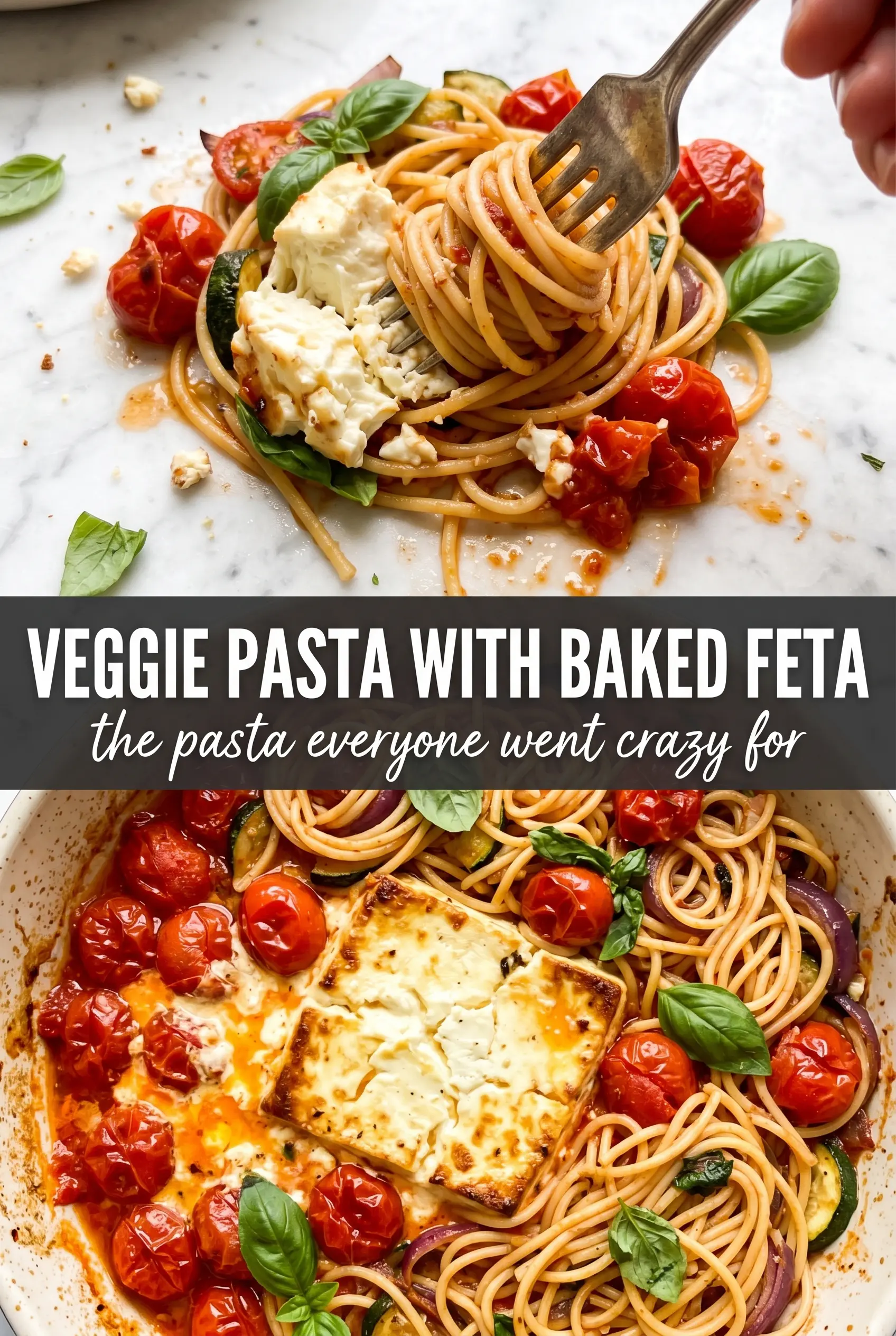
Veggie Pasta with Baked Feta
Ingredients
Equipment
Method
- Preheat oven to 400°F and place the feta block in the center of a 9x13 baking dish.
- Surround the feta with cherry tomatoes, zucchini, red bell pepper, red onion, and garlic; drizzle with olive oil and season with red pepper flakes, salt, and pepper.
- Bake for 30-35 minutes until the feta is golden and creamy at the edges and the tomatoes have burst and caramelized.
- Use a fork to mash the baked feta and stir it into the roasted vegetables to create a chunky sauce.
- Add a splash of pasta water if needed to loosen, until the sauce looks glossy and coats the vegetables.
- Add cooked pasta to the baking dish and toss to coat everything in the feta tomato sauce.
- Drizzle with extra olive oil and scatter fresh basil over the top, then serve immediately.