Vegan pumpkin ricotta stuffed shells land in that sweet spot between cozy and impressive: tender pasta, a creamy filling with real body, and a pumpkin sauce that bakes into something silky instead of flat. The shells hold their shape, the sauce clings to every curve, and the top turns bubbling and browned in all the right places. It’s the kind of vegetarian main dish that earns a repeat spot because it eats like a full meal, not a side dressed up as dinner.
What makes this version work is the contrast. The tofu-cashew ricotta gives you a filling that’s rich without being heavy, while nutritional yeast and garlic keep it savory enough to stand up to the sweet earthiness of pumpkin. Coconut cream adds enough fat for a smooth bake, but the vegetable broth keeps the sauce from turning into something gloopy or overly dense. I also like simmering the sauce before it goes in the dish; that extra minute or two helps the garlic soften and the pumpkin taste round out.
Below, I’ve included the small details that matter most: how to keep the shells from splitting, how to judge the sauce before it goes into the oven, and the swaps I’d actually use if I were making this for a mixed crowd.
The pumpkin sauce baked up creamy instead of watery, and the tofu ricotta stayed fluffy inside the shells. I was worried the coconut cream would taste overpowering, but it just made everything silky and the basil on top finished it perfectly.
Love the creamy pumpkin sauce and tofu ricotta in these stuffed shells? Save this one for a cozy meatless dinner with real comfort-food texture.
The Part That Stops Stuffed Shells From Turning Watery
The biggest mistake with stuffed shells is treating the sauce and filling like they can both be loose and still bake well. They can’t. If the ricotta filling is soft enough to spread, it will seep out of the shells. If the sauce is thin, it will pool in the pan and leave you with pasta that tastes steamed instead of baked. This version avoids that by starting with pressed tofu and a thick, blended ricotta, then simmering the pumpkin sauce until it tightens just enough to coat a spoon.
The other detail that matters is the pasta texture. Cook the shells until al dente, then stop right there. They keep cooking in the oven, and if they start too soft, they’ll tear when you stuff them and collapse once the sauce hits the pan. A little firmness at the boil is what gives you clean, intact shells after baking.
- Pressed tofu — This is the backbone of the filling. Pressing it matters because excess water makes the ricotta grainy and thin.
- Cashew cream — This gives the filling richness and a smoother finish than plain tofu alone. Full-fat soaked cashews blended with a little water work best.
- Pumpkin puree — Use plain pumpkin puree, not pie filling. Pie filling is already sweetened and spiced, which throws off the savory balance.
- Coconut cream — This is what makes the sauce lush and bakeable. Coconut milk won’t give quite the same body, but it can work in a pinch if you reduce the broth a little.
What Each Ingredient Is Actually Doing in These Shells
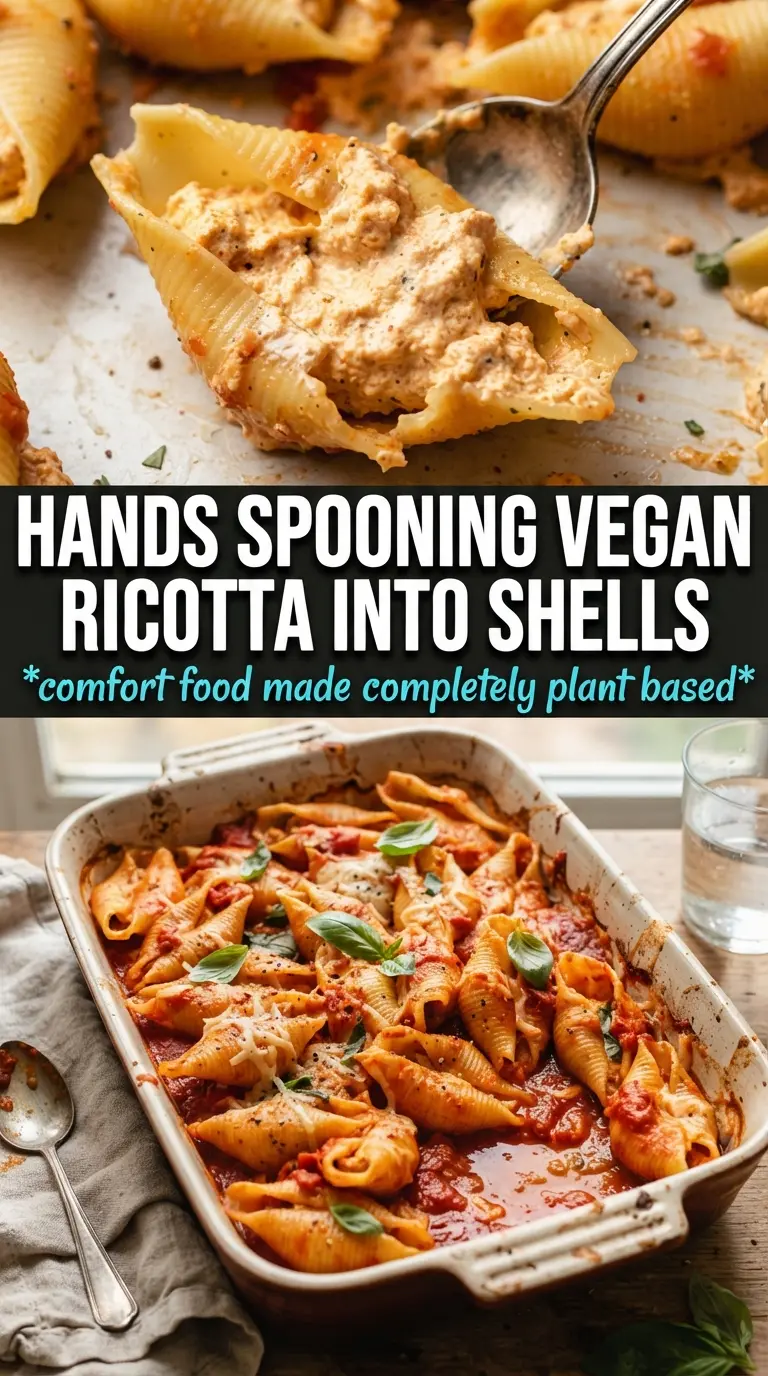
- Nutritional yeast — This brings the savory, cheesy edge that keeps the filling from tasting like seasoned tofu. It matters in both the ricotta and the sauce.
- Garlic — Fresh garlic is worth using here because it anchors both the filling and the sauce. Jarred garlic works, but it tastes flatter after baking.
- Italian seasoning — This keeps the pumpkin from leaning too sweet and gives the dish that familiar baked-pasta character. If yours is heavy on rosemary, use a lighter hand.
- Nutmeg — Just a little makes the pumpkin taste deeper and more savory. Too much and the sauce starts tasting like dessert.
- Vegan mozzarella — Use a brand that melts well, not just one that sits on top. The goal is a browned, stretchy layer, not dry shreds.
Stuffing, Saucing, and Baking Without Breaking the Shells
Build the pumpkin sauce first
Start by softening the garlic in a little oil until it smells sweet, not sharp. Then add the pumpkin, coconut cream, broth, seasoning, and nutmeg, and let the sauce simmer until it looks glossy and slightly thickened. If it stays loose, it will thin out again in the oven and you’ll lose that creamy baked finish. You want it spoonable, not pourable like soup.
Mix the ricotta until it holds its shape
Blend the tofu, cashew cream, nutritional yeast, garlic, seasoning, salt, and pepper until smooth but still thick. If the mixture looks wet or loose, stop and scrape the bowl, then blend a little more only if needed. The filling should mound on a spoon. If it slides off like batter, the shells will leak while baking.
Fill the shells with a light hand
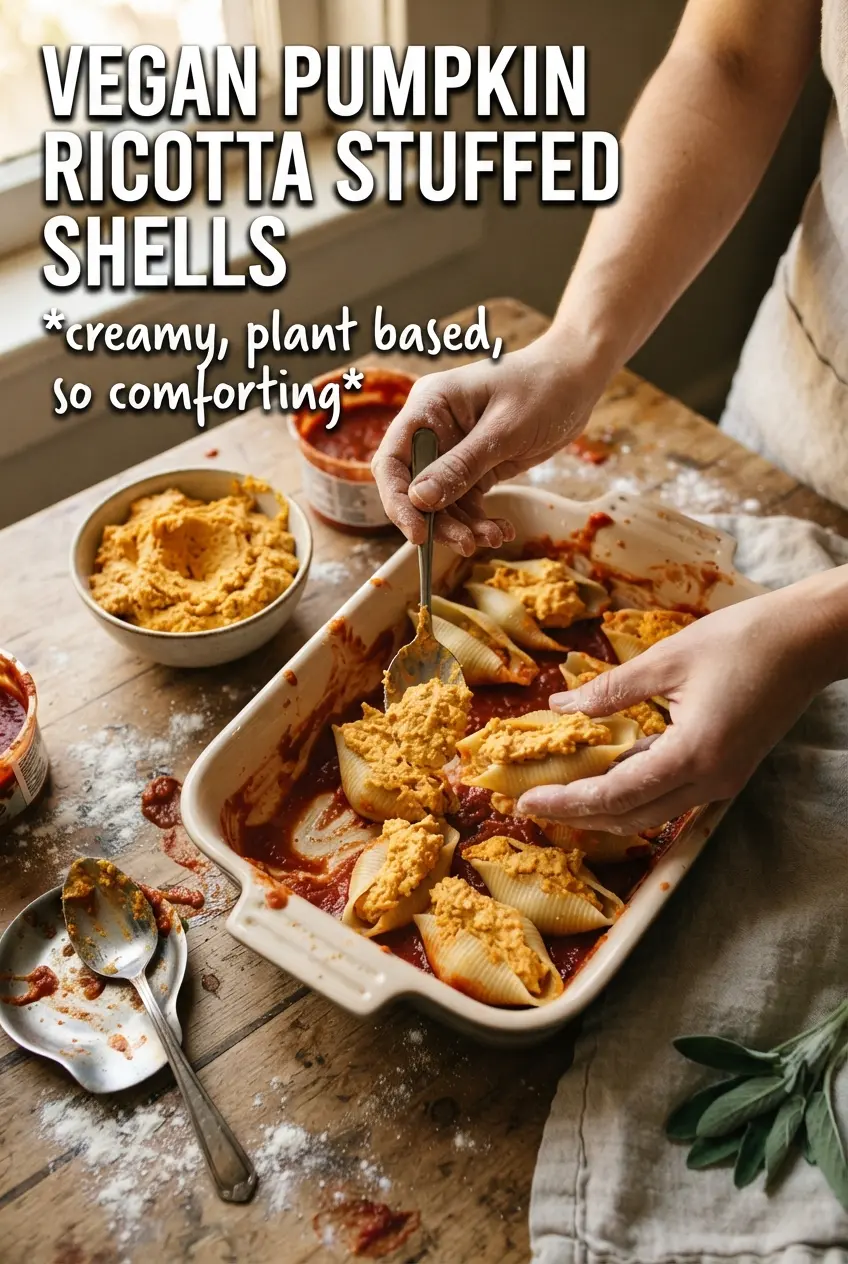
Spoon the ricotta into each shell without packing it in hard. Overstuffed shells split, and undercooked shells are usually the result of trying to cram too much filling into a fragile pasta shape. Nestle them seam-side up into the sauce so they sit snugly but not buried. That helps them cook evenly and keeps the tops from drying out.
Finish with sauce and vegan mozzarella
Pour the remaining sauce over the shells, then add the mozzarella across the top. The sauce should cover the exposed pasta edges so they don’t dry out in the oven. Bake until the filling is hot through and the cheese is melted and bubbling at the edges. If the top browns too fast before the center is hot, lay foil loosely over the dish for the last few minutes.
How to Adapt This for Different Kitchens and Different Diets
Make it gluten-free
Use gluten-free jumbo shells if you can find them, but keep a close eye on the boil because they often turn soft faster than regular pasta. If the shells tear easily, undercook them slightly and handle them while they’re still warm but not hot enough to split.
Make it nut-free
Swap the cashew cream for thick unsweetened oat cream or a plain vegan cream cheese-style alternative. The filling will be a little less rich and less naturally sweet, but it still bakes up creamy if you keep it thick.
Make it more savory
Add a handful of chopped sautéed spinach or mushrooms to the filling if you want a more dinner-leaning, less creamy result. Mushrooms deepen the flavor and spinach cuts through the richness, but both should be cooked first so they don’t release water into the shells.
Storage and Reheating
- Refrigerator: Store covered for up to 4 days. The shells soften a little more each day, but the flavor gets even better.
- Freezer: This freezes well after baking. Cool completely, portion if you want, then wrap tightly and freeze for up to 2 months. The sauce may look a little separated at first, but it comes back once reheated.
- Reheating: Cover with foil and warm at 350F until hot in the center, or reheat single portions in the microwave with a splash of broth or water. The biggest mistake is blasting it uncovered, which dries out the pasta before the center is warmed through.
Answers to the Questions Worth Asking
Vegan Pumpkin Ricotta Stuffed Shells
Ingredients
Equipment
Method
- Preheat the oven to 375F and grease a 9x13 baking dish.
- Cook the jumbo pasta shells until al dente, then drain and set aside.
- Sauté the minced garlic until fragrant in the pumpkin sauce pot.
- Add the pumpkin puree, coconut cream, vegetable broth, nutritional yeast, Italian seasoning, nutmeg, and salt and pepper to taste, then simmer for 5 minutes until slightly thickened.
- Pour most of the sauce into the greased 9x13 baking dish, reserving some for the top.
- Blend pressed firm tofu, cashew cream, nutritional yeast, garlic, Italian seasoning, salt, and black pepper until smooth.
- Stuff the cooked shells with the tofu-cashew ricotta and nestle them into the sauce in the baking dish.
- Pour the remaining sauce over the stuffed shells and top with vegan mozzarella.
- Bake for 35-40 minutes at 375F until hot and bubbly, then garnish with fresh basil before serving.