Thai peanut chicken wraps hit that sweet spot between fresh and filling: tender chicken, crunchy vegetables, and a thick peanut sauce that coats every bite without turning the tortilla soggy. The contrast is what makes them worth repeating. You get the crunch of cabbage and cucumber, the richness of peanut butter, and enough lime and rice vinegar to keep the whole wrap bright instead of heavy.
The trick is building each part with a little intention. The chicken gets a quick seasoning before it goes into the pan, which gives it flavor all the way through instead of leaving all the work to the sauce. The peanut sauce should be thick enough to cling but loose enough to drizzle; warm water is what gets it there without watering it down. Layering matters, too. Sauce on the tortilla, sturdy vegetables next, chicken on top, then a second drizzle before rolling keeps everything in place and gives you that glossy, messy-in-a-good-way finish.
Below you’ll find the little details that keep the wraps from falling apart, plus a few smart swaps if you need to work with what’s in the fridge.
The peanut sauce was thick and glossy, and it stayed put in the wraps instead of soaking through the tortilla. I also loved that the chicken stayed juicy after slicing — we ate the leftovers cold the next day and they were still great.
Save these Thai Peanut Chicken Wraps for the nights when you want a crunchy, saucy dinner that rolls up fast and still feels fresh.
The Reason the Wrap Stays Crisp Instead of Going Soggy
The biggest mistake with peanut sauce wraps is overloading the tortilla with sauce before the fillings are in place. Once that happens, the tortilla softens fast and the whole thing turns slippery. This version avoids that by using just enough sauce to anchor the fillings, then finishing with more sauce after the chicken and vegetables are already stacked.
There’s another small thing that matters: the vegetables stay raw and dry, which gives the wrap structure. Cabbage, carrots, and cucumber bring crunch and keep the filling from collapsing under the sauce. Warm tortillas help, too, because a cold tortilla cracks before you can roll it tightly.
What the Peanut Sauce and Chicken Each Need to Do
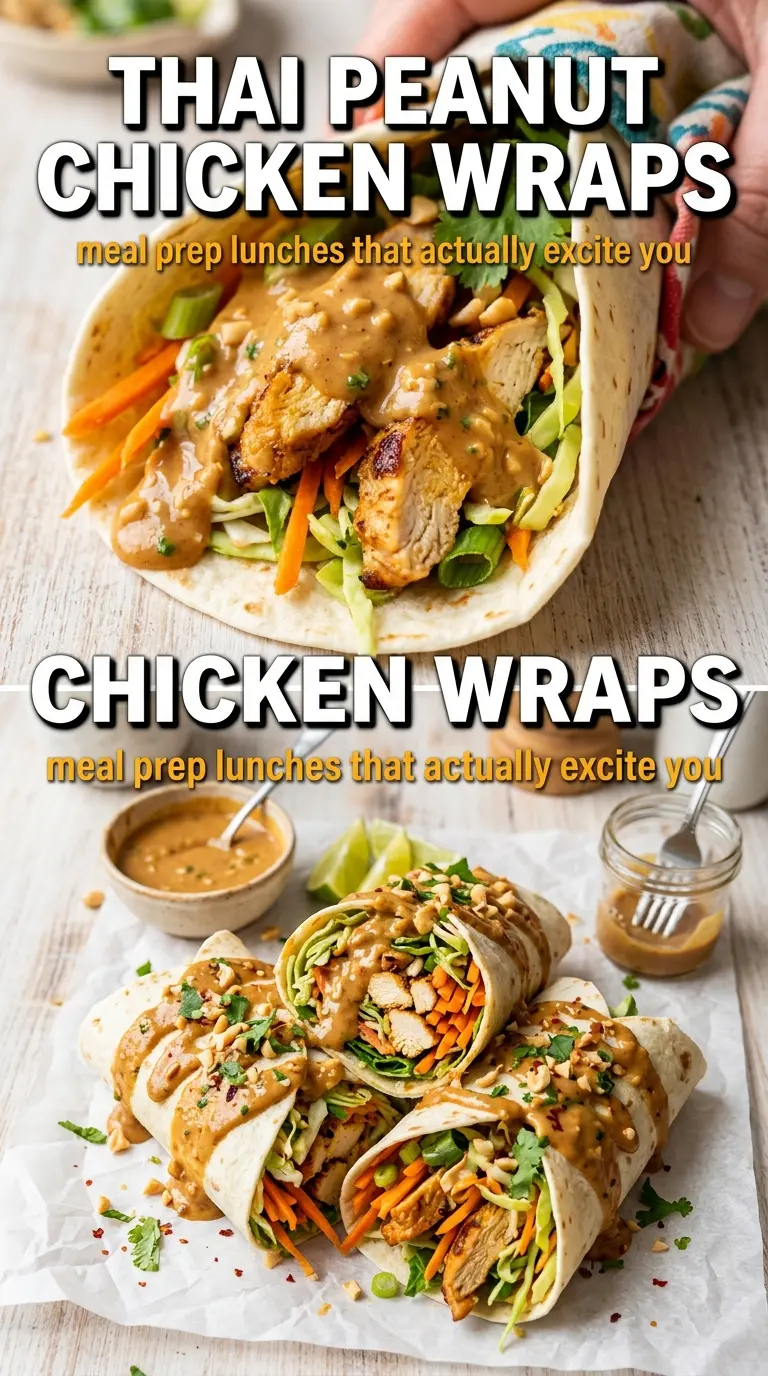
- Creamy peanut butter — This is the base of the sauce, and natural or standard creamy peanut butter both work. If you use a natural style, stir it well first so the sauce doesn’t separate or turn oily. Crunchy peanut butter will work in a pinch, but it changes the texture and makes the sauce less smooth.
- Rice vinegar and lime juice — These are what keep the sauce from tasting flat. The vinegar adds clean tang, while the lime gives a sharper finish that wakes up the chicken and vegetables. Don’t skip one for the other unless you have to; together they make the sauce taste balanced instead of heavy.
- Chicken breasts — Boneless, skinless chicken breasts cook quickly and slice neatly, which matters in a wrap. Cut the cooked chicken against the grain so it stays tender instead of stringy. Chicken thighs also work and stay juicier, but they bring a richer, slightly softer result.
- Flour tortillas — Large 10-inch tortillas are worth using here because smaller ones tear once the filling starts piling up. Warm them for a few seconds until they bend without cracking. If you need a gluten-free option, use the largest gluten-free wraps you can find and keep the filling a little tighter.
- Cabbage, carrots, cucumber, and cilantro — These aren’t just filler. The cabbage brings crunch, the cucumber adds coolness, the carrots add sweetness, and the cilantro keeps the whole wrap tasting fresh. If you want the wraps less wet, pat the cucumber dry after slicing.
Cooking the Chicken and Building the Wrap So It Holds Together
Seasoning the Chicken Fast
Toss the chicken with soy sauce, sesame oil, and garlic powder until every piece looks lightly coated. That short marinade gives the meat flavor without needing a long soak, and the sesame oil adds a nutty base that fits the peanut sauce later. If the chicken sits too long in the soy mixture, it can start to cure on the surface and cook up a little tighter than you want, so move it straight into the pan.
Getting a Golden Sear
Cook the chicken in a hot skillet until the outside is golden and the center is cooked through, about 5 to 6 minutes per side depending on thickness. You want browning, not steam, so give the pieces space in the pan. If they’re crowded, the chicken releases liquid and goes pale instead of picking up color. Rest it for a few minutes before slicing so the juices stay in the meat instead of running onto the cutting board.
Making the Sauce Pourable
Whisk the peanut sauce until it starts thick, then add warm water a little at a time until it drizzles easily from the spoon. It should cling to the back of a spoon without turning stiff or gloppy. If the sauce tastes too salty, a touch more honey or lime can balance it; if it tastes dull, it usually needs a little more acid, not more peanut butter.
Rolling Without Tearing
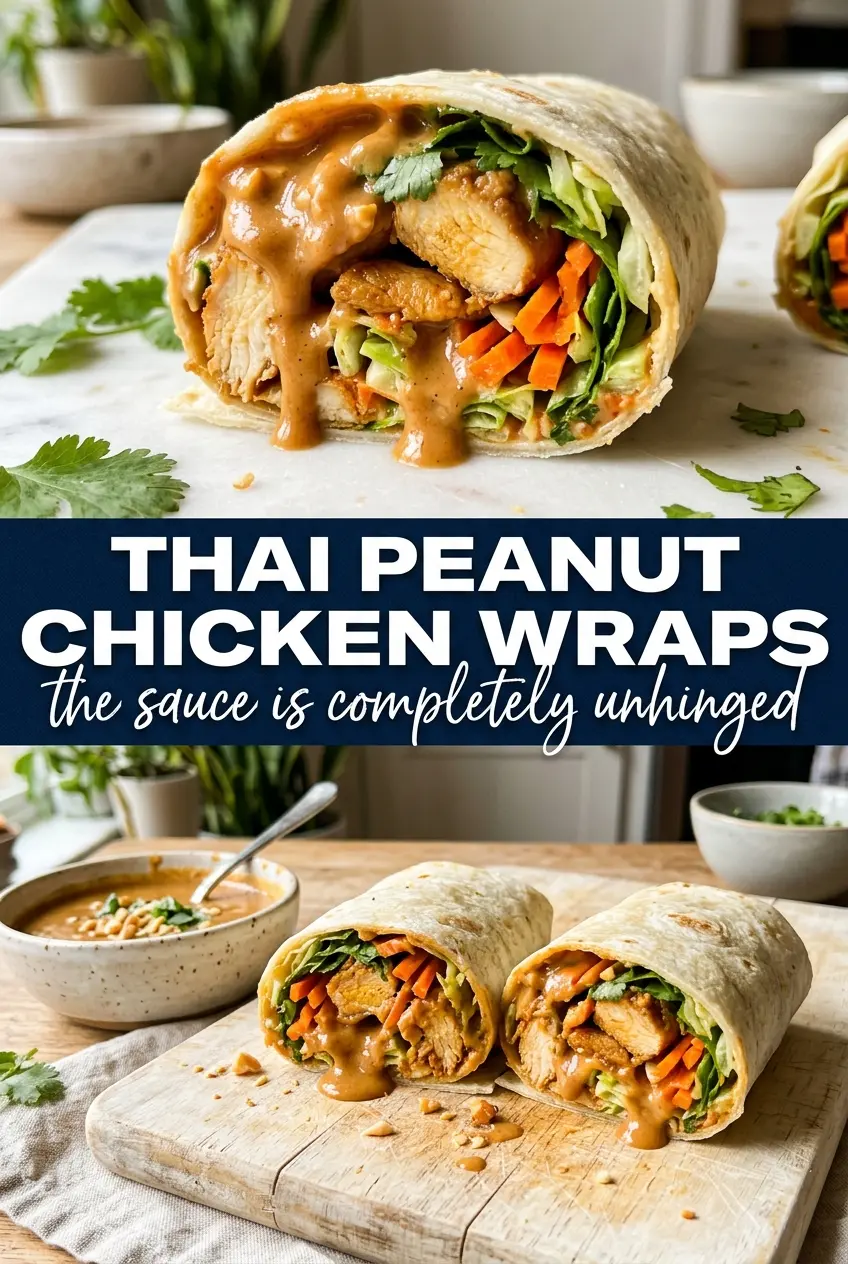
Lay the fillings in a line down the center of the tortilla instead of spreading them edge to edge. Start with a thin layer of sauce, then the cabbage and other vegetables, then the sliced chicken, then another drizzle and the crushed peanuts. Fold the sides in first, then roll tightly from the bottom up. If the tortilla splits, it’s usually too cold or overloaded.
Ways to Bend These Wraps Without Losing the Good Part
Make It Gluten-Free
Use tamari instead of soy sauce and choose a sturdy gluten-free wrap that can handle a generous filling. Gluten-free tortillas are more fragile than flour tortillas, so warm them carefully and keep the filling slightly narrower. The flavor stays the same, but the wrap will be a little less flexible.
Make It Dairy-Free and Naturally It Already Is
This recipe doesn’t need any dairy changes, which is one of the reasons it works so well for mixed groups. The peanut sauce gets its richness from peanut butter and sesame oil instead of cream or cheese. If you’re serving someone with a peanut allergy, this is the one ingredient set that can’t be swapped one-for-one.
Turn It Into a Lower-Carb Bowl
Skip the tortilla and serve everything over shredded cabbage or chopped romaine. You keep the crunch, the sauce, and the chicken, but lose the soft wrap element. This version is especially good if you like extra peanut sauce because the greens catch every bit of it.
Pack It for Lunch Without the Sog
Store the sauce separately and assemble the wraps right before eating. If you need to pack them fully rolled, leave the cucumber out or blot it dry, and tuck a thin layer of cabbage against the tortilla first so it acts like a barrier. That keeps the wrap from going limp by lunchtime.
Storage and Reheating
- Refrigerator: Store the chicken, vegetables, and sauce separately for up to 3 days. Once assembled, the wraps soften quickly.
- Freezer: The cooked chicken freezes well for up to 2 months, but the fresh vegetables and peanut sauce do not freeze with good texture.
- Reheating: Warm the chicken gently in a skillet or microwave until just hot, then assemble with fresh vegetables and sauce. Reheating an already assembled wrap usually makes the tortilla tough on the outside and soggy in the center.
Questions I Get Asked About This Recipe
Thai Peanut Chicken Wraps
Ingredients
Equipment
Method
- Whisk together creamy peanut butter, soy sauce, rice vinegar, honey, lime juice, sesame oil, and minced garlic, adding warm water 1 tablespoon at a time until pourable. Taste and adjust seasoning to balance sweet, tangy, and salty notes.
- Toss boneless skinless chicken breasts with soy sauce, sesame oil, and garlic powder until evenly coated. Cook in a skillet over medium-high heat for 5-6 minutes per side until golden and cooked through.
- Rest the chicken off the heat, then slice thin so it’s ready to layer in the wraps.
- Warm the flour tortillas until pliable so they fold without cracking.
- Spread 2 tablespoons peanut sauce across the center of each tortilla. Layer purple cabbage, red bell pepper, shredded carrots, cucumber, sliced chicken, and fresh cilantro.
- Drizzle additional peanut sauce over the filling, add crushed peanuts, roll tightly, and slice diagonally. Serve with extra peanut sauce for dipping.