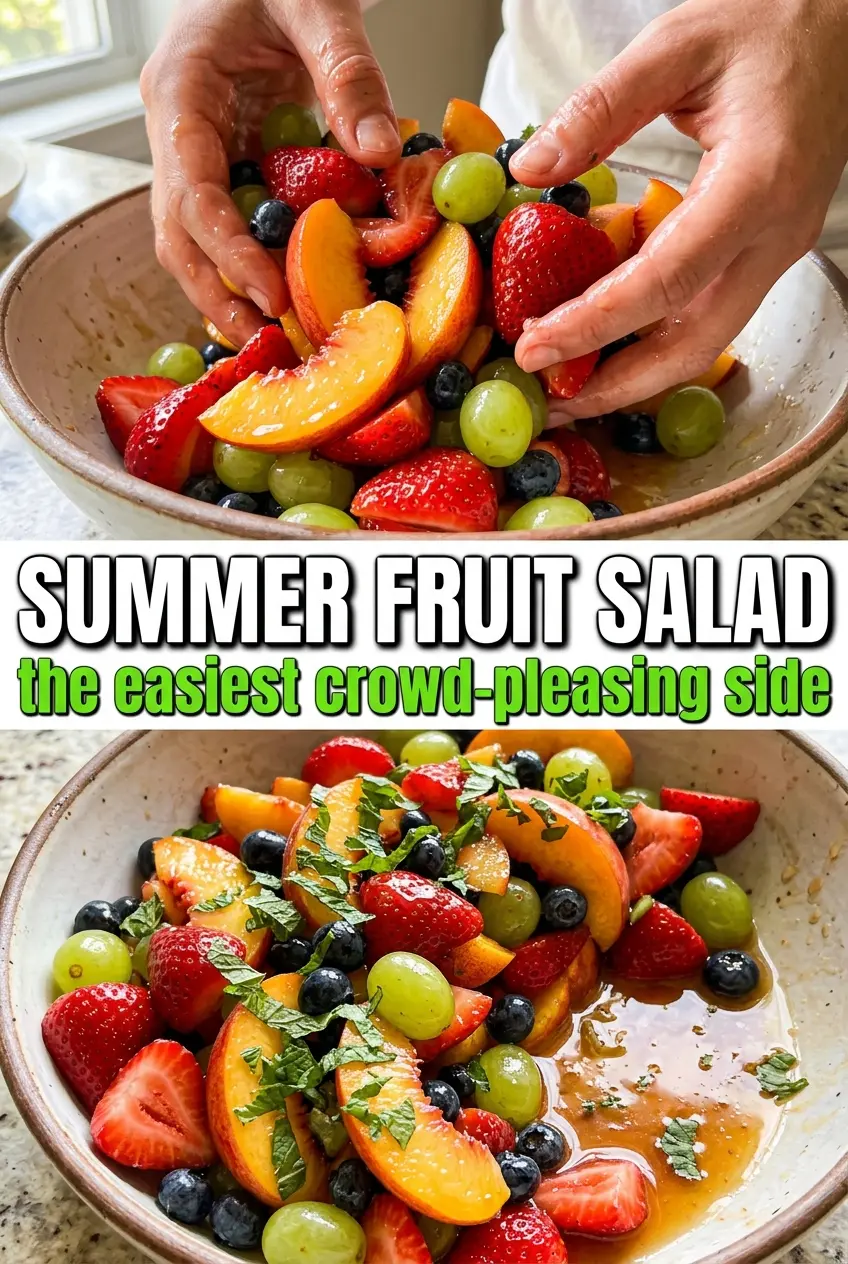
Juicy summer fruit salad hits the bowl with the kind of brightness that makes people hover near the serving spoon. The best versions aren’t muddy or overly sweet; they taste clean, cold, and just polished enough to make mixed fruit feel like a proper dish instead of a last-minute pile of odds and ends. This one stays lively because the fruit is cut to hold its shape, then tossed with a honey-lime dressing that clings lightly instead of pooling at the bottom.
The trick is balance. Watermelon and strawberries bring sweetness and a lot of juice, pineapple adds acidity, and the lime keeps the whole bowl from tasting flat. A short chill gives the fruit time to pick up the dressing without turning the berries soft. Mint goes on at the end so it stays fragrant and fresh instead of fading into the bowl.
Below, I’ve included the small details that keep this salad crisp and vibrant, plus a few smart ways to adapt it for whatever fruit you have on hand.
The honey-lime dressing made the fruit taste brighter without drowning it, and after 20 minutes in the fridge the whole bowl was perfectly chilled. Even the watermelon stayed crisp.
Save this honey-lime summer fruit salad for potlucks, cookouts, and any spread that needs a cold, colorful side dish.
The Part That Keeps Fruit Salad Crisp Instead of Watery
Most fruit salad goes soft because the dressing gets added too early or the fruit sits around after it’s cut. Once strawberries, watermelon, and peaches are sliced, they start releasing juice right away. That’s not a problem if you give the salad a short chill and serve it soon after, but it does mean the order matters.
The other thing that helps here is using fruit with different textures. Firm cubes of watermelon, juicy berries, and slightly sturdier pineapple create contrast, so the bowl doesn’t turn into one-note mush. The honey-lime dressing should coat the fruit lightly, not collect at the bottom; if it looks thick or sticky, whisk in a few drops more lime juice until it loosens.
- Cut size matters — Keep the watermelon, pineapple, and peaches in bite-size pieces so they chill evenly and don’t crush the softer berries when you toss everything together.
- Ripe fruit, not overripe fruit — The salad tastes best when the fruit is sweet but still firm. Overripe peaches or mushy strawberries will collapse once the dressing hits them.
- The chill is part of the recipe — Those 20 minutes in the fridge let the lime and honey settle into the fruit without drawing out too much extra juice.
- Mint belongs at the end — Add it right before serving so it stays bright and aromatic instead of turning dark and tired in the bowl.
What Each Fruit Is Doing in the Bowl
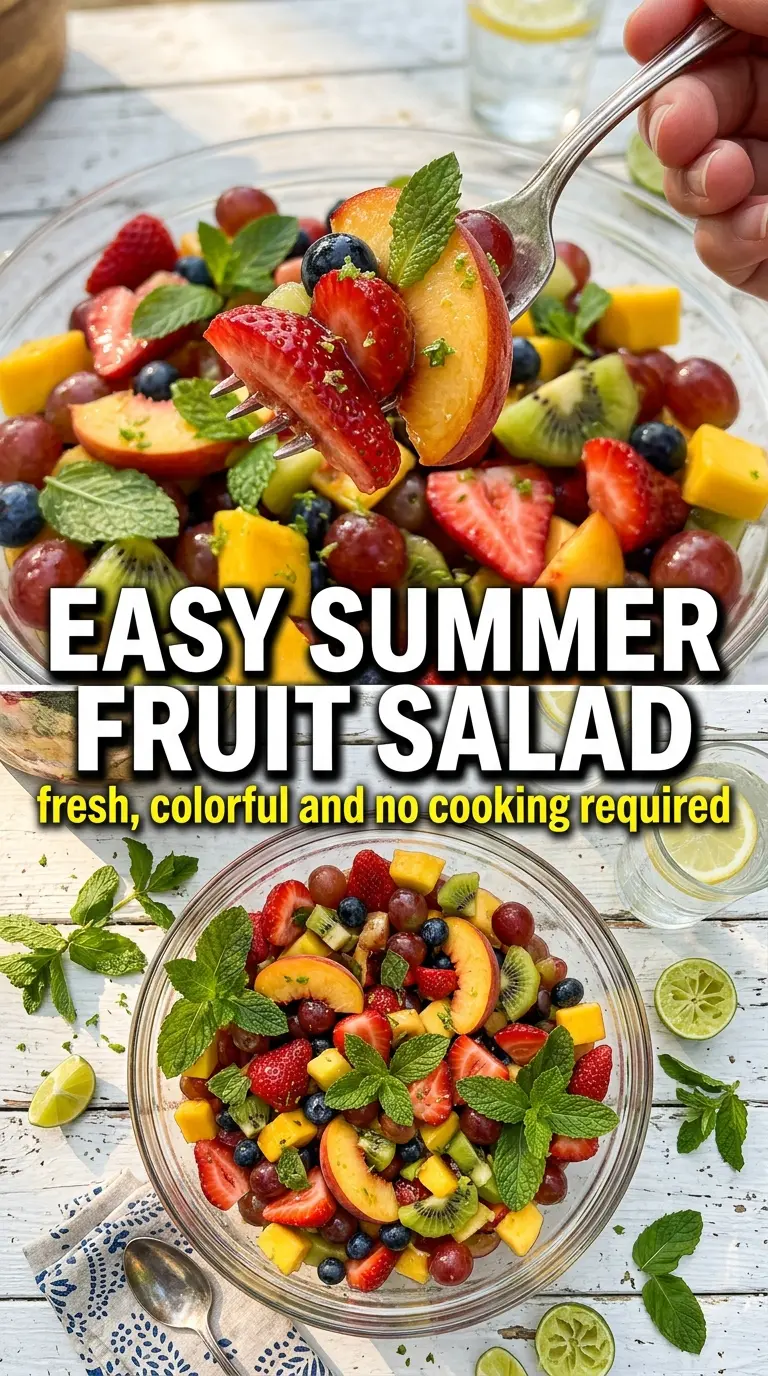
The fruit list here isn’t random. Each piece brings something different, and that’s what keeps the salad from tasting flat. You want a mix of juicy, tart, sweet, and firm so every bite changes a little.
- Watermelon — Adds cool, juicy bulk and makes the salad feel abundant. Choose a firm melon so it doesn’t melt into the bowl.
- Strawberries and raspberries — These bring berry sweetness and a little tart edge. Raspberries are delicate, so fold them in gently at the end to keep them intact.
- Pineapple — This is the bright, tangy anchor. Fresh pineapple tastes sharper and cleaner than canned, and that acidity helps wake up the whole salad.
- Kiwi and grapes — Kiwi adds a soft tang, while grapes give you little crisp pops between all the juicy fruit. Both hold up well in the fridge.
- Honey and lime — Honey rounds out the tart fruit, and lime keeps the dressing from tasting syrupy. If your fruit is very sweet, use a little more lime; if it’s tart, add a touch more honey.
- Mint — Fresh mint is worth using here. Dried mint won’t give you the same cool finish or aroma.
How to Toss the Fruit Without Bruising It
Build the Bowl in the Right Order
Start with the sturdier fruit: watermelon, pineapple, grapes, and sliced kiwi. Add strawberries next, then raspberries last so they don’t break down under the weight of everything else. A wide bowl gives you room to fold instead of stirring aggressively, and that matters because rough mixing turns the berries to juice.
Whisk the Dressing Until It Looks Thin and Glossy
Honey and lime juice need a few good whisk strokes to fully combine. You’re looking for a dressing that looks smooth and slightly loose, not sticky or separated. If the honey clings to the whisk and won’t spread, the lime juice is too cold or the honey is too thick; let it sit for a minute, then whisk again.
Fold, Don’t Stir
Pour the dressing over the fruit and use a big spoon or spatula to lift and turn the fruit from the bottom of the bowl. Stop as soon as everything looks lightly coated. The goal is a glossy sheen on the fruit, not a puddle of syrup at the bottom.
Chill Briefly, Then Garnish
Give the salad 20 minutes in the fridge so the fruit is cold and the flavors settle together. Any longer than that and the softer berries start to weep. Add the mint right before serving, when the bowl is already chilled and ready to go.
How to Adapt This for What’s in Your Fridge
Make It Dairy-Free and Naturally Vegan
This salad is already dairy-free and vegan as written, which makes it a good default for mixed crowds. Keep the honey if that fits your table, or swap in maple syrup for a fully vegan dressing with a slightly deeper sweetness and less floral finish.
Swap the Fruit Based on Season
Peaches, nectarines, cherries, and mango all work well here if they’re ripe and firm. Keep the total amount about the same and swap in fruit with a similar texture so the bowl still has contrast instead of turning all soft at once.
Use Maple Syrup Instead of Honey
Maple syrup gives the dressing a rounder, less floral sweetness. Use the same amount, then taste after tossing because maple can read a little stronger than honey once it hits cold fruit.
Storage and Reheating
- Refrigerator: Best the day it’s made, but it will keep for up to 2 days. The fruit softens and releases more juice as it sits.
- Freezer: Don’t freeze this salad. The fruit breaks down into a watery, mushy texture when thawed.
- Reheating: No reheating needed. Serve it straight from the fridge, and give it one gentle toss before bringing it to the table if any juice has settled at the bottom.