Strawberry shortcake tiramisu lands in that sweet spot between light and indulgent: plush mascarpone cream, strawberries that turn juicy without getting mushy, and ladyfingers that soften just enough to slice cleanly. The contrast is what makes people go back for a second spoonful. It tastes familiar in the best way, but the layered texture gives it a little more polish than a standard no-bake dessert.
The trick is keeping each part distinct. The mascarpone filling stays smooth because the cream is whipped separately and folded in, which keeps the mixture from turning dense. The strawberries get a short sugar rest so their juices become part of the dessert instead of making the layers watery, and the ladyfingers only need a quick dip in the coffee-strawberry mixture. Too long in the liquid and they collapse before the dessert even has time to chill.
Below, you’ll find the small details that keep the layers neat, plus a few swaps if you want to lean more strawberry shortcake or more classic tiramisu. The final garnish of dark chocolate pulls the whole thing together without overpowering the fruit.
The mascarpone layer stayed fluffy even after chilling, and the strawberries gave off just enough juice to soak into the ladyfingers without turning the whole pan soggy. I served it after dinner and there wasn’t a crumb left.
Layer this Strawberry Shortcake Tiramisu on Pinterest for the nights when you want a make-ahead dessert with clean slices and fresh berry flavor.
The Reason the Layers Stay Clean Instead of Sliding
Strawberry tiramisu goes wrong when the ladyfingers drink too much liquid or the cream is too loose to hold the fruit in place. This version avoids both problems by using a quick dip instead of a soak and by building a mascarpone filling that’s thick enough to support the berries. The dessert needs structure first, then softness. That order matters.
The strawberry juices also pull their weight here. A short rest with sugar gives you a syrupy fruit layer that spreads easily and perfumes the whole pan without flooding it. If your strawberries are very ripe, you may need a minute less resting time; if they’re pale and firm, give them the full 10 minutes so they release enough juice to matter.
- Ladyfingers — These need to be crisp enough to hold their shape during assembly. Soft or stale ladyfingers absorb liquid unevenly and can turn patchy, so use fresh ones if you can.
- Mascarpone — This is the backbone of the filling. Cream cheese will work in a pinch, but it gives a tangier, heavier result and won’t taste quite as close to classic tiramisu.
- Heavy cream — Whipping this separately gives the dessert its lift. Don’t skip the stiff peaks; underwhipped cream makes the layers slump after chilling.
- Strawberry liqueur or jam — Liqueur gives a cleaner, brighter finish, while jam makes the coffee mixture a little thicker and sweeter. If you use jam, whisk it hard into the cooled coffee so there are no clumps.
What Each Layer Is Doing in the Bowl
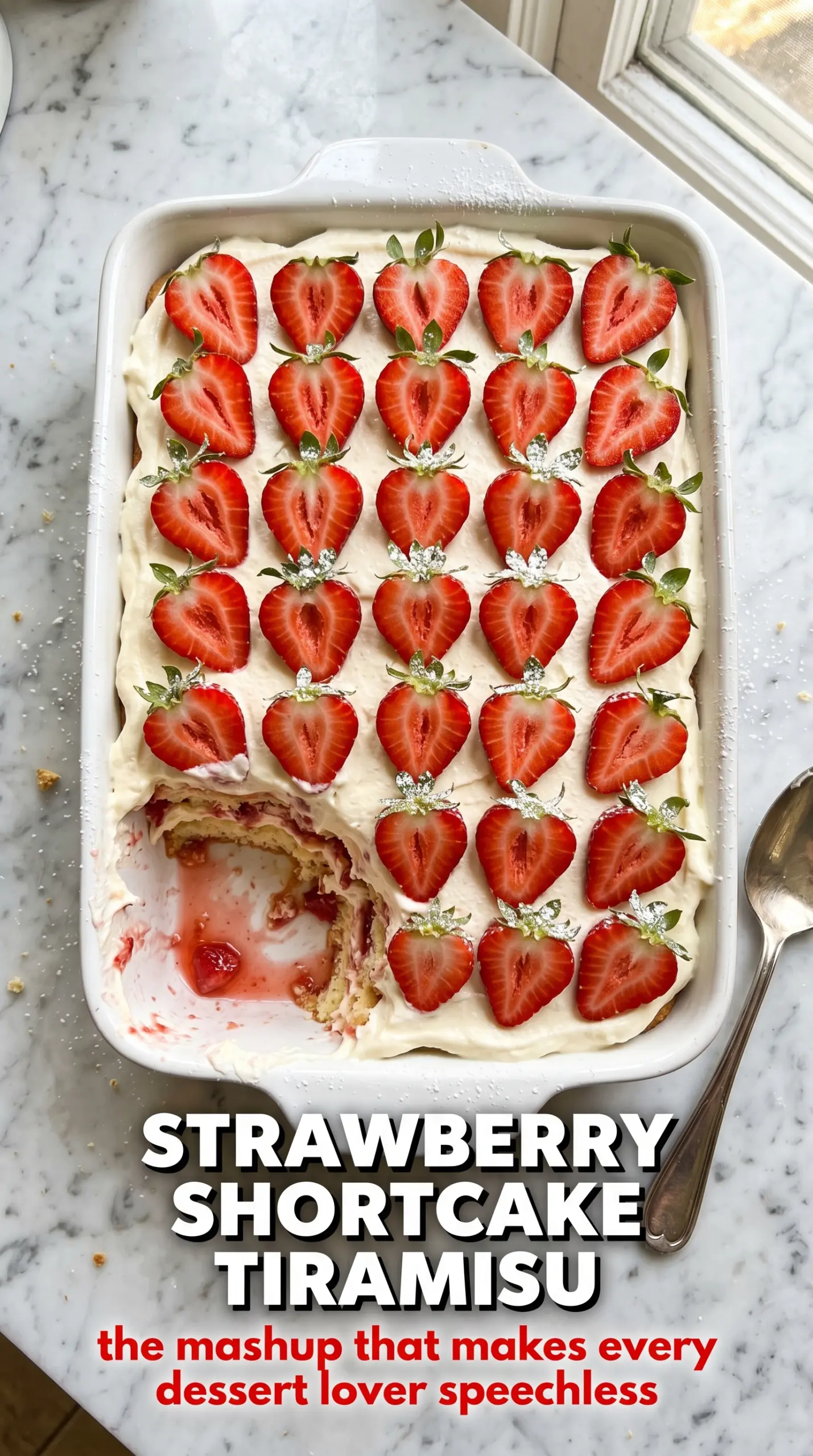
The ingredient list is short, which means each part has to earn its place. There isn’t much room to hide weak fruit, watery dairy, or an overdone soak. Once you understand what each layer is doing, the whole dessert gets easier to control.
- Mascarpone — Room temperature matters here. Cold mascarpone can stay grainy even after mixing, while softened mascarpone turns smooth fast and blends cleanly with the whipped cream.
- Powdered sugar — It dissolves smoothly into the mascarpone and keeps the filling silky. Granulated sugar can leave a faint grit unless you beat it much longer.
- Fresh strawberries — Slice them evenly so the layers stay neat and every bite gets fruit. If your berries are large and especially juicy, pat the slices lightly before layering so the dessert doesn’t weep.
- Cooled coffee — It brings the tiramisu note that keeps this from tasting like a plain berry trifle. Use strong coffee; weak coffee just gets lost under the fruit and cream.
- Dark chocolate — This is the finishing contrast. A little bitterness sharpens the sweetness and makes the whole thing taste more finished.
Building the Dessert So the Slices Hold
Whipping the Cream and Mascarpone Base
Beat the mascarpone and powdered sugar until the mixture is completely smooth, then whip the cream and vanilla to stiff peaks before folding it in. That separate whipping step keeps the filling airy instead of pasty. If the mascarpone looks lumpy, it was probably too cold; let it sit a few more minutes before mixing rather than overbeating it into a broken mess.
Turning the Strawberries into a Juicy Layer
Toss the sliced strawberries with sugar and let them sit until you see glossy syrup pooling in the bowl. That usually takes about 10 minutes, and the fruit should still hold its shape. If you let them sit much longer, they can slump too much and make the dessert watery, so move on once the juices have formed.
Assembling the Coffee-Soaked Base
Combine the cooled coffee with the strawberry liqueur or jam in a shallow dish, then dip each ladyfinger quickly and lay it into the pan in a single layer. The dip should be fast enough that the cookies stay intact; a brief dunk is enough because they keep softening as the dessert chills. If the ladyfingers feel mushy in your hands, they’ve been in the liquid too long.
Layering and Chilling for Clean Cuts
Spread half the mascarpone mixture over the ladyfingers, add half the strawberries and their juices, then repeat the layers. Cover the pan and chill for at least 4 hours so the filling sets and the flavors meld. Cutting too early is the main mistake here; the layers need time to settle or you’ll lose that neat cross-section when you serve it.
How to Adjust It Without Losing the Good Parts
Make it alcohol-free
Skip the strawberry liqueur and use strawberry jam or a little extra brewed coffee instead. Jam adds sweetness and body, while extra coffee keeps the tiramisu note stronger; either way, the dessert still tastes layered and intentional.
Swap in cream cheese for mascarpone
Use full-fat cream cheese if mascarpone isn’t available, but beat it well with the powdered sugar first and expect a tangier, denser filling. The texture will still slice well, but it won’t taste as plush or as classic.
Make it gluten-free
Use certified gluten-free ladyfingers, which are easier to find than people expect. The assembly stays the same, but you still need to dip them briefly because many gluten-free versions soften a little faster than standard ones.
Storage and Reheating
- Refrigerator: Store covered for up to 3 days. The ladyfingers soften more each day, but the dessert still slices nicely on day two.
- Freezer: It can be frozen, but the strawberries will lose some of their fresh texture. Freeze slices tightly wrapped, then thaw in the refrigerator overnight for the best result.
- Reheating: No reheating needed. Serve straight from the fridge so the filling stays set; letting it sit too long at room temperature makes the cream loose and the layers start to slide.
Questions I Get Asked About This Recipe
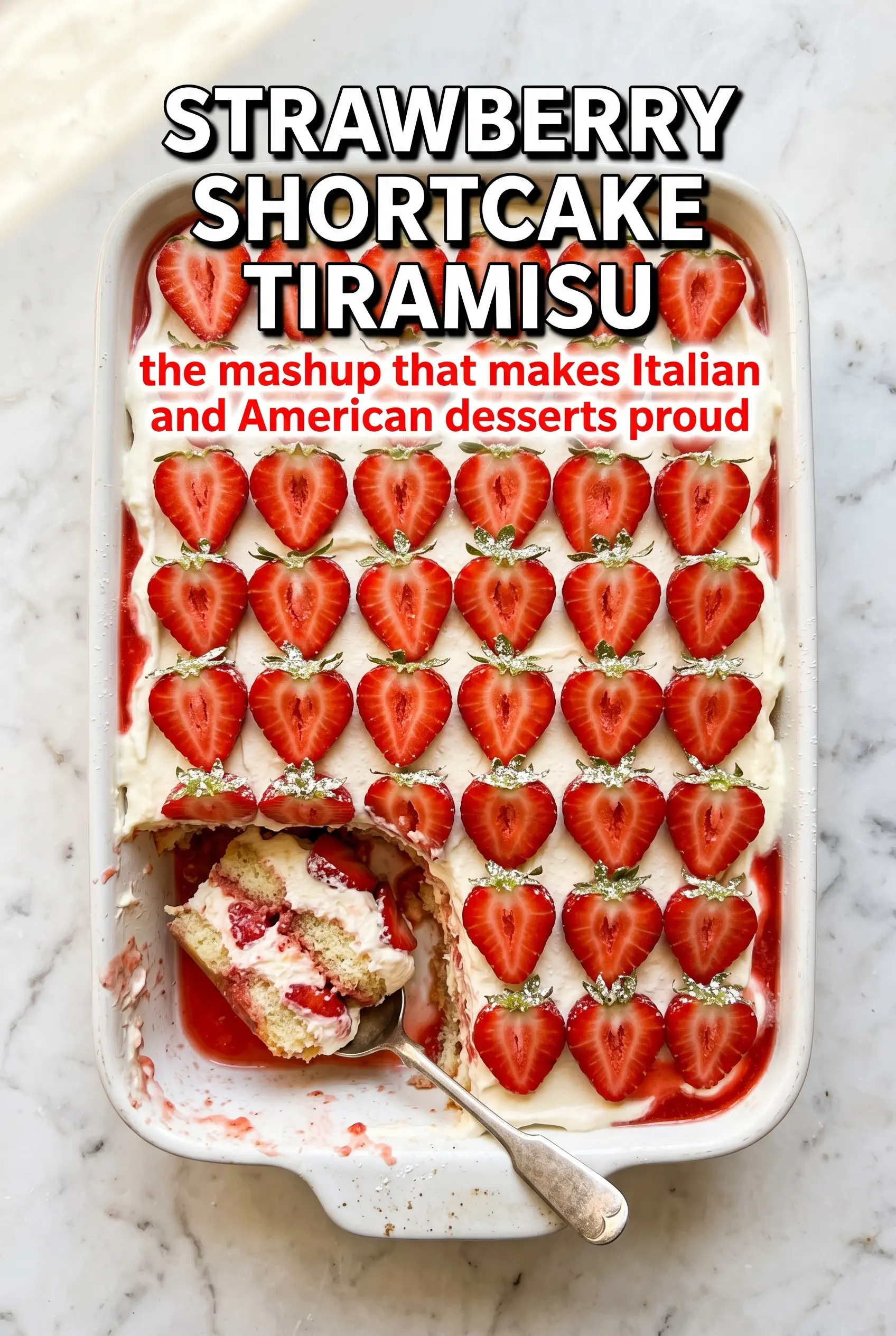
Strawberry Shortcake Tiramisu
Ingredients
Equipment
Method
- Beat the mascarpone cheese with the powdered sugar until smooth and no lumps remain, scraping the bowl as needed.
- Whip the heavy cream with the vanilla extract until stiff peaks form.
- Fold the whipped cream into the mascarpone mixture until evenly combined and fluffy.
- Toss the sliced fresh strawberries with the sugar and let sit for 10 minutes until they release juices.
- Combine the cooled strong brewed coffee with the strawberry liqueur or jam in a shallow dish.
- Dip the ladyfinger cookies briefly into the coffee mixture and arrange them in a single layer in the 9x13 baking dish.
- Spread half the mascarpone cream over the ladyfingers, then top with half the strawberries and their juices.
- Repeat with another layer of dipped ladyfinger cookies, the remaining mascarpone cream, and the rest of the strawberries.
- Cover and refrigerate for at least 4 hours to set the layers and meld the flavors.
- Before serving, top with shredded dark chocolate for a dark finish and a creamy contrast.