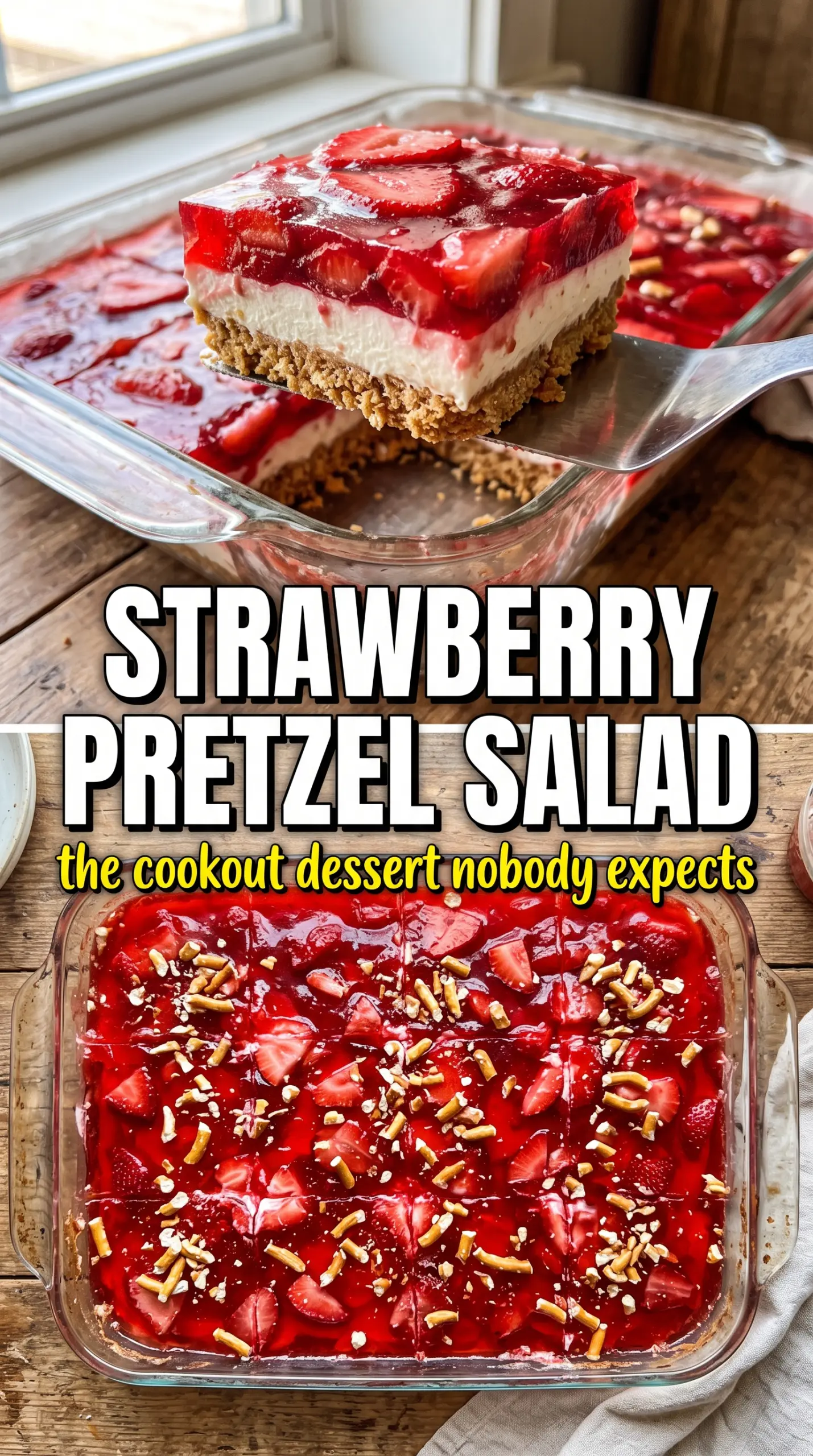
Sweet, salty, creamy, and cold, strawberry pretzel salad earns its spot because every layer pulls its own weight. The crust bakes up crisp and a little toasty, the cream cheese layer stays light but rich, and the strawberry Jello settles into a glossy top that slices cleanly when it’s chilled long enough. It’s the kind of dessert that disappears fast at potlucks because the contrast keeps every bite interesting.
The trick is treating each layer on its own terms. The pretzel crust needs to cool completely before the cream cheese goes on, or the butter softens the filling and turns the base soggy. The Jello also has to be just slightly thickened before it’s poured; if it’s still watery, the berries float and the top layer won’t set into neat slices. Fresh strawberries give this version a brighter, fresher flavor than using frozen fruit, and halving them helps the whole pan cut cleanly later.
Below, I’ll walk through the one timing detail that matters most, the ingredient swap that actually works if you need it, and a few fixes for the common problems that make this dessert slide apart.
The crust stayed crisp under the cream cheese layer, and the Jello set up beautifully once I waited for it to thicken a little first. The strawberry slices looked gorgeous when I cut into it the next day.
Love the salty crust and strawberry layers? Save this Strawberry Pretzel Salad for the potlucks where you need a chilled dessert that slices clean and tastes even better the next day.
The Reason the Crust Stays Crisp Under the Filling
The crust in strawberry pretzel salad gets soggy when the cream layer goes on before it’s fully cool. That’s the mistake that ruins the texture. A warm crust melts the cream cheese layer at the bottom, and once that happens, the pretzels lose their bite and the whole base turns pasty instead of crisp.
Baking the pretzel mixture for just 10 minutes sets the butter and sugar into a sturdy shell without overbrowning the pretzels. You want the crust to look dry on top and smell toasted, then you need to give it time to cool all the way to room temperature. If you rush it, the dessert still tastes fine, but the layered look falls apart when you cut it.
What Each Layer Is Actually Doing Here
- Pretzels — Coarsely crushed pretzels give you the salty crunch that makes this dessert work. Don’t crush them into dust; you want small chunks that bake into a real crust instead of a sandy base.
- Butter — The butter binds the crust and helps it set into one sliceable layer. Melted butter is exactly right here, and salted or unsalted both work because the pretzels bring plenty of salt.
- Cream cheese — This is the middle layer that keeps the dessert from feeling one-note sweet. Full-fat cream cheese gives the smoothest texture and the cleanest tang; low-fat versions tend to loosen as they chill.
- Whipped topping — This lightens the cream cheese layer so it spreads easily and doesn’t turn dense. Homemade whipped cream can work, but it’s softer and the dessert won’t hold as long in the fridge.
- Fresh strawberries — Fresh berries matter because they hold their shape and bring brightness to the set Jello. Frozen strawberries release too much liquid and can make the top layer weep.
- Strawberry Jello — The boxed Jello gives the glossy top layer and the set that carries the fruit. It’s not just for color; it’s what locks the strawberries in place once chilled.
Building the Layers So They Slice Cleanly
Pressing and Baking the Crust
Mix the crushed pretzels, melted butter, and sugar until every crumb looks evenly coated, then press the mixture firmly into the pan. An even, packed layer matters more than extra sugar or butter. Bake it until it smells toasty and the edges darken a shade, then cool it completely before you move on. If the crust is even slightly warm when the filling hits it, the bottom softens and the pan won’t slice neatly.
Whipping the Cream Cheese Layer Smooth
Beat the softened cream cheese with sugar until it looks completely smooth and no lumps remain. If the cream cheese is cold, you’ll chase little bits around the bowl and the layer won’t spread cleanly. Fold in the whipped topping gently so the mixture stays airy, then spread it all the way to the edges of the crust and seal it against the pan. That edge seal matters because it keeps the Jello from slipping through to the crust.
Waiting for the Jello to Thicken
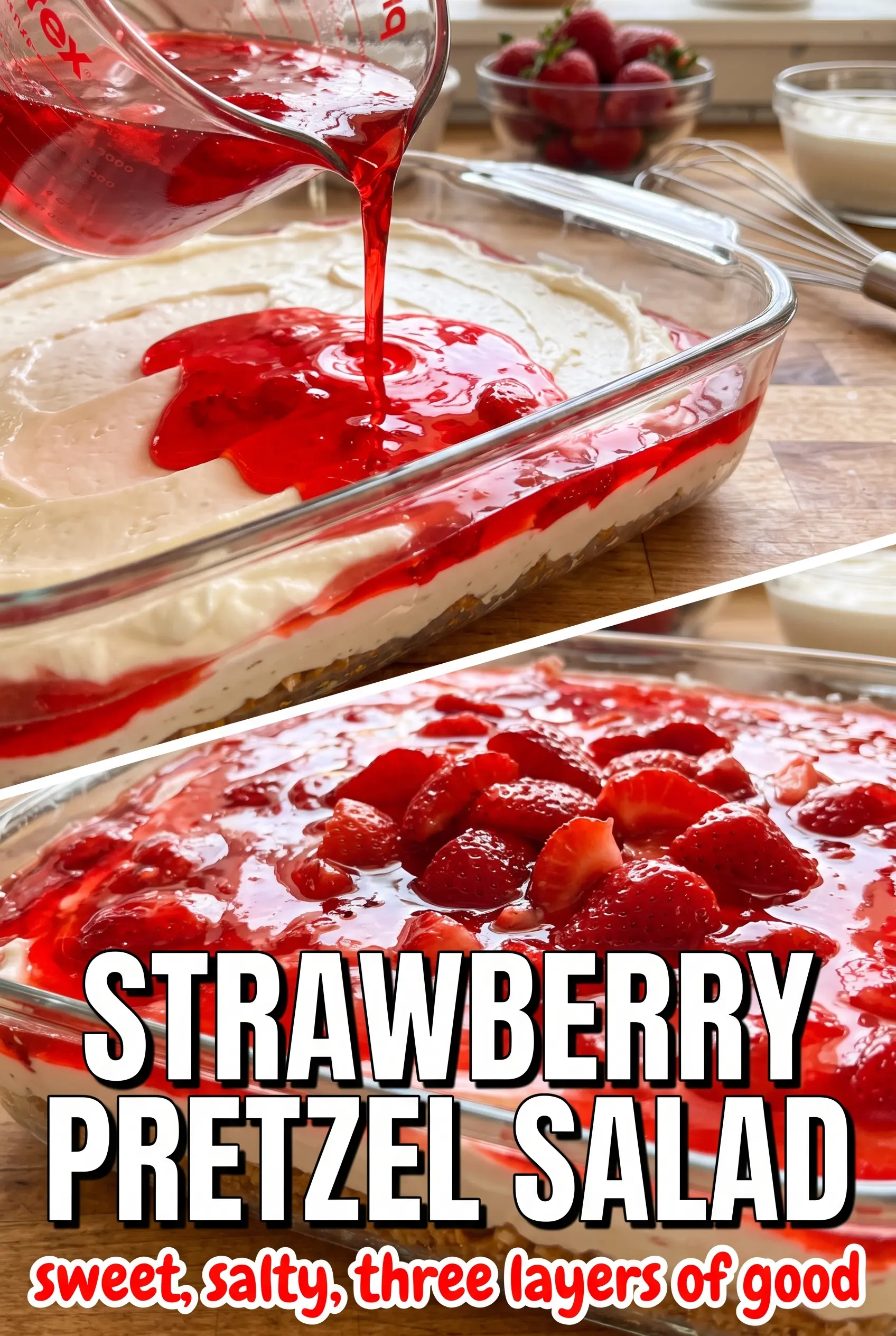
Dissolve the Jello in boiling water first, then stir in the cold water and let it chill until it starts to thicken but still pours. This is the timing that saves the dessert. If it’s too liquid, the strawberries drift and the top layer takes forever to set. If it gets too firm, it won’t spread around the berries, so check it often and pour when it looks like loose syrup rather than water.
Adding the Strawberries and Finishing the Pan
Arrange the strawberry halves over the cream layer before pouring in the Jello. The berries should sit snugly across the top, not float around. Pour slowly so you don’t break the cream layer underneath, then chill the pan long enough for the Jello to set fully. Four hours is the minimum; overnight gives you the cleanest slices and the most stable layers.
How to Adapt It Without Losing the Texture
Gluten-Free Version
Use certified gluten-free pretzels in the crust and keep the rest of the recipe the same. The texture stays close to the original as long as the pretzels are still coarsely crushed and baked until set. Some gluten-free pretzels are a little more fragile, so press the crust firmly into the pan before baking.
Using Whipped Cream Instead of Whipped Topping
Fresh whipped cream gives a softer, less stable cream layer and the dessert won’t hold as long in the fridge. If you use it, whip it to medium peaks and fold it in just before spreading, then serve the dessert the same day for the best structure. The flavor is a little more homemade, but the slices won’t be quite as tidy.
Mixed Berry Strawberry Salad
Swap half the strawberries for sliced raspberries or blueberries if you want a brighter berry flavor. Keep the total fruit amount about the same so the Jello layer still covers everything evenly. Softer berries can bleed a little more color, so stick with firmer fruit if you want sharp-looking slices.
Storage and Reheating
- Refrigerator: Keep covered and chilled for up to 3 days. The crust softens a little as it sits, but the flavor stays great.
- Freezer: I don’t recommend freezing this dessert. The cream layer and Jello both change texture when thawed, and the strawberries can turn watery.
- Reheating: Not needed. Serve it straight from the fridge for the cleanest slices. If it’s too cold and firm to cut, let it sit at room temperature for 10 minutes, not longer, or the Jello starts to slump.
Questions I Get Asked About This Recipe
Strawberry Pretzel Salad
Ingredients
Equipment
Method
- Preheat the oven to 350°F. Mix the crushed pretzels, melted butter, and granulated sugar, then press into a 9x13 pan.
- Bake the crust for 10 minutes. Let it cool completely until no longer warm, and keep it fully cool before layering (visual cue: crust feels firm and dry).
- Beat the softened cream cheese and granulated sugar until smooth. Fold in the whipped topping until evenly combined.
- Spread the cream cheese mixture over the completely cooled pretzel crust. Refrigerate for 30 minutes (visual cue: layer firms up slightly but stays creamy).
- Dissolve the strawberry-flavored Jello in the 2 cups boiling water. Stir until fully dissolved, with no powdery spots.
- Stir in the 1.5 cups cold water. Refrigerate until just beginning to thicken but still pourable, about 30-40 minutes (visual cue: it coats a spoon and drips slowly).
- Arrange the strawberry halves over the cream cheese layer. Place them in an even layer with cut sides up so they show on top.
- Pour the slightly thickened Jello carefully over the strawberries. Cover the fruit completely without disturbing the layer (visual cue: top becomes a smooth red layer).
- Refrigerate for at least 4 hours or overnight until the Jello is fully set. Cut into squares and serve cold (visual cue: Jello holds shape when sliced).