Dense, tender strawberry pound cake earns its place in the rotation because it slices cleanly, stays moist for days, and still tastes like actual strawberries instead of pink cake. The crumb has that classic pound cake richness, but the fresh puree and diced berries keep it bright and unmistakably fruit-forward. A lemon glaze on top sharpens everything and cuts through the butter so each bite finishes clean.
The trick is balancing moisture without making the batter heavy. Strawberry puree brings flavor and color, but too much liquid can turn the crumb gummy, so it gets paired with sour cream for structure and softness. The diced strawberries go in at the end and stay in small pockets instead of disappearing into the batter. That gives you those little bursts of fruit without weighing the loaf down.
Below, you’ll find the part that matters most: how to keep the cake from baking up dense in the wrong way, how to handle the strawberries so they don’t sink, and what to do if you want a tighter crumb or a stronger berry flavor.
The cake was tender all the way through and the strawberry pieces stayed put instead of sinking. That lemon glaze was the perfect finish and gave it a fresh taste.
Save this strawberry pound cake for the day you want a buttery loaf with fresh berry ribbons and a bright lemon glaze.
The Reason This Strawberry Pound Cake Stays Tender Instead of Heavy
Pound cake gets dense fast when the batter is overworked or the fruit adds too much moisture. This version avoids both problems by keeping the mixing method simple and by using sour cream alongside the strawberry puree. The sour cream gives you richness without thinning the batter, and that matters because the cake needs enough body to hold the berries in suspension.
The other key is the order of mixing. Once the flour goes in, the batter only needs enough stirring to disappear. If you beat it hard after that, the cake turns tight and bready instead of tender. The diced strawberries are folded in last so they stay distinct, and that gives you a better slice and a cleaner crumb.
- Butter and sugar — Creaming them until pale and fluffy traps air, which is the lift this cake depends on. Stop as soon as the mixture looks light and looks a little expanded; beating it forever won’t help.
- Sour cream — This keeps the crumb soft for days and adds a slight tang that works with the berries. Plain Greek yogurt can stand in, but use full-fat yogurt so the batter doesn’t loosen too much.
- Fresh strawberry puree — This gives the cake its strawberry flavor throughout the loaf. Frozen strawberries can be used if you cook and cool them first into a thick puree; watery puree will make the center bake up gummy.
- Diced fresh strawberries — These are for texture and bursts of fruit. Pat them dry after dicing, or they can bleed too much juice into the batter.
What Each Ingredient Is Actually Doing in the Batter
- All-purpose flour — This gives the cake its sturdy pound cake structure. Cake flour will make a softer crumb, but it can also make the loaf a little fragile once the berries are folded in.
- Baking powder — Just enough lift keeps the cake from turning brick-like. Don’t add more than the recipe calls for; too much will make the loaf rise and collapse.
- Butter — Softened butter gives that classic rich pound cake texture. If it’s melted, the cake loses the creamed structure and bakes up greasy.
- Lemon juice glaze — The glaze isn’t just for looks. It brightens the sweetness and helps the cake taste less heavy after the first bite.
How to Layer the Batter So the Berries Bake Evenly
Building the Base
Start with a properly creamed butter-and-sugar mixture. It should look pale, fluffy, and slightly increased in volume, not glossy and wet. Add the eggs one at a time and let each one disappear before the next goes in, because rushing that step can make the batter look curdled and that’s where people start overmixing. If the bowl looks split, keep going; it usually comes back together once the flour is added.
Alternating the Dry and Wet Ingredients
Add the flour mixture in stages, alternating with the sour cream and strawberry puree, and always begin and end with flour. That order protects the batter from breaking and keeps the loaf from sinking in the middle. Mix only until the last streaks of flour disappear. Overmixing here is the fastest way to get a tough cake with tunnels.
Folding in the Strawberries
Use a spatula and fold gently so the diced berries stay intact. If the fruit is tossed around too hard, it breaks down and streaks the batter pink in a muddy way instead of giving you clean fruit pockets. A light dusting of flour on the diced strawberries can help them stay suspended if your berries are especially juicy. The batter should look thick enough to hold the pieces in place when it goes into the pan.
Baking to the Right Center
Bake until the top is set, deeply golden, and a toothpick comes out clean or with a few moist crumbs. If you pull it too early, the center can fall as it cools, and pound cake that’s underbaked near the middle will feel damp instead of tender. Let it rest in the pan for 15 minutes before turning it out so the structure has time to set. Turn it out too soon and the loaf can tear.
How to Adapt This Cake When You Want More Berry or Less Dairy
Extra Strawberry Flavor
For a stronger berry flavor, simmer the strawberry puree for a few minutes before using it so some of the water cooks off. That gives you a more concentrated taste without adding extra liquid, which helps the loaf bake up dense in a good way instead of wet in the middle.
Dairy-Free Version
Use a plant-based butter and swap the sour cream for a thick dairy-free yogurt. The texture will still be tender, but the crumb won’t be quite as rich as the original, so don’t skip the glaze if you want the cake to finish with enough brightness.
Gluten-Free Swap
A good 1:1 gluten-free baking blend can work here, but the cake may be a little more delicate when you slice it. Let it cool completely before glazing and cutting, because warm gluten-free loaves tend to crumble more easily than the wheat version.
Storage and Reheating
- Refrigerator: Store covered for up to 4 days. The crumb stays moist, though the glaze may soften into the top of the cake.
- Freezer: Freeze slices tightly wrapped for up to 2 months. Freeze without the glaze if you want the cleanest texture after thawing.
- Reheating: Thaw at room temperature, then warm a slice briefly in the microwave for 10 to 15 seconds. Longer heating dries the butter-rich crumb and makes the strawberries taste muted.
Questions I Get Asked About This Recipe
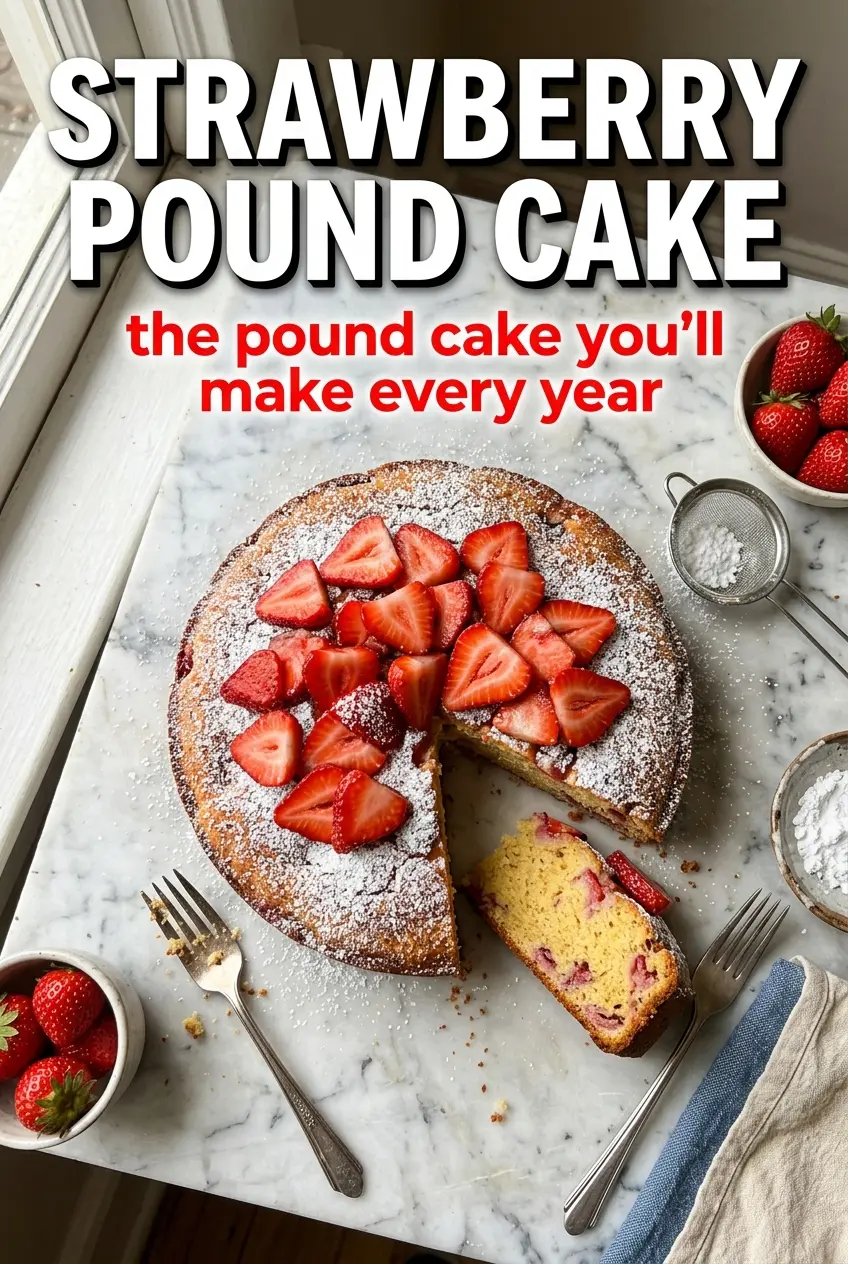
Strawberry Pound Cake
Ingredients
Equipment
Method
- Preheat oven to 325°F and grease a 9x5 inch loaf pan.
- Whisk together all-purpose flour, baking powder, and salt until evenly combined, with no visible lumps.
- Beat butter and granulated sugar until light and fluffy, about 3 minutes, and visibly paler.
- Add eggs one at a time and beat well after each addition until the mixture looks smooth.
- Alternate adding the flour mixture and the sour cream mixed with fresh strawberry puree, beginning and ending with flour, mixing just until incorporated.
- Stir in vanilla extract, then gently fold in fresh strawberries, diced, so the batter keeps streaks and pieces.
- Pour the batter into the prepared loaf pan and smooth the top.
- Bake at 325°F for 50-55 minutes, until a toothpick inserted in the center comes out clean.
- Cool in the pan for 15 minutes, then turn out onto a wire rack to cool completely so the loaf doesn’t steam.
- Whisk powdered sugar with fresh lemon juice and water until smooth and pourable, with no dry pockets.
- Drizzle the glaze over the cooled cake in thin ribbons, then garnish with fresh strawberries for garnish.