Crisp on the outside, marshmallow-soft in the middle, and piled high with whipped cream and strawberries, strawberry pavlova is one of those desserts that looks far more complicated than it is. The meringue bakes into a delicate shell with a little crackle when you cut into it, then the cream and berries soften every bite without weighing it down.
The trick is in the texture management. Superfine sugar dissolves more evenly into the egg whites, which keeps the meringue glossy instead of grainy, and the vinegar plus cornstarch help the center stay tender while the outside dries and crisps. The pavlova also needs a slow cool-down in the oven so it doesn’t collapse or split from a sudden temperature change.
Below, I’m walking through the part that matters most: how to get the meringue tall, stable, and crisp without overbaking it. I’ve also included a few practical swaps and the one timing rule that keeps the cream and strawberries from turning the whole dessert soggy before it reaches the table.
The shell stayed crisp and the center was marshmallowy like it should be. I added the cream and strawberries right before serving and it held up beautifully without getting weepy.
Keep this Strawberry Pavlova handy for a crisp meringue shell, billowy cream, and glossy strawberries that finish the dessert at the table.
The Part Where Pavlova Usually Cracks Too Soon
The biggest mistake with pavlova is rushing the sugar. If the sugar goes in too fast, the egg whites never get a chance to build that dense, stable structure that bakes up crisp outside and soft inside. You want the mixture glossy and thick enough that it holds a defined peak without looking wet or loose.
The second trap is overworking the meringue after the dry ingredients go in. Once the vinegar and cornstarch are folded through, stop as soon as they disappear. Overmixing knocks out the air you just built, and that’s how you end up with a flat shell and a hollow center that’s too fragile to hold the cream.
- Egg whites — Room temperature whites whip to more volume than cold ones, which gives you a lighter pavlova. Any trace of yolk will sabotage the foam, so separate them carefully.
- Superfine sugar — This is worth using if you can get it. It dissolves faster and more completely than regular granulated sugar, which keeps the meringue smooth instead of gritty.
- Vinegar and cornstarch — These two are what keep the center marshmallow-like instead of dry all the way through. Don’t skip them unless you’re willing to lose that classic pavlova texture.
- Heavy cream — Whips into a stable topping that softens the crisp shell just enough. Lower-fat cream won’t hold its shape as well once it sits on the meringue.
- Strawberries — Fresh berries matter here because they bring juice and brightness against the sweet base. If your strawberries are pale, toss them with the honey and let them sit for a few minutes so they release a little syrup.
Building the Meringue, Drying It, and Topping It at the Last Minute
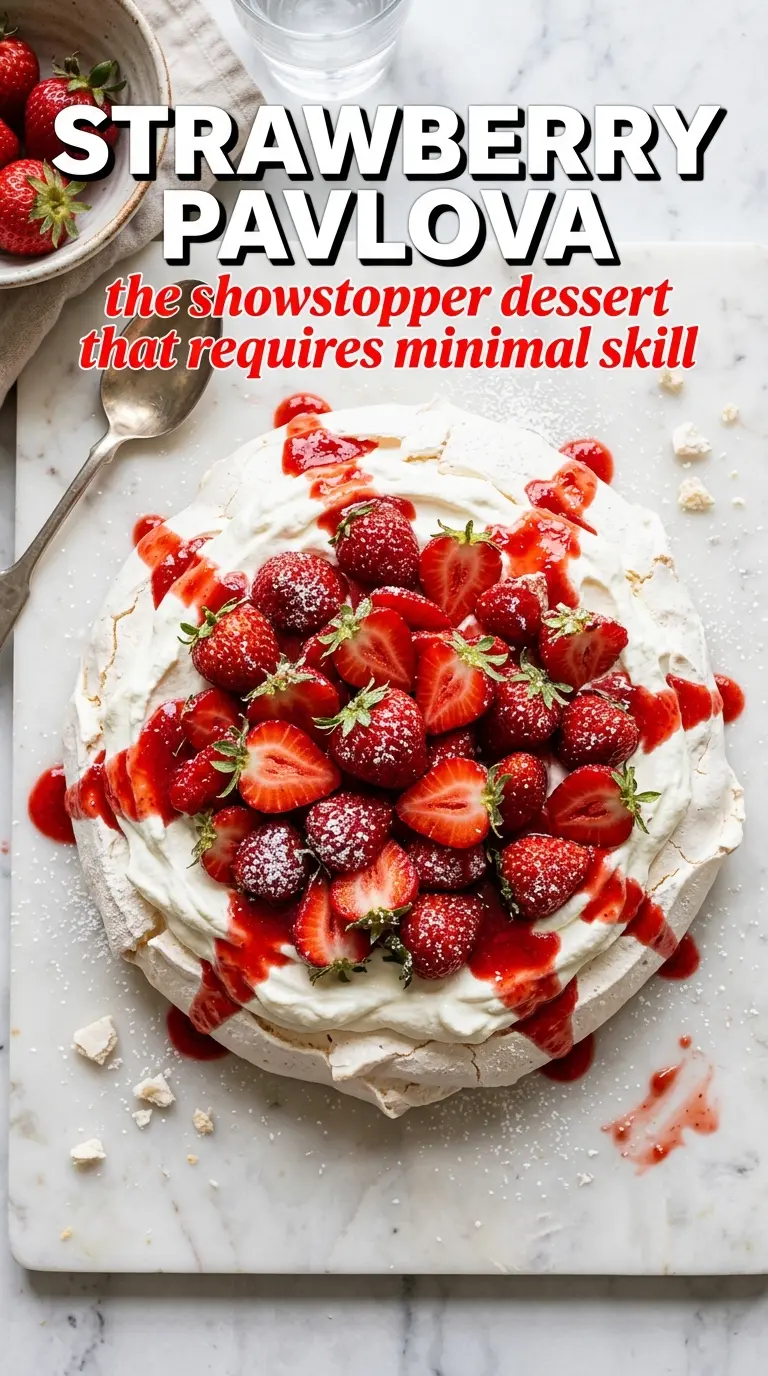
- Egg whites and sugar — Start with clean, dry bowls and beat the whites to soft peaks before adding sugar gradually. The sugar should disappear into the foam, not sit in it, so keep beating until the mixture is thick, shiny, and holds a firm peak when you lift the whisk.
- Folding in the stabilizers — Add the vanilla, vinegar, and cornstarch at the end and fold just until combined. If you stir aggressively, the meringue deflates and loses the lift that makes the shell crisp.
- Shaping the nest — Spread the meringue into an 8-inch circle with a slight dip in the center. That indent gives the cream a place to sit, and it helps the whole dessert stay balanced when you slice it.
- Baking and cooling — Bake until the outside is pale golden and dry to the touch, then turn off the oven and let it cool inside. Pulling it out too early or cooling it too fast is the fastest way to get cracks and collapse.
- Finishing with cream and berries — Whip the cream to stiff peaks, spoon it on right before serving, and top with the honeyed strawberries and mint. Once the cream hits the meringue, the clock starts, so assemble it at the table if you want the shell to stay crisp.
Three Ways to Adjust Strawberry Pavlova Without Breaking It
Dairy-Free Topping
Swap the whipped cream for a chilled coconut whipping cream or another stable dairy-free whip. You’ll lose a little of the classic tangy richness, but the dessert still keeps its light contrast if you serve it cold and pipe or spoon the topping on at the last minute.
Mixed Berry Pavlova
Use a mix of strawberries, raspberries, and blueberries if that’s what you have. Keep the berries fresh and dry, and don’t overload the top with extra juice or the meringue will start to soften before serving.
Lower-Sugar Version
You can reduce the powdered sugar in the cream a little, but don’t cut the meringue sugar much. The sugar isn’t just for sweetness here; it’s part of the structure, and reducing it too far gives you a fragile shell that weeps or collapses.
Storage and Reheating
- Refrigerator: Store the baked meringue shell, uncovered or loosely tented, at room temperature for up to 2 days. Once assembled, it’s best eaten within a few hours because the cream softens the crust.
- Freezer: The baked shell can be frozen, well wrapped, for up to 1 month, but the finished dessert doesn’t freeze well. Thaw the shell at room temperature before topping it.
- Reheating: Don’t reheat an assembled pavlova. If the shell has softened, a short low oven session can help dry it out again, but only before adding cream or fruit.
Answers to the Questions Worth Asking
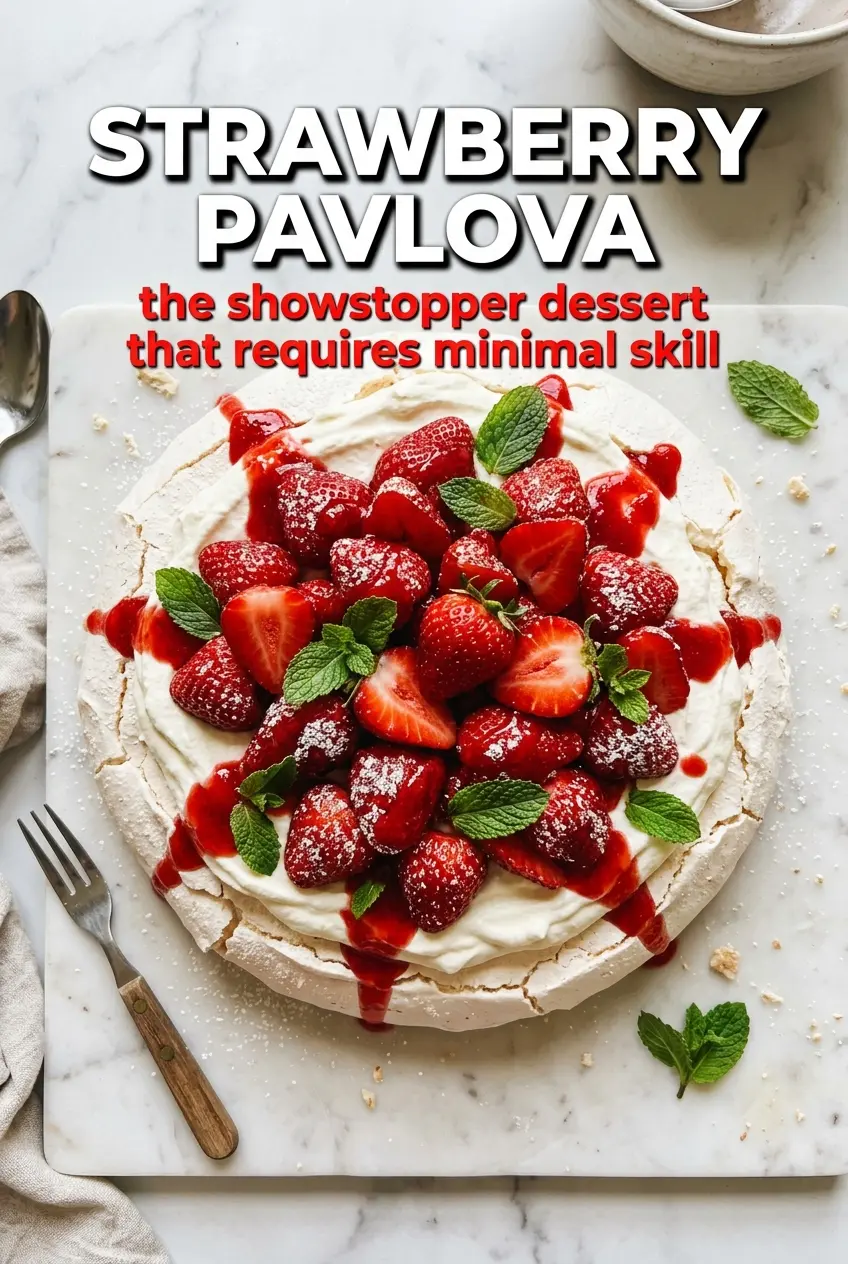
Strawberry Pavlova
Ingredients
Equipment
Method
- Preheat oven to 300°F and line a sheet pan with parchment paper. This prevents sticking and helps the nest lift cleanly.
- Beat egg whites until soft peaks form. The foam should look airy and hold gentle curves.
- Gradually add superfine granulated sugar while beating until stiff, glossy peaks form. Rub a little between fingers—no grainy feel should remain.
- Fold in vanilla, white vinegar, and cornstarch. Fold gently until evenly streaked, then stop.
- Spread the meringue onto the parchment in a circle about 8 inches across, using the back of a spoon to create a slight indent in the center. This makes room for the toppings.
- Bake for 60 minutes until pale golden and crisp. The shell should feel dry and sound lightly crisp when tapped.
- Turn off the oven and let the pavlova cool completely inside for about 30 minutes. The gradual cooling helps prevent cracking.
- Transfer the baked pavlova to a serving plate. Move carefully so the crisp edge stays intact.
- Whip heavy cream with powdered sugar and vanilla until stiff peaks form. The cream should hold tall peaks that don’t slump.
- Toss sliced strawberries with honey. Let them sit briefly so they become glossy and lightly syrupy.
- Top the pavlova with whipped cream, then spoon on the strawberries. Finish with fresh mint garnish just before serving.