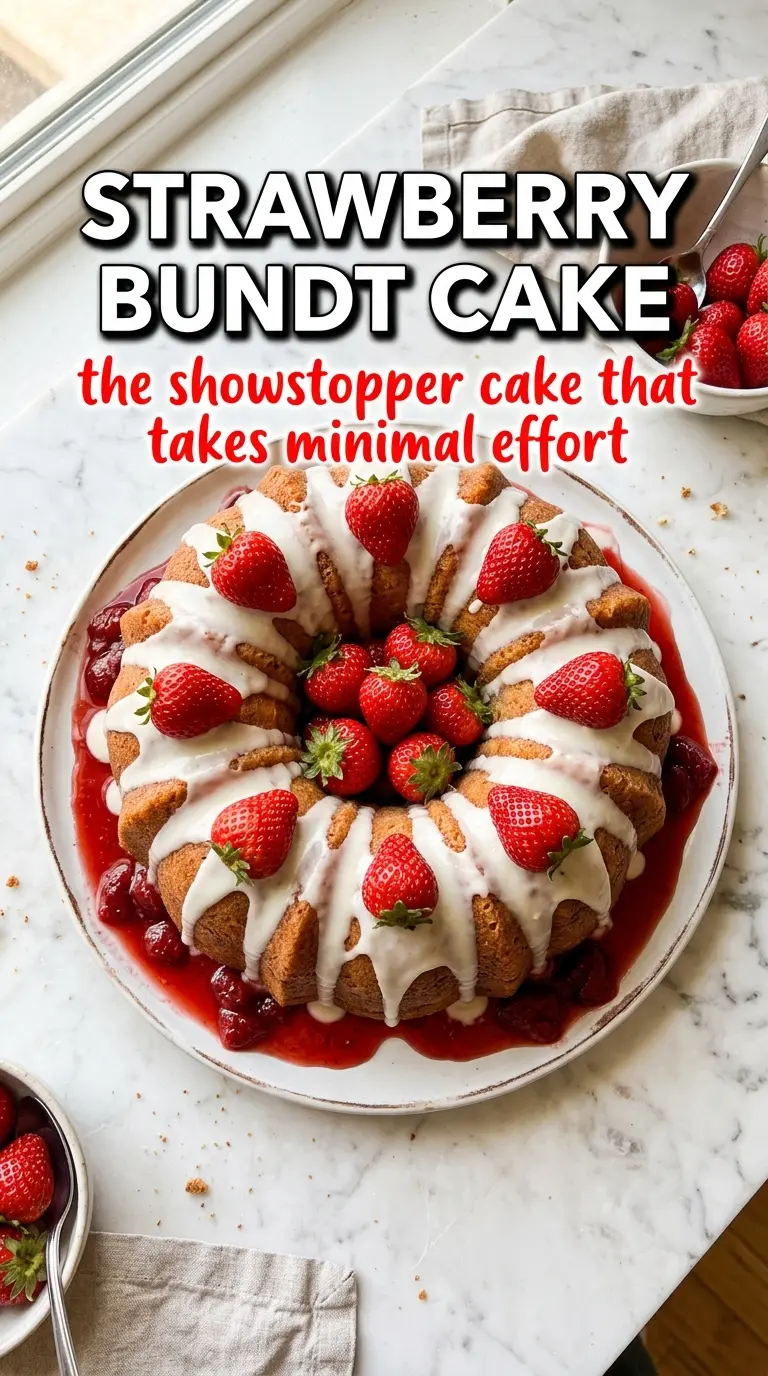
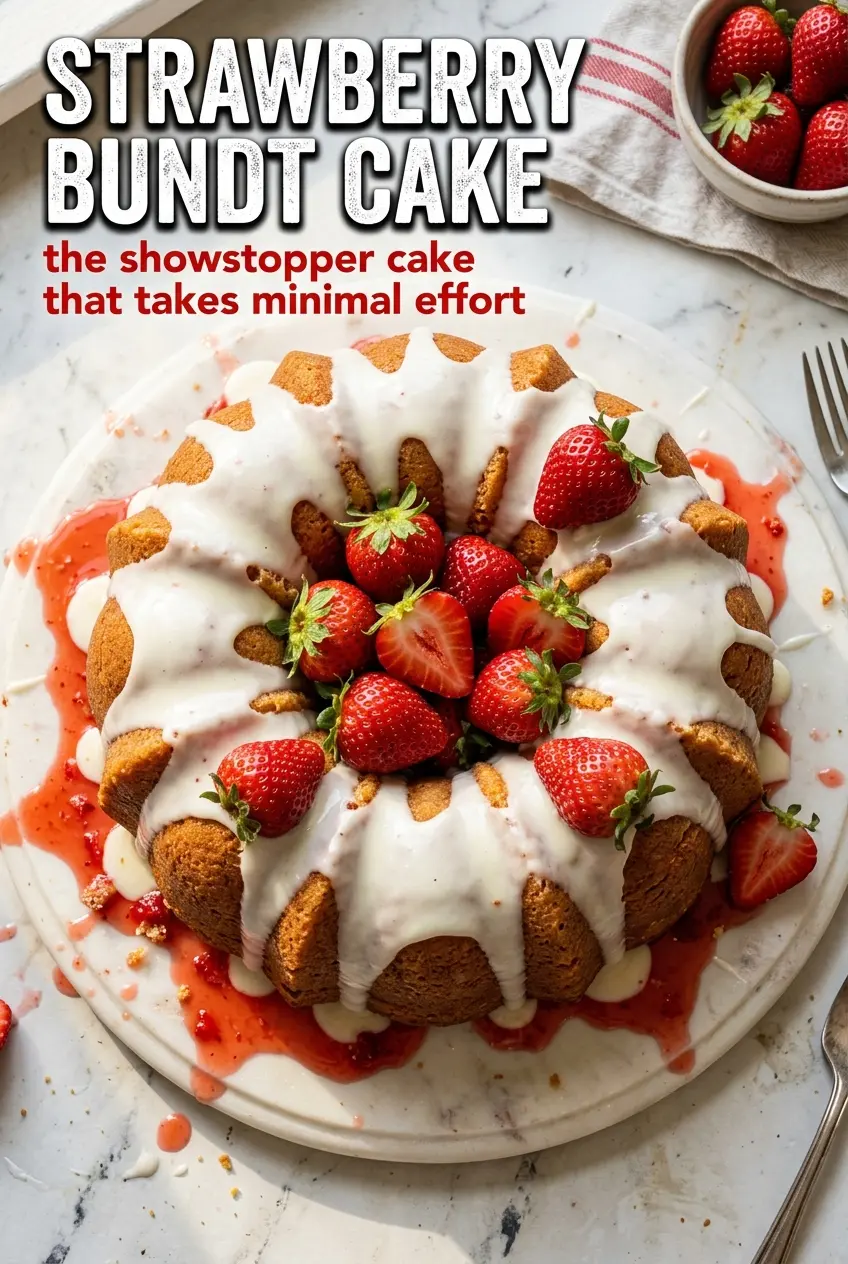
Tender strawberry Bundt cake has a way of disappearing fast once the glaze goes on. The crumb stays soft and moist from the sour cream and puree, but it still slices cleanly, which matters when you want those neat pink-edged pieces instead of a crumbly mess. The fresh strawberries tucked into the batter give each bite a little burst of fruit, while the glossy glaze brings the whole cake together with a bright finish.
The trick here is keeping the batter balanced. Strawberry puree adds flavor and color, but too much liquid can make a Bundt cake heavy, so the sour cream steps in to keep the texture rich without turning dense. Creaming the butter and sugar well also matters more than people think; that’s what gives the cake lift before the baking powder finishes the job. Let the cake cool before glazing, or the topping will slide right off instead of clinging to the sides.
Below, you’ll find the exact point where the batter should look thick and smooth, the reason diced strawberries need to be folded in gently, and a few smart swaps if you’re working with frozen berries or want to change up the finish.
The cake came out incredibly moist and the strawberry pieces stayed evenly distributed instead of sinking. I also loved that the glaze thickened just enough to drip красиво down the sides without making the cake soggy.
Save this strawberry Bundt cake for the kind of dessert that looks polished, slices beautifully, and finishes with a glossy berry glaze.
The Reason Strawberry Cakes Turn Dense Before They Turn Bright
Strawberry cake often goes wrong for one simple reason: too much fruit makes the batter heavy before the oven has a chance to set it. Puree adds flavor and color, but it also adds moisture, so the batter needs enough structure from flour, eggs, and creamed butter to hold that liquid without collapsing. That’s why this cake leans on sour cream too. It brings tenderness without thinning the batter the way extra juice or milk would.
The other common problem is overmixing after the flour goes in. Once the batter starts looking smooth, stop. If you keep beating it, the cake bakes up tighter and can turn a little gummy around the fruit pieces. A Bundt pan also rewards thorough prep; every ridge needs butter and flour or the cake will stick in the details and break when you turn it out.
What Each Ingredient Is Doing in This Strawberry Bundt Cake
- All-purpose flour — This gives the cake enough structure to hold the puree and diced berries. Cake flour can work if that’s what you have, but the crumb will be a little softer and less sturdy for slicing.
- Baking powder — The rise here comes mostly from this, so don’t swap in baking soda unless you’ve changed the acid level in the batter. Fresh baking powder matters; if yours is old, the cake can bake up flat.
- Butter and sugar — Creaming them until pale and fluffy traps air, which helps the cake lift and keeps the crumb lighter. Softened butter is important; melted butter will give you a denser cake.
- Fresh strawberry puree — This is the main flavor engine and the source of that pink color. Frozen strawberries can be cooked down and pureed too, but reduce any extra liquid so the batter doesn’t turn loose.
- Sour cream — This keeps the crumb moist and tender without making the cake soggy. Full-fat sour cream gives the best texture, though plain Greek yogurt works in a pinch.
- Fresh diced strawberries — These add bright fruit pockets that make the cake feel fresh, not just flavored. Tossing them lightly in a spoonful of flour before folding them in can help keep them suspended through the batter.
- Strawberry glaze or jelly — This is what gives the cake its glossy finish and extra berry hit. If the glaze is too thick to pour, warm it with the water just until it loosens; boiling can make it seize or become sticky.
Building the Batter and Finishing the Glaze
Start With a Thoroughly Greased Bundt Pan
Brush every curve and crease of the Bundt pan with softened butter or baking spray that includes flour, then dust it lightly with flour and tap out the excess. The pattern in a Bundt pan is beautiful, but it is also where cakes like to cling. If there’s a dry spot, that’s where the cake will tear when you invert it.
Cream the Butter and Sugar Until It Looks Light
Beat the butter and sugar until the mixture looks pale, fluffy, and a little expanded. That stage gives the cake lift before the batter even reaches the oven. Add the eggs one at a time so the batter stays smooth; if it looks curdled after an egg, keep mixing and it will come back together once the flour goes in.
Alternate the Dry Ingredients and Strawberry Mixture
Add the flour mixture in batches, alternating with the strawberry puree mixed with sour cream, and begin and end with flour. That order keeps the batter from separating and helps the flour absorb the moisture evenly. Stop mixing as soon as the batter looks uniform. Overworking it at this point is the fastest way to lose the tender crumb you want.
Fold in the Berries and Bake Until the Center Springs Back
Stir in the diced strawberries by hand so they stay intact and don’t bleed too much into the batter. Scrape the batter into the pan, smooth the top, and bake until a toothpick comes out clean or with a few moist crumbs. If the top is browning too quickly before the center is done, tent it loosely with foil during the last part of baking.
Cool Before You Glaze
Let the cake rest in the pan for 15 minutes, then turn it out onto a rack and let it cool completely. If you glaze it while warm, the topping runs straight off and collects at the bottom. Warm the strawberry glaze with just enough water to make it pourable, then drizzle it slowly so it settles into the ridges instead of flooding the cake.
How to Adapt This Cake for Different Kitchens and Different Crowds
Make it with frozen strawberries
Thawed frozen berries work for both the puree and the diced fruit, but drain off any extra liquid before using them. Frozen fruit can be a little looser than fresh, so removing that excess moisture keeps the cake from baking up gummy.
Swap the sour cream for Greek yogurt
Plain full-fat Greek yogurt gives a similar tang and moisture level. The cake may bake up just a touch tighter than with sour cream, but the flavor stays balanced and the crumb still slices cleanly.
Make it gluten-free
Use a 1:1 gluten-free flour blend that includes xanthan gum. The texture will be a little more delicate, so let the cake cool fully before slicing or it can crumble at the edges.
Storage and Reheating
- Refrigerator: Store covered for up to 4 days. The crumb stays moist, though the glaze may soften a little as it sits.
- Freezer: Freeze the unglazed cake tightly wrapped for up to 2 months. Thaw overnight at room temperature, then glaze after it has fully thawed so the topping stays glossy.
- Reheating: This cake is best served at room temperature. If you want to take the chill off a slice, warm it for just 10 to 15 seconds in the microwave; longer heating can make the glaze tacky and the crumb dry at the edges.
Questions I Get Asked About This Recipe
Strawberry Bundt Cake
Ingredients
Equipment
Method
- Preheat the oven to 350°F and grease a 12-cup Bundt pan thoroughly so the pink cake releases cleanly. Set the pan aside.
- Whisk together all-purpose flour, baking powder, and salt until evenly combined. Keep the dry mix dry and lump-free.
- Beat butter and granulated sugar until light and fluffy, which should look paler and more aerated. Add eggs one at a time, mixing well after each.
- Alternate adding the flour mixture and the strawberry puree mixed with sour cream, beginning and ending with flour. Mix just until the batter looks smooth and thick.
- Stir in vanilla extract and fold in the diced fresh strawberries so the pieces stay suspended. The batter should show small strawberry specks.
- Pour the batter into the prepared Bundt pan and smooth the top. Bake for 45-50 minutes at 350°F until a toothpick comes out clean.
- Cool the cake in the pan for 15 minutes, letting it firm up for a neat release. You should see the edges pulling slightly away.
- Invert the cake onto a wire rack and cool completely before glazing. The surface should be cool to the touch, not warm.
- Warm strawberry glaze or jelly with water until pourable, stirring until smooth. Aim for a glossy, thin consistency that will drip.
- Drizzle the warm glaze over the cooled cake, allowing it to run down the sides. Make sure the top is fully coated for a dripping finish.
- Dust powdered sugar for garnish over the glazed cake before serving. Finish once the glaze has set slightly so the dust sits on top.