Strawberry Basque cheesecake comes out with a bronzed, crinkled top, a custardy center, and those dark, caramelized edges that give every bite a little bitterness to balance the sweet filling. The strawberries on top cut through the richness instead of hiding it, which is what makes this version feel lighter and more interesting than a plain cheesecake. It looks rustic in the best way, but it slices like a proper dessert once it has had time to chill.
The trick is keeping the batter smooth without overworking it and baking long enough to set the edges before the center firms up. That high oven heat is what gives Basque cheesecake its signature color and deep flavor, and the parchment paper helps the cake climb and wrinkle instead of sticking. The strawberry topping is not just decoration; the honey and balsamic pull the fruit into a glossy, slightly tangy finish that works with the creamy filling.
Below you’ll find the small details that matter here: how to know when the cheesecake is done, why room-temperature cream cheese changes everything, and how to keep the strawberry topping fresh and bright right up to serving.
The center set up beautifully after chilling, and the strawberries with balsamic made it taste a lot fancier than the effort it took. Mine cracked just like the photo and still sliced cleanly.
Save this Strawberry Basque Cheesecake for the nights when you want a dramatic crackly top, creamy center, and a strawberry-balsamic finish.
The Crackly Top Starts in the Batter, Not the Topping
Basque cheesecake fails when the batter gets too much air or the oven runs too cool. A whipped, fluffy batter puffs fast, then sinks hard and turns grainy around the edges. What you want here is smooth and heavy, with just enough mixing to dissolve the sugar and blend in the eggs without turning the filling into mousse.
The other mistake is pulling it too early because the center still jiggles. That jiggle is the point. The edges should look set and deeply browned, while the middle still moves like thick custard when you nudge the pan. It finishes setting as it cools, then tightens fully in the fridge.
- Room-temperature cream cheese — Cold cream cheese leaves little lumps behind no matter how long you beat it. Let it soften fully so the batter turns silky before the eggs go in.
- High heat — 400°F gives this cake its dark top and that slight caramel note. A lower oven bakes it pale and dull instead of letting the top blister and crack.
- Low-speed mixing — Fast mixing beats in too much air and creates a soufflé-like rise that collapses. Low speed keeps the texture dense, creamy, and sliceable.
What the Strawberries Are Doing Besides Looking Pretty
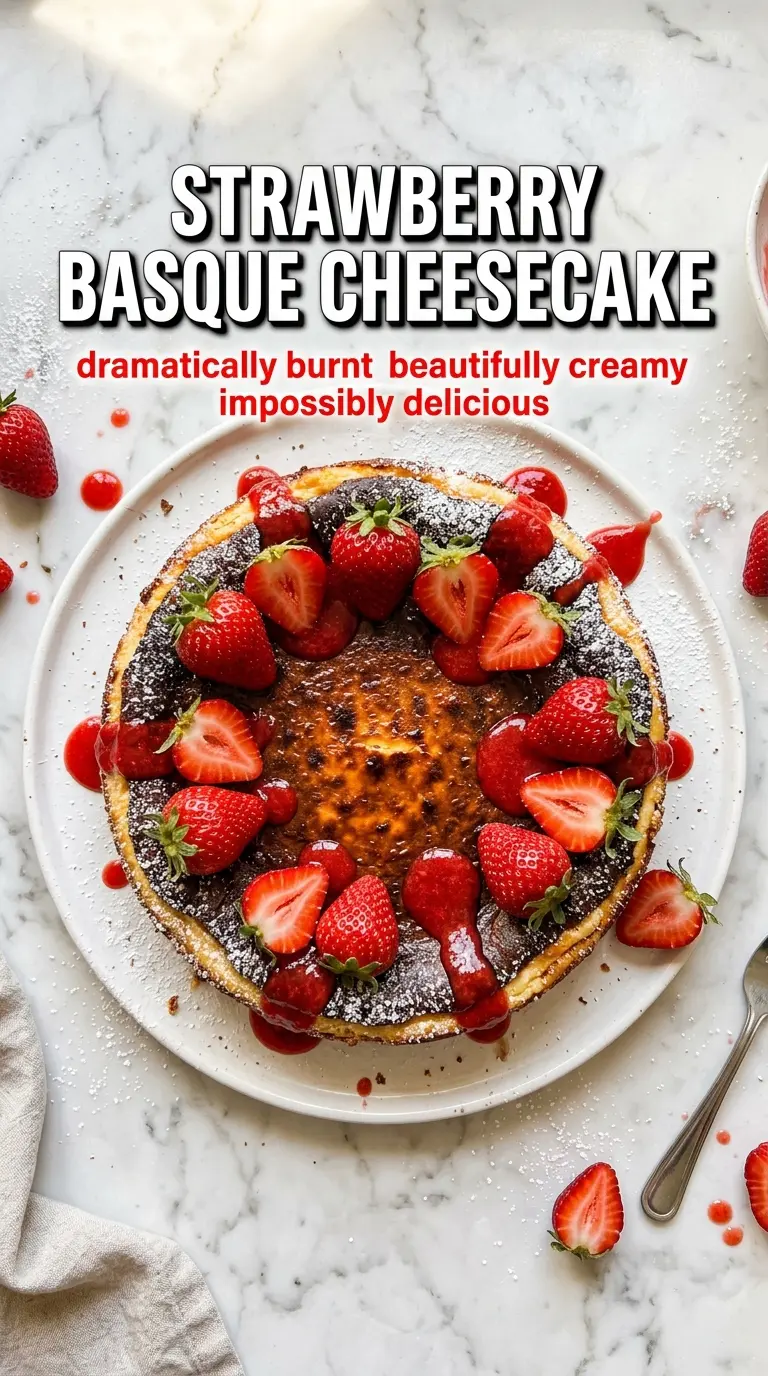
The strawberry topping needs to taste bright enough to cut through the cheesecake, which is why the honey and balsamic matter. Plain berries on a rich dessert can taste flat after one bite. The honey adds gloss and softness, while the balsamic sharpens the fruit and keeps the topping from reading as sugary jam.
- Cream cheese — Full-fat blocks give the right structure and tang. Tub-style cream cheese is softer and can make the batter loose, which changes how the center sets.
- Heavy cream — This keeps the filling lush and custardy. Half-and-half works in a pinch, but the result won’t be as silky.
- All-purpose flour — Just a little flour stabilizes the cake without making it bready. Skip it and the cheesecake can bake up too delicate to slice cleanly.
- Fresh strawberries — Fresh berries matter here because they hold their shape and stay juicy. Frozen berries release too much liquid and turn the topping watery.
- Balsamic vinegar — Use a good one if you have it. You don’t need aged syrup, but thin, harsh vinegar will taste sharp instead of balanced.
Getting the Bake and Chill Right
Building the Batter Without Overwhipping
Beat the cream cheese and sugar until the mixture looks smooth and glossy, with no visible grain. Add the eggs one at a time on low speed so each one disappears before the next goes in. Once the cream and vanilla are added, stop as soon as the flour is mixed through; if you keep going, you’ll work in air and the cheesecake can rise too much in the oven.
Watching for the Right Center Jiggle
Pour the batter into parchment-lined baking dish and bake until the top is a deep mahogany brown and the center still sways slightly when you tap the pan. If the whole surface looks firm, it’s gone too far and the texture will turn dry around the edges. The cake should look almost too dark on top; that contrast is what gives Basque cheesecake its character.
Cooling Before the Topping Goes On
Let the cheesecake cool completely at room temperature before it goes into the fridge. If you add the strawberries while the cake is warm, they’ll leak juice and slide around on top. A short chill of at least 30 minutes helps the filling set enough to slice, and longer is even better if you want clean wedges.
Make it gluten-free
Swap the all-purpose flour for a good 1:1 gluten-free baking blend. The cake will still set, but the crumb may be a touch more delicate, so give it the full chill before slicing.
Make it dairy-free
Use dairy-free cream cheese and a rich plant-based cream, then expect a slightly softer set and a milder tang. The texture stays creamy, but the top will brown a little differently, so rely on the jiggle test instead of color alone.
Swap the strawberry finish
Raspberries, blackberries, or cherries all work with the same honey-balsamic treatment. Softer fruit will break down faster, while cherries keep more bite and give the dessert a deeper, less juicy finish.
Storage and Reheating
- Refrigerator: Store covered for up to 4 days. The texture firms up in the fridge, which actually makes the slices cleaner.
- Freezer: Freeze the plain cheesecake without the strawberry topping for up to 1 month. Wrap slices tightly and thaw overnight in the refrigerator.
- Reheating: This dessert is meant to be served chilled or cool, not reheated. If you want a softer bite, let a slice sit at room temperature for 15 to 20 minutes before serving.
Questions I Get Asked About This Recipe
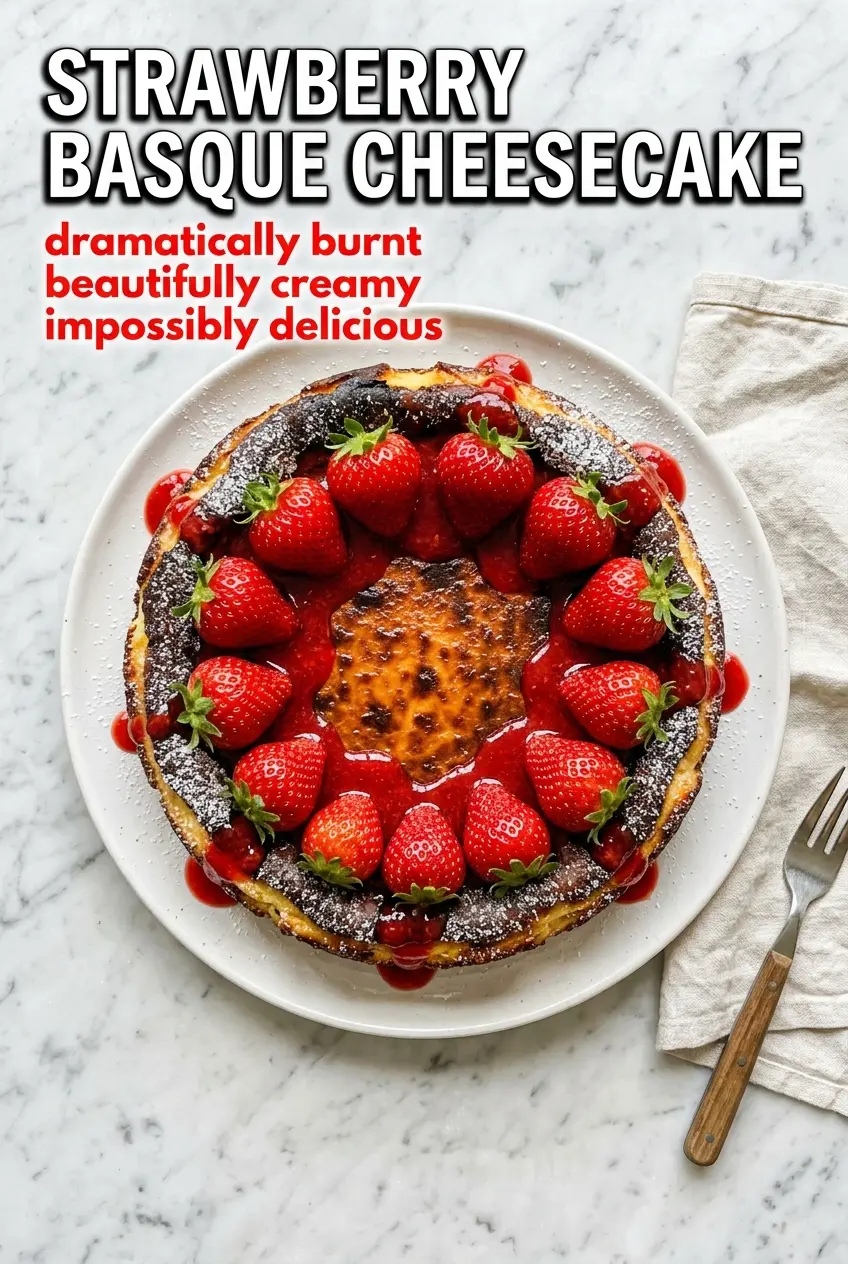
Strawberry Basque Cheesecake
Ingredients
Equipment
Method
- Preheat the oven to 400°F. Line an 8x8 inch baking dish (or a 9-inch round) with parchment paper, letting the edges hang over the sides.
- Beat the cream cheese and granulated sugar until smooth and combined. Add eggs one at a time, beating on low speed after each addition.
- Stir in the heavy cream, vanilla extract, and all-purpose flour until just combined. Avoid overmixing once flour is added.
- Pour the batter into the prepared baking dish. Bake for 45–50 minutes at 400°F until the top is deeply golden brown and the center still jiggles slightly.
- Cool the cheesecake completely at room temperature. This cooling step helps set the cracked top before chilling.
- Refrigerate the cooled cheesecake for at least 30 minutes. Keep it chilled so the rustic texture slices cleanly.
- Toss the sliced fresh strawberries with honey and balsamic vinegar until glossy. Top the cheesecake just before serving so the fruit stays bright.
- Garnish with fresh mint before serving. Serve with the berries scattered over the cracked top.