Golden roasted potatoes change potato salad from something soft and one-note into a side dish people actually remember. The edges pick up a little crunch, the centers stay creamy, and the blue cheese dressing clings to every warm bite without turning heavy. Bacon and chives finish it with the kind of salty, sharp contrast that makes this feel at home next to grilled steak or anything coming off the barbecue.
Roasting the potatoes instead of boiling them is the move here. It keeps them from absorbing water, which means they hold their shape and carry the dressing instead of collapsing into it. Letting the potatoes cool all the way down before mixing matters too, because hot potatoes can melt the sour cream base and make the whole salad loose. The vinegar and Worcestershire don’t make this taste acidic; they wake up the dressing so the blue cheese and bacon taste fuller.
Below, I’ve included the timing that keeps the potatoes from breaking, a few smart swaps, and the storage note that matters most if you’re making this ahead for a cookout.
The roasted potatoes held their shape all the way through chilling, and the blue cheese dressing was even better after a couple hours in the fridge. I added a little extra chives on top and it tasted like something from a good steakhouse.
Save this steakhouse potato salad for the nights when you want roasted potatoes, blue cheese, and bacon in one chilled side dish.
The Reason Roasted Potatoes Stay Potent After Chilling
The biggest mistake in potato salad is starting with potatoes that already taste watered down. Boiled potatoes take on moisture fast, and once they cool, they can go bland and a little mealy. Roasting fixes that by drying the surface just enough to give you flavor and structure at the same time. That matters even more here because the dressing is thick and tangy; it needs potatoes that can hold their own.
Cooling the potatoes before dressing them isn’t just about preventing a warm salad. It keeps the sour cream and mayonnaise from thinning out on contact, which is what makes the finished bowl creamy instead of greasy. If the potatoes go in warm, the blue cheese can smear instead of staying in little crumbles, and the whole thing turns muddled.
What Each Ingredient Is Doing In This Dish
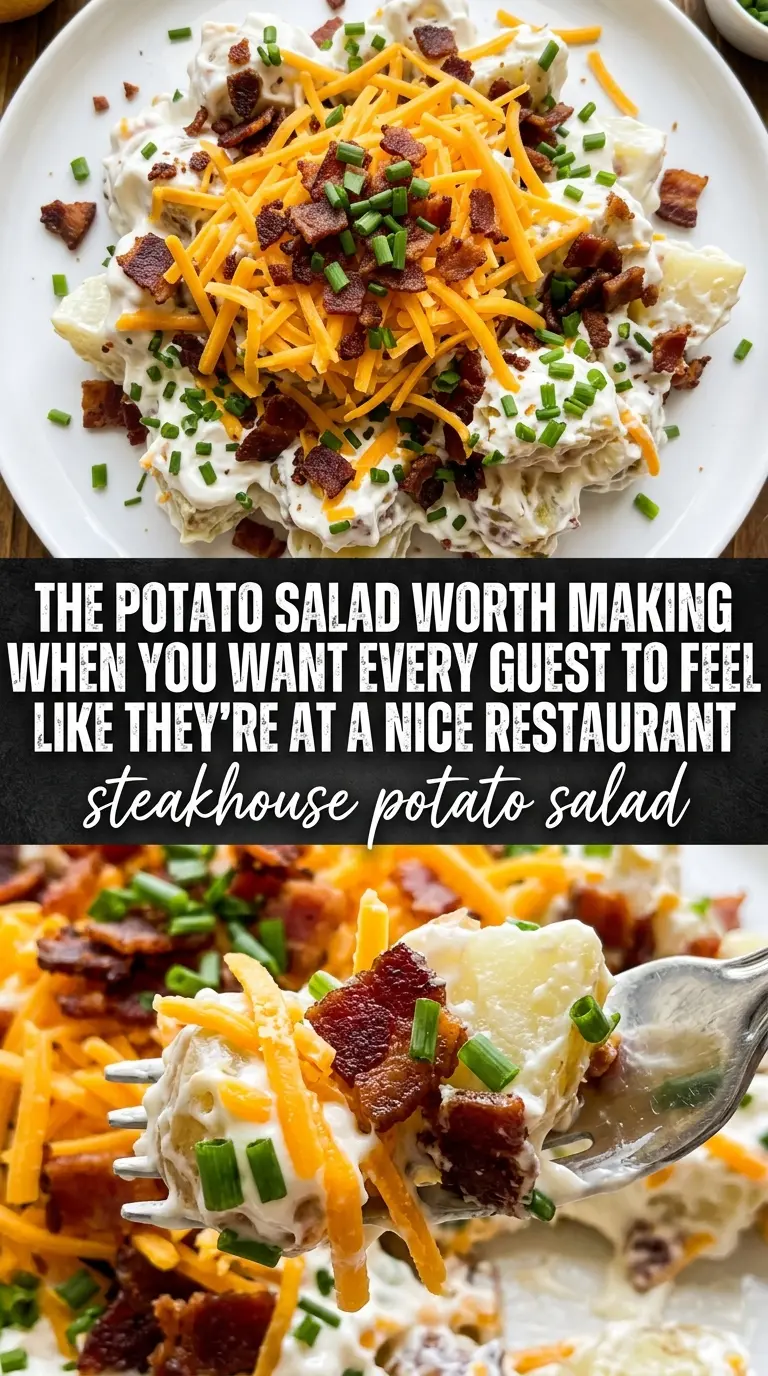
- Baby potatoes — Small potatoes give you creamy centers and plenty of surface area for browning. Halving them is worth it because the cut sides caramelize in the oven, which is where a lot of the flavor comes from. Waxy potatoes work best here; russets break down too easily.
- Sour cream and mayonnaise — This combo gives the dressing body and tang. Sour cream keeps it sharp and cool, while mayonnaise makes it cling. If you need a lighter version, swap half the mayo for plain Greek yogurt, but the dressing will taste a little more tart.
- Blue cheese — This is the ingredient that makes the salad taste like a steakhouse side instead of a standard picnic bowl. Buy a cheese you’d happily eat on its own, because the flavor needs to stand up after chilling. If blue cheese isn’t your thing, feta gives you salt and crumble, but it loses that creamy funk.
- Bacon — Bacon adds salt, crunch, and smoke. Cook it until crisp enough to crumble cleanly, then let it drain well so the dressing doesn’t get greasy. Thick-cut bacon works too, but it should still end up brittle, not chewy.
- White wine vinegar and Worcestershire sauce — These two wake up the dressing. The vinegar sharpens it, and the Worcestershire adds the kind of savory depth people notice even if they can’t name it. Don’t skip both unless you want a flatter, heavier salad.
- Chives — Chives give a fresh onion note without overpowering the blue cheese. Add some to the salad and save some for the top so the final bowl looks and tastes fresher.
Roasting, Cooling, and Folding Without Breaking the Salad
Getting the Potatoes Browned, Not Steamed
Spread the potato halves in a single layer on a hot baking sheet and roast them at 425°F until the cut sides are deep golden and the edges look crisp. If they’re crowded, they’ll steam and you’ll lose the texture that makes this salad stand out. A little browning on the pan is a good sign; pale potatoes will disappear into the dressing later.
Letting the Potatoes Cool All the Way Down
Give the potatoes time to cool completely before you mix anything in. Warm potatoes melt the dressing and soften the bacon, and that’s how you end up with a heavy, greasy bowl instead of a clean, creamy one. They should feel room temperature to the touch before you start folding.
Building the Dressing First
Stir the sour cream, mayonnaise, vinegar, Worcestershire, salt, and pepper together until the mixture looks smooth and glossy. That makes it easier to coat the potatoes evenly, and it prevents pockets of seasoning from ending up in one bite. If the dressing tastes a little sharp on its own, that’s right where it should be; the potatoes will mellow it.
Folding the Salad Without Crushing It
Add the potatoes, bacon, and half the blue cheese, then toss gently with a spatula instead of stirring hard. You want the dressing to coat the potatoes, not mash them. Finish with the remaining blue cheese and chives on top so the salad still looks like itself when it hits the table.
How to Adapt This for a Crowd, a Shortcut, or a Lighter Plate
Make it more bacon-forward
Use 10 slices of bacon instead of 8 and reserve a little of the rendered drippings to brush lightly over the potatoes before roasting. That adds a smoky edge that reads louder in the finished salad, but keep the extra fat minimal or the dressing will feel heavy.
Swap in feta for a milder, saltier finish
Feta works if blue cheese is too bold for your crowd. You’ll lose the creamy funk that makes this taste like a steakhouse salad, but you’ll keep the salty crumble and the sharp contrast against the potatoes.
Make it gluten-free without changing the texture
The salad is naturally gluten-free as long as your Worcestershire sauce is certified gluten-free. The rest of the ingredients do the same job without any special substitutions, so this is an easy win if you’re cooking for a mixed crowd.
Lighten the dressing without losing body
Replace half the mayonnaise with plain Greek yogurt. You’ll get a brighter, tangier dressing with a little less richness, and the salad still coats well because the sour cream keeps the texture stable.
Storage and Reheating
- Refrigerator: Store covered for up to 3 days. The potatoes stay sturdy, and the flavor gets even better after the first few hours.
- Freezer: Don’t freeze this one. The dairy dressing breaks when thawed, and the potatoes turn grainy.
- Reheating: Serve it cold or let it sit at room temperature for 20 to 30 minutes before serving. Heating will loosen the dressing and dull the blue cheese, which is the opposite of what you want.
Questions I Get Asked About This Recipe
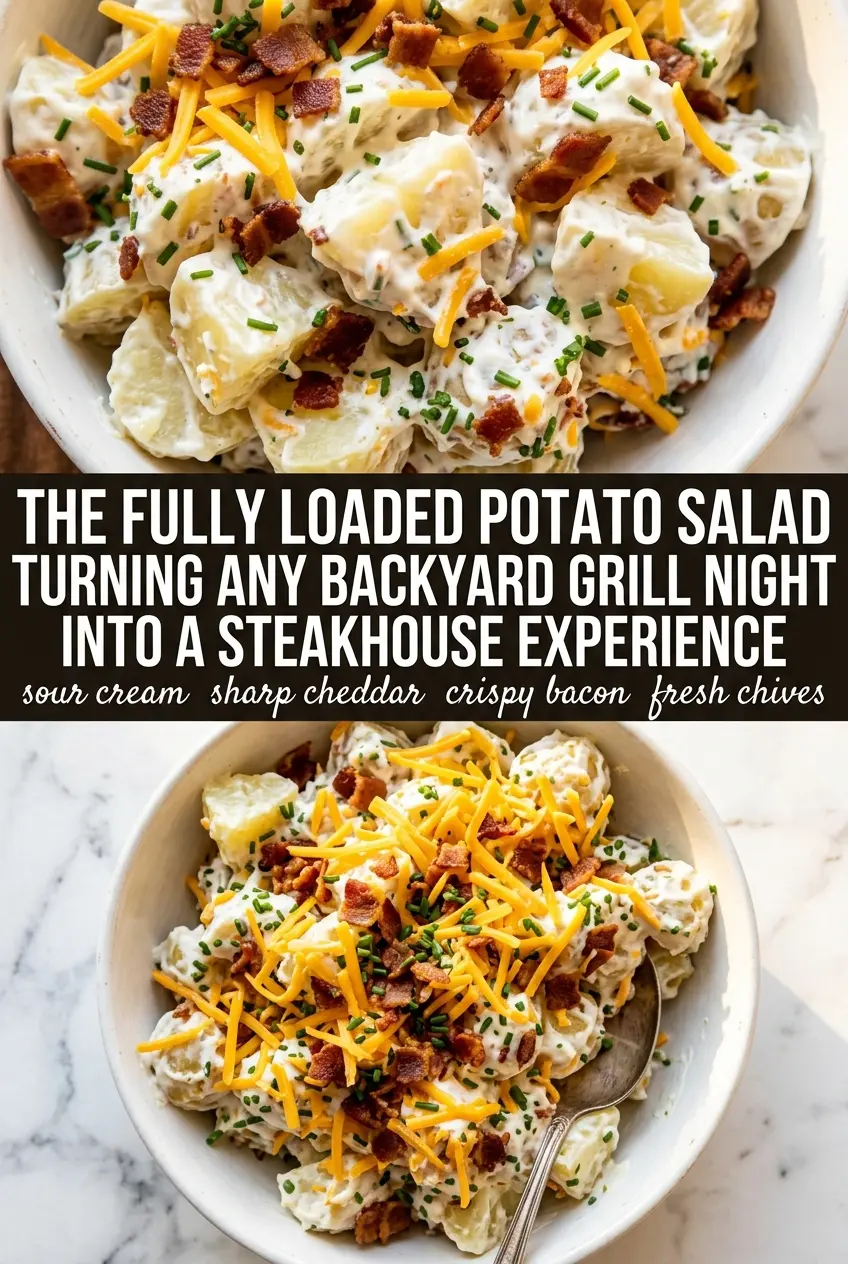
Steakhouse Potato Salad
Ingredients
Equipment
Method
- Heat the oven to 425°F and spread the potato halves cut-side down on a sheet pan. Roast for 25-30 minutes until golden.
- Remove the sheet pan from the oven and let the roasted potatoes cool completely before assembling the salad.
- In a bowl, mix sour cream, mayonnaise, white wine vinegar, and Worcestershire sauce. Season with salt and pepper to taste until smooth.
- Add cooled potatoes to the dressing and toss to coat evenly. Stir in the crumbled bacon and half of the blue cheese.
- Transfer the salad to a serving bowl or container and top with the remaining blue cheese and the chopped chives. Cover and refrigerate for 2 hours before serving.