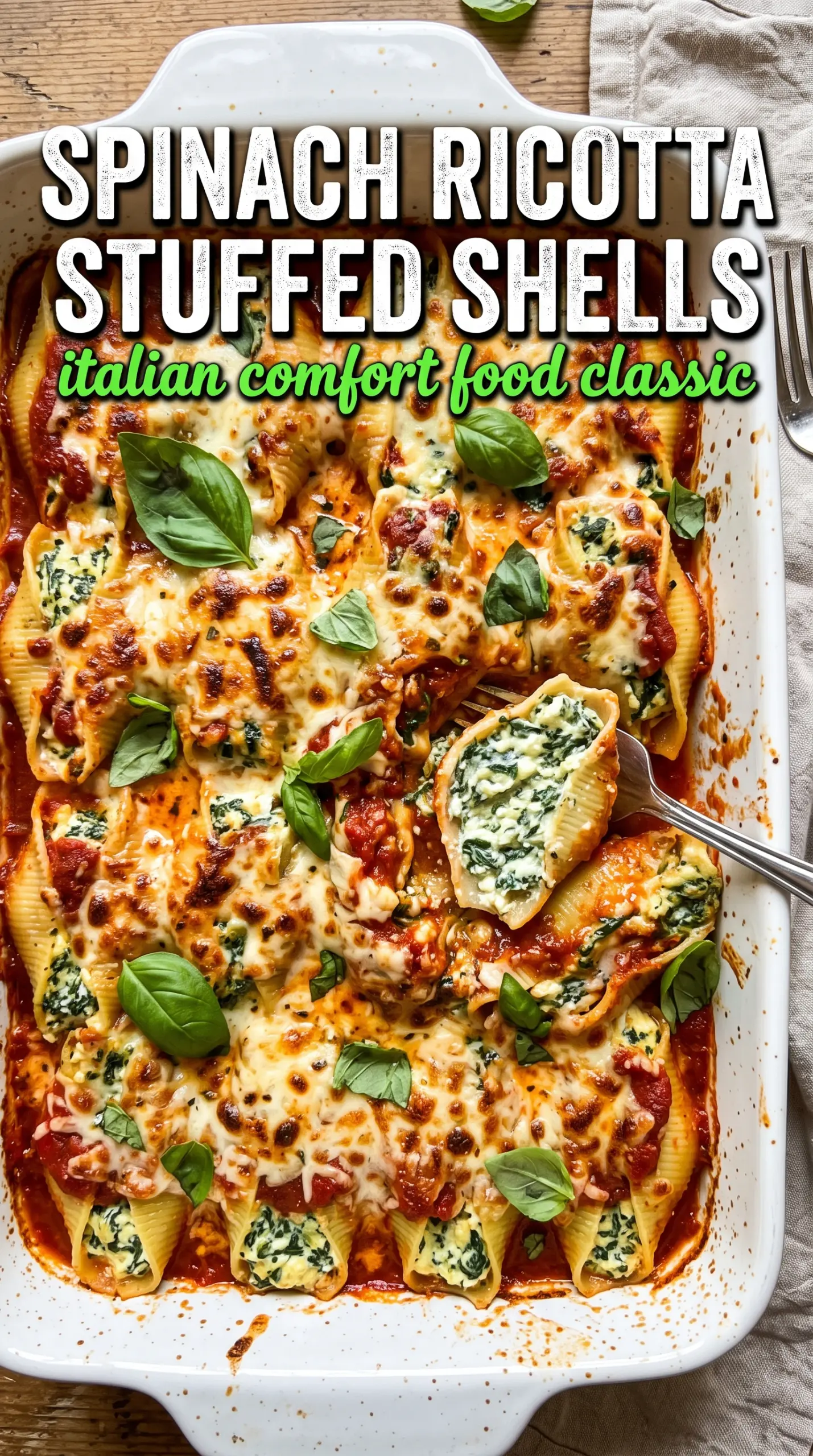
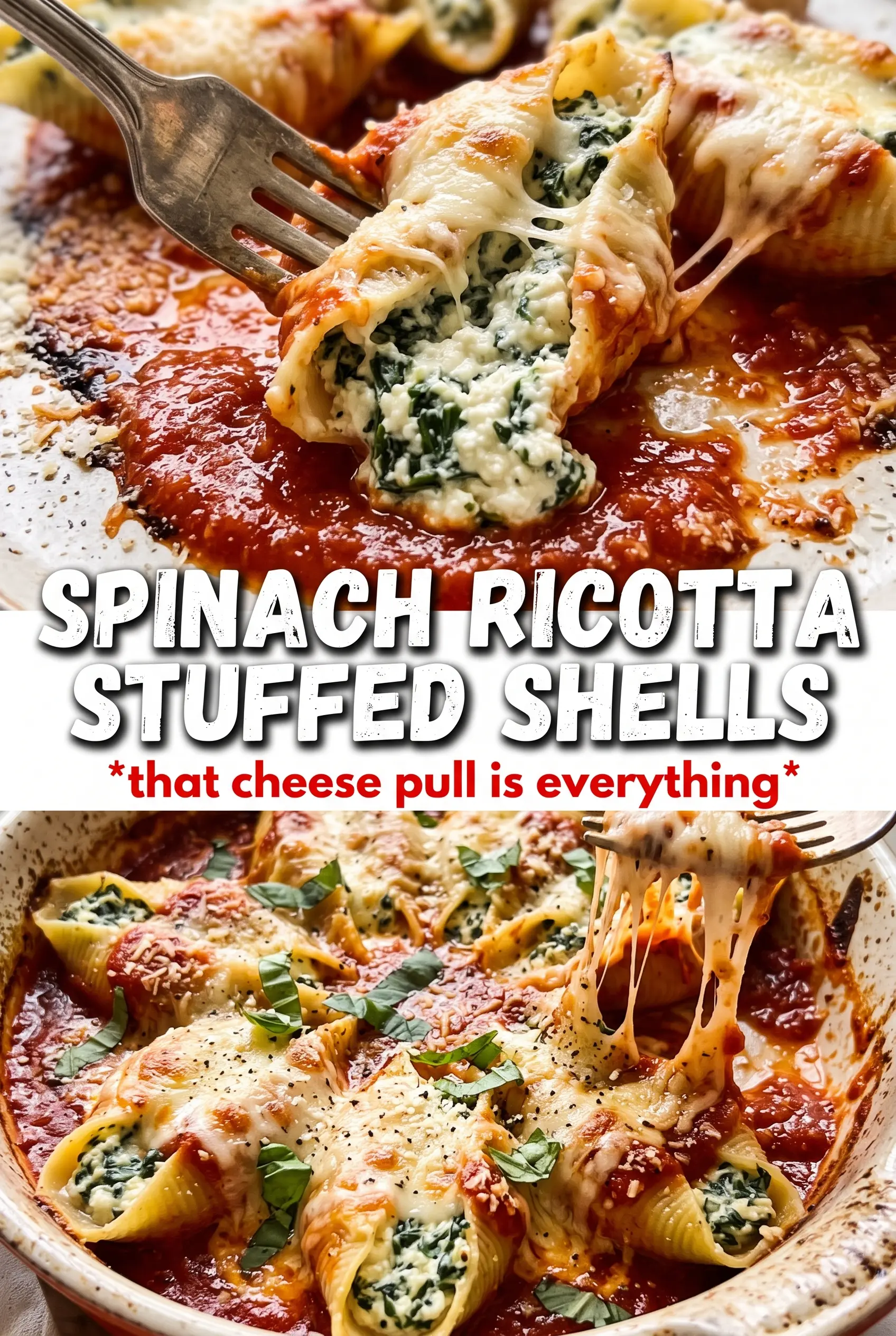
Spinach and ricotta stuffed shells bake into the kind of dinner that looks like you spent all afternoon in the kitchen, even when the filling comes together in a few minutes. The shells hold onto a creamy, garlicky ricotta mixture, the marinara keeps everything saucy, and the mozzarella on top turns into that browned, bubbling lid everyone wants to crack into first. It’s hearty without being heavy, and every bite gives you pasta, cheese, and tomato in the right balance.
What makes this version work is the texture inside the shells. Ricotta brings the body, but the egg helps it set so the filling stays plush instead of running out onto the pan. A little nutmeg rounds out the spinach and keeps the filling from tasting flat, and the garlic goes in raw so it perfumes the cheese as it bakes. Cook the shells just to al dente and stop there; if they get too soft, they tear when you stuff them and turn mushy in the oven.
Below, you’ll find the little details that keep the shells intact, the cheese filling creamy, and the sauce from drying out around the edges. I’ve also included a few smart swaps for making it dairy-free or stretching it into a bigger batch without losing that baked, cozy feel.
The filling stayed creamy after baking and the shells held their shape instead of collapsing. I loved the little bit of nutmeg in the ricotta — it made the whole dish taste more finished.
Save these spinach and ricotta stuffed shells for a baked pasta dinner with creamy filling, bubbling marinara, and golden mozzarella.
The Reason These Shells Stay Creamy Instead of Watery
The biggest mistake with stuffed shells is treating ricotta like a wet filling that will somehow improve in the oven. It won’t. Ricotta already holds moisture, and spinach brings more, so the job is to control both before they go into the shells. Chopping the spinach finely helps it blend into the cheese instead of clumping, and using it raw keeps the filling bright and tender once baked.
The other thing that matters is the sauce layer. A little marinara under the shells keeps the pasta from sticking and adds steam as the dish bakes under foil. That covered bake is what gives you soft shells without dried-out corners, then the final uncovered stretch turns the mozzarella into a browned top instead of just melted cheese.
- Ricotta — Whole-milk ricotta gives you the creamiest filling. Part-skim works, but it can bake up drier and a little grainy. If your ricotta looks watery in the tub, drain it in a fine mesh strainer for 15 to 20 minutes before mixing.
- Spinach — Fresh baby spinach keeps the flavor clean and mild. Frozen spinach works too, but it must be thawed and squeezed dry until it feels almost crumbly; otherwise the filling loosens and can seep out of the shells.
- Egg — The egg is what helps the filling set instead of slumping when you scoop it onto a plate. Skip it and the cheese mixture stays softer, which can be fine for a dip but not for stuffed pasta.
- Nutmeg — You only need a small amount, but it gives the ricotta a warm background note that makes the filling taste finished. Leave it out if you must, but the dish loses some depth.
What Each Ingredient Is Actually Doing in This Recipe
- Primary ingredient (the star) — Quality matters most. Choose the best you can find.
- Cooking medium (oil, butter, or broth) — This carries flavors and prevents dryness.
- Seasonings (salt, pepper, spices, herbs) — Layer flavors so nothing overpowers. Build depth gradually.
- Aromatics (garlic, onion, herbs) — Cook with fat to bloom flavors. Become the foundation.
- Supporting ingredients — Complement the main ingredient without overpowering it.
- Sauce or liquid (if applicable) — Brings flavors together. Balance richness with acid.
- Acid (lemon, vinegar, wine, or other) — Brightens and prevents flat-tasting results.
- Final finish (garnish, glaze, or sauce) — Prevents one-dimensional taste and adds visual appeal.
How to Fill, Bake, and Keep the Shells Intact
Boil the Shells Until They’re Just Flexible
Cook the shells in salted water until they’re al dente, not soft. They should bend without splitting when you lift one out of the pot. If they go too far, they’ll tear while you’re stuffing them and turn fragile in the oven. Drain them and lay them out in a single layer so they stop cooking instead of sticking into one big pile.
Mix the Filling Until It Holds Together
Stir the ricotta, chopped spinach, mozzarella, Parmesan, egg, garlic, Italian seasoning, nutmeg, salt, and pepper until the mixture looks evenly speckled and thick. You want it scoopable, not loose. If the spinach seems to disappear into the cheese, that’s a good sign. If the mixture looks runny, the ricotta or spinach was too wet, and the shells will leak filling once they hit the oven.
Stuff Generously Without Overpacking the Shells
Spoon the filling into each shell with enough pressure to fill the curved sides, but don’t force it so hard that the pasta splits. A heaping tablespoon or so per shell usually does it, depending on the size of your pasta. Nestle each shell into the sauce so it sits upright or slightly tilted. That keeps the filling in place and helps the bottom of the shell soak up flavor instead of drying out.
Bake Covered, Then Finish Hot
Cover the dish tightly with foil for the first part of the bake. That trapped steam softens the pasta and keeps the cheese filling creamy. Remove the foil for the last stretch so the mozzarella browns and the sauce bubbles around the edges. When the top looks golden in spots and the sauce is actively bubbling, it’s ready. Let it sit for a few minutes before serving so the filling settles and doesn’t spill out the second you cut in.
How to Adapt These Stuffed Shells Without Losing the Creamy Center
Use Frozen Spinach When That’s What You Have
Thaw about 1 cup of frozen spinach and squeeze out every bit of water before mixing it into the ricotta. Frozen spinach gives a slightly deeper, earthier flavor than fresh and saves prep time, but the filling will only stay thick if you remove the moisture first.
Make It Gluten-Free with the Right Pasta Shells
Use gluten-free jumbo shells if your store carries them, but cook them very carefully because they’re more likely to split. Pull them from the water when they still have a little bite left; overcooked gluten-free pasta falls apart fast once it’s stuffed and baked.
Go Dairy-Free Without the Same Creamy Texture
Swap in a dairy-free ricotta-style cheese and use your favorite plant-based mozzarella. The result will still be comforting and saucy, but the filling won’t set quite as firmly, so let the baked shells rest before serving to help everything hold together.
Stretch the Dish for a Bigger Crowd
Add another cup of ricotta, one more egg, and an extra handful of mozzarella if you need more shells filled. Keep the sauce generous under and over the pasta. Dry stuffed shells are what happen when the pan is packed too tightly without enough marinara to cushion everything.
Storage and Reheating
- Refrigerator: Store leftovers in a covered container for up to 4 days. The shells soften a little as they sit, but the flavor gets even better after a night in the fridge.
- Freezer: These freeze well either baked or unbaked. For best results, freeze in a tightly covered dish with extra sauce and thaw overnight in the refrigerator before baking or reheating.
- Reheating: Reheat covered in a 350°F oven until hot in the center, usually 20 to 25 minutes depending on the portion size. The mistake to avoid is blasting them in the microwave without any cover, which dries the pasta and makes the filling rubbery.
Questions I Get Asked About These Stuffed Shells
Spinach and Ricotta Stuffed Shells
Ingredients
Equipment
Method
- Preheat oven to 375°F, then spread 1 cup marinara on the bottom of a 9x13 baking dish so it forms a saucy base.
- Combine ricotta, chopped spinach, 1 cup mozzarella, Parmesan, egg, garlic, Italian seasoning, nutmeg, salt, and pepper until well mixed, aiming for a cohesive creamy filling with green flecks.
- Fill each cooked shell generously with the spinach ricotta mixture and arrange them in the baking dish so the filling is piled slightly above the rim.
- Pour the remaining marinara over the stuffed shells, then top with the remaining 1/2 cup mozzarella for a sealed, cheesy surface.
- Cover tightly with foil and bake for 30 minutes at 375°F until the sauce is bubbling around the edges.
- Remove foil and bake another 10 minutes at 375°F until the cheese is golden and the marinara is actively bubbling.
- Garnish with fresh basil and serve once the casserole is set and hot.