Spiced pumpkin cheesecake lands in that sweet spot between rich and light, with a gingersnap crust that stays crisp under a dense, silky filling. The pumpkin doesn’t taste flat or pumpkin-pie-like here; it tastes warm, layered, and balanced by tangy cream cheese and sour cream. Each bite gives you spice, creaminess, and just enough crunch from the crust to keep the texture interesting all the way through.
The thing that makes this version work is restraint and structure. The filling gets its body from cream cheese and eggs, but the pumpkin puree and sour cream keep it from turning heavy. A water bath is worth the extra step because it buffers the heat and helps the center bake evenly without drying out or cracking. The topping also matters more than it looks like it should — it softens the top into a cool, tangy finish that makes the spices taste cleaner.
Below, I’m walking through the small choices that keep the cheesecake smooth, the crust sturdy, and the spice balanced instead of muddy. If you’ve ever had a pumpkin cheesecake that baked up grainy, cracked, or bland, this one fixes those problems one by one.
The filling baked up so smooth, and the gingersnap crust stayed crisp even after chilling overnight. The sour cream topping took the spice level from good to perfect.
Like this spiced pumpkin cheesecake? Save it to Pinterest for the creamy slice, gingersnap crust, and tangy sour cream topping that make every bite worth chilling for.
The Water Bath Is What Keeps This Cheesecake From Cracking
Cheesecake cracks when the edges set too fast and pull away from a center that still needs time. The water bath slows that process down by surrounding the pan with gentle, even heat, which is why this pumpkin cheesecake bakes up with a smoother top and a creamier slice. If you’ve ever had a cheesecake that puffed, split, or turned dry around the edges, the issue was usually heat, not the recipe itself.
The other thing the water bath helps with is texture. Pumpkin adds moisture, and that means the filling needs enough time to set without getting overbaked. Pull it when the center still has a slight wobble; it will finish setting as it cools in the oven and later in the fridge.
- Start with room-temperature cream cheese. Cold blocks leave tiny lumps that don’t fully disappear once the eggs go in.
- Don’t skip the gradual cooling. A hot cheesecake moved straight to the counter is more likely to sink and split.
- Use a springform pan wrapped well for the water bath. If water seeps in, the crust gets soggy and the texture suffers.
What Each Ingredient Is Actually Doing in This Cheesecake
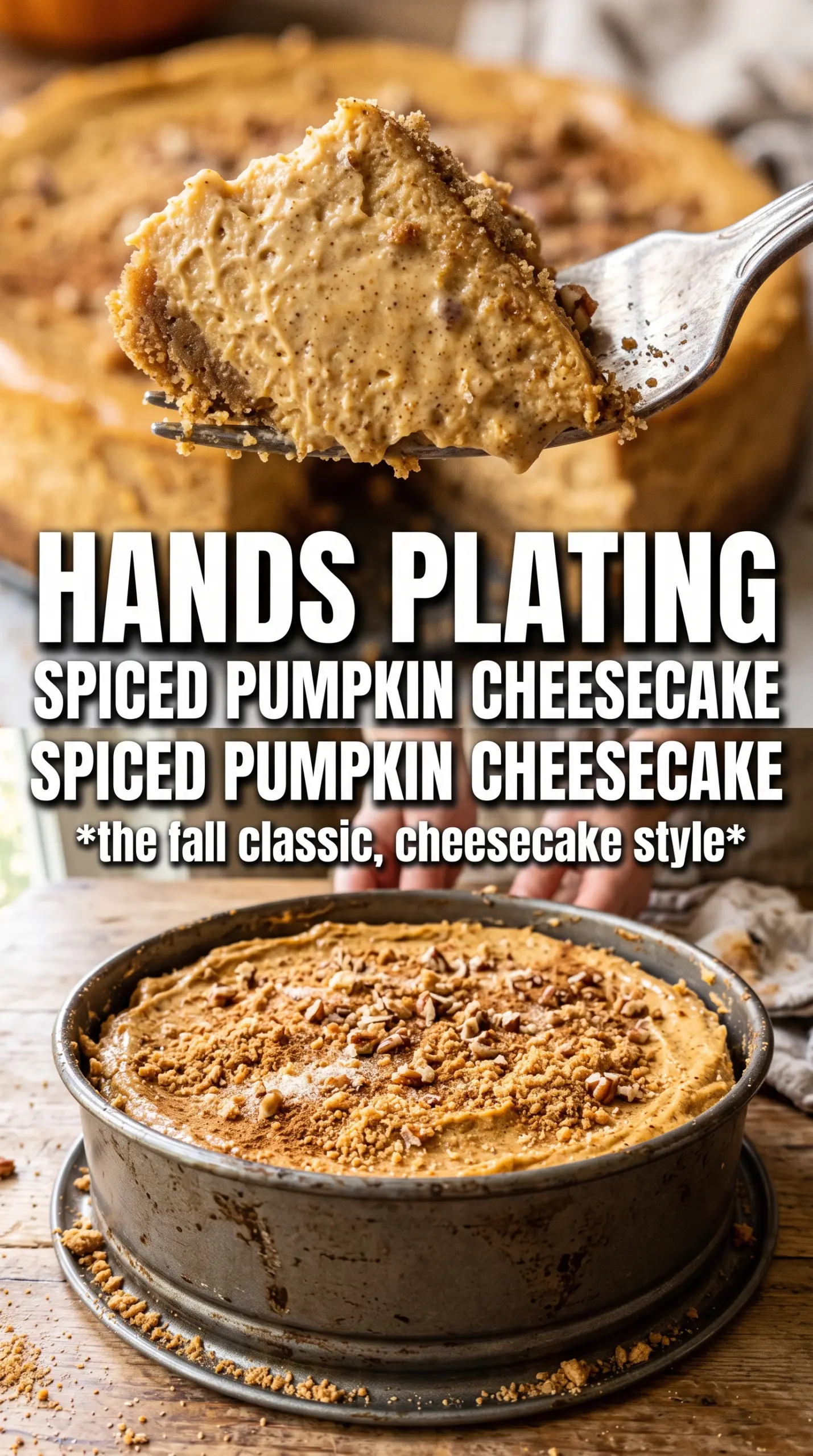
- Gingersnap crumbs — These bring sharp spice and a crisp, snappy texture that a plain graham crust can’t match. If you only have graham crackers, the crust will still work, but you’ll lose that darker, more autumn-spiced base.
- Cream cheese — This is the backbone of the filling, so buy full-fat blocks and soften them completely. Tub cream cheese usually has more moisture and won’t give you the same dense, clean slice.
- Pumpkin puree — Use pure pumpkin, not pumpkin pie filling. The pie filling already has sugar and spices mixed in, which throws off the balance and can make the cheesecake taste muddy.
- Sour cream — This keeps the filling tangy and smooth instead of heavy. It also helps the texture stay creamy after chilling, which matters in a dessert that spends hours in the fridge.
- Spice blend — Cinnamon, ginger, nutmeg, cloves, allspice, and cardamom build layers instead of one flat pumpkin-pie note. Cardamom is subtle, but it gives the filling a floral lift that keeps it from tasting one-dimensional.
- Brown sugar — The molasses note works beautifully with pumpkin and gingersnaps. White sugar will sweeten the filling, but it won’t round out the spice the same way.
Building the Filling So It Stays Smooth and Satiny
Pressing and Prebaking the Crust
Mix the crumbs, sugar, and melted butter until the mixture looks like damp sand and holds together when squeezed. Press it firmly into the bottom of the springform pan, especially around the edges where loose crumbs tend to crumble later. Bake it just long enough to smell toasted and look set; that short bake gives the crust structure so it doesn’t turn soggy once the filling goes in.
Beating the Filling Without Whipping Air Into It
Beat the cream cheese and brown sugar until the mixture is smooth before you add the eggs. Once the eggs go in, mix just until combined. If you beat the batter hard at that point, you trap air, and those bubbles rise and burst in the oven, which is one of the main reasons cheesecakes crack or soufflé and then fall.
Baking Until the Center Still Jiggles
The cheesecake is done when the edges look set and the center moves like soft gelatin when you nudge the pan. That little jiggle is what you want. If the whole surface is firm, it’s already overbaked, and the texture will turn dry after chilling. Turn the oven off and let the cheesecake sit inside with the door cracked so the temperature drops slowly instead of shocking the custard.
Finishing With the Tangy Topping
Stir the sour cream topping until it’s smooth, then spread it over the chilled cheesecake in a thin, even layer. Doing this after the first chill protects the top from the heat of the oven and gives you a cool, clean finish. Dust with the spices right before serving so the colors stay bright and the aroma hits the moment the slice is plated.
Three Ways to Adapt This Pumpkin Cheesecake Without Losing the Good Part
Gluten-Free Crust Swap
Use certified gluten-free gingersnaps or gluten-free graham crackers. The texture stays crisp as long as the crumbs are fine and the butter is evenly mixed in, though gluten-free crumbs can be a little more fragile when slicing, so chill the cheesecake fully before serving.
Lower-Sugar Version
Reduce the sugar in the filling by about 1/4 cup if you want a less sweet dessert, but don’t cut it much further. Sugar isn’t just about sweetness here; it also softens the texture and helps the cheesecake bake into a smooth custard instead of a dense brick.
Dairy-Free Approach
Use a dairy-free cream cheese and sour cream designed for baking, not a soft spread that melts or separates. The flavor will be a little less tangy and the texture a touch softer, but it still works if you keep the bake gentle and give it the full chill time.
Make-Ahead and Storage
This cheesecake is a make-ahead dessert by nature, and it tastes better after an overnight chill because the spices settle in and the slices cut cleaner.
Storage and Reheating
- Refrigerator: Store covered for up to 5 days. The crust softens a little over time, but the filling stays smooth.
- Freezer: Freeze slices tightly wrapped for up to 1 month. Thaw in the fridge overnight; freezing a whole cheesecake works too, but the topping is best added after thawing.
- Reheating: Don’t reheat this one. Serve it cold or cool-room temp so the texture stays dense and creamy instead of loose and greasy.
Answers to the Questions Worth Asking
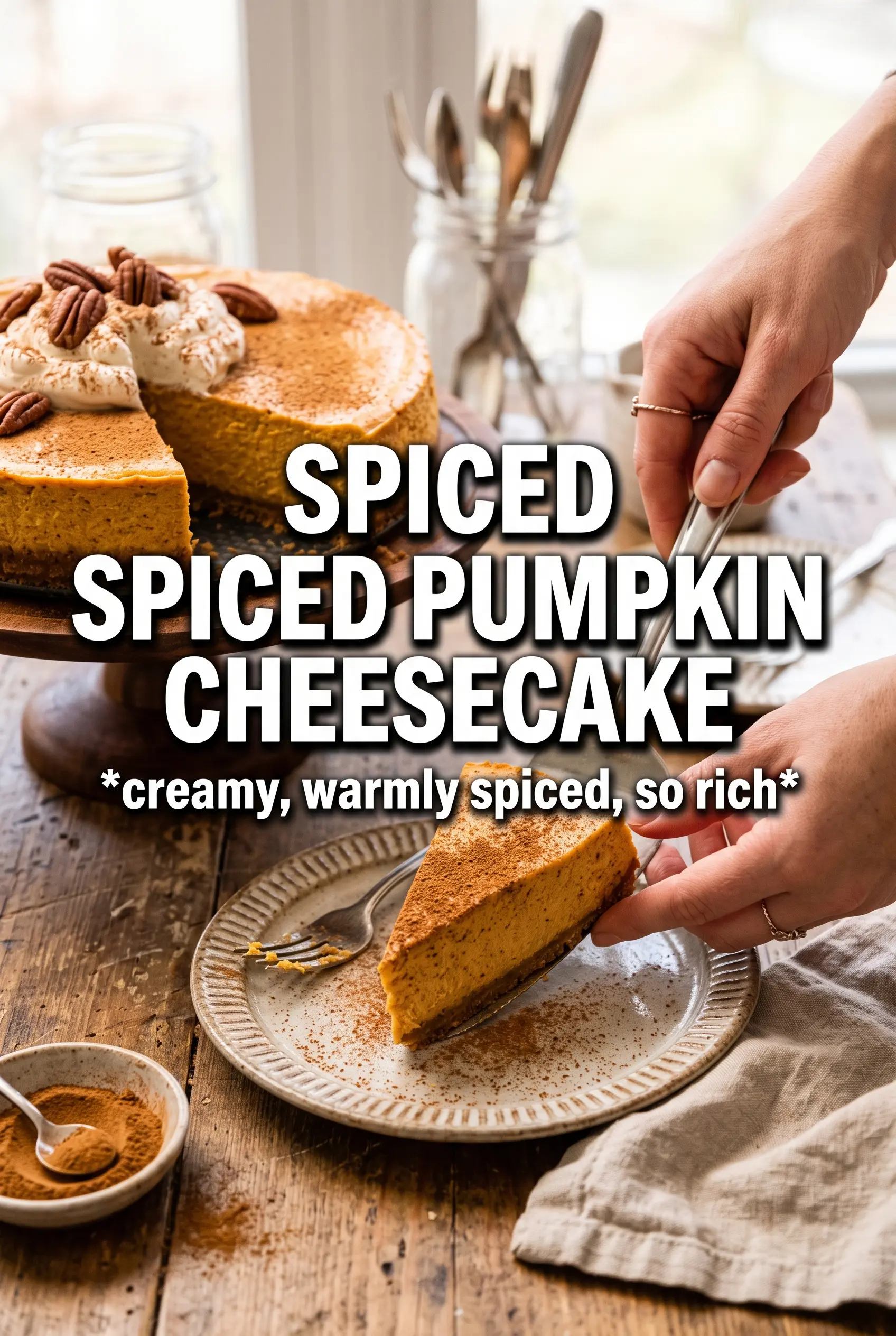
Spiced Pumpkin Cheesecake
Ingredients
Equipment
Method
- Press gingersnap crumbs, sugar, and melted butter into a 9-inch springform pan to form an even, packed crust.
- Bake the crust for 10 minutes at 325F, then remove to cool while you prepare the filling.
- Beat the cream cheese until smooth, then mix in brown sugar and continue beating until fully combined.
- Beat in the eggs one at a time, mixing just until incorporated to keep the batter silky.
- Mix in pumpkin puree and sour cream until smooth, scraping the sides as needed.
- Stir in cinnamon, ginger, nutmeg, cloves, allspice, and cardamom, then add vanilla and mix until the batter is evenly spiced.
- Pour the cheesecake batter over the baked crust.
- Bake in a water bath for 60-65 minutes at a gentle bake, until the edges are set and the center jiggles slightly.
- Cool the cheesecake in the oven for 1 hour to prevent cracking.
- Refrigerate the cheesecake for 4 hours.
- Stir sour cream, sugar, and vanilla for the topping, then spread over the chilled cheesecake in an even layer.
- Refrigerate for 2 more hours to fully set the topping.
- Dust with individual spices before serving for a fresh, spiced finish.