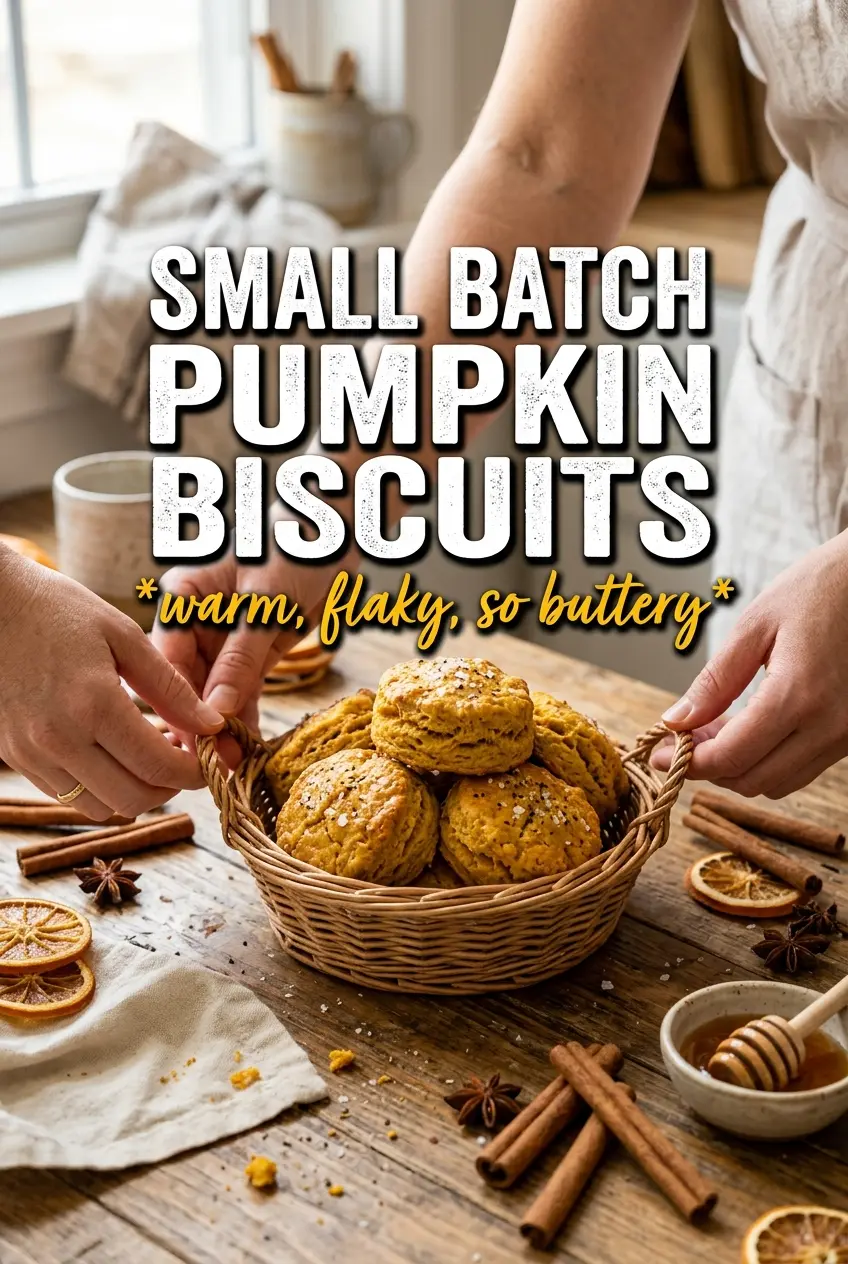
Small batch pumpkin biscuits bake up tender, flaky, and lightly sweet with just enough pumpkin to give them a warm orange color and a soft, plush crumb. They’re the kind of breakfast biscuit that disappears fast because they taste rich without being heavy, and the cinnamon-honey butter on top makes them feel like a little treat without turning them into dessert.
What makes this version work is the balance: enough pumpkin puree to bring flavor and moisture, but not so much that the dough turns sticky and dense. Cold buttermilk keeps the dough supple, cold butter creates the flakes, and the folding step builds layers without overworking the dough. That means you get biscuits that rise tall instead of spreading flat.
Below I’ll walk through the part that matters most — how to handle the dough so the biscuits stay tender — plus the ingredient choices and a few smart swaps if you need to adjust what’s in your kitchen.
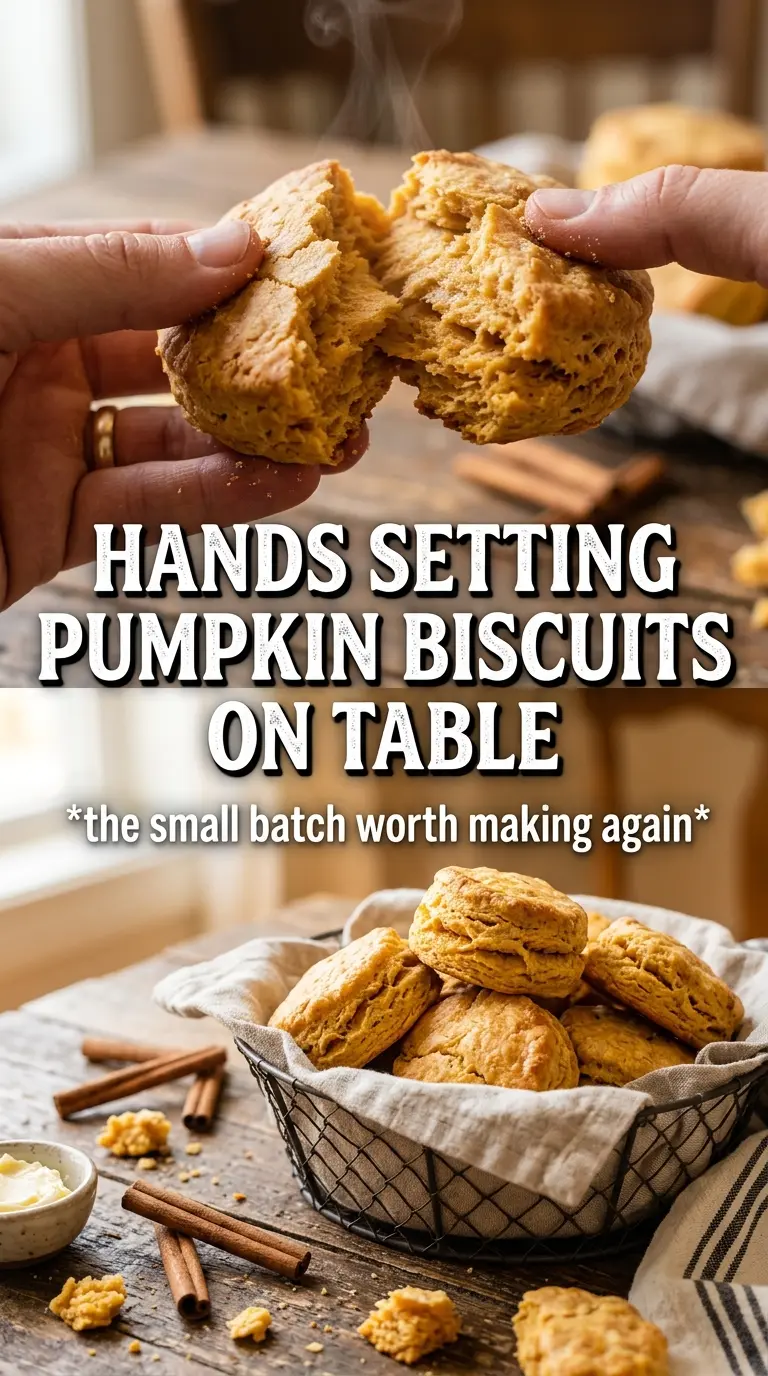
The biscuits rose higher than I expected and the centers stayed soft instead of doughy. The pumpkin flavor was there without making them heavy, and the honey butter melted right into all those flaky layers.
Save these small batch pumpkin biscuits for a breakfast that bakes up flaky, tender, and ready for cinnamon honey butter.
The Trick to Keeping Pumpkin Biscuits Light Instead of Dense
Pumpkin brings moisture, but it also brings weight. The mistake most people make is adding it straight into the flour and then stirring until the dough looks smooth, which turns the biscuits tight and bready. This dough should look a little rough when it comes together. A few dry streaks are fine because the folds and the oven finish the job.
The other thing that matters here is temperature. Cold butter stays in little pockets, and those pockets turn into steam in the oven, which is what gives you lift and layers. If the butter starts softening while you work, the biscuits will still taste good, but they won’t pull apart with those clean flaky edges.
- Pumpkin puree — Use plain canned pumpkin puree, not pumpkin pie filling. Pie filling is already sweetened and spiced, which throws off the balance and can make the dough too wet.
- Buttermilk — The acidity helps tenderize the dough and gives the biscuits a subtle tang. If you don’t have it, stir 1 teaspoon lemon juice or vinegar into 1/3 cup milk and let it sit for 5 minutes.
- Cold butter — This is the ingredient that gives you those flaky layers. Cube it first and keep it chilled right up until it goes into the flour.
- Baking powder — A full tablespoon gives these small batch biscuits a strong rise. It needs to be fresh; old baking powder is one of the main reasons biscuits bake up flat.
What Each Ingredient Is Actually Doing in This Recipe
- Primary ingredient (the star) — Quality matters most. Choose the best you can find.
- Cooking medium (oil, butter, or broth) — This carries flavors and prevents dryness.
- Seasonings (salt, pepper, spices, herbs) — Layer flavors so nothing overpowers. Build depth gradually.
- Aromatics (garlic, onion, herbs) — Cook with fat to bloom flavors. Become the foundation.
- Supporting ingredients — Complement the main ingredient without overpowering it.
- Sauce or liquid (if applicable) — Brings flavors together. Balance richness with acid.
- Acid (lemon, vinegar, wine, or other) — Brightens and prevents flat-tasting results.
- Final finish (garnish, glaze, or sauce) — Prevents one-dimensional taste and adds visual appeal.
Building the Dough So the Layers Actually Show Up
Cutting in the Butter
Work the cold butter into the dry ingredients until you have pea-sized pieces with a few larger bits still visible. Those uneven pieces matter. They create the flaky structure as they melt. If you overdo it and end up with sandy crumbs, the biscuits will still bake, but they’ll be more uniform and less layered.
Bringing the Dough Together
Mix the pumpkin and buttermilk first, then add them to the flour mixture and stir only until the dough starts to hold. It should look shaggy, not polished. If the bowl has a few dry patches at the bottom, stop mixing and bring them in gently with your hands. Overmixing develops gluten fast and makes the biscuits tough.
Folding for Height
Pat the dough to thickness, fold it into thirds, then pat it out again. That one simple fold gives the biscuits more lift and a better pull-apart texture without turning the dough into a patchwork of scraps. Press straight down with the cutter instead of twisting; twisting seals the edges and can keep the biscuits from rising cleanly.
Baking Until the Edges Set
Put the biscuits on the sheet with a little space between them so the sides can brown. Bake until the tops are golden and the edges look set, not pale and doughy. If the tops brown too quickly before the center is done, your oven may run hot, so start checking a minute or two early the first time you make them.
How to Adapt These Biscuits for Different Kitchens and Mornings
Dairy-Free Version
Use a dairy-free butter that comes in sticks, not a soft tub spread, so you still get the same cold-cutting behavior. Swap the buttermilk for unsweetened plant milk mixed with 1 teaspoon lemon juice. The biscuits will still rise and stay tender, though the flavor will be a little less rich.
Gluten-Free Adaptation
A 1:1 gluten-free baking blend can work here, but the dough is more fragile and benefits from a gentler hand. Don’t expect quite the same high, layered rise; the biscuits usually bake a little more tender and crumbly. Chill the cut biscuits for 10 minutes before baking if the dough feels soft.
Maple Instead of Honey Butter
Swap the honey in the finishing butter for pure maple syrup and keep the cinnamon. Maple gives a deeper, woodsy sweetness that fits the pumpkin well. If you use pancake syrup instead, the topping will taste flatter and sweeter rather than round and warm.
Make-Ahead and Reheat
Bake the biscuits a day ahead and warm them before serving, or freeze the unbaked cut rounds on a tray and bake from frozen with a couple extra minutes. Leftover biscuits reheat best in a 300°F oven for 8 to 10 minutes. The microwave will make the layers soft and a little damp, which is the quickest way to lose the texture you worked for.
Questions I Get Asked About This Recipe
Small Batch Pumpkin Biscuits
Ingredients
Equipment
Method
- Preheat the oven to 425°F, then line a baking sheet with parchment. Keep the tray ready so the biscuits can bake as soon as they’re cut.
- Whisk the all-purpose flour, baking powder, sugar, cinnamon, nutmeg, and salt together until evenly combined. Look for a uniform color with no visible spice clumps.
- Cut in the cold unsalted butter until pea-sized crumbles form. The mixture should look crumbly and slightly streaked with butter, not smooth.
- Stir the pumpkin puree and cold buttermilk together, then add to the flour mixture and stir until just combined. Stop mixing when no dry flour remains to avoid tough biscuits.
- Turn the dough onto a floured surface and pat to 3/4-inch thickness. The dough should hold together in a cohesive round.
- Fold the dough in thirds, pat again to 3/4-inch thickness, and cut into 6 rounds with a 2.5-inch cutter. Place the cut rounds with the edges intact for cleaner layers.
- Place the biscuits on the prepared baking sheet and bake for 16-18 minutes at 425°F until golden. Watch for puffed tops and browned edges.
- Mix softened butter, honey, and cinnamon to make cinnamon honey butter. Serve alongside the hot biscuits so it melts into the flaky layers.