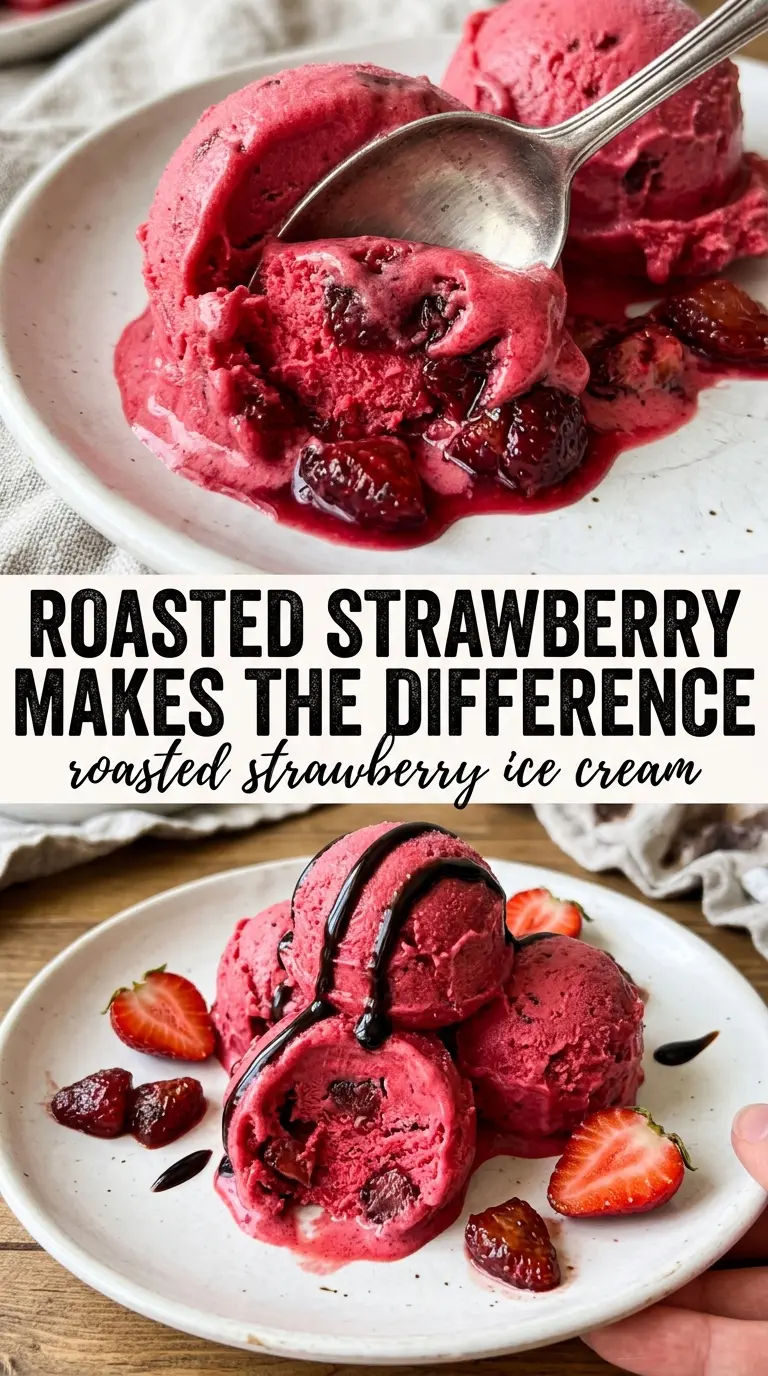
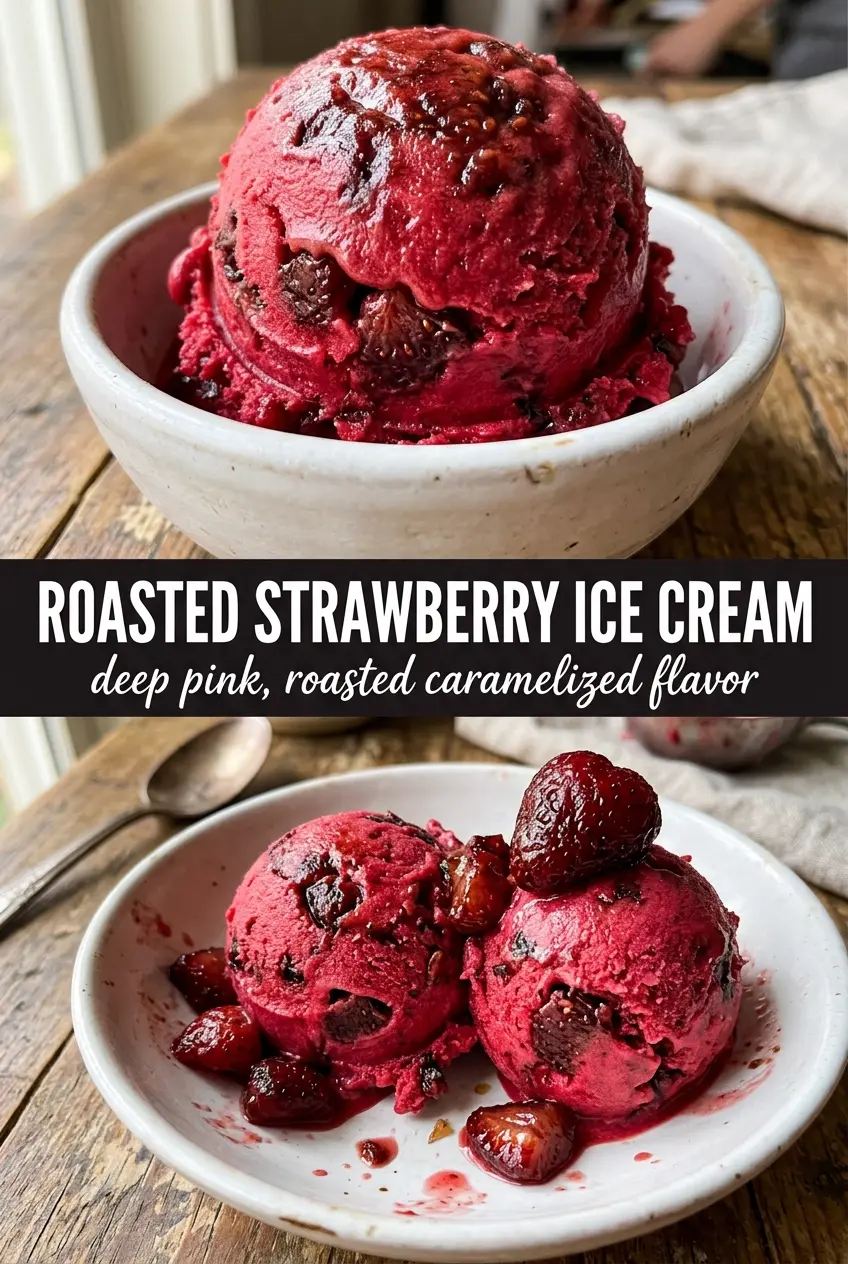
Roasted strawberry ice cream has a deeper, more focused strawberry flavor than the fresh-fruit version most people expect. The berries cook down into something jammy and intense, with a little caramel edge that makes every bite taste rounder and richer. Instead of a pale pink scoop that leans watery, you get a deep ruby base with real fruit presence all the way through.
The difference comes from treating the strawberries like a sauce, not a mix-in. Roasting them with sugar and a little balsamic vinegar pulls out their juices, concentrates the flavor, and adds just enough acidity to keep the ice cream from tasting flat. Then the custard base gives it body and a clean, creamy finish without covering up the fruit.
Below, I’ll show you how to get that roasted strawberry flavor to stay bold after churning, plus a few ways to adapt the base if you want to work around dairy or egg yolks. The small details matter here, especially cooling the fruit completely before it goes into the custard.
The strawberries turned into this thick, almost jammy puree in the oven, and the ice cream had a deep berry flavor all the way through. I was worried the balsamic would taste odd, but it just made everything brighter.
Love the deep berry flavor and jammy texture in this roasted strawberry ice cream? Save it to Pinterest for the days when you want a homemade scoop that tastes rich, bright, and intensely strawberry.
Why Roasting the Strawberries Gives You a Better Ice Cream Base
The biggest mistake with strawberry ice cream is relying on raw berries for all the flavor. Raw strawberries bring water, but not much depth, and that extra moisture can make the base taste thin once it’s churned. Roasting changes that completely. The fruit softens, the juices concentrate, and the edges caramelize just enough to build a darker, more layered strawberry taste.
The balsamic vinegar isn’t there to make the ice cream taste savory. It sharpens the fruit and keeps the sweetness from flattening out. That tiny amount of acid also helps the roasted strawberries taste more like strawberries after the freezing stage, which is when a lot of fruit ice creams go dull.
- Fresh strawberries — Use ripe berries with strong aroma and color. If they taste bland out of the bowl, roasting will improve them, but it won’t turn poor fruit into great ice cream.
- Balsamic vinegar — A small amount makes the berry flavor pop and adds depth. Don’t skip it unless you have to; lemon juice works in a pinch, but it gives a brighter, less rounded finish.
- Egg yolks — These build the custard body that keeps the ice cream scoopable. There isn’t a true substitute that gives the same creamy texture, though a cornstarch-thickened base can work if you want an egg-free version.
- Heavy cream and whole milk — This balance gives you richness without making the ice cream greasy. Using all cream will taste heavy and set up too firmly in the freezer.
What Each Ingredient Is Actually Doing in This Ice Cream
- Base ingredient (cream, milk, or custard) — This provides the foundation and richness. Quality matters.
- Sweetener (sugar, honey, or condensed milk) — This sweetens and prevents ice crystals. The ratio is critical.
- Flavor element (vanilla, fruit, chocolate, or other) — This defines the ice cream personality. Use quality ingredients.
- Egg yolks (if making custard base) — These create richness and silky texture. Optional but elevates ice cream.
- Churning (if using ice cream maker) — This incorporates air and prevents ice crystals. Critical for smooth texture.
- Freezing temperature and time — Proper freezing prevents rock-hard texture. Store at 0°F or below.
- Mix-ins (chocolate, cookies, fruit, or swirls) — These add texture and prevent one-dimensional flavor. Add near end of churning.
- Serving temperature (slightly soft, not rock hard) — This provides creamy mouthfeel. Remove from freezer 5 minutes before serving.
Building the Custard Without Scrambling the Yolks
Heat control is everything once the yolks go in. If the dairy is too hot when you add it, the eggs turn grainy instead of smooth. You want to temper slowly, whisking in a little hot cream mixture first so the yolks warm up before they hit the pan.
Keep the heat low and steady when you cook the custard. Stop at 175F, or when the mixture lightly coats the back of a spoon and leaves a clean line when you run a finger through it. Push it much past that point and the eggs tighten, which gives you a slightly curdled texture after churning.
Roasting the Strawberries
Toss the hulled strawberries with part of the sugar and the balsamic vinegar, then spread them in a single layer so they roast instead of steam. After 25 to 30 minutes, the berries should look collapsed, glossy, and syrupy, with browned spots around the edges. Let them cool completely before blending them into a puree. If you add warm fruit to the custard base, it can thin everything out and make the chilling time much longer.
Tempering the Egg Yolks
Whisk the yolks with the remaining sugar until they look lighter and slightly thickened. Stream in the hot cream and milk slowly, whisking constantly so the eggs warm gradually. If you dump the dairy in all at once, the yolks can seize into little bits before they ever make it back to the stove. Once everything is combined, return it to the pan and cook gently until it reaches 175F.
Finishing the Base
Strain the custard if you want the silkiest texture, then stir in the vanilla, salt, and roasted strawberry puree. The mixture should taste a little sweeter and more intense than you want the finished ice cream to taste, because freezing softens flavor. Chill it fully for at least 4 hours. If it goes into the churn even slightly warm, the texture will be loose and icy instead of dense and creamy.
Make it without balsamic vinegar
Use 2 teaspoons lemon juice instead. The ice cream will taste brighter and a little sharper, with less of the deep jammy note balsamic brings. It still works, but the roasted strawberries will read more fresh-fruit than caramelized-fruit.
Egg-free version
Skip the yolks and whisk 1 1/2 tablespoons cornstarch into the sugar before heating the milk and cream. The result will be lighter and a little less rich, but it still freezes smoothly if you cook the base until it thickens enough to coat a spoon.
Dairy-free swap
Use full-fat canned coconut milk in place of the cream and milk. The texture will be a little softer and the coconut flavor will show through, but it still pairs well with the roasted strawberries. Chill the base thoroughly before churning, since coconut milk benefits from extra cold time.
How to store it after churning
Freeze the ice cream in a shallow container with parchment pressed directly against the surface. It keeps for about 2 weeks before the texture starts to turn icy. For the creamiest scoop, let it sit at room temperature for 5 to 10 minutes before serving rather than microwaving it, which melts the edges and leaves the center hard.
Questions I Get Asked About This Recipe
Roasted Strawberry Ice Cream
Ingredients
Equipment
Method
- Preheat the oven to 375F. Toss the hulled strawberries with 1/4 cup sugar and balsamic vinegar on a baking sheet until evenly coated.
- Roast at 375F for 25-30 minutes until the strawberries are caramelized, jammy, and deeply concentrated. Spread them in an even layer so the roasted edges can develop.
- Cool completely after roasting. Leave the berries at room temperature until no longer steaming before blending.
- Blend the roasted strawberries into a smooth puree. Blend thoroughly until the mixture looks ruby-red and silky with no large chunks.
- Heat the heavy cream and whole milk until steaming, not boiling. Slowly whisk the hot dairy into the egg yolks beaten with the remaining 1/4 cup sugar.
- Cook the custard to 175F, stirring constantly until thick enough to coat the back of a spoon. The surface should look smooth and slightly glossy as it reaches temperature.
- Strain the custard into a clean bowl and stir in vanilla, salt, and the roasted strawberry puree. Mix until the color turns deep ruby-red and the puree is fully incorporated.
- Cool completely, then refrigerate for 4 hours. Chill until very cold for the best churnable texture.
- Churn the chilled base in an ice cream maker according to the manufacturer’s instructions. Churn until it thickens to a soft-serve consistency with visible roasted strawberry flecks.
- Freeze until firm. Transfer to a container with a lid and freeze until scoopable, typically several hours, for a dense strawberry ice cream texture.