Red potato salad lands on the table with the kind of soft, creamy bite that keeps people going back for a second scoop. Keeping the skins on gives the potatoes more structure, a little earthiness, and that rustic look that makes the bowl feel homemade in the best way. The dressing clings instead of sliding off, and the celery, onion, and parsley keep each bite bright enough to balance the richness.
The trick here is cooking the potatoes until they’re tender but still holding their shape, then cooling them enough that they don’t turn the dressing greasy or thin. Red potatoes are the right choice because they stay firm after boiling, which means the salad stays chunky instead of turning mushy. A little Dijon and white wine vinegar give the mayo enough sharpness to taste finished, not heavy.
The potatoes held their shape perfectly and the dressing thickened up after chilling, which made the salad taste even better the next day. The Dijon and vinegar gave it just enough bite without overpowering the red potatoes.
Red potato salad with skin-on chunks and a tangy creamy dressing is the kind of side that disappears fast at picnics and cookouts.
The Reason Red Potatoes Stay Chunky When Other Potatoes Turn Soft
Red potatoes earn their place here because they’re waxy, not fluffy. That means they keep their shape after boiling and still feel creamy at the center instead of collapsing into paste when you toss them with dressing. If you’ve ever ended up with potato salad that looks more like mashed potatoes with add-ins, the potato type was probably working against you.
The other thing that matters is how you handle them after cooking. Drain them well and let them cool until steam is gone from the surface. Hot potatoes can soak up dressing unevenly and make the mayo loosen up fast, which is how the salad turns slick instead of creamy.
- Red potatoes — Keep the skins on for texture and a sturdier salad. If you swap in Yukon Golds, expect a softer, richer result; they work, but they’re a little more delicate.
- Dijon mustard — Adds sharpness and helps the dressing taste balanced. Regular yellow mustard will work in a pinch, but it tastes sweeter and less rounded.
- White wine vinegar — Gives the dressing lift. Apple cider vinegar works too, though it brings a fruitier edge.
- Fresh parsley — This isn’t just garnish. It brightens the whole bowl and keeps the salad from tasting flat after chilling.
Building the Dressing Before It Meets the Potatoes
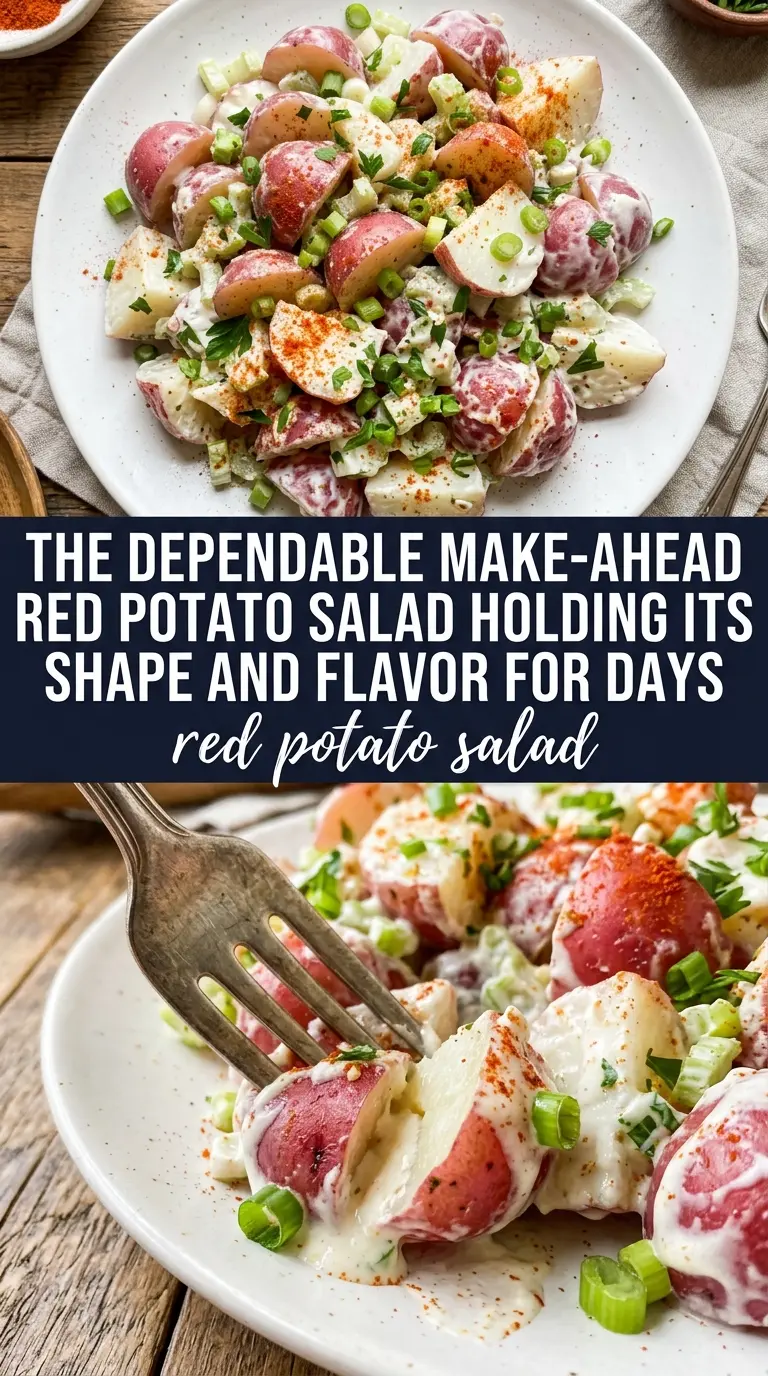
The mayo, mustard, and vinegar need to be whisked together before anything else goes in. That gives you a smooth base and keeps the acid from hitting one pocket of potato at a time. Season it now, not at the end, so the potatoes absorb enough salt while they chill.
The celery and red onion bring crunch and bite, but the dice needs to be small enough that they don’t dominate the bowl. If the onion tastes sharp to the point of being harsh, soak it in cold water for ten minutes and drain well before adding it. That takes the edge off without losing the flavor.
Boiling the Potatoes Just Until Tender
Start the cubed potatoes in salted water and cook them until a fork slides in with little resistance. Stop before they start splitting at the edges. If they’re overcooked, they’ll break apart when you stir in the dressing and the salad will lose its clean, chunky texture.
Cooling Without Letting Them Dry Out
Drain the potatoes thoroughly, then spread them out so the steam can escape. You want them warm, not hot, when they meet the dressing. That’s the point where they absorb flavor without turning the mayo loose and oily.
Coating and Chilling the Salad
Fold the dressing through the potatoes, celery, onion, and parsley until everything is lightly coated. Don’t overmix. A few broken edges are fine, but vigorous stirring turns the bowl heavy and mashed-looking. Chill it for at least two hours so the flavors settle and the dressing thickens back up.
How to Adjust This Potato Salad for Different Tables
Dairy-Free and Already Naturally Dairy-Free
This recipe already skips dairy, so there’s nothing to change for that need. Just check your mayonnaise brand if you’re serving someone with specific dietary restrictions, since some are made with different oils or additives.
Lighter Dressing With Half Mayo
Replace half the mayonnaise with plain Greek yogurt if you want a tangier, lighter salad. The texture will be a little less silky and a little more tart, so add the vinegar gradually and taste as you go.
Extra Crunch for Picnic Style
Add finely chopped dill pickles or celery leaves if you want a sharper, crunchier bite. That gives the salad more contrast, but keep the additions small so the dressing still reads as creamy and not overloaded.
Make-Ahead Storage and Reheating
- Refrigerator: Store covered for up to 4 days. The salad will tighten up as it chills, so let it sit at room temperature for about 15 minutes before serving.
- Freezer: Don’t freeze it. Mayonnaise-based potato salad breaks after thawing and turns watery and grainy.
- Reheating: This salad is meant to be served cold. If it’s been refrigerated overnight, stir it gently and add a spoonful of mayo if it looks dry before serving.
Answers to the Questions Worth Asking
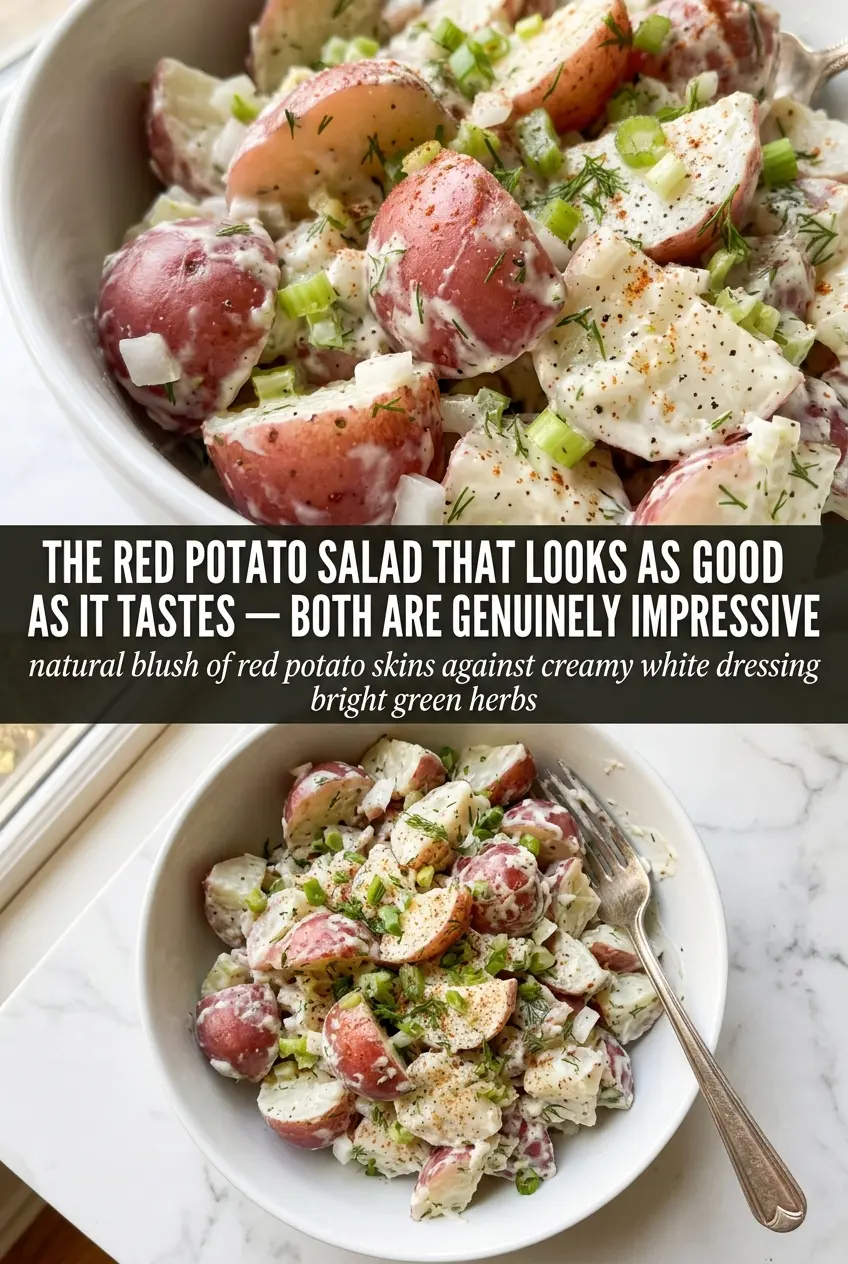
Red Potato Salad
Ingredients
Equipment
Method
- Add red potatoes to a Dutch oven and cover with water; bring to a boil over high heat, then cook until tender, 10–20 minutes. Visual cue: a fork slides into the cubes with little resistance.
- Drain the potatoes and cool them to room temperature, about 15–30 minutes. Visual cue: the cubes look dry on the surface and are no longer steaming.
- In a bowl, mix mayonnaise, Dijon mustard, white wine vinegar, salt, and pepper until smooth. Visual cue: the dressing becomes creamy and evenly tinted.
- Combine the cooled potatoes with celery, red onion, and fresh parsley. Visual cue: all vegetables are evenly distributed across the potato pieces.
- Pour the dressing over the potato mixture and toss until every cube is coated. Visual cue: the salad looks glossy and cohesive, not dry.
- Refrigerate the potato salad for at least 2 hours before serving. Visual cue: it thickens slightly and tastes better after the chill.