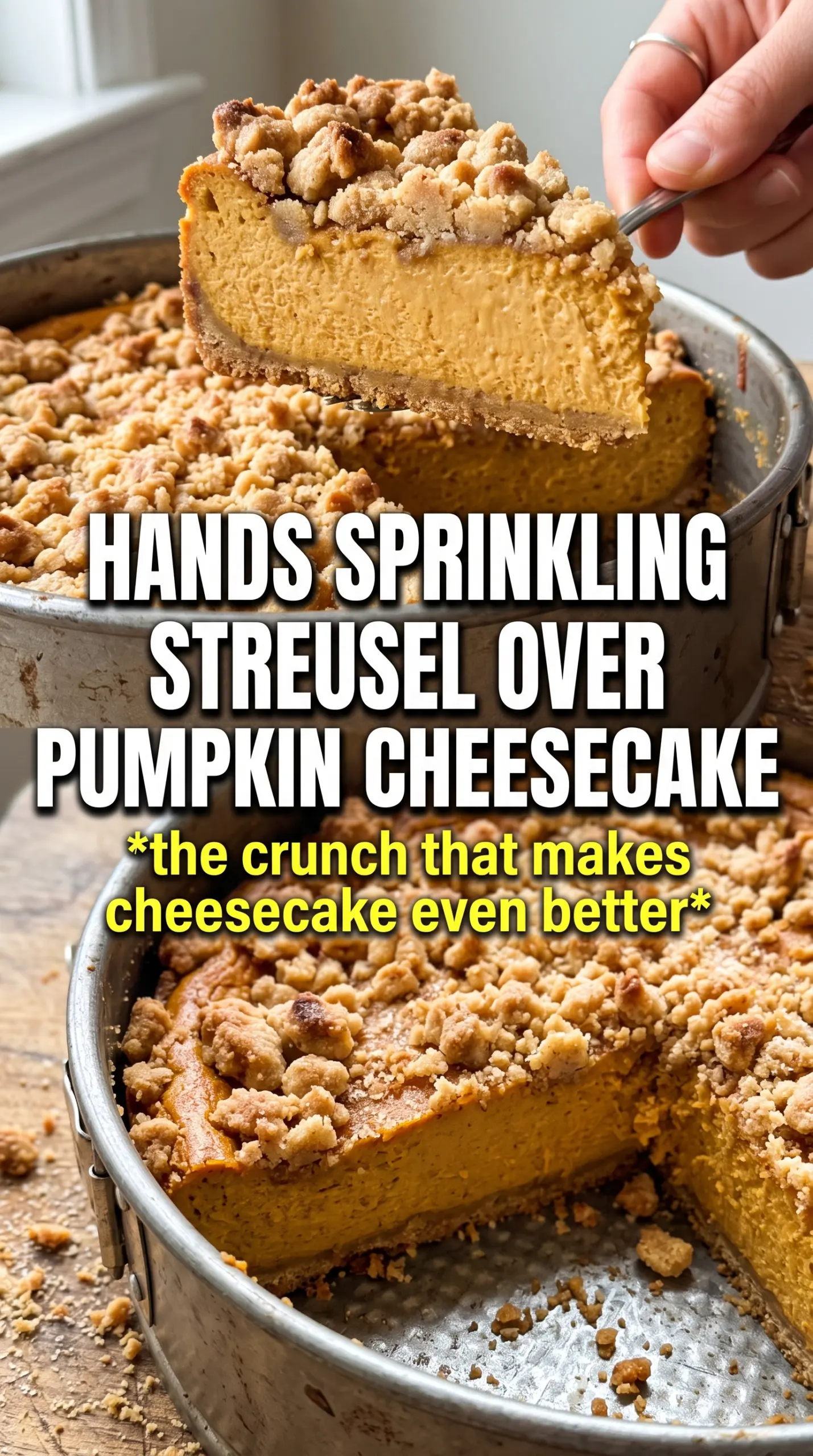
Pumpkin streusel cheesecake gives you the best parts of two desserts at once: a buttery gingersnap crust, a smooth pumpkin-scented cheesecake layer, and a crisp oat streusel that stays golden instead of turning soggy. The caramel drizzle at the end pulls everything together without making the topping too sweet. Each bite has contrast, which is exactly why this version earns a spot on the holiday table and then keeps showing up after that.
The trick is keeping the filling lean and the topping separate. The cream cheese and sour cream give the center enough richness to taste like cheesecake, while the pumpkin adds flavor without making the texture loose. A short prebake on the crust helps it stay firm under the filling, and the streusel uses cold butter so it bakes into little craggy clusters instead of melting into the surface.
Below, I’ve included the part that matters most for a water bath cheesecake: how to tell when it’s actually done before you overbake the center. I also added a few swaps for the crust and a storage note, because this is one dessert that tastes even better after a long chill.
The streusel stayed crisp on top even after chilling, and the pumpkin layer set up with that creamy cheesecake texture instead of going dense. I served it cold with caramel and everyone went back for a second slice.
Save this pumpkin streusel cheesecake for the nights when you want a creamy pumpkin center, a crisp oat topping, and a clean caramel finish.
The Water Bath Is What Keeps the Center Creamy, Not Bouncy
Cheesecake fails when the edges set before the middle has a chance to cook gently. A water bath slows that process down, which keeps the pumpkin filling silky instead of dry and grainy. Without it, the eggs tighten too fast and the top can crack before the center is done.
The other piece that matters is the visual test at the end of baking. The cheesecake should look set around the edges with a slight wobble in the center when you nudge the pan. That wobble is what you want. If the middle looks firm in the oven, it’s already overdone by the time it cools.
- Gingersnap crumbs — These give the crust a spicier, deeper base than graham crackers. The flavor stands up to the pumpkin and caramel instead of getting lost.
- Cream cheese — Use full-fat blocks, not spreadable tub cream cheese. The block style melts and sets properly; the softer products can leave the filling loose.
- Sour cream — This keeps the texture creamy and adds a little tang so the cheesecake doesn’t taste flat. Greek yogurt works in a pinch, but the finish is slightly sharper.
- Cold butter for the streusel — Cold butter is what creates the crumbly topping. If it softens too much, you lose those crisp clusters and the topping bakes into a paste.
What Each Ingredient Is Actually Doing in This Recipe
- Primary ingredient (the star) — Quality matters most. Choose the best you can find.
- Cooking medium (oil, butter, or broth) — This carries flavors and prevents dryness.
- Seasonings (salt, pepper, spices, herbs) — Layer flavors so nothing overpowers. Build depth gradually.
- Aromatics (garlic, onion, herbs) — Cook with fat to bloom flavors. Become the foundation.
- Supporting ingredients — Complement the main ingredient without overpowering it.
- Sauce or liquid (if applicable) — Brings flavors together. Balance richness with acid.
- Acid (lemon, vinegar, wine, or other) — Brightens and prevents flat-tasting results.
- Final finish (garnish, glaze, or sauce) — Prevents one-dimensional taste and adds visual appeal.
Building the Crust, Filling, and Streusel in the Right Order
Pressing and Prebaking the Crust
Mix the gingersnap crumbs, sugar, and melted butter until the texture looks like damp sand, then press it firmly into the bottom of a 9-inch springform pan. Use the bottom of a measuring cup to compact it so the crust slices cleanly later. Bake it for 10 minutes and let it cool just enough to stop steaming before you add the filling. If the crust is loose, the first slice will crumble apart.
Mixing the Cheesecake Without Adding Air
Beat the cream cheese and sugar until smooth, then add the eggs one at a time and stop as soon as each one disappears. Too much whipping adds air, and air is what causes cracks and puffy centers that fall as they cool. Stir in the pumpkin, sour cream, spices, and vanilla just until the batter turns uniform and thick. The finished mixture should look glossy, not fluffy.
Making the Streusel and Finishing the Top
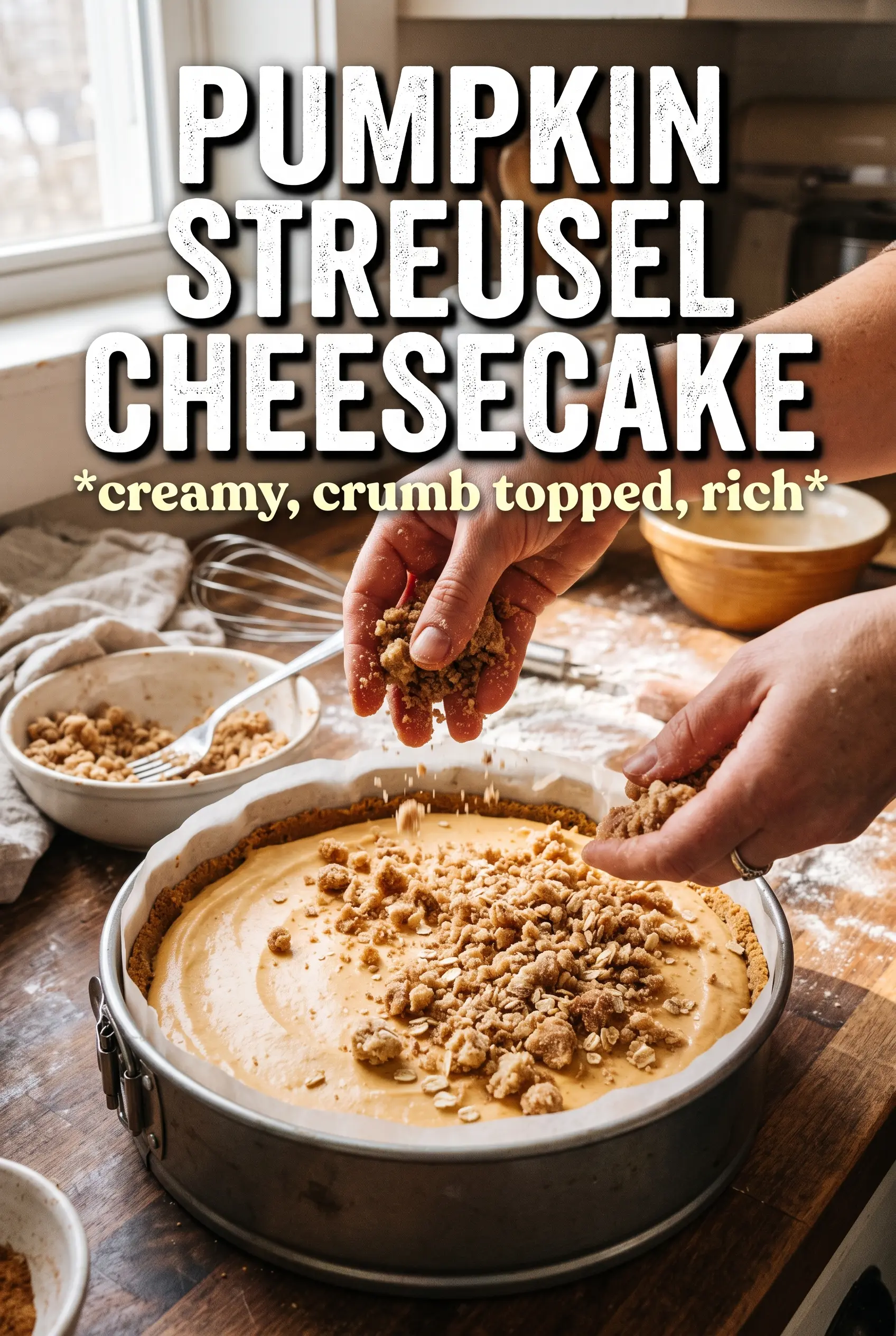
Cut the cold butter into the oats, flour, brown sugar, and cinnamon until the mixture forms rough, uneven clumps. You want crumbly pieces, not a smooth dough. Scatter the streusel generously over the batter so some patches bake into crunchy clusters and some sink just slightly into the surface. That uneven top is what makes the first forkful so good.
Baking Until the Center Still Jumps Slightly
Set the springform pan in a larger pan and pour in hot water halfway up the sides of the outer pan. Bake until the edges are set and the center still has a small wobble, about 65 to 70 minutes. Pull it out and let it cool slowly before chilling it for at least 6 hours. Rushing the chill makes the slices slouch when you cut them.
What to Change When You Need a Different Crust or Topping
Gluten-Free Crust Swap
Use gluten-free gingersnap crumbs or gluten-free graham-style crumbs in the same amount. The texture stays nearly the same because the butter binds the crust, but you may need to press it a little more firmly so it holds together when sliced.
Dairy-Free Version
Use dairy-free cream cheese and a thick dairy-free sour cream substitute, then keep the mixing gentle so the filling doesn’t turn loose. The flavor will be a little less rich and tangy, but the spices and caramel still carry the dessert.
Swap the Gingersnap Base for Graham Cracker
Graham crackers give you a milder, sweeter crust if you want the pumpkin filling to lead. You lose some spice and depth, so add an extra pinch of cinnamon to the crumb mixture if you want to keep the crust from tasting flat.
Storage and Reheating
- Refrigerator: Store covered for up to 5 days. The streusel softens a little after day one, but the cheesecake stays creamy.
- Freezer: Freeze whole or in slices, wrapped tightly and then placed in a freezer bag, for up to 2 months. Thaw overnight in the refrigerator; freezing works well, though the streusel won’t stay quite as crisp.
- Reheating: Serve this cheesecake chilled or let a slice sit at room temperature for 15 to 20 minutes. Don’t microwave it, or the filling can turn greasy and the crust will go soft.
Questions I Get Asked About This Recipe
Pumpkin Streusel Cheesecake
Ingredients
Equipment
Method
- Preheat oven to 325F, then press gingersnap crumbs into a 9-inch springform pan and pack it firmly to an even layer. Bake for 10 minutes, then leave the oven on for the cheesecake.
- Beat cream cheese filling smooth with sugar, eggs, pumpkin, sour cream, pumpkin pie spice, cinnamon, and vanilla until silky. Pour the filling over the baked crust and smooth the top.
- Cut cold butter into oats, flour, brown sugar, and cinnamon until crumbly, keeping the mixture rough and sandy. Scatter the streusel generously over the cheesecake so it covers the surface.
- Bake the cheesecake in a water bath at 325F for 65-70 minutes, until the center is just set with a slight wobble. Cool to room temperature, then refrigerate for 6 hours to fully set.
- Drizzle caramel sauce over the chilled cheesecake right before serving, letting it fall in thin ribbons across the streusel top. Slice and serve chilled for clean, defined layers.