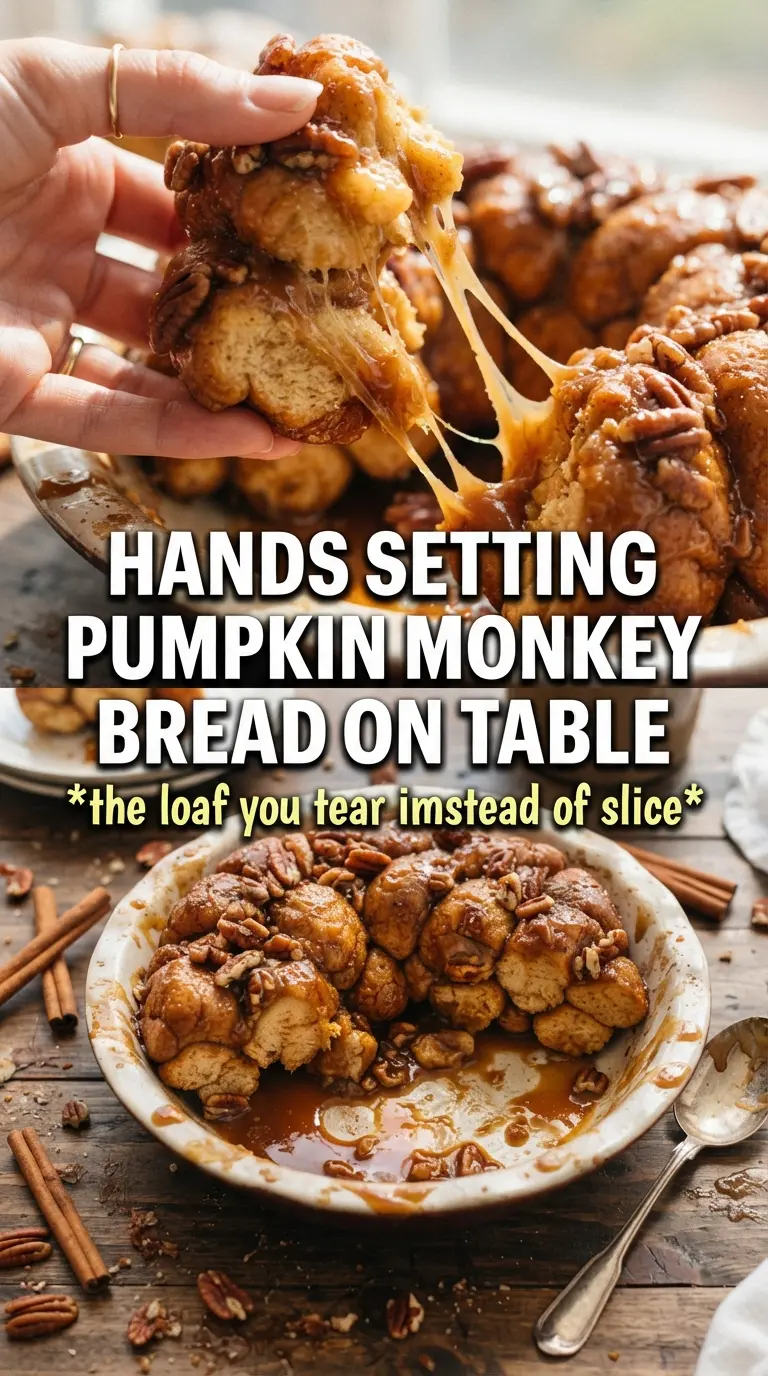
Pumpkin spice monkey bread turns into one of those breakfasts people hover over before it even hits the table. The biscuit pieces bake up soft in the center with sticky caramelized edges, and the cream cheese glaze melts into every nook so each pull-apart bite tastes rich, spiced, and just a little bit messy in the best way.
What makes this version work is the pumpkin in the caramel sauce, not in the dough. That keeps the biscuit layers light while still giving you the warm pumpkin flavor and deep amber color you want. Cutting the biscuits into quarters gives you lots of surface area for the cinnamon sugar to cling to, and layering them loosely in the bundt pan helps the heat move through the middle instead of leaving you with gummy spots.
Below, I’ll walk through the one step that keeps the bread from sticking, the ingredient that keeps the glaze smooth, and a few swaps that make this recipe work whether you want it richer, lighter, or easier to prep ahead.
The caramel soaked into the biscuit pieces perfectly, and the glaze stayed creamy instead of sliding right off. I baked it for 33 minutes and the center came out soft but not doughy.
Save this pumpkin spice monkey bread for the mornings when you want a pull-apart breakfast with gooey caramel and cream cheese glaze.
The Part That Keeps Monkey Bread From Turning Gummy in the Middle
The mistake most people make with monkey bread is packing the pan too tightly and then wondering why the center stays underdone while the edges darken. This dough needs space for hot air to move between the pieces. When the biscuit quarters are tossed well in the spiced sugar, then layered loosely instead of pressed down, the caramel can seep through and bake into every layer without sealing the middle shut.
The bundt pan matters here too. Its shape creates more surface area than a loaf pan, which means better browning and a cleaner release if you grease it well. The other thing to watch is the bake time: you want the top deeply golden and the sugar bubbling around the edges, but the loaf should still feel set when you gently nudge the pan. If it jostles like raw dough in the center, it needs a few more minutes.
What Each Ingredient Is Actually Doing in This Monkey Bread
- Refrigerated biscuit dough — This gives you the soft, pull-apart structure without making a yeast dough from scratch. Use the standard flaky canned biscuits, not the jumbo ones, because smaller pieces bake more evenly and soak up the caramel better.
- Pumpkin puree — This is what gives the caramel its pumpkin flavor and a little body. Use plain pumpkin puree, not pumpkin pie filling, or the sugar level will throw off the sauce and it can turn too loose.
- Pumpkin pie spice and cinnamon — The two work together, but cinnamon gives the stronger edge and pumpkin pie spice rounds it out with clove and ginger. If you only have pumpkin pie spice, use it in both places and add extra cinnamon for a warmer finish.
- Brown sugar — This melts into the butter and pumpkin to make the sticky coating that settles between the biscuit pieces. Light brown sugar works fine, though dark brown sugar will give you a deeper molasses note.
- Cream cheese glaze — This needs to be beaten smooth while the cream cheese is softened. If it’s too cold, you’ll get little lumps that never fully dissolve, and the glaze won’t drizzle cleanly over the warm bread.
Building the Layers So the Caramel Soaks In Instead of Running Off
Tossing the Biscuit Pieces
Cut the biscuits into quarters first, then toss them in the cinnamon sugar until every cut edge is coated. Those rough edges are what grab onto the sugar and caramel, so don’t rush this part or you’ll lose the best sticky bits in the finished bread. If the pieces look pale and dusty in spots, keep tossing until they’re evenly speckled. A large zip-top bag works well here because it coats fast without crushing the dough.
Cooking the Pumpkin Caramel
Melt the butter first, then stir in the brown sugar, pumpkin puree, and spices just until the mixture looks glossy and combined. It should smell warm and thick, but not scorch on the bottom. If the sauce looks grainy, keep stirring over low heat for a minute or two until the sugar melts through. High heat is the fastest way to separate the butter and end up with oily spots on top of the finished bread.
Filling the Bundt Pan
Layer the coated biscuit pieces into the pan and pour the caramel over them as you go, not all at once at the very end. That helps the sauce settle through the cracks instead of pooling only on top. Don’t press the pieces down hard; you want a loose stack so the center cooks through. Once the pan is full, tap it on the counter a couple of times to settle the layers without compacting them.
Baking and Flipping
Bake until the top is deeply golden and the caramel is bubbling around the edges, then invert it immediately onto the serving plate. If you wait too long, the sugar hardens in the pan and can glue the bread in place. If a few pieces stick, lift the pan straight up and nudge them back into place with a spatula instead of trying to pry the whole loaf apart. The glaze should go on while the bread is still warm so it melts into the ridges instead of sitting on top in a thick cap.
Make It Dairy-Free
Use a plant-based butter in the caramel and a dairy-free cream cheese for the glaze. The texture will still be sticky and soft, but the glaze may taste a little sharper, so add the vanilla slowly and stop once it tastes balanced.
Swap in Homemade Biscuit Dough
If you don’t want canned dough, use a soft homemade biscuit dough cut into small pieces. The result will taste a little more buttery and less uniform, but it also needs careful handling because overworked dough bakes up denser and won’t pull apart as neatly.
Make It a Little Less Sweet
Cut the granulated sugar coating by 1/4 cup and use a thinner drizzle of glaze instead of pouring it all on. You’ll still get the pumpkin spice aroma and sticky edges, but the finished bread will read more breakfast than dessert.
Storage and Reheating
- Refrigerator: Store leftovers covered for up to 3 days. The bread softens a little as it sits, but the flavor stays good.
- Freezer: Freeze without the glaze for the best texture. Wrap portions tightly and thaw in the refrigerator before reheating.
- Reheating: Warm individual pieces in the microwave for 15 to 20 seconds or reheat a larger portion in a 300°F oven. Don’t blast it on high heat or the bread turns tough before the center warms through.
Answers to the Questions Worth Asking
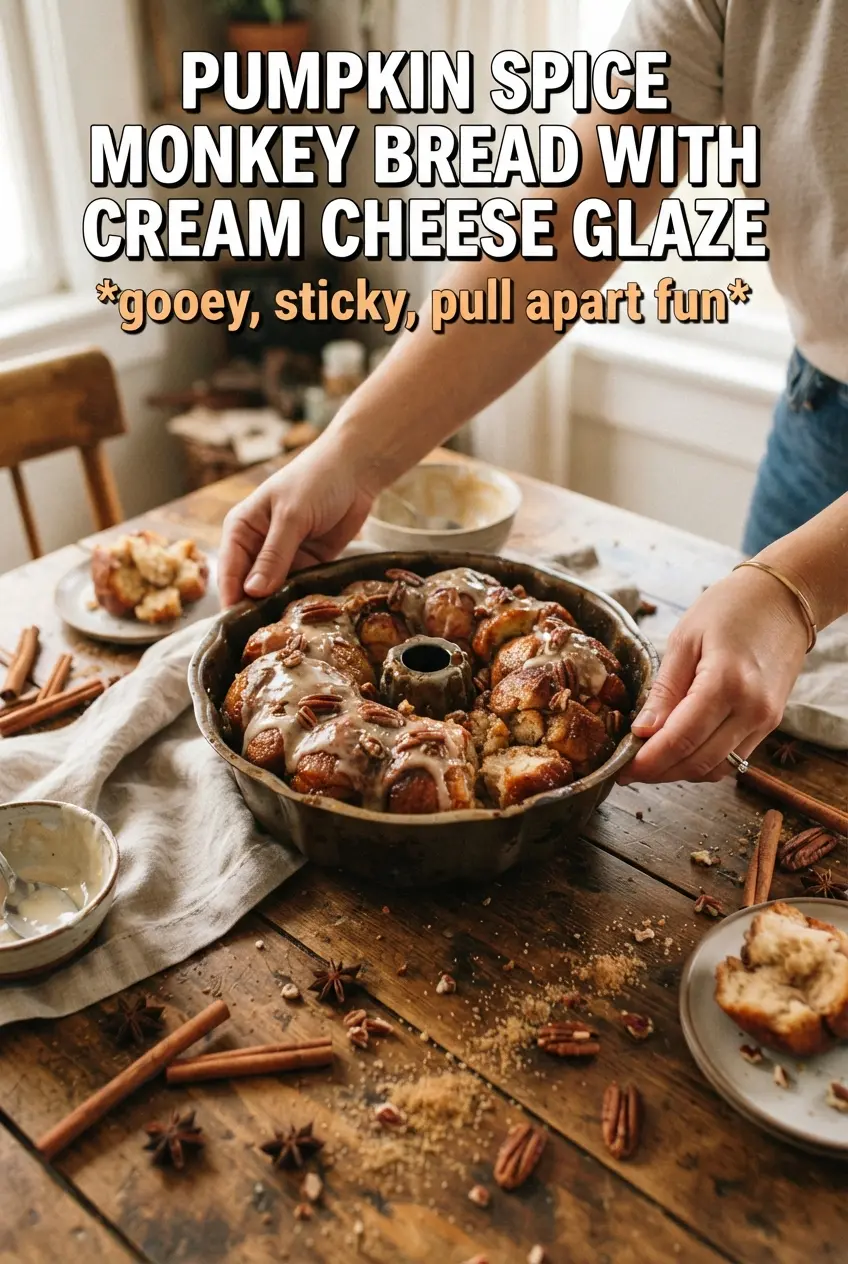
Pumpkin Spice Monkey Bread With Cream Cheese Glaze
Ingredients
Equipment
Method
- Preheat oven to 350F, then grease a bundt pan so the monkey bread releases cleanly.
- Cut the refrigerated biscuit dough into quarters.
- In a bowl, mix granulated sugar, pumpkin pie spice, cinnamon, and nutmeg, then toss biscuit pieces until evenly coated.
- In a Dutch oven, melt unsalted butter over medium heat.
- Stir in brown sugar, then add pumpkin puree, pumpkin pie spice, and cinnamon until smooth and glossy.
- Layer the coated biscuit pieces in the greased bundt pan.
- Pour the caramel sauce over the layered biscuit pieces.
- Bake at 350F for 30-35 minutes, until deep golden and cooked through, with bubbling caramel visible at the edges.
- Invert immediately onto a serving plate so the caramel sets in a shiny layer.
- Rest for 30 minutes to allow the caramel to set before glazing, keeping the top layer intact.
- Beat cream cheese until smooth, then mix in powdered sugar, milk, and vanilla until pourable.
- Drizzle the cream cheese glaze over the warm monkey bread so it melts slightly into the ridges.