Hearty oatmeal cookies get a coffeehouse twist here: crisp edges, a soft center, and a glossy pumpkin spice latte glaze that settles into every ridge. The oats give these cookies real chew, while the espresso in both the dough and the icing keeps the pumpkin from tasting flat or overly sweet.
The part that makes this version work is moisture control. Pumpkin brings great flavor, but it also brings extra water, so the puree gets blotted before it goes into the bowl. That one step keeps the cookies from spreading too much or baking up cakey. The glaze follows the same idea: strong coffee, powdered sugar, and just enough pumpkin to taste like a latte without turning soupy.
Below, I’ve included the exact texture cues I watch for in the oven, plus a few swaps that still keep the cookies chewy and the icing set enough to stack.
The glaze set up beautifully and the cookies stayed chewy for days. Blotting the pumpkin made a huge difference — mine baked up thick instead of puffy and cakey.
Like these pumpkin spice latte iced oatmeal cookies? Save them to Pinterest for the days when you want chewy oatmeal cookies with a coffee-spiced glaze that sets cleanly.
The Pumpkin Purée Trick That Keeps These Cookies Chewy
Pumpkin cookies can go wrong in two directions: too dry and bready, or too wet and cakey. This version stays in the chewy middle because the pumpkin is treated like a supporting ingredient, not the main structure. Blotting it first pulls off enough water that the dough still behaves like an oatmeal cookie instead of a pumpkin muffin in disguise.
The oats help anchor the texture, but they need time to hydrate. That’s why coarsely pulsed oats work better than floury oat dust — you still get those nutty bits that give the cookies their bite. If you process the oats too fine, the dough loses that hearty texture and the cookies can bake up dense.
- Rolled oats — Pulse them just enough to break them down a little. You want a mix of smaller pieces and some larger bits for texture, not oat flour.
- Pumpkin puree — Blot it between paper towels until it looks matte, not wet. Canned pumpkin works perfectly here as long as you remove the extra moisture.
- Espresso powder — This doesn’t make the cookies taste like coffee. It deepens the pumpkin spice and keeps the glaze from tasting one-note. Instant espresso is fine if you crush it smooth.
What Each Ingredient Is Actually Doing in the Dough and Glaze
- All-purpose flour — This gives the cookies enough structure to hold the glaze. A 1:1 gluten-free baking blend can work if it includes xanthan gum, but the cookies may spread a little less and feel slightly softer.
- Brown sugar — It brings moisture and that deeper caramel note that plays well with pumpkin. Dark brown sugar makes the cookies a touch richer; light brown sugar keeps them a little cleaner and more latte-like.
- Butter — Softened butter creams with the sugar to trap air, which helps the cookies lift instead of bake up flat. Don’t use melted butter here or the dough will spread too fast.
- Powdered sugar + coffee for the glaze — This is where the latte part really happens. Use strong coffee or espresso, not weak brewed coffee, or the glaze will need too much liquid and set too thin.
Getting the Dough and Glaze to the Right Point
Building the butter base
Beat the softened butter and brown sugar until the mixture looks lighter and a little fluffy, not greasy and collapsed. That step sets up the cookie’s lift. If the butter is too warm, the dough will feel loose and the cookies will spread before the center has a chance to set.
Adding the pumpkin without watering down the dough
Stir in the blotted pumpkin, eggs, and vanilla until the mixture looks smooth. The dough may look a little curdled at first, but it comes together once the dry ingredients go in. If the pumpkin was still too wet, the dough will look slack and sticky instead of scoopable.
Finishing with the dry ingredients
Fold in the oat mixture and flour mixture just until no dry streaks remain. Stop as soon as the dough looks uniform. Overmixing here turns the cookies tough and makes the oats lose their pleasant chew. Scoop 2-tablespoon rounds and leave space between them so the edges can spread slightly.
Baking and glazing at the right moment
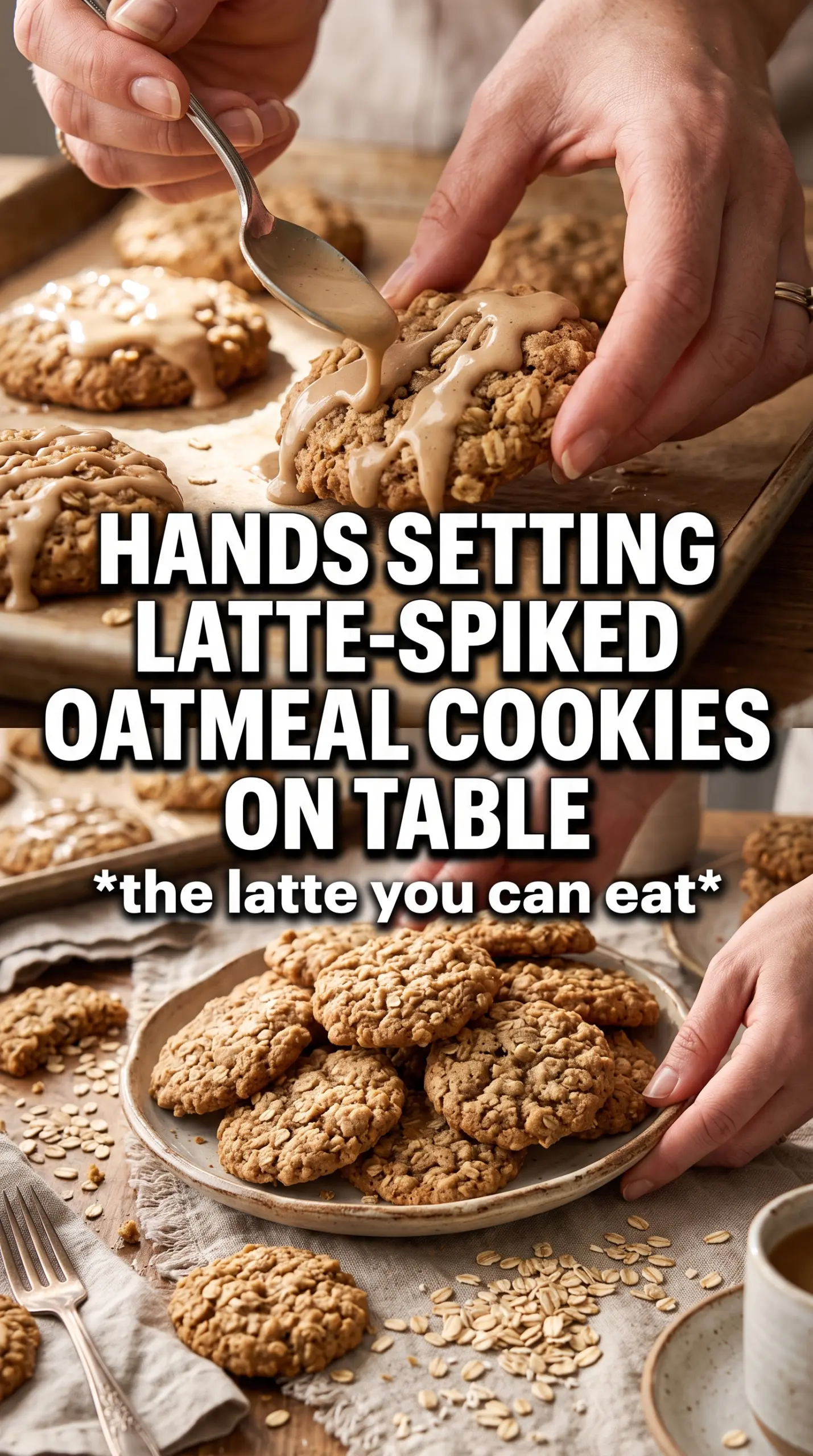
Bake until the edges look set and lightly golden and the centers still look a little soft. They’ll finish setting on the pan as they cool. Cool them completely before glazing or the icing will melt and slide off. The glaze should be thick enough to mound on a spoon, then settle into a smooth cap as it sets.
Add chopped pecans for a praline edge
Fold in 3/4 cup chopped pecans with the dry ingredients. They add crunch and a buttery finish that fits the spice and coffee notes. Walnuts work too, but pecans taste softer and a little more bakery-style.
Make them dairy-free
Swap the butter for a solid plant-based butter stick, not a tub spread. The texture stays close, though the cookies may brown a little less deeply. For the glaze, use the same coffee mixture and keep the liquid amount low so it still sets.
Dial back the coffee without losing the latte effect
If you want a gentler coffee note, cut the espresso powder in the dough to 1/2 teaspoon and use strong brewed coffee instead of espresso in the glaze. The cookies will taste more pumpkin-forward, but they’ll still read as a latte cookie because the spice and coffee glaze stay in place.
Storage and Reheating
- Refrigerator: Store in an airtight container for up to 5 days. The glaze stays set, though the cookies soften slightly by day two.
- Freezer: Freeze the unglazed cookies for up to 2 months. Glaze them after thawing for the cleanest finish; glazed cookies can be frozen, but the icing may lose some shine.
- Reheating: Warm unglazed cookies at room temperature or for a few seconds in the microwave. Don’t heat glazed cookies hard or the icing will melt and get tacky instead of staying smooth.
Questions I Get Asked About This Recipe

Pumpkin Spice Latte Iced Oatmeal Cookies
Ingredients
Equipment
Method
- Pulse rolled oats coarsely in a blender, aiming for visible oat flakes. Keep going until the oats look chunky rather than powdery.
- Beat unsalted butter, softened and brown sugar, packed together until creamy and evenly combined. The mixture should look smoother and slightly lighter.
- Add pumpkin (blotted dry) and mix until the dough looks evenly tinted with no dry patches. Scrape the bowl so all pumpkin is incorporated.
- Add eggs and vanilla, then mix just until the batter is cohesive. Stop as soon as the eggs disappear to avoid overmixing.
- Fold in the pulsed oat mixture until no oat streaks remain. The dough will feel thicker and textured.
- Fold in all-purpose flour, baking soda, pumpkin pie spice, cinnamon, espresso powder, and salt until evenly distributed. Stop when the dry flour is no longer visible.
- Scoop dough into 2-tablespoon rounds and place them on a sheet pan with space between cookies. Flatten each mound slightly for even baking.
- Bake at 375F for 10-12 minutes, until edges look set and lightly golden. Pull them when centers still look soft but not wet.
- Cool the cookies completely before glazing. If warm, the glaze will melt and run off.
- Stir powdered sugar with strong coffee or espresso, pumpkin puree, pumpkin pie spice, and cinnamon until a thick, pourable glaze forms. The texture should ribbon slowly off a spoon.
- Spoon the pumpkin spice latte glaze over each cookie and let it set. Watch for the glaze to firm up into a smooth top before stacking.