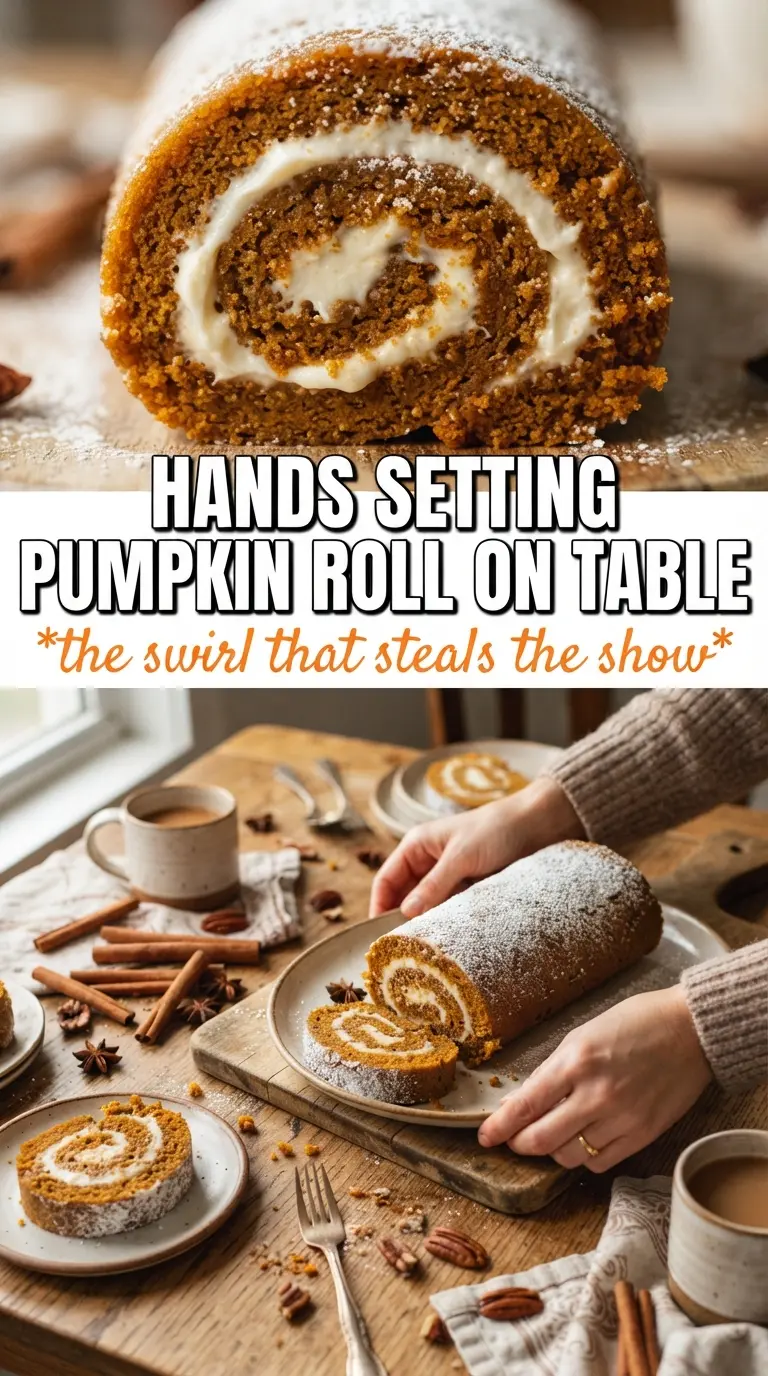
Pumpkin roll lands in that rare dessert category where the slices look bakery-made, but the flavor stays familiar and homey. The cake is soft and springy, the cream cheese filling sets into a cool, tangy layer, and the spiral gives every bite a little contrast instead of one heavy mouthful. It’s the kind of dessert people keep reaching back for because it eats cleanly and tastes even better after a short chill.
What makes this version work is the balance in the cake batter and the timing of the roll. The eggs and sugar get beaten long enough to build structure, which helps the thin pumpkin cake stay flexible instead of cracking. A towel dusted with powdered sugar does more than keep things from sticking — it trains the cake into its shape while it’s still warm, so the final roll doesn’t have to fight the pan.
Below you’ll find the small details that matter most: how to avoid a dry sponge, when the filling is soft enough to spread without tearing the cake, and how to dust it at the end so the swirl still shows through.
The cake rolled up without a single crack, and the cream cheese filling stayed thick instead of sliding out when I sliced it. I chilled it for an hour like you said, and the spiral looked perfect on the plate.
Love the pumpkin spice swirl and cream cheese filling? Save this pumpkin roll for the dessert table when you want a make-ahead cake that slices cleanly.
The Trick to a Pumpkin Cake That Rolls Without Cracking
The crack point with pumpkin roll usually starts before the cake ever hits the towel. If the batter is overmixed after the flour goes in, or if it bakes even a minute too long, the cake loses the flexibility it needs and splits as soon as you lift it. This recipe stays reliable because the batter is thin and the bake time is short, which gives you a soft sheet cake that still has enough strength to hold the spiral.
The other piece that matters is the first roll. You’re not rolling for shape yet; you’re teaching the cake to bend while it’s warm. That first roll in a powdered sugar-dusted towel keeps the surface from sticking to itself and helps prevent the hard crease that causes tearing later.
- Eggs — These build the structure, so beating them with the sugar until pale and thick matters more than people think. That extra air keeps the cake light enough to roll.
- Pumpkin puree — Use plain pumpkin puree, not pumpkin pie filling. Pie filling is already sweetened and spiced, which throws off both the texture and the balance.
- Pumpkin pie spice and cinnamon — The two together give the cake depth without making it taste muddy. If you only have pumpkin pie spice, you can use it in place of the cinnamon and spice mix, but the flavor will be a little less layered.
- Parchment and the towel — The parchment helps the cake release cleanly, and the towel gives it a safe surface to cool in shape. Skipping either one makes the roll more fragile than it needs to be.
What Each Ingredient Is Actually Doing in the Spiral
- All-purpose flour — This keeps the cake tender but stable. Don’t add extra for a thicker batter; the thin sheet is what rolls cleanly.
- Baking powder and baking soda — Both are needed here. Baking soda reacts with the pumpkin and helps browning, while baking powder gives the cake a little lift so it doesn’t bake up dense.
- Cream cheese — Full-fat cream cheese gives the filling its tang and body. Low-fat versions soften too much and can turn loose after chilling.
- Butter — Softened butter makes the filling silky instead of grainy. If it’s too cold, you’ll end up with little lumps that won’t smooth out.
- Powdered sugar — In the filling, it sweetens and thickens at the same time. On the towel and top of the roll, it keeps the cake from sticking and gives that classic finish.
Rolling, Filling, and Chilling Without Losing the Swirl
Building the Batter
Beat the eggs and sugar until the mixture looks pale, thick, and slightly foamy. That step is doing the work that butter would normally do in a cake, so don’t rush it. Once the pumpkin and vanilla go in, the batter will look looser, and that’s normal. Fold in the dry ingredients just until the flour disappears; overmixing at this stage makes the cake tougher and harder to roll.
Baking the Thin Sheet
Spread the batter evenly into the lined jelly roll pan so it reaches the corners without pooling in the middle. Bake just until the top springs back when touched and the cake pulls slightly from the sides, usually 11 to 13 minutes. If it bakes past that point, the edges dry out first and those are the spots that crack when you roll it.
The First Warm Roll
Invert the cake onto a towel dusted with powdered sugar, peel off the parchment, and roll it up from the short end while it’s still warm. The towel should be snug but not tight. If the cake sticks, it usually means the towel wasn’t dusted well enough or the cake sat too long before rolling. Let it cool completely in that rolled shape so it remembers the curve.
Filling and Final Chill
Beat the filling until it’s smooth and spreadable, then unroll the cake gently and spread the filling almost to the edges, leaving a small border so it doesn’t squeeze out. Re-roll without the towel and place it seam-side down. Chill for at least an hour before slicing; that chill firms the filling and gives you clean spirals instead of a messy center.
Gluten-Free Pumpkin Roll
Use a cup-for-cup gluten-free flour blend that includes xanthan gum. The cake will still roll, but it can be a touch more delicate, so don’t overbake it or try to move it around while it’s hot.
Dairy-Free Filling
Use a dairy-free cream cheese and a plant-based butter that’s meant for baking. The texture will be a little softer than the classic version, so chill it until it feels firm before slicing.
Extra-Spiced Version
Add a pinch of nutmeg or ginger to the batter if you want a sharper spice note. Keep the amount small, though, because too much spice can overpower the cream cheese filling instead of complementing it.
Storage and Reheating
- Refrigerator: Store tightly wrapped for up to 4 days. The cake actually slices better after a full chill, but the powdered sugar on top may dissolve a little.
- Freezer: It freezes well. Wrap the whole roll or individual slices tightly, then thaw in the refrigerator overnight before serving.
- Reheating: This dessert is meant to be served cold or cool. Don’t microwave it; that softens the filling too much and blurs the swirl.
Answers to the Questions Worth Asking
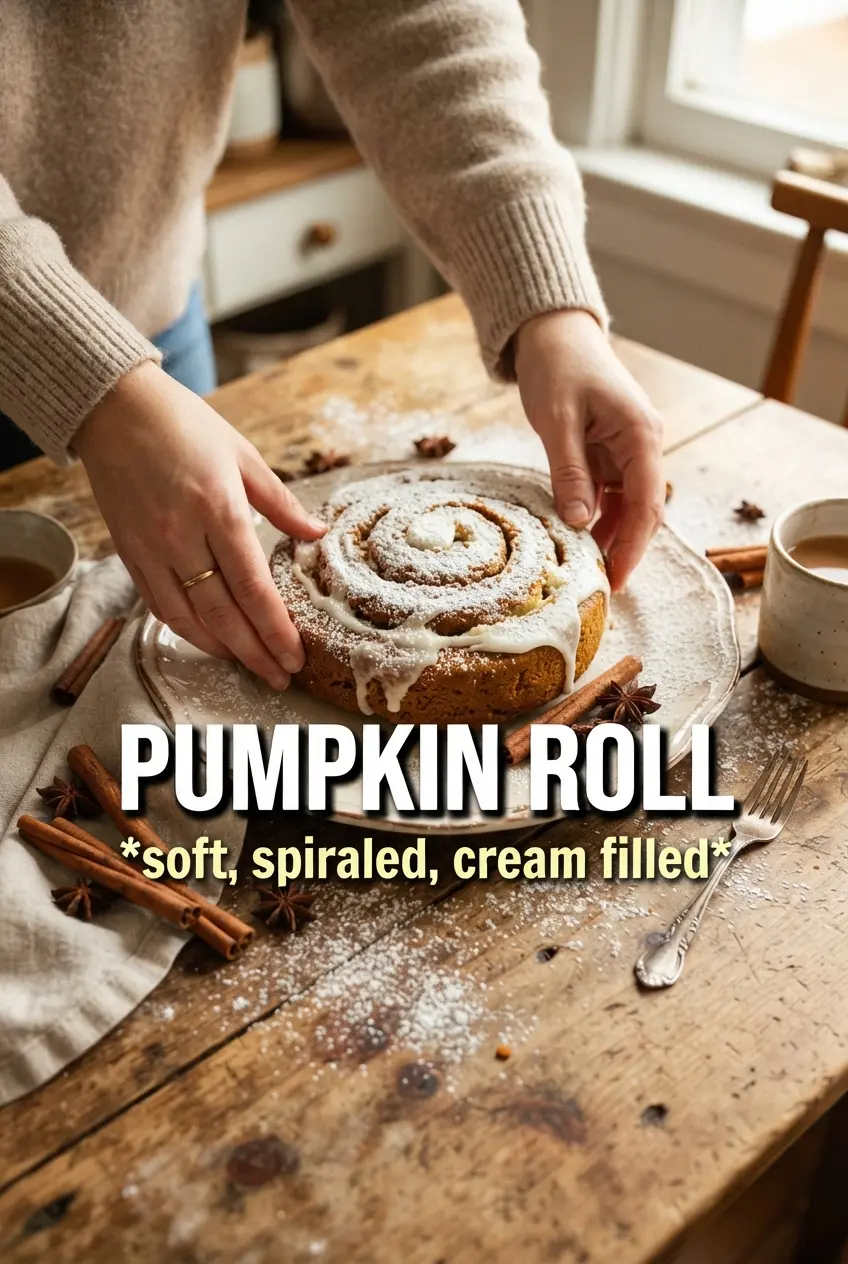
Pumpkin Roll
Ingredients
Equipment
Method
- Preheat oven to 375F, grease a 15x10 jelly roll pan, line with parchment, then grease again so the cake releases cleanly.
- Beat eggs and granulated sugar until light and fluffy, then mix in pumpkin puree and vanilla until evenly combined.
- Fold in all-purpose flour, baking powder, baking soda, pumpkin pie spice, cinnamon, and salt just until no dry streaks remain.
- Spread batter evenly in the prepared pan and bake 11-13 minutes at 375F, until the center springs back when lightly touched.
- Invert the cake onto a powdered sugar-dusted towel and peel off the parchment.
- Roll the cake in the towel from the short end and cool completely so it holds the spiral shape.
- Beat cream cheese, powdered sugar, unsalted butter, vanilla, and cinnamon until smooth and spreadable.
- Unroll the cooled cake, spread the cream cheese filling evenly, then re-roll without the towel.
- Refrigerate 1 hour to set, then dust with powdered sugar before slicing.