Pumpkin roll cake earns its place on the dessert table because the slice looks as good as it tastes: tender spice cake wrapped around a cool, tangy cream cheese filling, with a clean spiral that holds together when you cut it. The cake stays soft, the filling stays fluffy, and the whole thing tastes even better after it has had time to chill.
The trick is handling the cake while it’s warm enough to bend but not so hot that it tears. A jelly roll pan gives you the thin layer you need for a tight spiral, and the powdered sugar on the towel keeps the cake from sticking as it cools. The filling is simple, but the butter and cream cheese need to be truly soft so it beats smooth instead of turning lumpy.
Below, I’ll walk you through the part that matters most: rolling the cake before it cracks, then filling it so the spiral stays neat when you slice it. There’s also a note on make-ahead storage, because this dessert is at its best after a good chill.
The cake rolled up without cracking, and the filling set up creamy instead of sliding out. Slicing after the chill made the spiral come out clean every time.
Like this pumpkin roll cake? Save it to Pinterest for the dessert that slices into a perfect cream cheese swirl every time.
The Roll That Cracks When You Wait Too Long
The biggest mistake with pumpkin roll cake is letting the cake cool flat in the pan before you shape it. By the time it’s fully cool, it loses the flexibility that makes the spiral possible, and cracks show up the moment you try to roll it. Rolling it in a powdered sugar-dusted towel while it’s still warm sets the curve early, which is what keeps the final cake neat.
The other trap is overbaking. This cake is thin, so it only needs enough time to spring back when touched. If it goes dry, it won’t crack from one dramatic mistake — it will crack from a thousand tiny ones as you roll it.
- Warm cake, not hot cake — You want enough heat left in the crumb to bend without breaking. Too hot and it steams itself soggy in the towel; too cool and it stiffens.
- Powdered sugar on the towel — This creates a dry barrier so the cake lifts cleanly after cooling. Plain towel fabric can stick to the surface and tear it.
- Short-end roll — Rolling from the short end gives you more spirals in each slice. That’s how you get the classic bakery look.
What the Filling Needs to Stay Smooth and Spreadable
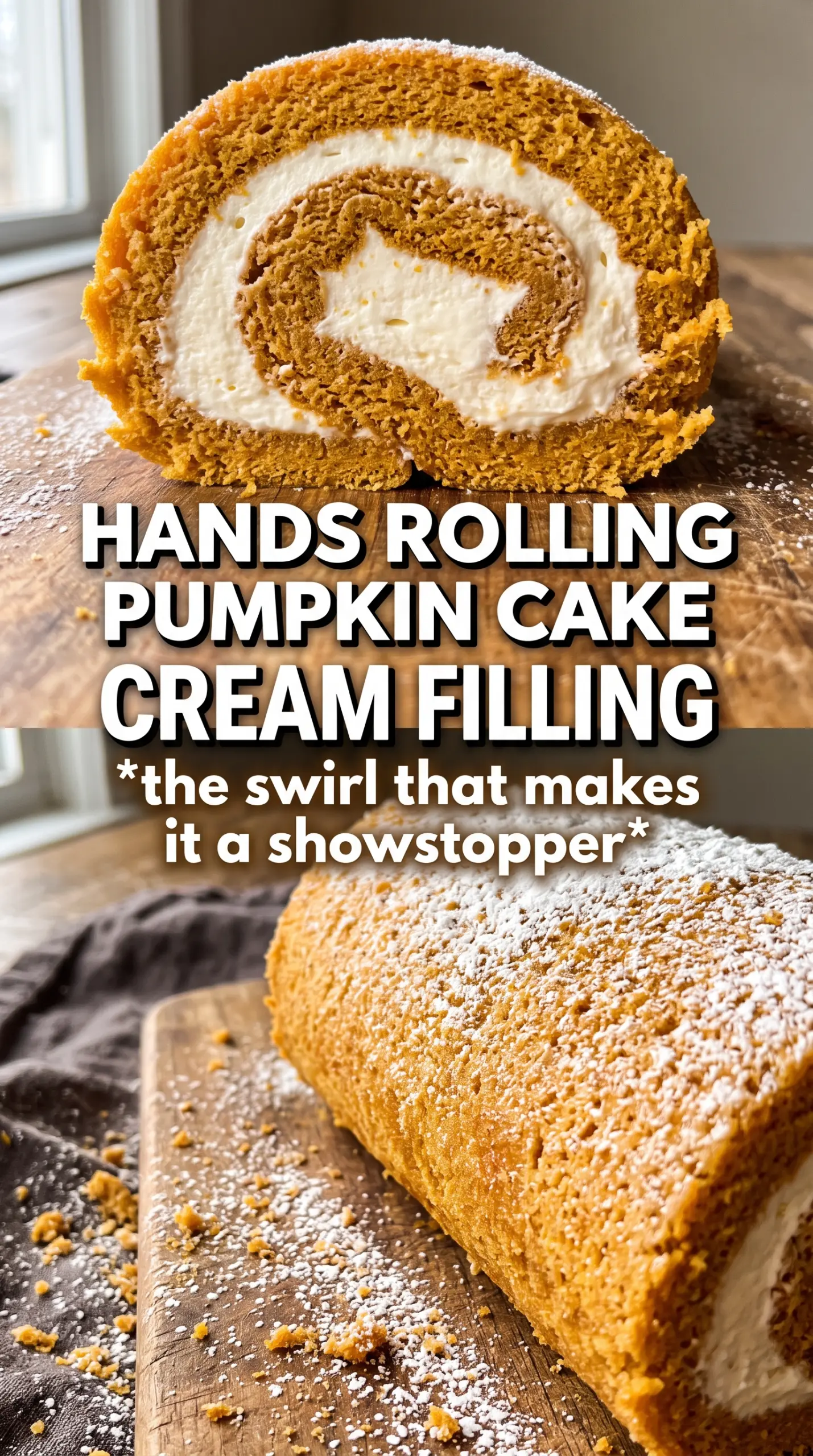
- Cream cheese — Full-fat cream cheese gives the filling its tang and body. Low-fat versions can go loose and a little grainy, which makes the swirl less clean.
- Butter — Softened butter makes the filling lighter and helps it spread without tearing the cake. If it’s even slightly cold, you’ll end up with little lumps that never fully disappear.
- Powdered sugar — This sweetens the filling and thickens it at the same time. Granulated sugar won’t dissolve the same way and can leave the filling gritty.
- Pumpkin puree — Use plain pumpkin puree, not pumpkin pie filling. The pie filling is already sweetened and spiced, which throws off both the cake texture and the balance of the filling.
Getting the Spiral Set Without Smearing the Filling
Whipping the Batter
Beat the eggs and sugar until the mixture turns thick, pale, and slightly ribbony. That air matters because this cake doesn’t rely on much flour for structure. When you fold in the dry ingredients, stop as soon as the batter looks smooth; overmixing tightens the crumb and makes the cake less flexible.
Baking in a Thin Layer
Spread the batter evenly into the parchment-lined jelly roll pan and bake just until the center springs back when touched. If the edges pull away and the top looks deeply browned, it has gone too far. A dry cake will still taste fine, but it won’t roll the same way.
The First Roll While It’s Warm
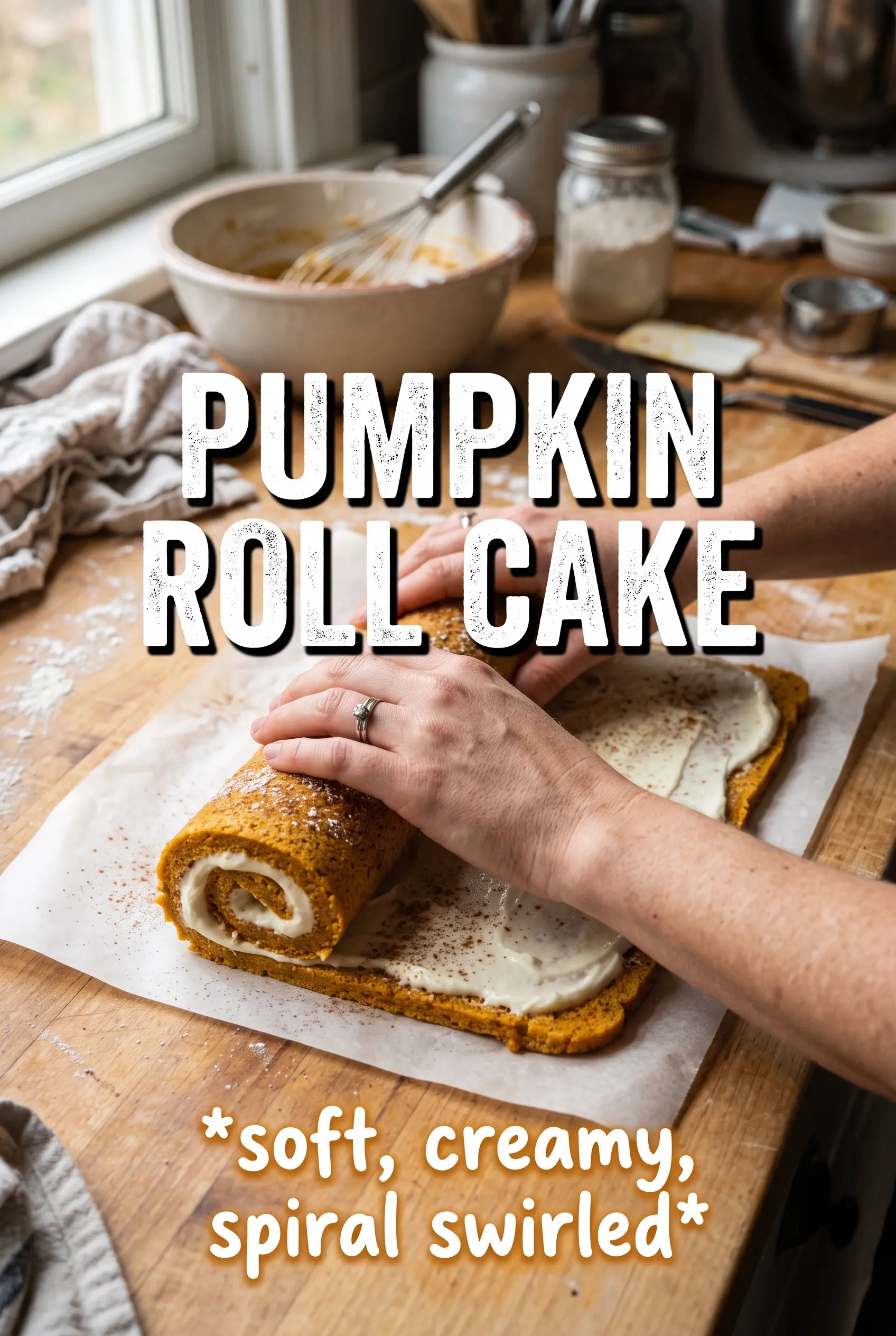
Turn the cake out onto the sugared towel, peel off the parchment, and roll it up right away from the short end. Don’t press hard; guide it into shape so it learns the curve instead of splitting against it. Let it cool completely in that rolled shape, because that’s what trains the cake to stay round later.
Filling and Finishing the Roll
Unroll the cooled cake gently, spread the filling in an even layer, and leave a small border at the edges so it doesn’t squeeze out when you roll it back up. Roll it again without the towel, seam-side down, and chill it before slicing. That rest time firms the filling and gives you the cleanest cut.
Gluten-Free Pumpkin Roll Cake
Use a 1:1 gluten-free flour blend that includes xanthan gum. The cake will be a little more delicate when warm, so handle the first roll gently and cool it fully before filling. The flavor stays the same, but the crumb is slightly softer and benefits from that chill.
Dairy-Free Filling
Swap in dairy-free cream cheese and a plant-based butter that firms up when chilled. The filling won’t be quite as tangy, so add a tiny pinch of salt if it tastes flat. Keep the texture thick enough to spread, not pour.
Extra-Spiced Version
Add another 1/2 teaspoon cinnamon or a pinch of nutmeg to the cake batter if you want a stronger spice note. Don’t keep adding pumpkin pie spice indefinitely; too much spice can make the cake taste muddy instead of warm and balanced.
Storage and Reheating
- Refrigerator: Store tightly wrapped for up to 4 days. The filling stays best when chilled, and the cake actually slices more cleanly on day two.
- Freezer: Freeze the whole roll or individual slices, wrapped well, for up to 2 months. Thaw overnight in the fridge so the filling doesn’t weep.
- Reheating: This dessert is meant to be served cold or cool, not warmed. If you want to take the chill off, let a slice sit at room temperature for 15 to 20 minutes; microwave heat softens the filling too much and can collapse the spiral.
Answers to the Questions Worth Asking
Pumpkin Roll Cake
Ingredients
Equipment
Method
- Preheat the oven to 375F, then grease a 15x10 jelly roll pan and line it with parchment for easy release.
- Beat the eggs and granulated sugar until thick, then add pumpkin puree and vanilla and mix until smooth.
- Fold in all-purpose flour, baking powder, baking soda, pumpkin pie spice, cinnamon, and salt until no dry streaks remain.
- Spread the batter evenly in the prepared pan, then bake for 11-13 minutes at 375F until the top springs back when touched.
- Invert the hot cake onto a powdered sugar-dusted kitchen towel and peel off the parchment.
- Roll the cake up from the short end in the towel and cool completely, seam-side down, so it keeps its spiral shape.
- Beat the cream cheese, powdered sugar, unsalted butter, vanilla, and cinnamon until smooth.
- Unroll the cooled cake and spread the filling evenly, leaving the edges close to filled without overloading.
- Re-roll without the towel and refrigerate for 1 hour so the filling firms up and slices cleanly.
- Dust the pumpkin roll cake with powdered sugar, then slice and serve.