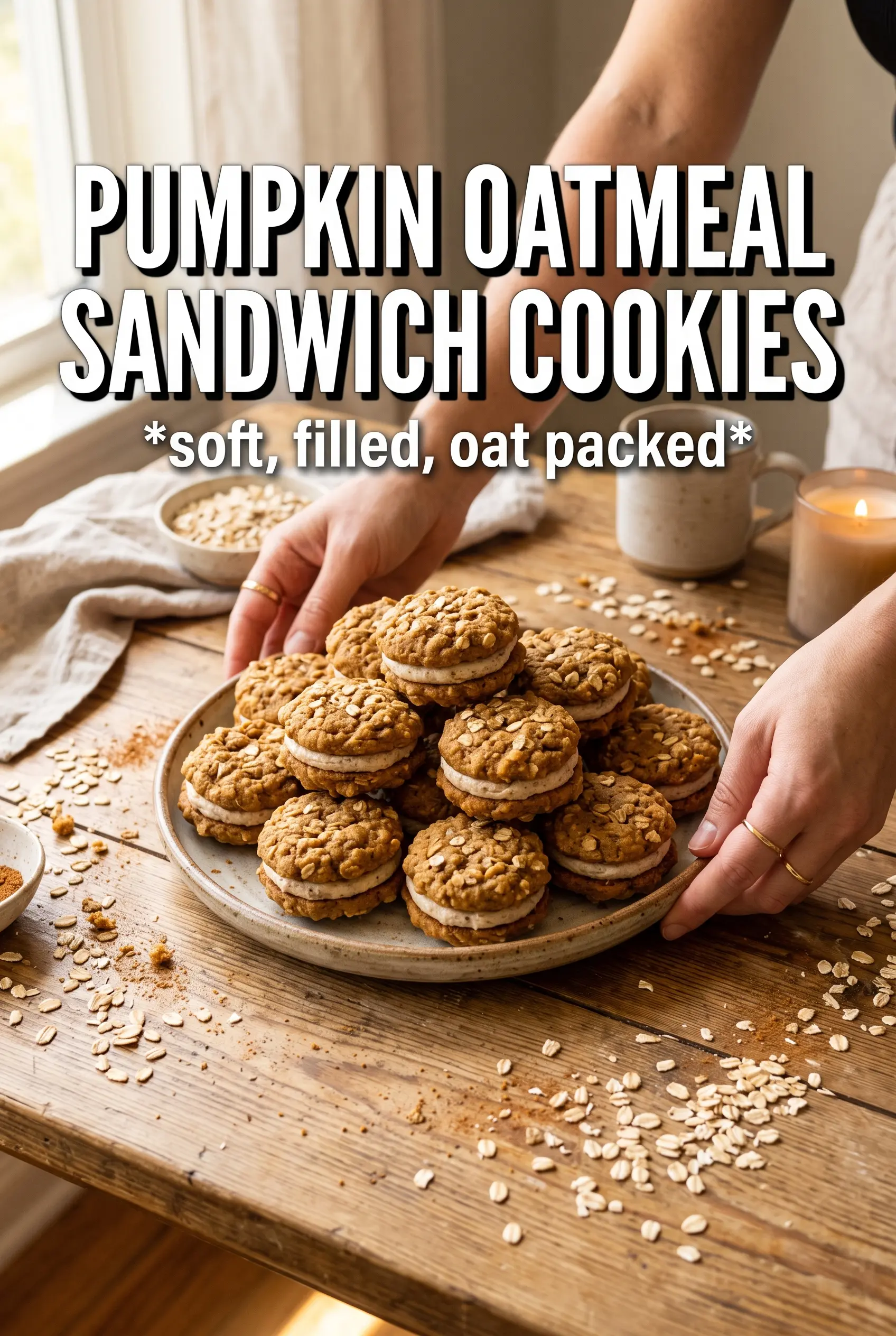
Pumpkin oatmeal sandwich cookies bake up soft at the center, lightly crisp around the edges, and packed with enough warm spice to taste like autumn without turning heavy. The oats give the cookies a hearty chew, while the cinnamon cream cheese filling lands smooth, cool, and thick enough to hold the sandwich together without squishing out the sides. They’re the kind of cookie that disappears fast because one bite gives you the contrast people actually remember: tender cookie, creamy filling, and just enough cinnamon to make the pumpkin taste round and cozy.
The part that makes this version work is the pumpkin handling. Too much moisture turns oatmeal cookies cakey and dull, so the pumpkin gets blotted first, which keeps the dough thick enough to scoop cleanly and bake with a real cookie texture. The other trick is cooling the cookies all the way before filling them. If they’re even slightly warm, the cream cheese layer softens and slides, and you lose that neat bakery-style sandwich look.
Below, I’ve included the texture cue I watch for at the oven and the small filling adjustment that keeps the center fluffy instead of runny. If you’ve ever had sandwich cookies that leaned greasy or sank in the middle, this method fixes both problems.
The cookies stayed soft for days and the filling set up thick instead of running out the sides. Blotting the pumpkin made a huge difference — mine baked into proper sandwich cookies, not muffin tops.
Save these pumpkin oatmeal sandwich cookies for the days you want soft spiced cookies with a thick cinnamon cream cheese center.
The Pumpkin Moisture Trap That Ruins the Texture
Oatmeal cookies can go wrong fast when pumpkin is added without any adjustment. The dough gets slack, the cookies spread too much, and the centers bake up soft in the wrong way — more cakey than chewy. Blotting the pumpkin first pulls out enough excess moisture to keep the dough scoopable and helps the oats stay prominent instead of dissolving into the background.
The other thing to watch is the bake time. These cookies should look set at the edges and still a little soft in the center when they come out. If you wait until the tops look fully dry, they’ll finish too firm once cooled and won’t have that tender bite sandwich cookies need.
- Blotted pumpkin — This is what keeps the cookies from becoming dense and damp. A paper towel press is enough; you’re not drying it out completely, just taking away the extra liquid that would throw off the dough.
- Rolled oats — Old-fashioned oats give the best chew and the most obvious cookie texture. Quick oats can work in a pinch, but the cookies come out softer and less substantial.
- Brown sugar — It brings moisture and a deeper, molasses-like note that pairs with pumpkin. Granulated sugar won’t give the same softness.
- Butter — Use real butter here. It helps the cookies spread just enough and gives the edges that light, toasty finish that oil can’t match.
What the Cream Cheese Filling Is Doing Beyond Sweetness
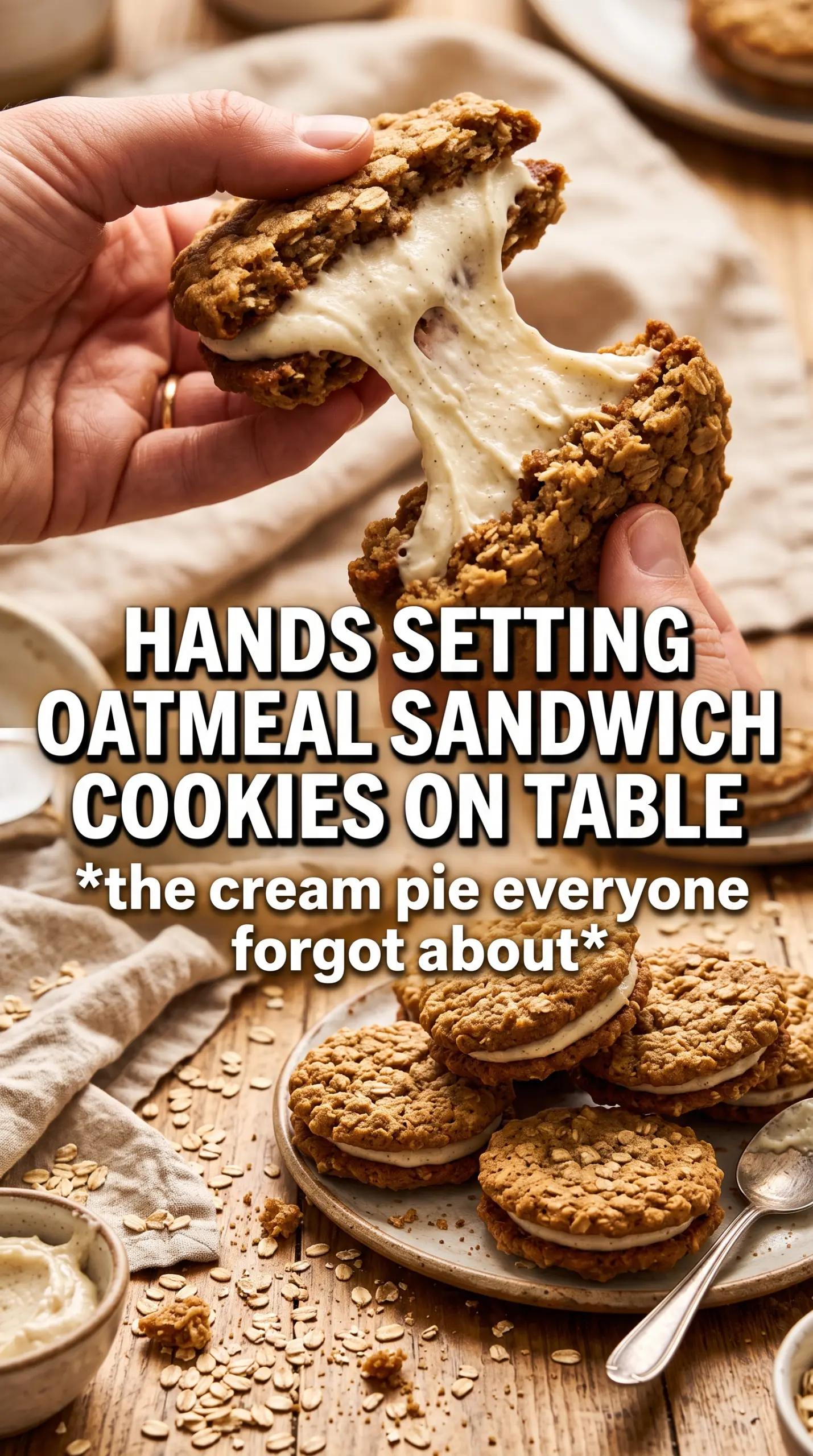
The filling isn’t just there to hold the cookies together. It cuts through the spice with tang, which keeps the sandwich from tasting flat or overly sweet. Cream cheese gives the filling structure once beaten with powdered sugar, while the butter adds body so it pipes or spreads smoothly without feeling heavy.
Softened ingredients matter here. If the cream cheese or butter is cold, the filling turns lumpy before it ever gets fluffy, and you’ll keep beating it longer than you should. The best result comes from ingredients that press easily under a fingertip and blend into a thick, smooth cream in a couple of minutes.
- Cream cheese — Full-fat cream cheese gives the filling the right tang and thickness. Neufchâtel works, but the filling will be a touch softer.
- Powdered sugar — This dissolves into the filling cleanly and gives it structure. Granulated sugar leaves it gritty.
- Cinnamon and nutmeg — These carry the pumpkin flavor into the filling so every bite tastes complete, not just the cookie.
- Vanilla — It rounds out the sharpness of the cream cheese and makes the filling taste fuller. Don’t skip it.
Building the Dough Before the Cookies Spread
Mix the butter, sugar, and pumpkin first
Beat the butter and brown sugar until the mixture looks lightened and a little fluffy, then mix in the blotted pumpkin, eggs, and vanilla. The pumpkin won’t make the mixture airy, and that’s fine — you’re looking for a smooth, cohesive base. If the pumpkin still seems wet at this stage, stop and blot it again rather than adding extra flour later, which can make the cookies dry.
Fold in the dry ingredients gently
Add the flour mixture and oats, then mix just until the last streaks disappear. Overmixing tightens the dough and makes the cookies tougher, especially once the oats go in. The dough should hold its shape when scooped and feel soft, not pourable.
Bake until set at the edges
Scoop 2-tablespoon rounds and give them space on the pan. Bake at 375°F for 10 to 12 minutes, watching for lightly browned edges and tops that no longer look wet. If the cookies are pale but still soft, pull them anyway — they firm as they cool, and that’s what keeps them tender instead of dry.
Cool completely before filling
Move the cookies to a rack and let them cool all the way through before pairing them up. Warm cookies melt the filling from the inside out, and you end up with a sliding mess instead of a clean sandwich. Once cool, match the cookies by size so the filling stays even from edge to edge.
Make Them Dairy-Free
Use a plant-based butter in the cookies and a dairy-free cream cheese for the filling. The cookies stay close in texture, but the filling may be a little softer, so chill it for 15 to 20 minutes before sandwiching if it feels loose.
Swap the Filling Flavor
Add a pinch of cloves or a little orange zest to the filling if you want a brighter finish. That keeps the cookies from tasting one-note and gives the spice a sharper edge.
Make Smaller Tea Cookies
Use 1-tablespoon scoops and shorten the bake time by a couple of minutes. You’ll get more sandwich cookies with a higher filling-to-cookie ratio, which makes them feel more delicate and a little fancier.
Storage and Reheating
- Refrigerator: Store in an airtight container for up to 5 days. The cookies soften a bit as they sit because of the filling, which is normal.
- Freezer: Freeze assembled cookies in a single layer until firm, then transfer to a container with parchment between layers. They freeze well for up to 2 months.
- Reheating: Thaw in the refrigerator or at room temperature. Don’t microwave them unless you want the filling to get too soft and slide.
Questions I Get Asked About This Recipe
Pumpkin Oatmeal Sandwich Cookies
Ingredients
Equipment
Method
- Beat butter and brown sugar until smooth, then add the blotted pumpkin, eggs, and vanilla and mix until combined.
- In a separate bowl, fold in the flour mixture and oats until a thick dough forms.
- Scoop 2-tablespoon rounds onto a sheet pan, spacing them a few inches apart for even spreading.
- Bake at 375°F for 10-12 minutes, until the edges look set and lightly golden.
- Cool the cookies completely so the filling won’t melt or slide.
- Beat the cream cheese and softened butter until smooth, then beat in powdered sugar, cinnamon, vanilla, and nutmeg until fluffy.
- Match cookies in pairs by size, then sandwich a generous layer of filling between each pair.