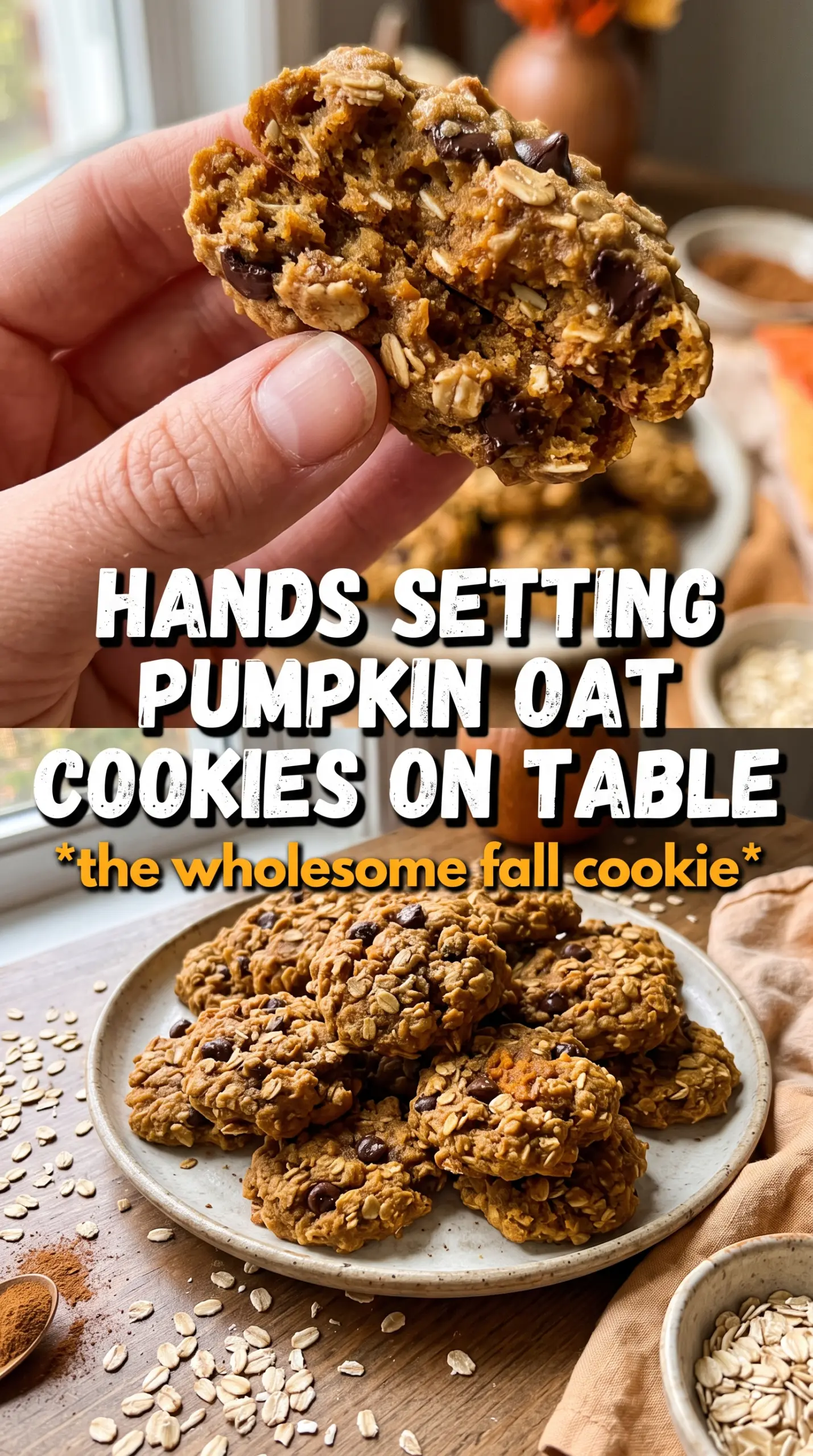
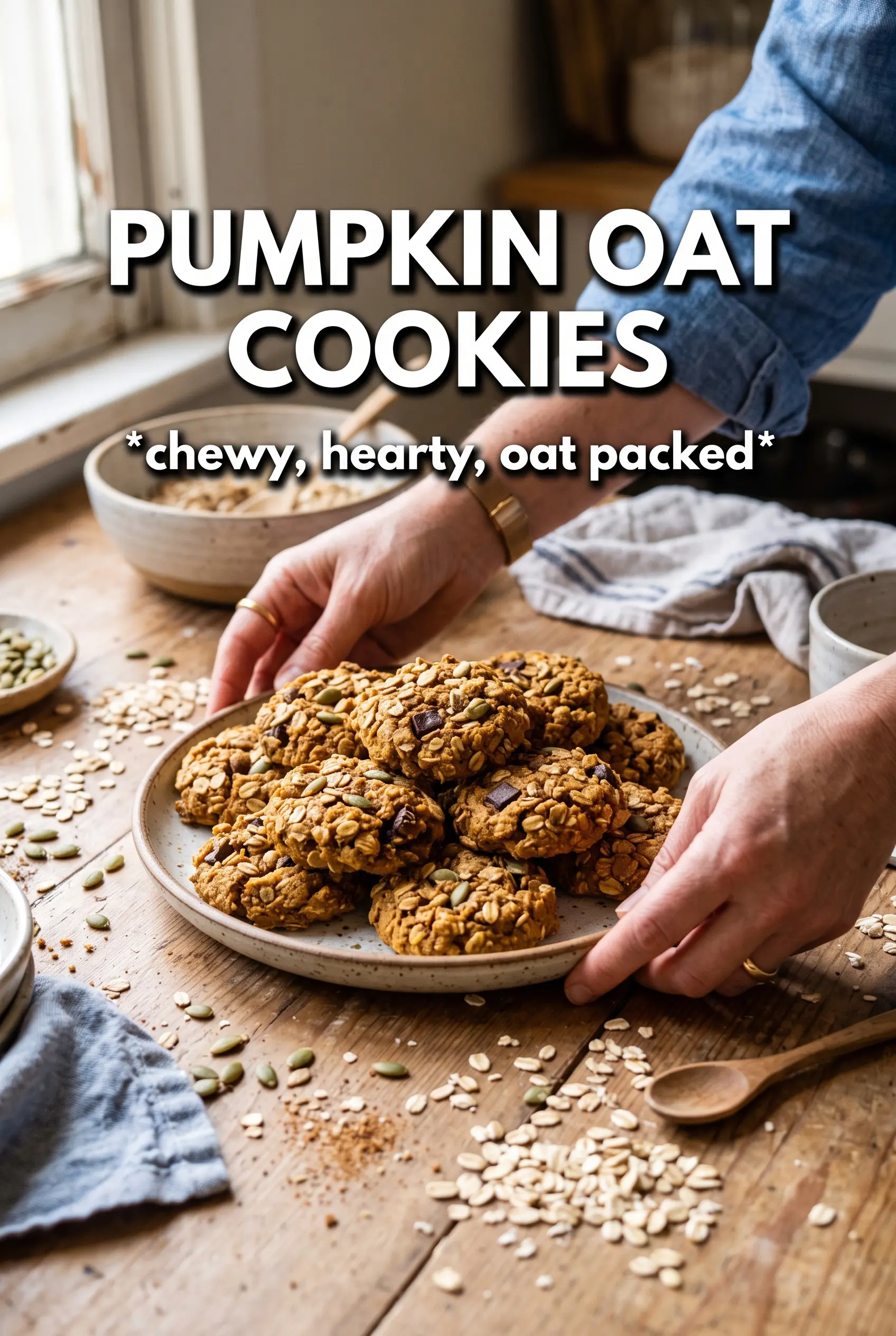
Pumpkin oat cookies bake up with soft centers, crisp golden edges, and that warm spice-and-brown-sugar smell that fills the kitchen fast. They land somewhere between a breakfast cookie and a classic drop cookie, which is exactly why they disappear so quickly. The oats give them chew, the pumpkin keeps them tender, and the cinnamon sugar on top adds the little crackly finish that makes each bite feel complete.
The trick is using pumpkin puree that has been blotted dry. Pumpkin brings great flavor, but too much moisture turns cookies cakey and dulls the edges. Pulling back on the wetness lets the butter and sugar do their job, so the cookies spread just enough instead of puffing up like little muffins. A short bake keeps the centers soft while the tops set and the bottoms turn lightly caramelized.
Below you’ll find the exact texture cues I watch for, plus a few smart swaps if you want to skip the raisins or make these a little more pantry-friendly.
I blotted the pumpkin like you said and the cookies baked up thick but still soft in the middle. The cinnamon sugar top was the best part, and they stayed chewy for two days.
Pumpkin oat cookies with chewy centers and cinnamon sugar tops are worth pinning for easy fall baking.
The Pumpkin Purée Trick That Keeps These Cookies from Turning Cakey
Most pumpkin cookies lean too soft because the puree adds more water than the dough can handle. That extra moisture pushes the texture toward muffin-like, which is fine if that’s what you want, but it won’t give you the chewy cookie bite these need. Blotting the pumpkin first changes the whole batch. You still get the flavor and color, just without the damp, spongy middle.
The oats also matter here. Old-fashioned rolled oats hold their shape and give the cookies a hearty chew, while quick oats would disappear into the dough and make the texture tighter and softer. The result is a cookie that feels substantial without getting heavy.
- Blotted pumpkin puree — This is the difference between a cookie that spreads and one that puffs. Press it between layers of paper towel until it feels thick and paste-like.
- Old-fashioned rolled oats — They bring chew and structure. Quick oats work in a pinch, but the cookies will be less textured.
- Brown sugar — It keeps the centers soft and adds a deeper caramel note that pairs well with pumpkin spice.
- Cinnamon sugar topping — This isn’t just decoration. It gives the tops a light crunch and reinforces the spice without making the dough too sweet.
What Each Ingredient Is Actually Doing in These Cookies
- All-purpose flour — Enough to hold the oats and pumpkin together without making the cookies dry. Bread flour would make them tougher, and cake flour would be too fragile.
- Baking soda — This gives lift and helps the cookies spread just enough. If your soda is old, the cookies can bake up dense and flat.
- Butter — Softened butter creams with the sugars to trap air, which helps with texture. Don’t melt it, or the dough will turn greasy and the cookies will spread too much.
- Egg and vanilla — The egg binds the dough, and vanilla rounds out the pumpkin spice so the cookies taste balanced instead of one-note.
- Raisins or dried cranberries — Optional, but they add little bursts of sweetness and chew. Cranberries give a brighter bite; raisins keep the flavor softer and more classic.
The Dough Stage That Decides the Texture
Creaming the Butter and Sugars
Beat the softened butter with both sugars until the mixture looks lighter and a little fluffy, not greasy or wet. This step builds tiny air pockets that help the cookies bake up with soft centers. If the butter is too warm, the dough will look loose and the cookies will overspread, so stop as soon as the mixture turns creamy and smooth.
Bringing in the Pumpkin Without Overmixing
Add the blotted pumpkin, egg, and vanilla and mix just until combined. The dough may look slightly curdled for a moment, and that’s normal once the pumpkin goes in. Keep going only until the mixture looks cohesive, because beating it too long can weaken the structure and make the cookies cakier.
Folding in the Oats and Flour
Add the dry ingredients and oats and fold until no flour streaks remain. The dough will be thick and a little sticky, which is exactly what you want. Overmixing at this stage can toughen the cookies, so stop as soon as the last dry bits disappear. If you’re using raisins or cranberries, fold them in at the very end so they stay evenly distributed.
Baking Until the Edges Set
Scoop 2-tablespoon rounds and give each one a light cinnamon sugar coating before baking. Pull them when the edges are set and golden and the centers still look a touch soft; they finish on the pan as they cool. If you wait until the tops look fully dry in the oven, they’ll go past chewy and head straight for crumbly.
How to Adapt These for Different Kitchens and Different Cravings
Skip the Raisins and Keep Them Plain
Leave out the dried fruit and the cookies bake up a little cleaner and more uniform, with the oats and spice taking center stage. This is the version I make when I want the pumpkin flavor to stay front and center.
Gluten-Free Version
Use a 1:1 gluten-free flour blend in place of the all-purpose flour. The cookies will still be chewy from the oats, though the crumb may be a little more delicate, so let them cool fully on the pan before moving them.
Dairy-Free Swap
Use a plant-based butter that works as a 1:1 replacement for baking. You still need the fat for creaming, so don’t swap in oil; oil changes the texture and the cookies lose that soft, cookie-shop style bite.
Make Them a Little Sweeter and Chewier
Add the optional cranberries and use the full cinnamon sugar coating. The extra fruit adds little chewy pops, and the topping gives you a slightly crunchier finish on the outside.
Storage and Reheating
- Refrigerator: Store in an airtight container for up to 5 days. The oats will keep absorbing moisture, so the cookies get a little softer by day two.
- Freezer: These freeze well baked or unbaked. Freeze the dough balls on a tray, then move them to a bag and bake straight from frozen with an extra minute or two.
- Reheating: Warm baked cookies in a 300F oven for 4 to 5 minutes. The mistake is blasting them in the microwave, which makes the oats rubbery and softens the edges too much.
Questions I Get Asked About This Recipe
Pumpkin Oat Cookies
Ingredients
Equipment
Method
- Preheat oven to 375F and line baking sheets with parchment or a silicone mat for easy release.
- Blot pumpkin puree dry so the cookies bake up thick and not gummy.
- Whisk all-purpose flour, baking soda, pumpkin pie spice, cinnamon, and salt in a bowl until evenly combined with no visible spice clumps.
- Beat softened unsalted butter, brown sugar, and granulated sugar until smooth and lighter in color.
- Mix in blotted pumpkin puree, then beat in egg and vanilla until the dough looks cohesive.
- Fold the flour mixture into the wet mixture just until no streaks remain.
- Fold in old-fashioned rolled oats, and add raisins or dried cranberries if using.
- Scoop 2-tablespoon rounds of dough onto the lined baking sheets, leaving space between cookies.
- Sprinkle cinnamon sugar over each dough mound so the tops sparkle as they bake.
- Bake at 375F for 10-12 minutes, until edges are golden and the centers look set.
- Cool on the pan for 5 minutes before transferring so the cookies finish setting without breaking.