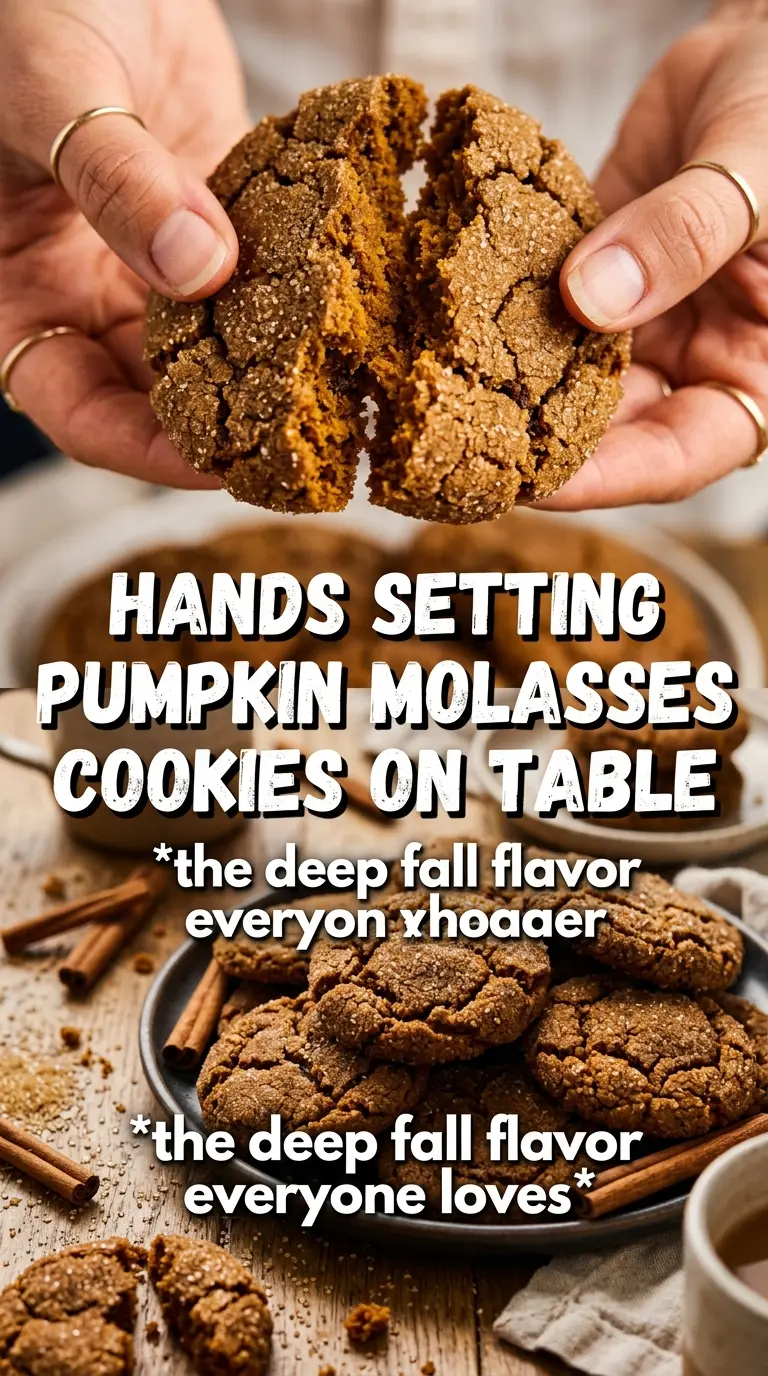
Pumpkin molasses cookies bake up with crackly sugar-sparkled tops, soft centers, and that deep spiced flavor that makes people reach for a second one before they've finished the first. The edges set up just enough to hold the cookie together, while the middle stays chewy instead of cakey, which is the whole point of a good molasses cookie.
The trick here is keeping the pumpkin subtle and dry. A small amount of well-blotted pumpkin puree adds body and a gentle autumn warmth without turning the dough wet or muffin-like. Molasses brings the dark sweetness, brown sugar keeps the texture tender, and the black pepper gives the spice blend a quiet little edge that makes the cookies taste fuller.
Below, I've broken down the one step that keeps these from spreading too much, plus a few smart swaps if you need to adjust for what's in the pantry.
The cookies came out crackly on top and chewy in the middle, and chilling the dough made a huge difference. The pumpkin flavor stayed balanced instead of tasting cakey, which is exactly what I wanted.
Save these pumpkin molasses cookies for the days when you want crackly sugar tops, chewy centers, and deep warm spice in one bite.
The Reason These Cookies Stay Chewy Instead of Puffy
Most pumpkin cookies lean soft and cakey because the dough carries too much moisture. These stay chewy because the pumpkin amount is modest, and it gets blotted first so it doesn't water down the dough. That small step keeps the cookies from spreading into flat puddles while still giving them the warm pumpkin background you want.
The other key is the chill time. Refrigerating the dough gives the flour a chance to hydrate and firms up the butter, which helps the cookies bake thicker with those crinkled tops. If you skip the chill, the cookies will still taste good, but they'll spread faster and lose that dense, chewy middle.
- The baking soda gives the cookies their lift and crackly surface, but it needs the acidity from molasses to do its best work.
- Black pepper may sound odd, but it sharpens the spices without making the cookies taste spicy. It's a small amount with a big payoff.
- Brown sugar keeps the centers tender and adds a little extra molasses depth that plain white sugar can't give.
What Each Ingredient Is Actually Doing in the Dough
- Pumpkin puree — Use canned pumpkin, not pumpkin pie filling. The puree adds moisture and color, but only if it's blotted dry first; otherwise the dough turns slack and bakes up more cakey than chewy.
- Molasses — This is the flavor backbone. Unsulphured molasses gives the cleanest, richest taste, and I wouldn't swap it for blackstrap unless you want the cookies noticeably darker and more bitter.
- Brown sugar — This helps with softness and chew. Light or dark brown sugar both work, but dark brown sugar brings a deeper molasses note.
- Cinnamon, ginger, cloves, allspice, and black pepper — This spice mix tastes layered, not loud. The pepper doesn't read as peppery; it just makes the warm spices feel more complete.
- Butter — Softened butter creams with the sugar and gives the cookies their tender bite. If it's too warm, the dough gets greasy and spreads more in the oven.
- Flour — All-purpose flour gives the dough enough structure to hold the sugar coating and the crinkles. Too little flour or too much wetness is what makes these cookies slump.
Getting the Crinkles Without Overbaking Them
Start With a Dry Pumpkin Base
Blot the pumpkin puree with paper towels until it looks pasty instead of loose. That one detail changes the whole dough. Whisk the dry ingredients together before you start on the butter mixture so the spices disperse evenly and you don't end up with a pocket of clove or pepper in one cookie.
Cream the Butter and Sugar Until It Lightens
Beat the softened butter and brown sugar until the mixture looks fluffy and a little paler. That traps air, which helps the cookies bake with structure instead of turning dense. Add the egg, molasses, pumpkin, and vanilla after the creaming stage; if the mixture looks a little separated at this point, that's normal and it comes together once the flour goes in.
Chill the Dough Before Scooping
Once the flour mixture is folded in, refrigerate the dough for 30 minutes. The dough should be firm enough to scoop without slumping, but not hard. If your kitchen is warm, the extra chill time is worth it, because soft dough spreads before the edges can set and you lose the chewy center.
Bake Until the Tops Crinkle and the Centers Still Look Soft
Roll the dough balls in granulated sugar, then bake just until the cookies are puffed, cracked, and set around the edges. The centers will still look a little underdone when you pull them out, and that's correct. They finish setting on the pan, and if you wait until they look fully baked in the oven, they'll end up dry.
Three Ways to Make These Cookies Fit Your Kitchen
Make Them Dairy-Free
Swap the butter for a good plant-based butter stick, not a soft tub spread. You'll keep the same cookie shape and chew, though the flavor will be slightly less rich. Choose one that's firm when cold so the dough still chills and bakes up thick.
Use Dark Brown Sugar for Deeper Molasses Flavor
If you want a darker, more caramel-like cookie, use dark brown sugar instead of light. The cookies will taste a little deeper and less sweet, and the centers may bake up just a touch softer because of the extra moisture in the darker sugar.
Gluten-Free Adjustment
A 1:1 gluten-free flour blend can work here as long as it includes xanthan gum. The cookies may spread a little less and taste a bit more delicate, so don't skip the chill time. If the dough seems dry after mixing, let it rest for 10 minutes before deciding whether to add anything.
Storage and Reheating
- Refrigerator: Store baked cookies in an airtight container for up to 5 days. They stay chewy, though the sugar coating softens a little after the first day.
- Freezer: Freeze the baked cookies for up to 2 months, layered with parchment. You can also freeze the portioned dough balls and roll them in sugar just before baking.
- Reheating: Warm cookies for 8 to 10 seconds in the microwave or a few minutes in a low oven. Heat only until the centers loosen; overheating dries out the edges and takes away the chew.
Answers to the Questions Worth Asking
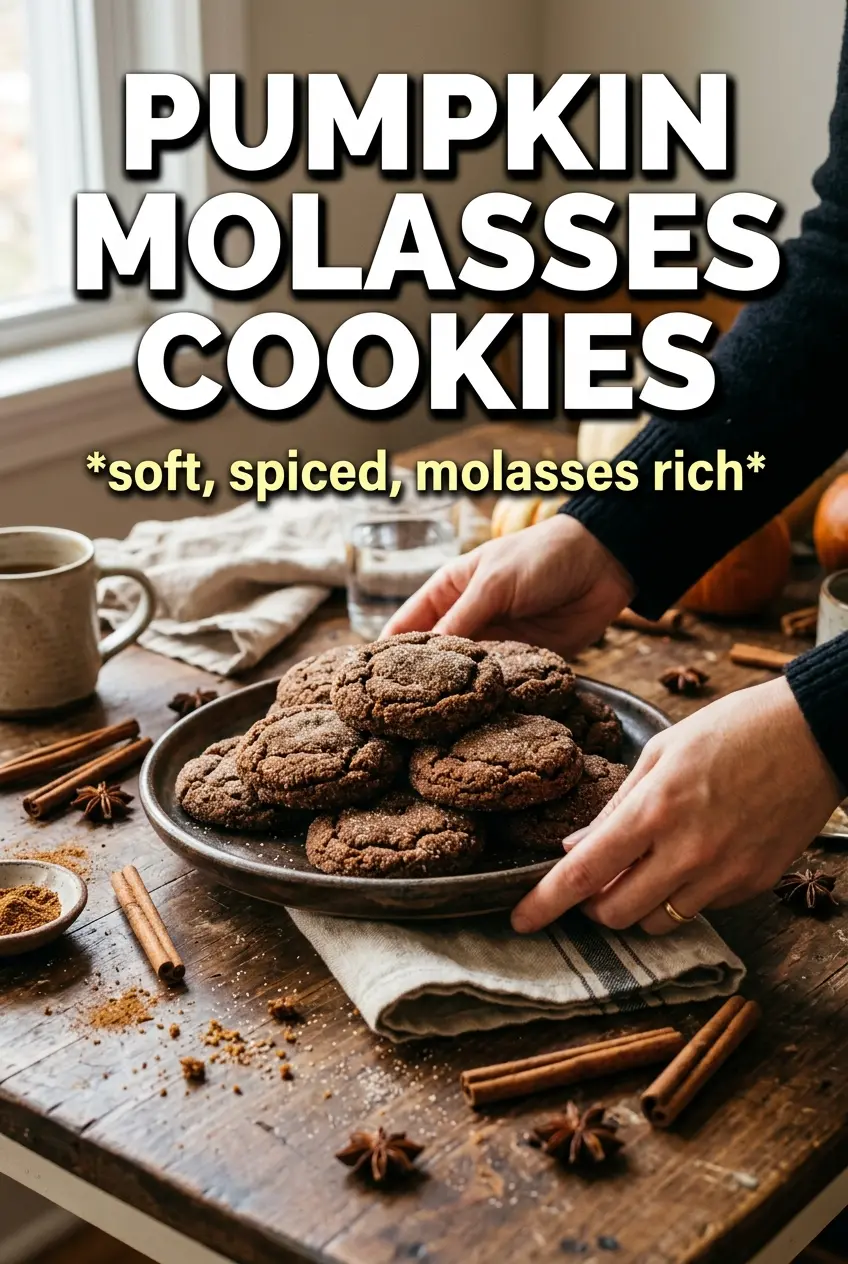
Pumpkin Molasses Cookies
Ingredients
Equipment
Method
- Preheat the oven to 375°F and line baking sheets. Make sure the sheets are ready before the dough is mixed (visual cue: sheets on the counter, oven at temperature).
- Blot the pumpkin puree very dry, then whisk together the all-purpose flour, baking soda, cinnamon, ginger, cloves, allspice, black pepper, and salt in a bowl. Keep whisking until the spices are evenly distributed (visual cue: uniform tan-brown dry mix).
- Beat the softened unsalted butter and packed brown sugar until smooth, then beat in the egg, molasses, blotted pumpkin puree, and vanilla. Stop when the batter looks glossy and evenly combined (visual cue: no streaks of molasses or pumpkin).
- Fold the flour mixture into the wet ingredients until just combined, then refrigerate the dough for 30 minutes. Chilling helps the dough scoop cleanly (visual cue: thicker, slightly firm dough).
- Scoop 1-1/2 tablespoon balls of dough and roll them in granulated sugar. Roll until well coated (visual cue: sugar sparkle on the dark brown dough balls).
- Bake at 375°F for 9-11 minutes until the cookies are crinkled, crisping at the edges. Do not overbake so the centers stay soft and chewy (visual cue: crinkled tops with set edges, slightly underbaked centers).