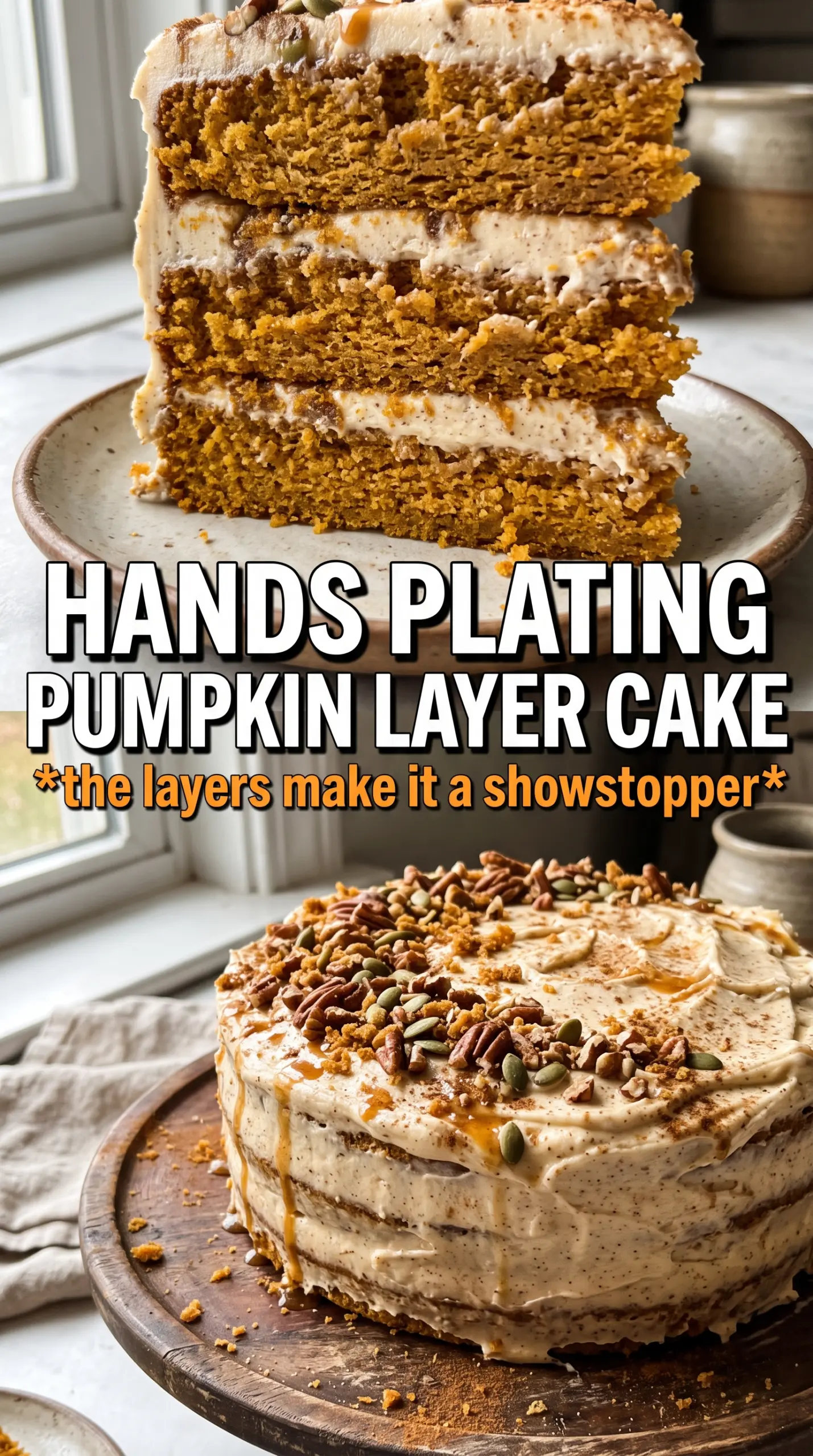
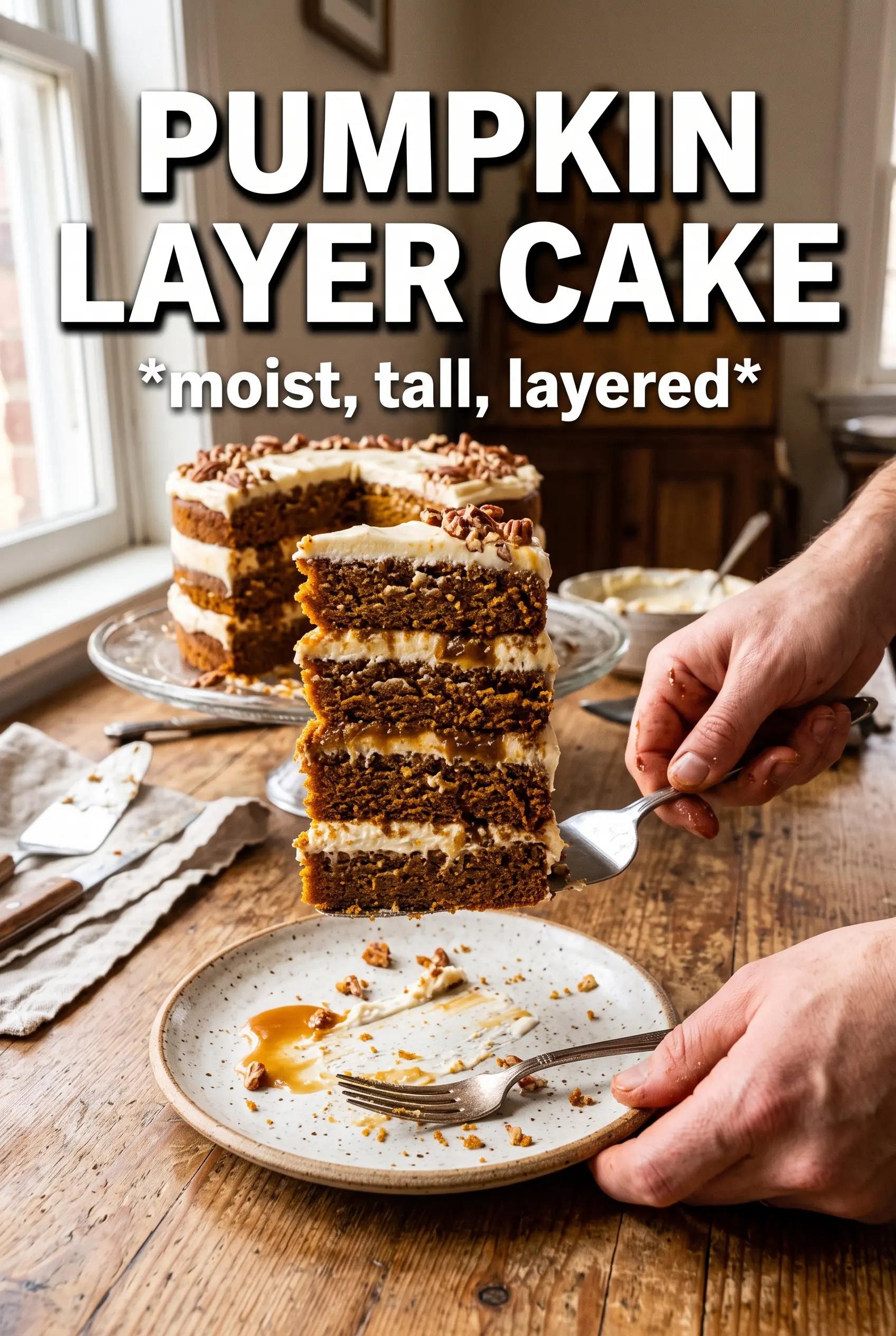
Pumpkin layer cake earns its place when you want a dessert that slices tall, stays tender, and tastes like actual pumpkin instead of just warm spice. The crumb is soft and sturdy at the same time, which matters when you’re stacking four layers and spreading cream cheese frosting between them. A caramel drizzle on top turns it from a nice cake into a cake people remember after the plates are cleared.
What makes this version work is the balance of moisture and structure. Pumpkin puree, sour cream, and brown sugar keep the layers plush, while enough flour and eggs hold the cake up so it doesn’t slump under the frosting. The cream cheese frosting is beaten until light and spreadable, which helps it glide over the sides instead of tearing the cake apart. If your cakes have ever turned dense, greasy, or overly sweet, the fix is in the proportions below.
You’ll also find a few practical notes on stacking, frosting, and the one caramel step that makes the finish look bakery-level without extra fuss.
The cake layers baked up flat enough to stack cleanly, and the cream cheese frosting was fluffy instead of runny. I loved that the cinnamon and pumpkin came through without the cake tasting overly sweet.
Save this pumpkin layer cake for the kind of dessert table that needs tall spiced layers, fluffy frosting, and a caramel finish.
The Trick to Keeping Four Pumpkin Layers Tall Instead of Heavy
Most layer cakes fail before they ever hit the plate because the batter is overmixed or the pans are underprepared. Pumpkin batter is thicker than a standard vanilla cake, and once the flour goes in, every extra stir tightens the crumb. Stop as soon as the dry streaks disappear. That’s what keeps the cake soft instead of chewy.
The other thing that matters is how evenly you divide the batter. If one pan is packed fuller than the others, that layer domes too much and the stack gets unstable. Weighing the pans is the easiest fix, but even a quick visual check helps. You want four layers that bake to the same height so the frosting doesn’t have to do structural work it was never meant to do.
- Brown sugar — Gives the cake a deeper, more caramel-like sweetness than white sugar and helps hold moisture in the crumb.
- Pumpkin puree — Use canned pumpkin puree, not pumpkin pie filling. The filling already has sugar and spice, which throws off both texture and balance.
- Sour cream — This is what keeps the crumb plush without making the cake heavy. Full-fat sour cream gives the best texture, and plain Greek yogurt works in a pinch if you want a slightly tangier finish.
- Cream cheese — Softened cream cheese is nonnegotiable for a smooth frosting. If it’s cold, the frosting turns lumpy before you know it.
What Each Ingredient Is Actually Doing in This Recipe
- Primary ingredient (the star) — Quality matters most. Choose the best you can find.
- Cooking medium (oil, butter, or broth) — This carries flavors and prevents dryness.
- Seasonings (salt, pepper, spices, herbs) — Layer flavors so nothing overpowers. Build depth gradually.
- Aromatics (garlic, onion, herbs) — Cook with fat to bloom flavors. Become the foundation.
- Supporting ingredients — Complement the main ingredient without overpowering it.
- Sauce or liquid (if applicable) — Brings flavors together. Balance richness with acid.
- Acid (lemon, vinegar, wine, or other) — Brightens and prevents flat-tasting results.
- Final finish (garnish, glaze, or sauce) — Prevents one-dimensional taste and adds visual appeal.
Building the Batter and Frosting It Before It Fights Back
Whipping the Base Smooth
Beat the butter and brown sugar until the mixture looks lighter in color and a little fluffy. That step pulls air into the cake and gives the layers a finer crumb. Add the eggs one at a time so the batter stays emulsified, then mix in the pumpkin, sour cream, and vanilla until everything looks uniform. If the mixture looks slightly curdled at this point, that’s normal; the flour will pull it back together.
Folding in the Dry Ingredients
Add the flour, baking powder, baking soda, salt, pumpkin pie spice, and cinnamon on low speed or by hand just until combined. The batter should be thick and smooth, not whipped. Overmixing at this stage is what makes pumpkin cake dense. Divide it evenly among the pans so the layers bake at the same rate.
Baking Until the Centers Spring Back
Bake at 350°F until the tops are set and a toothpick comes out with a few moist crumbs, usually 30 to 35 minutes. The cakes should spring back when lightly pressed, but they shouldn’t look dry around the edges. Pull them out on time; overbaking is the fastest way to lose the soft, almost velvety texture this cake needs. Cool the layers completely before frosting or the cream cheese will melt and slide.
Making the Frosting Fluffy Enough to Stack
Beat the cream cheese and butter until smooth before adding the powdered sugar. If you dump everything in at once, the frosting can turn grainy and heavy. Add the cinnamon and vanilla last, then beat until the frosting looks airy and holds soft swirls. If it feels loose, chill it for 10 to 15 minutes before assembling.
Stacking and Finishing Cleanly
Spread frosting between each layer in an even layer, then use the rest to coat the outside. Don’t rush the crumb coat if the layers are especially tender; a thin first layer of frosting catches loose crumbs and gives you a cleaner final finish. Drizzle the caramel after the frosting is set so it stays visible on top instead of sinking into the sides.
How to Adapt This Pumpkin Cake Without Losing the Structure
Make it ahead for a cleaner assembly
Bake the layers a day in advance, wrap them well once cool, and frost the cake the next day. Chilled layers are easier to stack, and the crumb firms up just enough to keep the frosting from pulling at the cake surface.
Gluten-free version
A good 1:1 gluten-free baking flour can work here because the cake already has moisture from pumpkin and sour cream. The texture will be a touch more delicate, so cool the layers completely before moving them and expect a softer crumb.
Less cinnamon, more pumpkin
If you want the pumpkin to stand out more clearly, cut the cinnamon in the cake and frosting slightly and keep the pumpkin pie spice. That shifts the cake toward a gentler, more pumpkin-forward flavor without changing the structure.
Storage and Reheating
- Refrigerator: Store covered for up to 4 days. The frosting will firm up in the fridge, but the cake stays moist.
- Freezer: Freeze unfrosted layers wrapped tightly for up to 2 months. Thaw them in the refrigerator before frosting for the best texture.
- Reheating: This cake is best served chilled or at cool room temperature, not warmed. If you’ve refrigerated leftovers, let slices sit out for 20 to 30 minutes so the frosting softens and the crumb tastes more tender.
Questions I Get Asked About This Recipe
Pumpkin Layer Cake
Ingredients
Equipment
Method
- Preheat oven to 350F, grease four 8-inch round pans, and set them aside (or line up to bake in two batches). Visually check the pans are coated so the cakes release cleanly.
- In a stand mixer, beat butter and brown sugar until smooth, then add eggs one at a time and mix until combined.
- Add pumpkin, sour cream, and vanilla, then mix until the batter looks evenly orange and glossy.
- Incorporate the dry ingredients (flour, baking powder, baking soda, pumpkin pie spice, cinnamon, and salt) into the wet batter until no dry streaks remain.
- Divide batter equally among the pans and smooth the tops with an even layer.
- Bake at 350F for 30-35 minutes, until the centers spring back and a toothpick comes out with just a few moist crumbs.
- Cool the layers completely in their pans before frosting, so the frosting stays thick and doesn’t melt.
- Beat the cream cheese and softened unsalted butter until very fluffy and smooth, scraping the sides as needed.
- Add powdered sugar, cinnamon, and vanilla, then beat until the frosting is thick, airy, and spreadable.
- Generously frost between all layers, using a flat layer of frosting so the cake stacks evenly.
- Frost the outside of the cake with a smooth coating, leaving swirls if desired for texture.
- Drizzle caramel over the top in a light, even pattern so it pools slightly on the frosting.