Pumpkin hummus has a way of disappearing fast once it hits the table. The texture is what keeps people coming back: silky, light, and creamy with just enough body to hold a swirl of olive oil in the center. The pumpkin doesn’t make it taste like dessert; it rounds out the chickpeas and gives the hummus a soft orange color and a little extra sweetness that plays well with garlic, cumin, and smoked paprika.
What makes this version work is the order of the blending. Chickpeas, tahini, and lemon juice get processed first so the base turns smooth before the pumpkin goes in. That extra minute up front helps avoid the grainy, pasty texture you get when everything is dumped in at once. Aquafaba, added at the end, loosens the hummus without watering it down, which matters more here because pumpkin puree is already thick.
Below, I’ve included the ingredient swaps that matter, the texture cues that tell you when to keep blending, and the small finish that makes a bowl of hummus look like it came from a good mezze spread.
I blended it longer than I usually do with hummus, and that was the trick. It turned out super smooth, and the pumpkin spice with smoked paprika gave it this cozy savory thing that worked perfectly with carrots and pita chips.
Save this pumpkin hummus for the next mezze platter, snack board, or holiday spread when you want something creamy, savory, and a little unexpected.
The Mistake That Makes Pumpkin Hummus Taste Flat
Most pumpkin hummus falls into one of two traps: it tastes bland, or it tastes like pumpkin pie pretending to be dinner. The fix is balancing the pumpkin with enough tahini, lemon, garlic, cumin, and smoked paprika so the squash stays in the background and the hummus still tastes like hummus. Pumpkin puree adds body and color, but it doesn’t carry the flavor on its own, so the seasoning has to be deliberate.
The other mistake is stopping too early. Pumpkin puree makes the mixture look thick before it’s fully smooth, and under-blended hummus always feels heavy on the tongue. Give the processor time to do its job, then loosen it with aquafaba a spoonful at a time until it turns glossy and fluffy.
What Each Ingredient Is Actually Doing in This Bowl
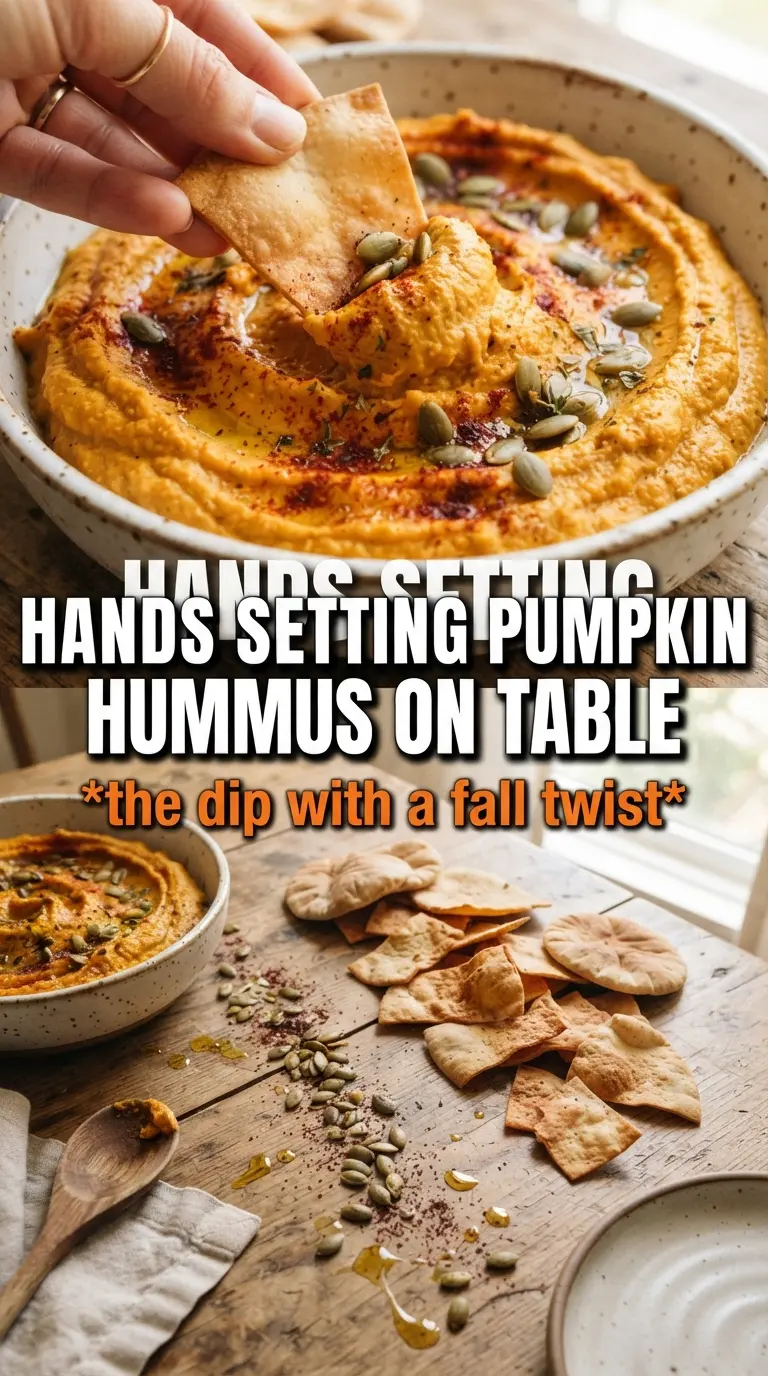
- Chickpeas — These create the body of the hummus. A canned version works perfectly here as long as you drain it and save the liquid, because the processor will do the rest of the work. If you want an even silkier result, peel some of the skins off, but it isn’t required.
- Pumpkin puree — Use plain pumpkin puree, not pumpkin pie filling. Pie filling is sweetened and spiced, which throws off the balance fast. The puree adds color, creaminess, and a subtle earthy note that plays well with the spices.
- Tahini — This is the ingredient that gives hummus its depth and that nutty, almost buttery finish. Cheap tahini can taste bitter, so use one that tastes smooth and sesame-forward. If yours is separated, stir it well before measuring.
- Aquafaba — The reserved chickpea liquid is better than water because it helps the hummus turn airy instead of thin. Add it slowly so you can control the texture. You may not need the full amount if your pumpkin puree is loose.
- Smoked paprika and cumin — These keep the dish savory. Smoked paprika adds warmth and color, while cumin gives the hummus its familiar backbone. The pumpkin pie spice is used lightly, just enough to round out the pumpkin without making the bowl taste sweet.
Blending It Smooth Without Turning It Soupy
Build the Base First
Start with the chickpeas, tahini, and lemon juice and blend them until the mixture looks thick and pasty. That first minute matters because it breaks up the chickpeas before the pumpkin gets involved. If you skip it, the puree can stay grainy no matter how long you blend later.
Add the Pumpkin and Seasonings
Once the base looks smoother, add the pumpkin puree, garlic, olive oil, cumin, smoked paprika, pumpkin pie spice, and salt. Blend for a couple of minutes, stopping to scrape the sides if needed, until the hummus looks velvety and evenly colored. If you see little flecks of chickpea skin or garlic, keep going; this recipe gets better the longer it’s processed.
Loosen It With Aquafaba
Add the chickpea liquid one tablespoon at a time. The hummus should lighten up, look glossy, and spread easily without running. If it gets too loose, it won’t hold the well in the center, and the toppings will sink instead of sitting nicely on top.
Finish for the Table
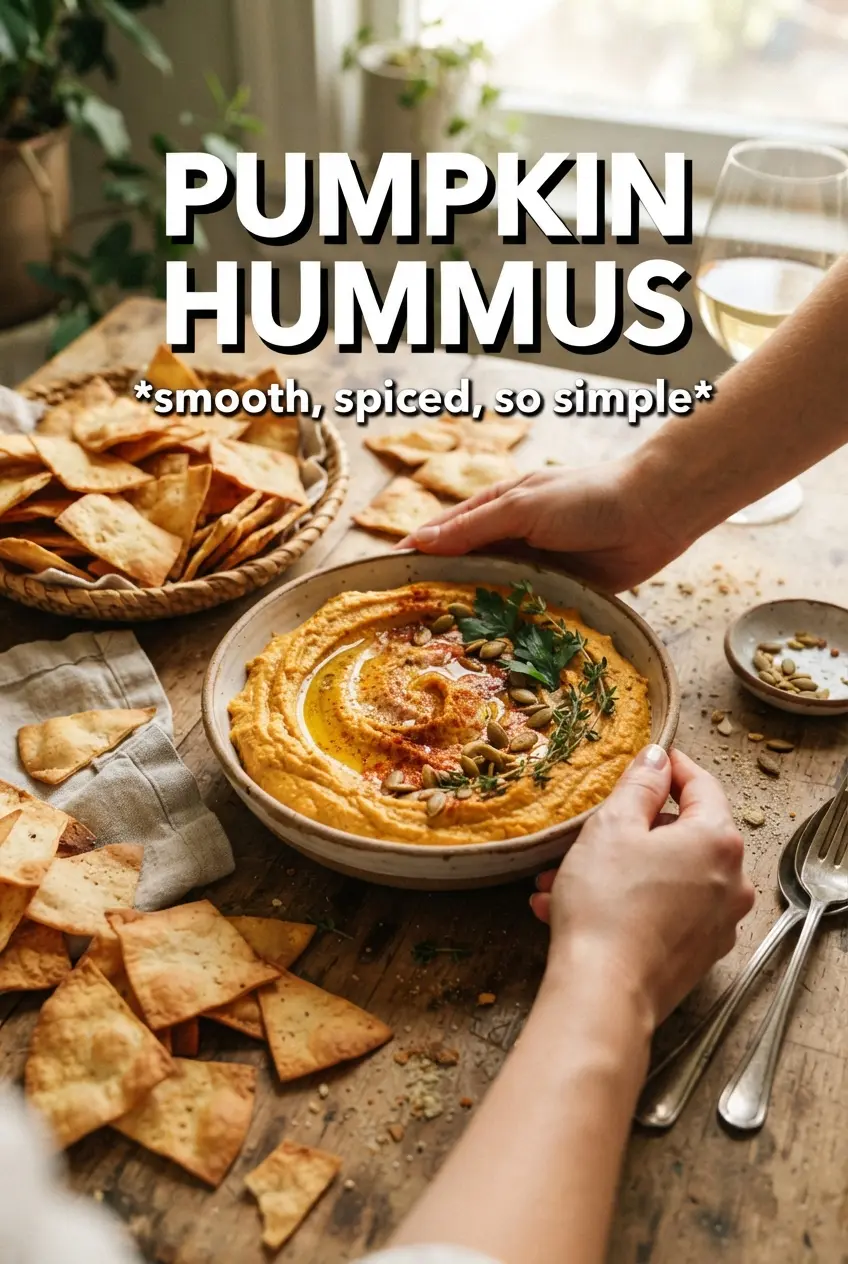
Taste the hummus before serving and adjust the salt or lemon if it needs more lift. Spread it into a shallow bowl, create a small well, then drizzle with olive oil and scatter on pumpkin seeds, smoked paprika, and parsley. That final topping step isn’t just decoration; it gives every bite a little crunch and a burst of freshness.
Three Ways to Make Pumpkin Hummus Work for Different Tables
Dairy-Free and Naturally Vegan
This recipe already lands in dairy-free territory as written, which is one reason it works so well for mixed gatherings. The creamy texture comes from tahini, chickpeas, and aquafaba instead of yogurt or cheese, so you don’t lose richness by keeping it plant-based. Just watch the toppings if you’re serving a crowd and keep everything dairy-free too.
Make It Sweeter or More Savory
If you want a softer, more mellow dip, add a little extra pumpkin puree and another splash of lemon to keep it bright. For a sharper, more savory version, increase the cumin slightly and add a pinch more salt. The balance shifts quickly, so adjust in tiny amounts and blend again before tasting.
Use It as a Sandwich Spread
For spreading, keep the hummus a little thicker by using less aquafaba and a touch less olive oil in the blend. That gives you a sturdier texture that clings to bread and wraps without sliding around. It’s a good move if you’re packing lunch or building a vegetable sandwich with a lot of moisture.
Storage and Reheating
- Refrigerator: Keeps well for 4 to 5 days in a sealed container. It may thicken a bit as it chills.
- Freezer: Freezes fairly well for up to 2 months, though the texture can loosen slightly after thawing. Stir it well after defrosting and add a little fresh aquafaba or lemon juice if needed.
- Reheating: Hummus is usually best served cold or at room temperature, not heated. Let it sit out for 15 to 20 minutes before serving so the texture softens, and stir in a teaspoon of olive oil if it looks tight from the fridge.
Questions I Get Asked About This Recipe
Pumpkin Hummus
Ingredients
Equipment
Method
- In a blender, combine chickpeas, tahini, and lemon juice and blend for 1 minute until as smooth as possible. Stop and scrape down the sides once if needed.
- Add pumpkin puree, garlic, olive oil, cumin, smoked paprika, pumpkin pie spice, and salt, then blend for 2-3 minutes until very smooth and creamy. Continue blending until no chickpea bits remain.
- Add chickpea liquid (aquafaba) 1 tablespoon at a time, blending after each addition until the hummus reaches your desired consistency. Use more aquafaba for a fluffier texture.
- Taste the hummus and adjust seasoning as needed for salt, lemon, or spices. Blend briefly again if you make changes.
- Spoon the hummus into a bowl and spread it smooth, creating a well in the center. Keep the surface level so the topping pools nicely.
- Drizzle olive oil into the center well, then scatter pumpkin seeds and smoked paprika over the top. Finish with fresh parsley for color.
- Serve with pita and vegetables, arranging carrots, celery, and cucumbers around the bowl for dipping.