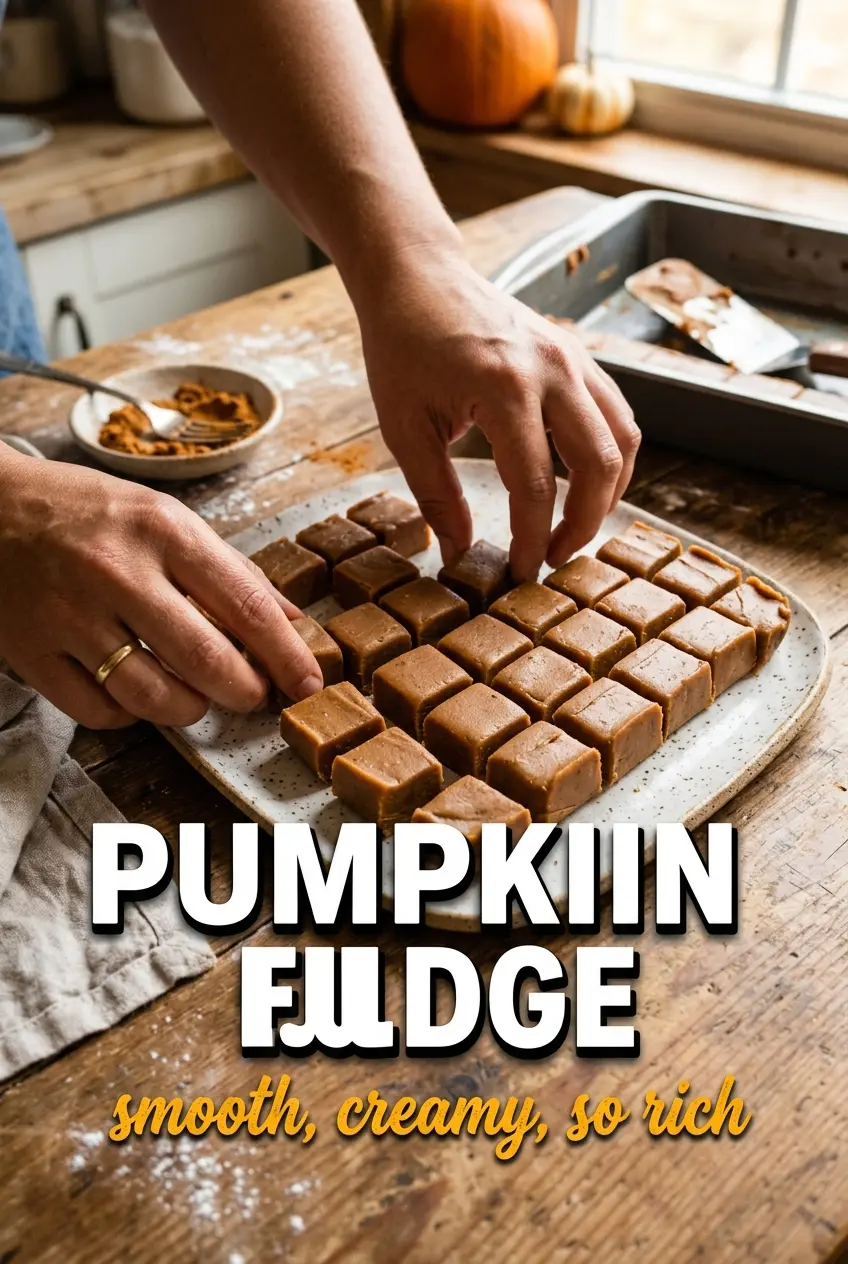
Pumpkin fudge sets up with a smooth, dense bite that lands somewhere between classic holiday fudge and pumpkin pie filling in candy form. The white chocolate keeps it creamy, the marshmallow creme gives it that old-fashioned fudge texture, and the pumpkin spice stays warm without turning the whole pan muddy or grainy. When it’s done right, the squares cut cleanly, hold their shape, and melt just enough on the tongue to feel rich without being cloying.
The trick is temperature and timing. Pumpkin puree adds moisture, which means this fudge needs to cook all the way to the soft-ball stage before the white chocolate goes in, or it will stay soft and sticky. I also like the pecans pressed on top after pouring, not stirred through, so you get a clean finish and a little crunch in each piece instead of losing that contrast inside the candy.
Below, I’ll walk through the point where most fudge recipes go off track, the ingredient that matters more than you’d think, and a few swaps that still give you a pan you can slice neatly after chilling.
I was worried the pumpkin would make it too soft, but cooking it to 240°F fixed that. It came out smooth, sliced clean, and the pecans on top made each square look bakery-perfect.
Pumpkin fudge cuts like a dream when it’s chilled all the way through, so save this one for the holiday tray or gift box.
The Soft-Ball Stage Is What Keeps This Fudge Sliceable
Most pumpkin fudge problems start before the candy even reaches the pan. If the mixture never cooks long enough, the extra moisture from the pumpkin stays trapped in the batch and the fudge won’t set with that dense, clean edge you want. The goal is 238-240°F on a candy thermometer, and that range matters more than the clock because the boil can slow down or speed up depending on the pan and burner.
Stir constantly while it boils so the sugar doesn’t scorch on the bottom, especially once the mixture thickens and starts to look glossy. If you see the boil flatten out before the thermometer climbs, keep going; if the thermometer jumps past 240°F, the fudge can turn crumbly instead of creamy. The texture you’re after is thick, bubbling, and slightly heavier as you stir, not just a fast simmer.
What the White Chocolate and Marshmallow Creme Are Doing Here

- Pumpkin puree — Use plain pumpkin puree, not pumpkin pie filling. Pie filling already has sugar and spices mixed in, which throws off both the sweetness and the set. Canned puree is fine here, and the thicker it is when it goes into the pan, the better the fudge behaves.
- White chocolate chips or white baking chocolate — This is the creamy backbone of the recipe. Good white baking chocolate melts more smoothly than bargain chips, but either works if you add it off the heat and stir until fully melted. If you use chips, choose a brand that actually contains cocoa butter, not just waxy confectionery coating.
- Marshmallow creme — This helps the fudge stay silky and gives it that classic melt-in-your-mouth texture. Don’t substitute regular marshmallows unless you’re prepared for a different result, because marshmallow creme blends in without leaving bits behind. Stir it in after the chocolate has melted so it doesn’t seize or clump.
- Evaporated milk — This gives richness without adding the water content you’d get from regular milk. The whole recipe depends on controlled moisture, so don’t swap in sweetened condensed milk unless you want a much sweeter, denser candy.
- Pecans — The pecans are more than decoration. Pressing them on top adds a toasted, buttery finish that cuts through the sweetness. If you want a softer top, skip them, but you’ll lose that nice contrast in every square.
Building the Candy Base Without Crystallizing It
Start With a Heavy Pan and a Clean Stir
Use a heavy saucepan so the sugar heats evenly and the bottom doesn’t scorch before the rest of the batch catches up. Combine everything except the white chocolate, marshmallow creme, vanilla, and salt, then stir over medium heat until the sugar starts to dissolve and the mixture looks uniform. If you see dry sugar clinging to the edges, scrape it in now; those stray crystals can encourage graininess later.
Boil Until the Thermometer Says Stop
Once the mixture comes to a boil, keep stirring and watch the thermometer instead of the clock alone. You’re aiming for 238-240°F, and that narrow window is what gives you fudge that sets firmly but still feels creamy when you bite it. If you pull it early, the centers stay soft; if you push it much past that range, the fudge can turn dry and crumbly.
Finish Off the Heat for a Smooth Set
Take the pan off the burner before you add the white chocolate. Residual heat is enough to melt it, and staying off the burner keeps the chocolate from separating or turning greasy. Stir in the marshmallow creme, vanilla, and salt until the mixture turns glossy and fully smooth, then work fast to get it into the pan before it starts to thicken.
Brown Butter Pumpkin Fudge
Brown the butter first for a deeper, nutty note that plays well with the pumpkin spice. Let it cool just enough that it doesn’t scorch the sugar when you add the rest of the ingredients. The fudge tastes richer, but the texture stays the same.
Dairy-Free Pumpkin Fudge
Use dairy-free white chocolate and a plant-based butter substitute that behaves like real butter when heated. The flavor will be a little less rich, but the fudge still sets well if you keep the temperature control tight and don’t rush the boil.
Nut-Free Topping
Leave off the pecans and finish with a light sprinkle of cinnamon sugar or a few flakes of flaky salt. You lose the crunch, but you keep a clean top that still looks finished and slices neatly for gifting or party trays.
Storage and Reheating
- Refrigerator: Store in an airtight container for up to 2 weeks. The texture firms up in the fridge, so let the pieces sit at room temperature for a few minutes before serving.
- Freezer: Freeze tightly wrapped squares for up to 3 months. Separate layers with parchment so they don’t stick together, and thaw in the refrigerator before bringing them to room temperature.
- Reheating: This fudge isn’t meant to be reheated. If it feels too firm straight from the fridge, just let it warm on the counter briefly. Microwaving will melt the chocolate and ruin the set.
Answers to the Questions Worth Asking
Pumpkin Fudge
Ingredients
Equipment
Method
- Line an 8x8 pan with parchment and butter generously, covering the base and up the sides so the fudge lifts out cleanly.
- Set the pan aside while you cook the fudge base.
- Combine sugar, butter, evaporated milk, pumpkin puree, pumpkin pie spice, and cinnamon in a heavy saucepan and stir to fully blend.
- Bring to a boil over medium heat, stirring constantly until the mixture reaches 238–240°F (soft ball stage), about 10–12 minutes, with a thick bubbling look.
- Remove from heat and stir until smooth, then stir in the white chocolate until fully melted and glossy.
- Stir in marshmallow creme, vanilla, and salt until completely smooth with no streaks.
- Pour the fudge into the prepared pan and spread evenly.
- Press pecan halves over the top in a single even layer so they adhere to the surface.
- Cool at room temperature for 30 minutes, then refrigerate for 1.5 hours until fully set and firm to the touch.
- Cut into squares and serve with neat edges.