Thick slices of pumpkin French toast hit the plate with crisp, buttery edges and a soft custardy center that tastes like maple, cinnamon, and warm pumpkin all in one bite. The bread stays plush instead of soggy, and the outside gets that deep golden crust that makes the whole stack worth repeating on a weekend morning.
The trick is keeping the custard balanced. Pumpkin puree adds body, but too much and the bread can turn dense before it has a chance to brown. The milk loosens the mixture just enough, while the maple syrup in the custard brings a gentle sweetness that lets you serve the toast with a little less at the table. Thick brioche or challah matters here too because thin sandwich bread collapses fast once it hits the pan.
Below, I’m walking through the soak time that gives you a tender center without a wet middle, plus a few ways to adjust the recipe if you want it dairy-free or a little richer.
The custard soaked into the brioche just enough, and the edges got crisp without the middle going mushy. I used a little extra cinnamon on top and my kids asked for it again the next morning.
Craving pumpkin French toast with crisp edges and a custardy center? Save this one for an easy breakfast stack that tastes like maple and spice.
The Soak Time That Keeps Pumpkin French Toast from Turning Heavy
Pumpkin puree changes the game because it thickens the custard. That’s great for flavor, but it also means the bread needs a little discipline in the pan. If you soak too long, the slices can get past the point of tender and start cooking up dense in the middle, especially if you use bread that’s fresh and soft. Thirty seconds per side is the sweet spot for thick brioche or challah.
The other mistake is cranking the heat too high to rush the browning. Pumpkin and maple both brown faster than plain egg custard, so medium heat gives you a deep golden crust before the center overcooks. If the pan starts smoking or the butter turns dark in seconds, it’s too hot.
- Thick brioche or challah — These breads hold the custard without falling apart. Slice them thick enough that they stay plush after cooking. Soft sandwich bread will go limp fast and never give you that contrast between crisp edge and creamy center.
- Pumpkin puree — Use pure pumpkin, not pumpkin pie filling. Pie filling already has sugar and spices mixed in, which throws off the balance and can make the toast overly sweet and pasty.
- Whole milk or half-and-half — Whole milk gives you a lighter custard, while half-and-half adds more richness and a slightly silkier middle. I’d use half-and-half if your bread is especially sturdy.
- Maple syrup in the custard — This seasons the bread all the way through instead of leaving sweetness only on top. Honey can work in a pinch, but it reads a little sharper and less round.
What Each Ingredient Is Actually Doing in the Custard
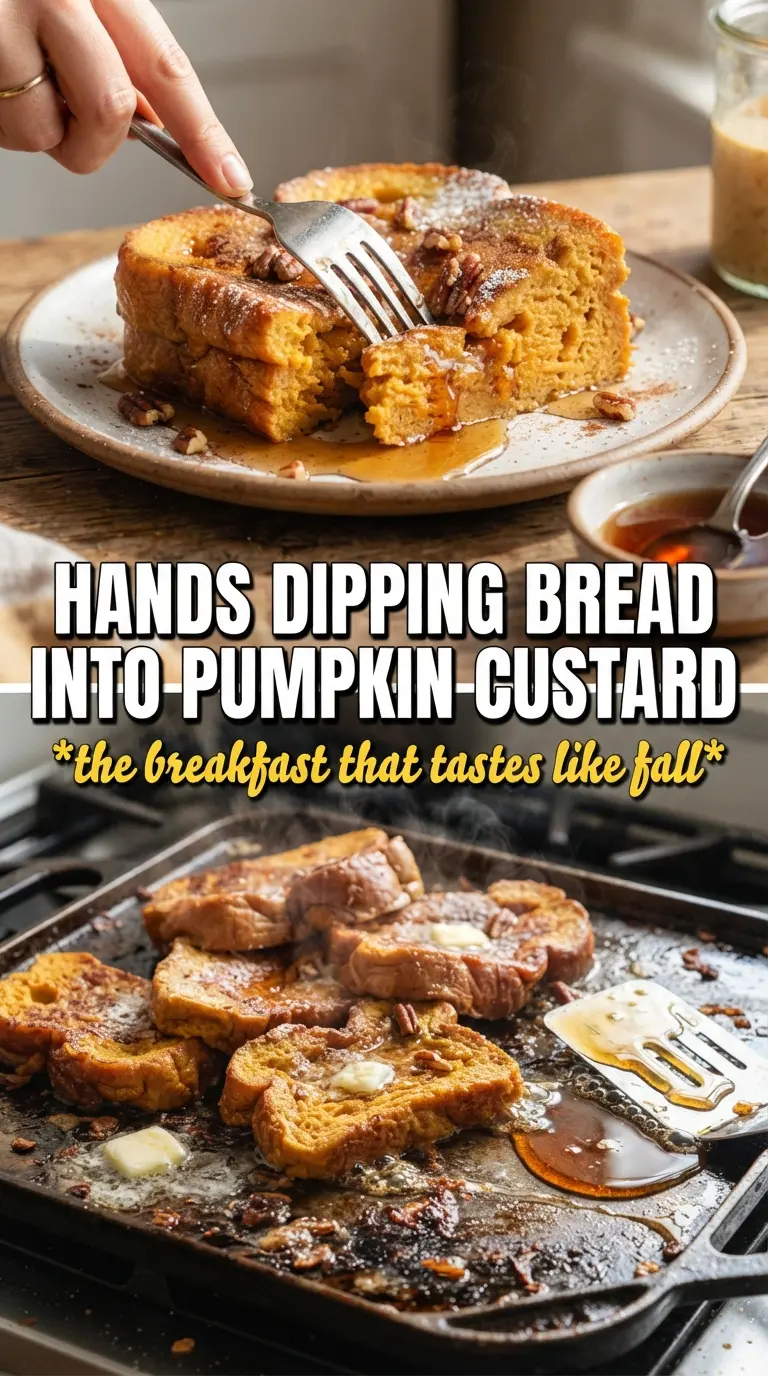
- Eggs — They set the custard and give the toast structure. Three eggs is enough to bind the pumpkin without making the texture rubbery.
- Pumpkin puree — This is the flavor and the body. It gives the French toast its color and that unmistakable pumpkin center, but too much would make it thick and pasty, which is why the milk matters.
- Vanilla, cinnamon, and pumpkin pie spice — These build the warm background flavor. Cinnamon adds direct sweetness, while pumpkin pie spice brings clove, nutmeg, and ginger notes that make the toast taste complete.
- Butter for cooking — Butter gives you the best browning and flavor in the pan. If it foams too quickly, the heat is too high; let it calm down before adding the soaked bread.
Getting the Crust Right Before the Center Sets
Whisk the Custard Until It’s Completely Smooth
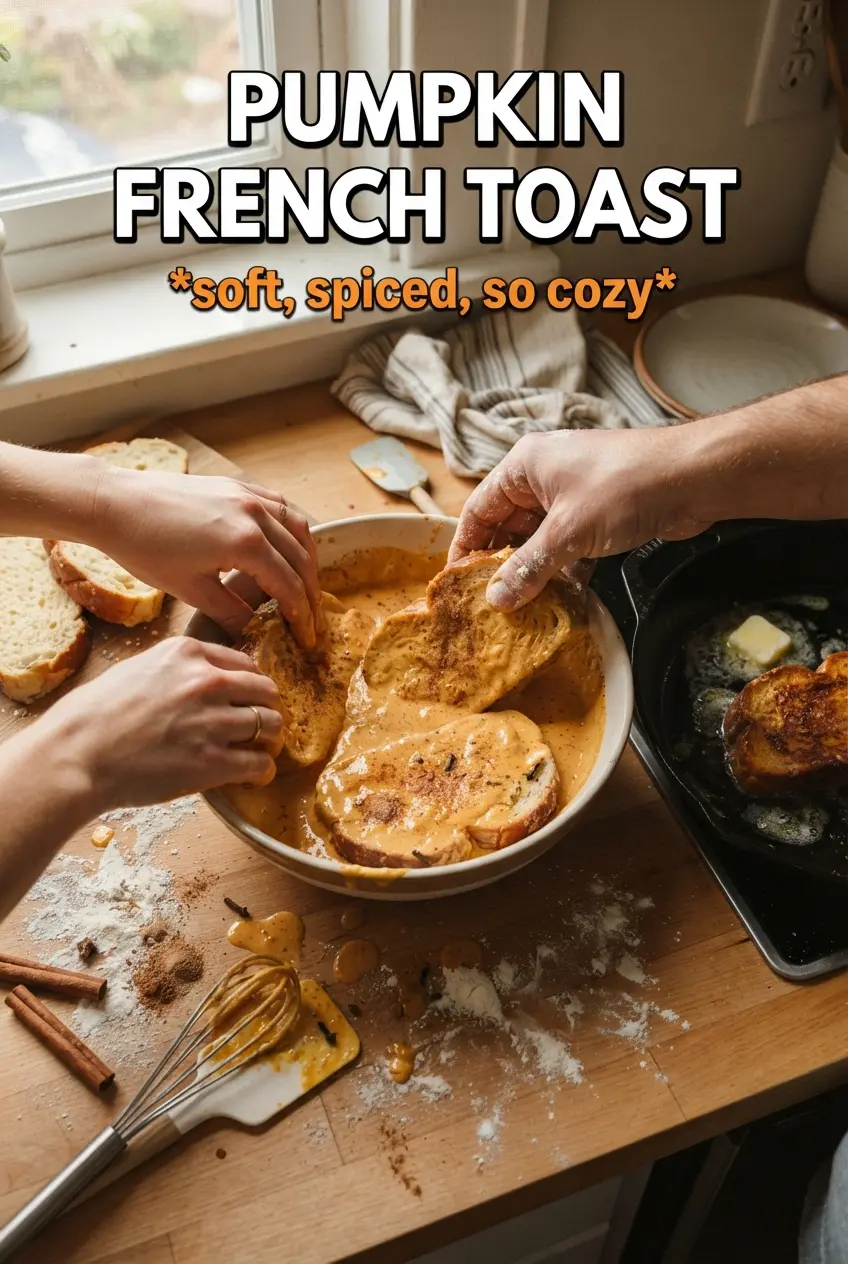
Whisk the eggs, pumpkin puree, milk, maple syrup, spices, vanilla, and salt until there are no streaks of pumpkin left. A lumpy custard clings unevenly to the bread, and those dense spots show up again after cooking. You want the mixture thick but pourable, almost like a loose pudding.
Soak the Bread Without Letting It Collapse
Dip each slice and let it sit about 30 seconds per side. The bread should feel saturated on the outside but still hold its shape when you lift it. If it starts tearing when you move it, the bread is too fresh or too thin.
Cook Over Medium Heat for Deep Color
Melt the butter, add the soaked bread, and cook until the underside is a deep golden brown before flipping. The first side needs time to set, or the bread will tear when you turn it. Add more butter between batches so the next slices brown instead of dry out on a bare pan.
Finish with Warm Toppings, Not Cold Ones
Serve the French toast right away with warm maple syrup, powdered sugar, and whipped cream. Cold toppings can cool the crust down fast and soften it before you get to eat that crisp edge. If you’re feeding a crowd, keep finished slices on a rack in a low oven instead of stacking them on a plate.
How to Adapt Pumpkin French Toast for Different Kitchens
Dairy-Free Version with the Same Custardy Center
Use unsweetened almond milk, oat milk, or coconut milk in place of whole milk or half-and-half, and cook with a neutral dairy-free butter substitute or oil. The result is still tender, but it’ll taste a little lighter and less rich than the original. Oat milk gives the closest texture.
Gluten-Free Bread That Actually Holds Up
Use a sturdy gluten-free brioche-style loaf if you can find one, and dry the slices out for a few minutes before dipping. Gluten-free bread often breaks when it’s too soft, so a slightly drier slice soaks up the custard without falling apart. Expect a softer finish and handle it gently in the pan.
Richer, Dessert-Style French Toast
Swap the whole milk for half-and-half and add an extra pinch of pumpkin pie spice. The custard turns silkier and the finished toast tastes a little more indulgent, especially with whipped cream on top. Keep the heat moderate so the richer custard doesn’t brown before it sets.
Storage and Reheating
- Refrigerator: Store leftover slices for up to 3 days. The crust softens, but the flavor stays good.
- Freezer: Freezes well. Cool completely, wrap individually, and freeze for up to 2 months so the slices don’t stick together.
- Reheating: Reheat in a 350°F oven or toaster oven until hot and crisp again. Skip the microwave if you want to keep the edges from turning soggy.
Questions I Get Asked About This Recipe
Pumpkin French Toast
Ingredients
Equipment
Method
- Whisk eggs, pumpkin puree, whole milk or half-and-half, maple syrup, pumpkin pie spice, cinnamon, vanilla extract, and salt until smooth and evenly combined.
- Heat a griddle or skillet over medium heat and melt 1 tablespoon butter until lightly sizzling.
- Dip each bread slice in the pumpkin custard and let it soak for 30 seconds per side, so the center looks saturated but not falling apart.
- Cook the soaked slices for 2-3 minutes per side until deeply golden and crisp around the edges.
- Work in batches, adding more butter to the pan as needed so each batch browns evenly.
- Serve the French toast immediately with warm maple syrup, powdered sugar, and whipped cream.