Golden, puffed pumpkin French toast casserole is the kind of breakfast that gets scraped clean before the coffee is even finished brewing. The bread bakes up custardy in the middle with crisp edges around the pan, and the cinnamon streusel on top gives every bite a little crunch against the soft pumpkin filling. It’s rich without feeling heavy, and it lands on the table looking like you spent a lot more effort than you did.
The trick is giving the bread enough time to soak overnight so the custard reaches the center of every cube instead of pooling underneath the pan. Brioche or challah works best because the rich crumb holds its shape after baking and doesn’t collapse into mush. Pumpkin puree brings flavor and moisture, but the balance of eggs, milk, and cream is what keeps the texture sliceable instead of soggy.
Below, I’ve included the exact cue I look for when the casserole is done, plus the small streusel habit that keeps the top crisp instead of sandy. If you’ve ever had a breakfast bake turn watery or dense, this version avoids both.
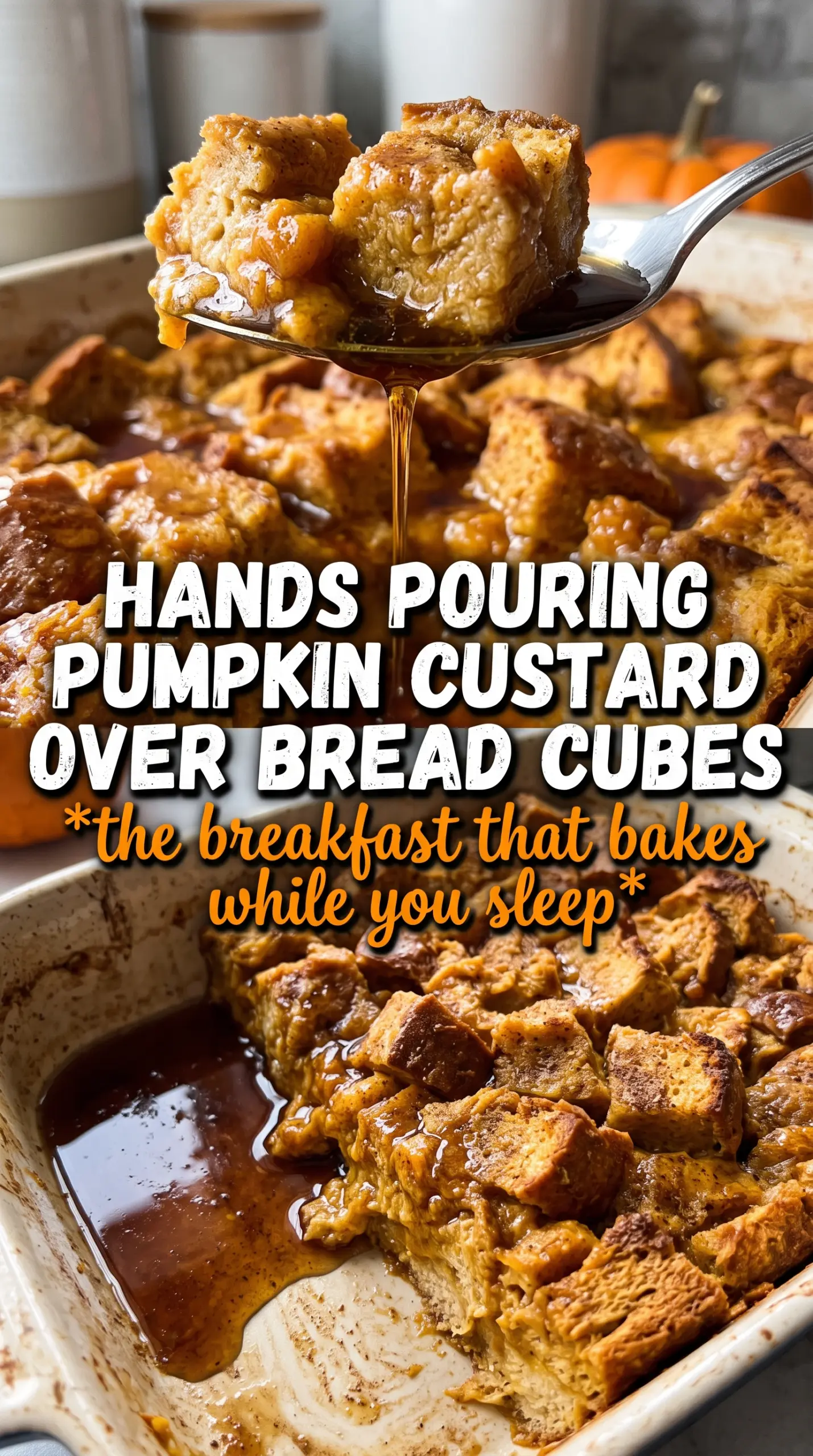
The custard soaked in overnight and baked up perfectly set, not mushy, and the streusel stayed crisp even after we added syrup.
Save this pumpkin French toast casserole for an overnight breakfast that bakes into a custardy center and crisp streusel top.
The Overnight Soak That Keeps the Casserole Custardy, Not Soggy
The biggest mistake with French toast casserole is rushing the soak. If the bread hasn’t had time to absorb the custard all the way through, the bottom turns wet while the top bakes dry, and you end up with two textures that never come together. Overnight chilling fixes that. It gives the brioche time to drink in the pumpkin mixture evenly, so the whole pan bakes into soft custard with defined cubes instead of a bread pudding puddle.
The other thing that matters is the bread itself. Brioche and challah both have enough structure to hold up after a long soak, but they’re still tender enough to melt into the custard. Dense sandwich bread gets heavy fast, and lean artisan loaves can bake up chewy in the wrong way. If the top looks dry before baking, that’s a sign the custard hasn’t reached the center yet — press the bread down after pouring and let the fridge do the work.
- Brioche or challah — These breads hold their shape after soaking and bake up soft instead of collapsing. Day-old bread is ideal because it absorbs more custard without turning flimsy.
- Pumpkin puree — Use plain pumpkin puree, not pumpkin pie filling. Pie filling is already sweetened and spiced, which throws off the custard balance.
- Heavy cream — This is what gives the casserole a rich, silky finish. You can swap in more whole milk, but the texture will be a little less luxurious and the custard won’t feel as round on the palate.
- Maple syrup — Real maple syrup adds depth that brown sugar alone can’t give. If you need to, use half maple syrup and half honey, but the flavor will lean lighter and less woodsy.
What Each Ingredient Is Actually Doing in This Recipe
- Primary ingredient (the star) — Quality matters most. Choose the best you can find.
- Cooking medium (oil, butter, or broth) — This carries flavors and prevents dryness.
- Seasonings (salt, pepper, spices, herbs) — Layer flavors so nothing overpowers. Build depth gradually.
- Aromatics (garlic, onion, herbs) — Cook with fat to bloom flavors. Become the foundation.
- Supporting ingredients — Complement the main ingredient without overpowering it.
- Sauce or liquid (if applicable) — Brings flavors together. Balance richness with acid.
- Acid (lemon, vinegar, wine, or other) — Brightens and prevents flat-tasting results.
- Final finish (garnish, glaze, or sauce) — Prevents one-dimensional taste and adds visual appeal.
Building the Custard So the Top Browns Before the Center Overbakes
Mix the pumpkin custard first
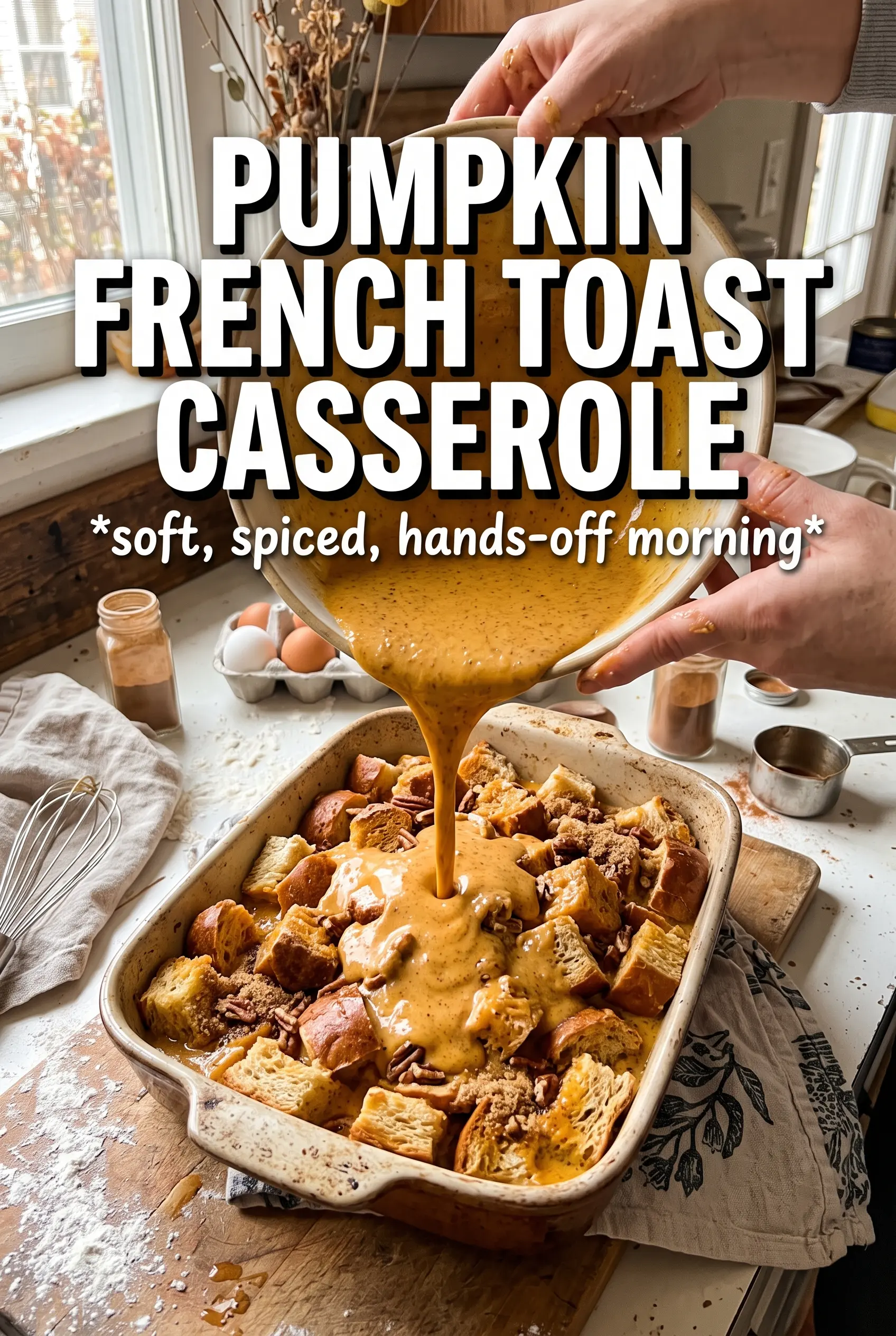
Whisk the eggs, milk, cream, pumpkin, maple syrup, brown sugar, spices, vanilla, and salt until the mixture looks smooth and evenly colored. You’re looking for no streaks of pumpkin or egg whites floating around the bowl. If the custard is lumpy here, those bits will bake into dense spots in the casserole. Give the spices enough whisking time so they don’t settle to the bottom of the dish.
Press the bread into the custard
Pour the custard over the bread cubes and press down gently with a spatula or the back of a spoon. The goal is to help the top cubes contact the liquid and start soaking immediately. If the bread floats above the custard, the center won’t absorb enough and you’ll get dry bites after baking. Cover the dish tightly and refrigerate overnight so the custard can finish its job.
Finish with streusel right before baking
Mix the flour, brown sugar, cinnamon, and cold butter until the topping looks like coarse crumbs with some pea-sized bits of butter left. Scatter it over the soaked bread just before the casserole goes into the oven. That cold butter is what gives you crisp, craggy pieces on top instead of a sandy layer. If the butter warms up too much while you’re mixing, the topping will melt into the custard instead of staying crisp.
Bake until puffed and set
Bake at 350°F until the top is deep golden and the center feels set when you gently shake the pan. It should puff up around the edges and no longer look wet in the middle. If the top browns too fast, lay a loose piece of foil over the dish for the last part of baking. Pull it when the center is still slightly springy; it will continue setting as it rests.
How to Adapt This Pumpkin French Toast Casserole for the Table You Have
Dairy-Free Version
Use full-fat coconut milk or a rich oat milk in place of the milk and cream. You’ll lose a little of the classic dairy richness, but the custard still bakes up tender. Keep the bread and pumpkin amounts the same so the texture stays balanced.
Gluten-Free Swap
Use a sturdy gluten-free brioche-style loaf if you can find one, or another enriched gluten-free bread cut into cubes and dried out a bit first. Gluten-free bread softens faster, so don’t skip the overnight chill. The casserole will be a touch more delicate when sliced, but the flavor stays the same.
Make It Less Sweet
Cut the maple syrup in the custard back to 1/4 cup and keep the brown sugar in the streusel as written. That gives you a breakfast casserole that still tastes warmly spiced but works better with extra syrup on the table. The pumpkin flavor comes through more clearly when the custard isn’t overly sweet.
Storage and Reheating
- Refrigerator: Keep leftovers covered for up to 4 days. The top softens a little, but the custard stays pleasantly tender.
- Freezer: Freeze baked slices tightly wrapped for up to 2 months. Thaw in the refrigerator before reheating so the center warms evenly.
- Reheating: Warm in a 325°F oven, covered loosely with foil, until heated through. The microwave works in a pinch, but it softens the streusel and can make the custard rubbery if you overdo it.
Answers to the Questions Worth Asking
Pumpkin French Toast Casserole
Ingredients
Equipment
Method
- Arrange the brioche or challah cubes in a greased 9x13 dish in a single even layer. Spread them so more surface area is exposed for soaking.
- Whisk the eggs, whole milk, heavy cream, pumpkin puree, maple syrup, brown sugar, pumpkin pie spice, cinnamon, vanilla, and salt until smooth and evenly colored. Stop when no streaks of spice remain.
- Pour the custard over the bread and press down so the cubes absorb the liquid. Cover and refrigerate overnight, keeping the dish sealed so it chills evenly.
- Preheat the oven to 350F and keep the casserole covered while the oven heats. This helps the custard start baking right away.
- Make the streusel by mixing flour, brown sugar, and cinnamon, then rubbing in cold butter until the mixture looks like coarse crumbs. You should see small clumps that will crisp on top.
- Uncover the casserole, sprinkle the streusel over the soaked bread, and lightly press it down. Scatter it evenly so the top browns uniformly.
- Bake at 350F for 50-55 minutes until golden and puffed. Look for a set center and a crisp, browned streusel surface.
- Serve the pumpkin French toast casserole warm with maple syrup and powdered sugar. Spoon syrup over each portion so the topping slightly melts into the custard.