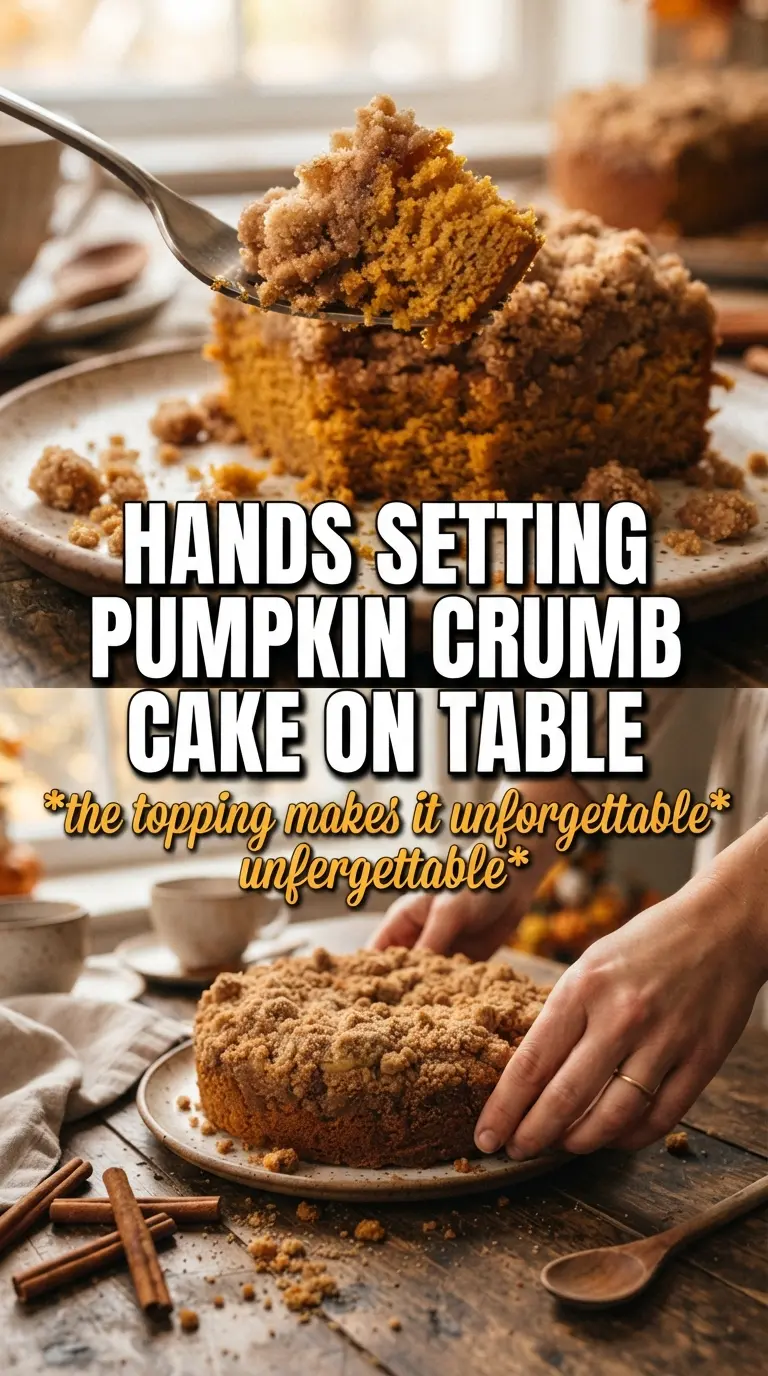
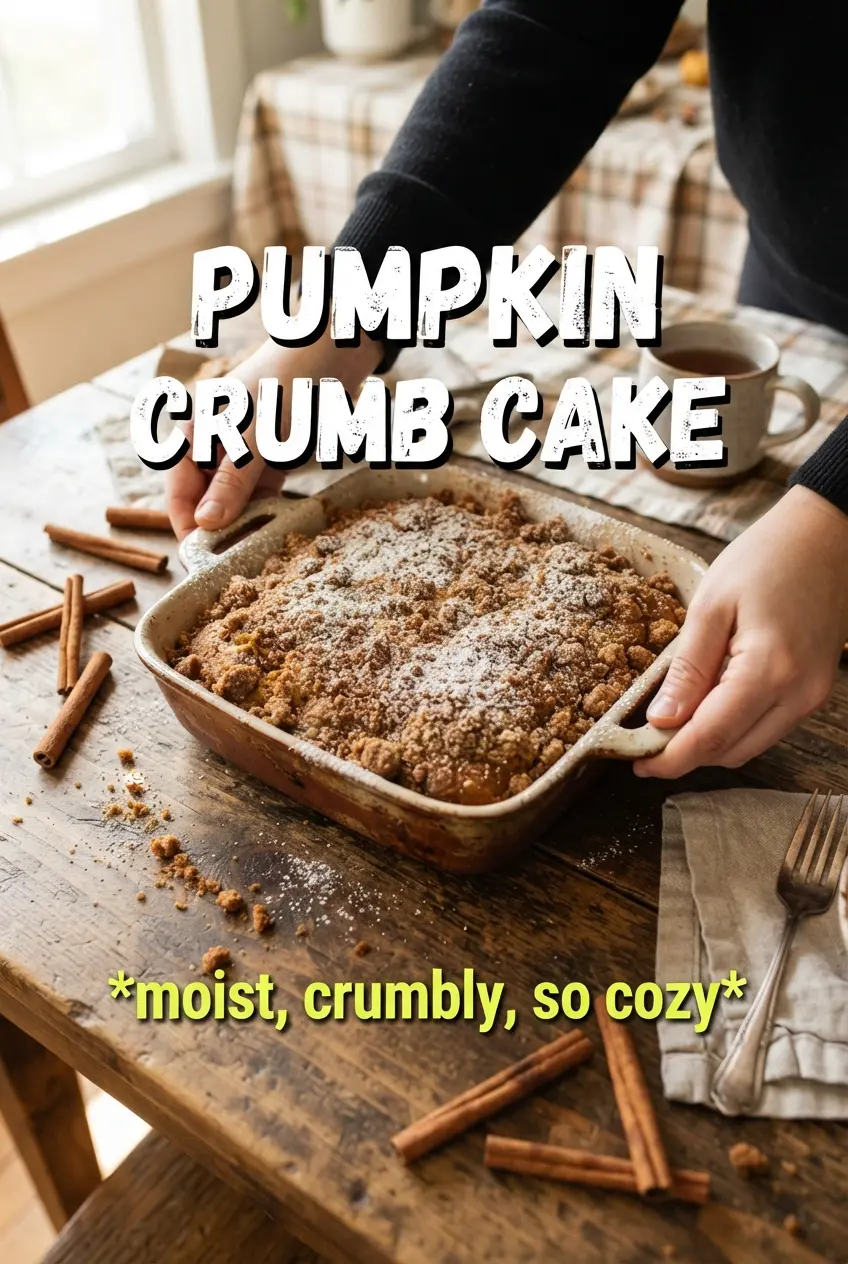
Thick, buttery crumbs sitting on top of a soft pumpkin cake is the kind of breakfast bake that disappears faster than you expect. The crumb layer bakes into crisp, cinnamon-heavy clusters while the cake underneath stays tender and damp in the best way, with enough pumpkin spice to taste autumn without turning bitter or dry. A dusting of powdered sugar finishes it off cleanly, so each slice looks as good as it tastes.
What makes this version work is the balance between the crumb and the cake. The topping uses melted butter, which helps form those big, shaggy pieces instead of a sandy layer that melts away in the oven. In the cake itself, sour cream keeps the crumb soft and the pumpkin flavor rounded out, while brown sugar gives it a deeper, almost caramel note that plays nicely with the spice.
Below you’ll find the little details that matter most: how to get true crumbs instead of paste, why the batter should look thick, and what to do if you want to bake it ahead for a brunch table.
The crumb topping baked into those big buttery pieces I was hoping for, and the cake stayed moist even the next morning. I used the full 55 minutes and it sliced cleanly once it cooled.
Save this Pumpkin Crumb Cake for the mornings when you want a thick cinnamon crumble and a soft, pumpkin-rich slice with almost no fuss.
The Crumb Topping Needs Cold Time, Not More Butter
The biggest mistake with crumb cake is rushing the topping. When you mix melted butter into the flour and sugar, it should look clumpy and uneven, not smooth like wet sand. Then it needs a short chill so the butter firms back up before baking. That pause is what keeps the crumbs distinct instead of letting them melt into one thick sheet.
Another thing worth watching is the ratio of topping to batter. This cake wants a heavy hand with the crumbs. A thin layer bakes too flat and loses the contrast that makes each bite good. Keep the crumble in loose, large pieces and spread it all the way to the edges so every slice gets that crunchy top.
- Brown sugar — This does more than sweeten. It helps the crumb bake into darker, caramelized clusters that stay a little chewy at the edges. White sugar won’t give you the same depth.
- Melted butter — Melted butter creates those bigger, bakery-style crumbs. If it’s too hot, let it cool for a minute before mixing so it doesn’t dissolve the dry ingredients into paste.
- Refrigerating the crumb — Don’t skip this. Five to ten minutes in the fridge helps the topping hold its shape long enough to bake into crisp pieces.
What Each Ingredient Is Actually Doing in the Cake
- Pumpkin puree — Use plain pumpkin puree, not pumpkin pie filling. Pie filling is already sweetened and spiced, which throws off both the texture and the balance of the cake.
- Sour cream — This is the ingredient that keeps the crumb soft and the cake plush. Plain full-fat Greek yogurt works in a pinch, but the cake will taste a little tangier and slightly less rich.
- Softened butter — The butter and brown sugar need to beat together until pale and fluffy so the cake has some lift. If the butter is still cold, the batter turns dense and uneven.
- Pumpkin pie spice plus cinnamon — The mix matters here. Pumpkin pie spice gives the warm background notes, while extra cinnamon sharpens the crumb topping and keeps it from tasting flat.
Building the Batter So the Cake Stays Tender Under That Crumb
Mix the Crumb First and Park It in the Fridge
Stir the flour, brown sugar, cinnamon, and pumpkin pie spice together, then pour the melted butter over the top and toss until large crumbs form. Stop as soon as you have uneven clusters. If you keep stirring, the mixture turns into a heavy dough and you lose the texture that makes crumb cake worth baking. Chill it while you make the batter so the pieces stay distinct.
Whip the Base Until It Looks Light
Beat the softened butter and brown sugar until the mixture looks fluffy and a little lighter in color. That step traps air and gives the cake some lift before the dry ingredients go in. Add the eggs one at a time, then mix in the pumpkin, sour cream, and vanilla. If the batter looks slightly curdled at this stage, that’s normal and it smooths out once the flour goes in.
Fold in the Dry Ingredients Without Overworking Them
Combine the flour, baking powder, baking soda, spice, cinnamon, and salt separately, then add them to the wet mixture and mix just until the flour disappears. Overmixing makes the cake tough and tight instead of soft and sliceable. The batter should be thick enough to spread with a spatula, not pour like cake batter from a box. Spread it evenly in the pan so the crumb bakes at the same rate across the top.
Bake Until the Center Springs Back
Scatter the crumb mixture over the batter in a generous, even layer, then bake at 350°F until the top is deep golden and the center feels set when lightly pressed. A toothpick in the middle should come out with a few moist crumbs, not wet batter. If the topping browns before the center is done, lay a loose sheet of foil over the pan for the last 10 to 15 minutes. Let the cake cool a bit before slicing so the crumb settles instead of falling apart.
Orange zest in the batter
A little finely grated orange zest brightens the pumpkin and makes the spices taste cleaner. Use just the zest, not the juice, or the batter can loosen too much.
Gluten-free version
A good 1:1 gluten-free flour blend works here because the cake is rich and tender rather than delicate. The crumb topping will still be crisp, though the cake may need a few extra minutes in the oven to set fully.
Dairy-free adjustment
Use plant-based butter for both the crumb and the cake, and swap the sour cream for a thick dairy-free yogurt. The cake will still bake up moist, but the crumb may be a touch less rich and a little more delicate.
Storage and Reheating
- Refrigerator: Store covered for up to 4 days. The crumb softens a little as it sits, but the cake stays moist.
- Freezer: Freeze slices tightly wrapped for up to 2 months. Thaw at room temperature while still wrapped so condensation doesn’t make the topping soggy.
- Reheating: Warm individual slices in a 300°F oven for about 8 minutes. The microwave softens the crumb too much, so use it only if you don’t mind losing the texture on top.
Questions I Get Asked About This Recipe
Pumpkin Crumb Cake
Ingredients
Equipment
Method
- Preheat oven to 350F, then grease a 9x13 pan and set it aside with the rack in the center position.
- Make crumb topping by pouring melted butter over the dry crumb ingredients and tossing until large crumbs form, with no dry patches remaining.
- Refrigerate the crumb while you mix the cake batter so it stays thick and crumbly.
- Beat softened butter and brown sugar until light and creamy, with the mixture looking smoother and slightly paler.
- Add eggs one at a time, mixing after each, until the batter looks cohesive and glossy.
- Mix in pumpkin, sour cream, and vanilla until fully incorporated with no streaks visible.
- Fold in the dry pumpkin cake ingredients just until the batter is uniform, stopping as soon as you no longer see flour.
- Spread batter into the greased 9x13 pan in an even layer, smoothing the top for consistent baking.
- Top with a generous, thick layer of chilled crumble so the surface is covered.
- Bake at 350F for 50-55 minutes, until the center looks set and a toothpick inserted near the middle comes out with moist crumbs, not wet batter.
- Let cool briefly, then dust the top generously with powdered sugar before serving.