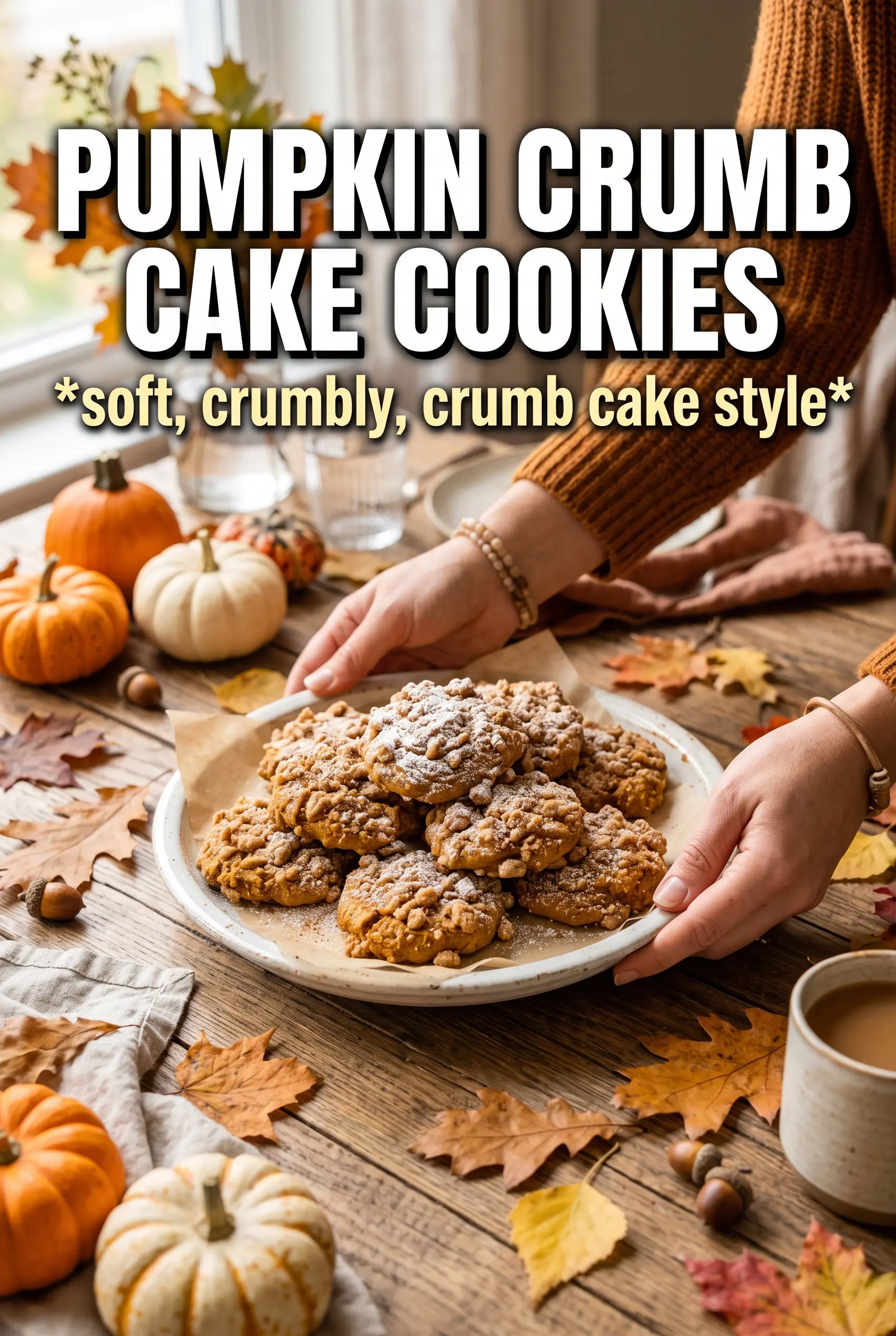
Pumpkin crumb cake cookies land somewhere between a soft bakery-style cookie and a slice of coffee cake, with a thick pumpkin-spiced center and a buttery cinnamon crumb that bakes up crisp on top. The best part is the contrast: tender underneath, golden and sandy on the surface, and finished with a snowfall of powdered sugar that makes each cookie look like it came straight from a bakery case.
What makes this version work is restraint in the pumpkin. Too much pumpkin turns cookies cakey and dull, so the dough uses blotted pumpkin puree and just an egg yolk for richness instead of extra moisture. The crumb topping also gets chilled before baking, which keeps the pieces distinct instead of melting into a paste in the oven.
Below, I’ve included the small details that keep the topping crisp and the cookies thick, plus a few swaps if you need to work around what’s in your pantry.
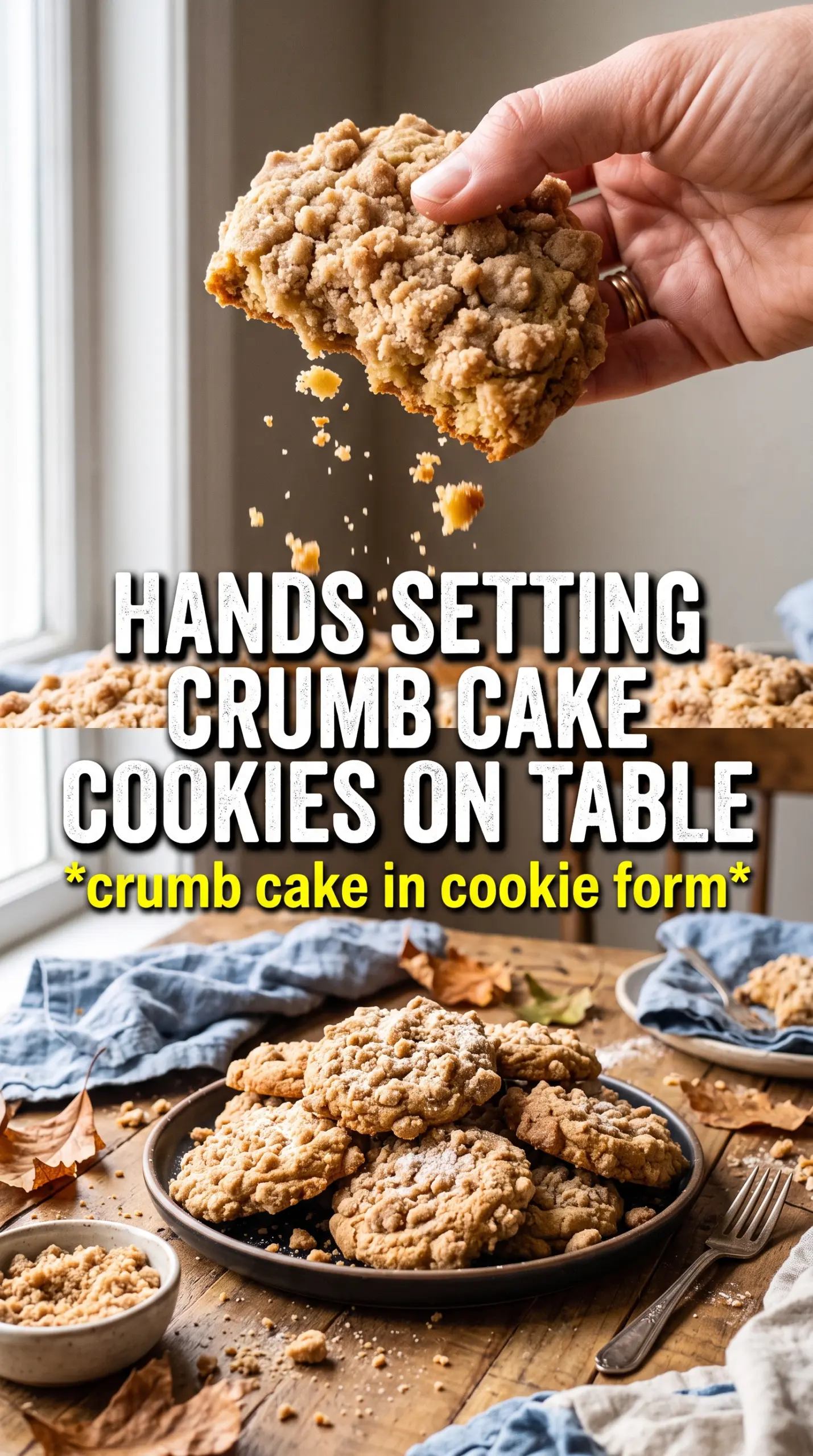
The crumb topping stayed in those big bakery-style pieces and the cookies baked up thick instead of spreading flat. I chilled the topping while I mixed the dough, and that made all the difference.
Save these pumpkin crumb cake cookies for the days when you want a soft pumpkin center and a thick cinnamon crumb on top.
The Trick to Keeping Pumpkin Cookies Thick Instead of Cakey
Pumpkin is the ingredient that causes most cookie recipes to go soft, puffy, and a little disappointing if the balance is off. The problem isn’t flavor. It’s water. Even a small amount of loose pumpkin puree can thin the dough enough that the cookies spread and lose that dense, coffee-cake feel.
Blotting the pumpkin first is the part that keeps this recipe grounded. You’re not trying to dry it out completely; you’re just removing enough excess moisture that the dough stays scoopable and the cookies hold their shape. The egg yolk helps with richness and tenderness without adding the extra liquid a whole egg would bring. That small adjustment is what gives these cookies a thick, soft middle instead of a muffin-like crumb.
What Each Ingredient Is Doing in the Crumb Cake Stack
- Flour — The flour in both the cookies and the crumb topping gives the structure this recipe needs. For the base, stick with all-purpose flour; it keeps the cookies tender but sturdy enough to hold the topping. For the crumb, the flour binds the sugar and butter into those bakery-style clumps instead of a smooth paste.
- Brown sugar — Brown sugar brings moisture, a deeper caramel note, and helps the cookies stay soft after cooling. Light or dark brown sugar both work, but dark brown sugar will push the flavor a little richer and molasses-forward.
- Pumpkin puree — This needs to be blotted dry. Canned pumpkin is fine, but it should feel thick before it goes into the dough. If you skip the blotting step, the cookies bake up cakier and the topping can sink.
- Butter — Melted butter in the crumb topping is what creates those chunky streusel pieces. Softened butter in the cookie base creams with the sugar and gives the dough the right lift and spread control.
- Pumpkin pie spice and cinnamon — Pumpkin pie spice gives the familiar warm background, while the extra cinnamon sharpens the crumb topping so it tastes more like coffee cake than plain pumpkin cookie dough.
- Egg yolk — The yolk adds richness and binding power without watering down the dough. A whole egg would make the cookies puffier and softer in a way that works against the texture here.
Building the Crumb So It Stays Craggy in the Oven
Mix the topping until it looks uneven
Stir the flour, brown sugar, and cinnamon together first, then drizzle in the melted butter and toss with a fork or your fingers. Stop when the mixture forms clumps ranging from pea-sized to about the size of a marble. If you overmix, you’ll end up with a damp sandy layer instead of those thick crumbs that hold their shape on top of the cookie.
Chill before you move on
The crumb mixture needs time in the refrigerator so the butter firms up again. That pause keeps the topping from melting instantly when it hits the oven. If it feels too loose after mixing, give it another quick toss before chilling so the butter is distributed evenly and the clumps bake up uniformly.
Keep the cookie dough thick and cold
Cream the butter and brown sugar until the mixture looks lighter, then mix in the blotted pumpkin, egg yolk, and vanilla. Add the dry ingredients just until no streaks of flour remain. The dough should be soft but scoopable; if it looks shiny or loose, the pumpkin wasn’t blotted enough. Scoop into tall mounds rather than flat rounds so the cookies bake upward instead of outward.
Press the crumb on generously
Use a firm handful of topping for each cookie and press it gently into the dough so it adheres. Don’t sprinkle it lightly. These cookies need a real layer of crumb to get that coffee-cake look and texture. Bake until the edges are set and the centers still look slightly soft; they finish on the pan as they cool.
Make Them with Maple in the Dough
Swap 2 tablespoons of the brown sugar in the cookie base for maple syrup if you want a softer autumn flavor. The dough will be a touch looser, so keep the pumpkin well blotted and chill the scooped dough for 15 minutes before baking. The cookies will taste a little more like maple pumpkin bread than classic crumb cake, which is a good thing if you like deeper sweetness.
Gluten-Free Version
Use a good 1:1 gluten-free flour blend in both the crumb and the cookie base. The cookies will still bake up thick, but they may be a little more delicate when warm, so let them cool fully before moving them. If your blend is especially starchy, add an extra tablespoon of flour to the crumb topping so it stays chunky.
Dairy-Free Swap
Use a plant-based butter that lists itself as a 1:1 baking substitute. The topping is the most sensitive part, so choose a brand that firms up when chilled; softer spreads can make the crumb greasy instead of sandy. The flavor stays close, though the dairy-free version won’t have quite the same buttery finish once it cools.
Storage and Reheating
- Refrigerator: Store in an airtight container for up to 4 days. The crumb softens a bit after day one, but the cookies stay tender.
- Freezer: Freeze baked cookies in a single layer, then transfer to a container for up to 2 months. You can also freeze the unbaked dough mounds with the crumb topping already pressed on.
- Reheating: Warm baked cookies in a 300F oven for 4 to 6 minutes. Skip the microwave if you want the topping to stay crisp; it softens the crumb and makes the cookies feel dense instead of fresh-baked.
Questions I Get Asked About This Recipe
Pumpkin Crumb Cake Cookies
Ingredients
Equipment
Method
- Mix flour, brown sugar, and cinnamon together until evenly combined. Drizzle in the melted butter while tossing until large crumbs form with no dry flour pockets.
- Refrigerate the crumb topping for 15 minutes so it firms up for pressing onto the cookies.
- Beat butter and brown sugar together until smooth and creamy.
- Add blotted dry pumpkin, then beat to incorporate.
- Beat in the egg yolk and vanilla until the mixture looks uniform.
- Fold in flour, baking soda, pumpkin pie spice, cinnamon, and salt just until no dry streaks remain.
- Scoop 2-tablespoon thick rounds and place them on a sheet pan.
- Press a generous handful of crumb topping into each cookie so it adheres and covers the top.
- Bake at 375°F for 12-14 minutes, until the tops look set and lightly golden at the edges.
- Cool completely before finishing.
- Dust generously with powdered sugar right before serving for a coffee-cake look.