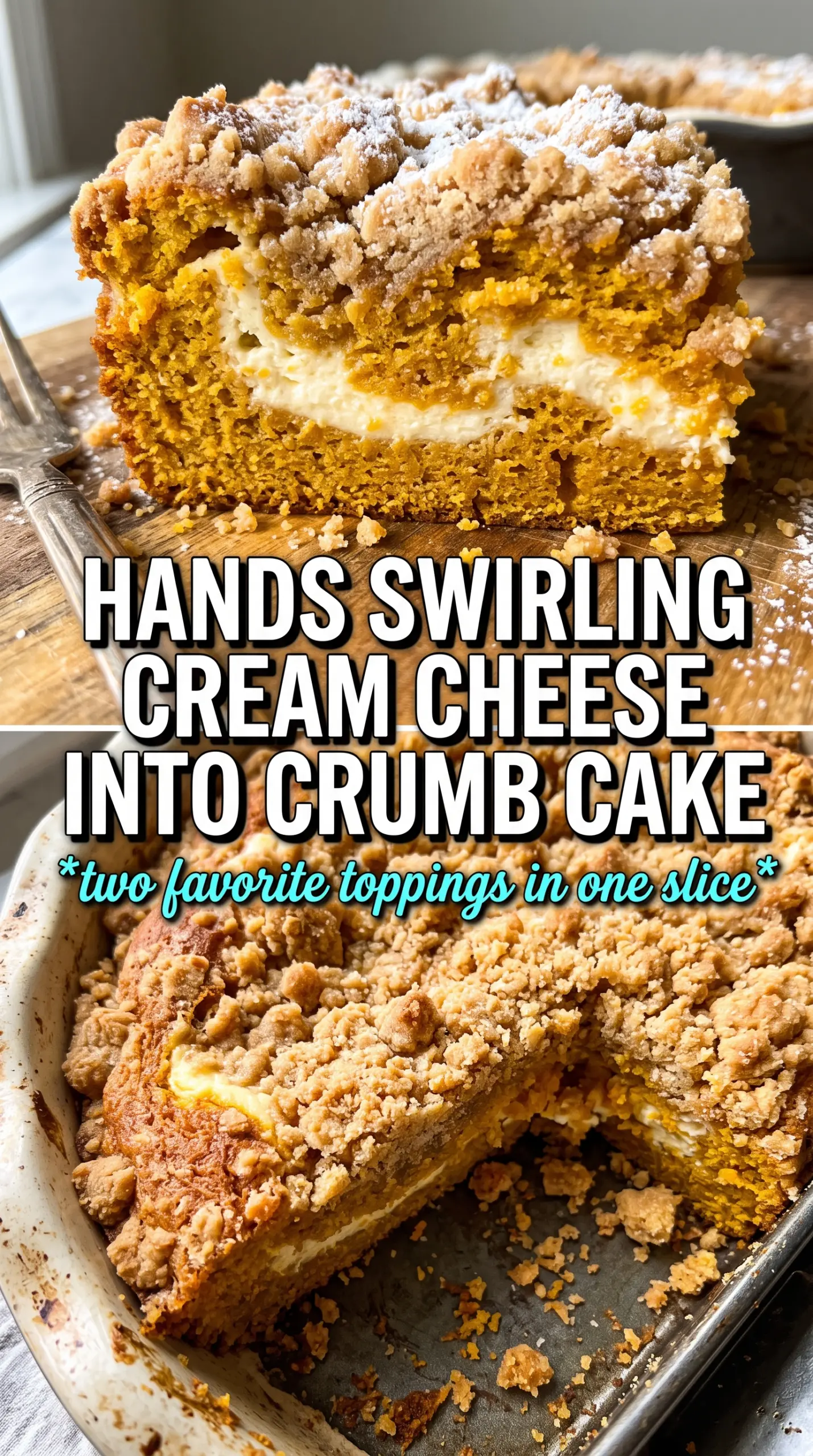
Thick, buttery crumbs, a soft pumpkin cake, and a cool cream cheese ribbon give this crumb cake the kind of contrast that makes people go back for a second slice before the first one’s gone. The topping bakes into big nubbly clusters instead of sandy little bits, and the cream cheese layer stays distinct enough to cut cleanly without disappearing into the batter.
What makes this version work is the order of the layers and the way the crumb topping is handled. Chilling the crumbs keeps the butter from melting too soon, so you get real craggy texture on top instead of a flat sugary lid. The pumpkin batter is rich from sour cream and butter, which gives it enough body to hold the cream cheese layer without sinking into a dense mess.
Below, I’m walking through the little details that matter here: how to spread the batter without dragging the cream cheese around, what the center should look like when it’s done, and the best way to keep the topping from softening after it cools.
The cream cheese layer stayed in the middle instead of disappearing, and the crumb topping baked up crisp even after sitting for a bit. I cut it while it was still slightly warm and it held together beautifully.
Save this pumpkin cream cheese crumb cake for the mornings when you want a tall slice with a real cream cheese layer and a crisp brown sugar topping.
The Detail That Keeps the Cream Cheese Layer from Sinking
The biggest mistake in a layered crumb cake is building it like a plain coffee cake and hoping the fillings behave. They usually don’t. The cream cheese mixture needs to be thick and smooth, and the batter underneath needs enough structure to hold it in place. If the cream cheese is lumpy or the butter is too warm, the middle turns streaky and loose instead of staying as a clean ribbon.
This cake also depends on a gentle hand when you add the final batter layer. You don’t need perfect coverage. You need enough batter to seal the cream cheese in place before the crumbs go on top. The surface can look uneven going into the oven; it evens out as it bakes.
- Softened cream cheese — Cold cream cheese leaves little lumps that never fully melt out. Let it sit at room temperature until it dents easily with a finger.
- Sour cream — This is what keeps the pumpkin cake tender without making it loose. Greek yogurt works in a pinch, but the cake will be a little tangier and slightly less rich.
- Brown sugar in the crumb topping — It adds both moisture and that deep caramel note the white sugar version misses. Light or dark brown sugar both work; dark will give you a stronger molasses flavor.
- Pumpkin puree — Use plain pumpkin puree, not pumpkin pie filling. Pie filling is already sweetened and spiced, which throws off both the texture and the balance of the cake.
What Each Ingredient Is Actually Doing in This Recipe
- Primary ingredient (the star) — Quality matters most. Choose the best you can find.
- Cooking medium (oil, butter, or broth) — This carries flavors and prevents dryness.
- Seasonings (salt, pepper, spices, herbs) — Layer flavors so nothing overpowers. Build depth gradually.
- Aromatics (garlic, onion, herbs) — Cook with fat to bloom flavors. Become the foundation.
- Supporting ingredients — Complement the main ingredient without overpowering it.
- Sauce or liquid (if applicable) — Brings flavors together. Balance richness with acid.
- Acid (lemon, vinegar, wine, or other) — Brightens and prevents flat-tasting results.
- Final finish (garnish, glaze, or sauce) — Prevents one-dimensional taste and adds visual appeal.
Building the Layers So the Cake Bakes Evenly
Mixing the Crumb Topping
Stir the flour, brown sugar, and cinnamon into the melted butter until large crumbs form. You want clumps, not a smooth paste. If the mixture looks like wet sand, it’s too warm and will bake into a flat layer instead of a real crumb topping, so refrigerate it while you finish the batter.
Making the Cream Cheese Filling
Beat the cream cheese, sugar, egg, and vanilla until completely smooth. Stop as soon as the mixture looks creamy and unified. Overbeating adds too much air and can make the layer puff, crack, and settle unevenly after baking.
Assembling the Batter
Cream the butter and brown sugar until lightened, then beat in the eggs, pumpkin, sour cream, and vanilla. Fold in the dry ingredients just until the flour disappears. If you keep mixing after that point, the cake turns tough instead of soft and plush.
Layering and Baking
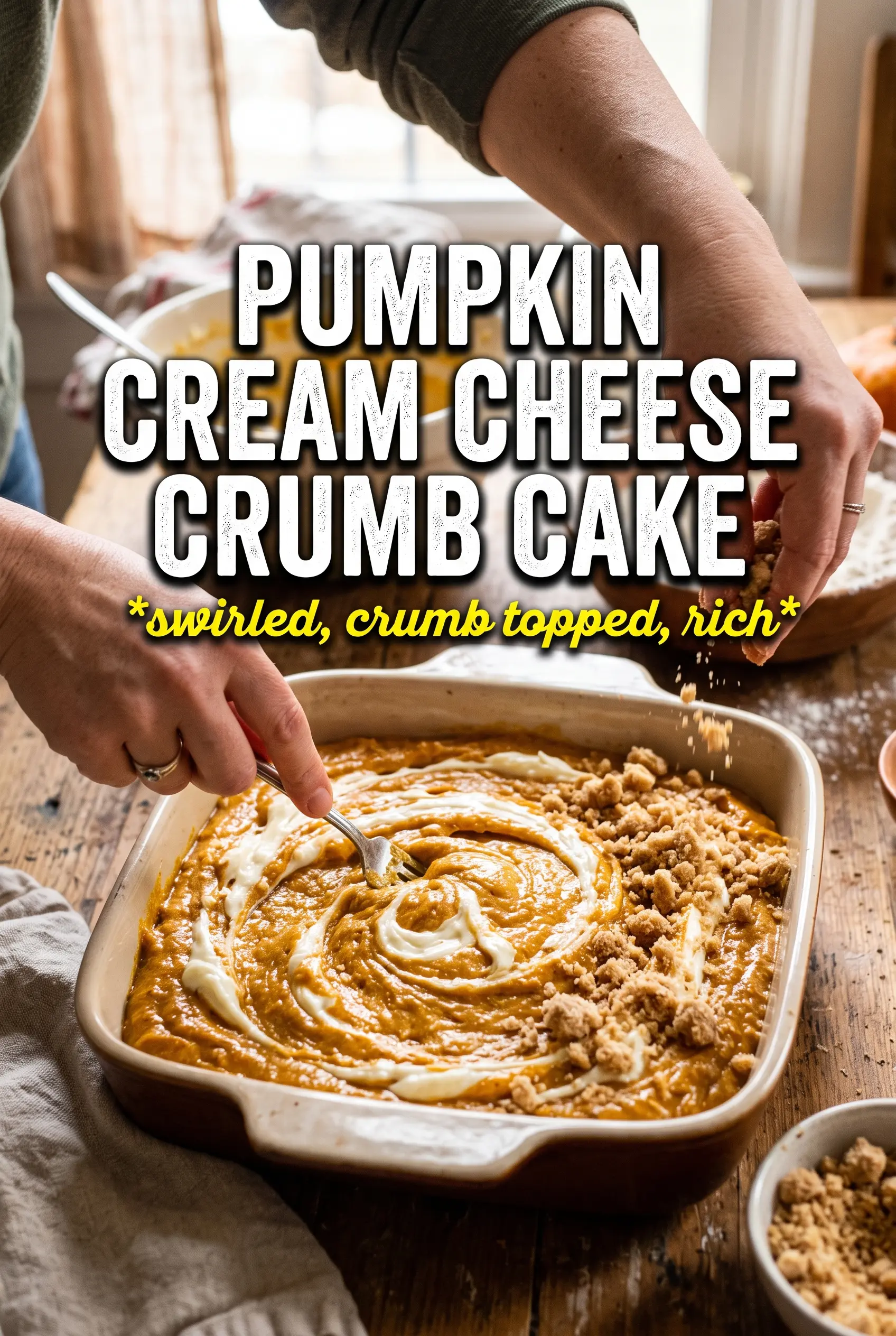
Spread half the batter in the pan, then dollop the cream cheese mixture over it and spread gently. The easiest mistake here is dragging the bottom layer around while you work; use the back of a spoon and small strokes. Add the remaining batter in spoonfuls, scatter the chilled crumbs over the top, and bake until the center is set and a tester comes out with only a few moist crumbs.
Dairy-Free Version with the Same Crumb Topping
Use plant-based cream cheese, dairy-free butter, and an unsweetened thick coconut yogurt or dairy-free sour cream in the cake. The crumb topping still works well as long as the butter substitute is firm enough to clump. The texture will be a touch softer, but the layers still hold.
Gluten-Free Swap That Still Bakes Up Tall
Use a 1:1 gluten-free flour blend that includes xanthan gum for both the crumb topping and the cake. The batter may look slightly thicker, which is normal. Let the cake cool completely before slicing so the center can finish setting cleanly.
Make It a Little More Spiced
Add another 1/2 teaspoon of pumpkin pie spice or a pinch of cloves to the cake batter. That gives the pumpkin a sharper edge and makes the crumb topping taste even deeper. Don’t increase the spices too much, or the cream cheese layer starts to taste muted.
Storage and Reheating
- Refrigerator: Store covered for up to 5 days. The crumb topping softens a little after day one, but the cake stays moist.
- Freezer: Freeze individual slices tightly wrapped for up to 2 months. Thaw in the refrigerator overnight for the best texture.
- Reheating: Warm slices in a 300F oven for about 8 to 10 minutes. The microwave softens the topping too much, so use it only if you don’t mind losing that crumbly finish.
Questions I Get Asked About This Recipe
Pumpkin Cream Cheese Crumb Cake
Ingredients
Equipment
Method
- Preheat oven to 350F and grease a 9x13 pan, then set it aside for later. A thin sheen of grease should coat the entire bottom and sides.
- Make the crumb topping by mixing flour, brown sugar, and cinnamon, then stir in melted butter until large crumbs form. The mixture should look uneven and clumpy like thick streusel.
- Refrigerate the crumb topping while you prepare the cake layers. It should firm up enough to scatter without fully melting.
- Beat the cream cheese layer ingredients (cream cheese, sugar, egg, and vanilla) until smooth. Stop when no lumps remain and the mixture flows like a thick pour.
- Beat butter and brown sugar until smooth, then add eggs, pumpkin, sour cream, and vanilla and mix until combined. The batter should be thick and glossy with no dry pockets.
- Fold in the dry ingredients (flour, baking powder, baking soda, pumpkin pie spice, cinnamon, and salt) until just incorporated. Mix only until the flour disappears so the crumb stays tender.
- Spread half the batter into the prepared 9x13 pan. The surface should be level enough to support the cream cheese dollops.
- Dollop the cream cheese mixture over the batter and spread gently. Create swirls and keep the dollops from mixing completely with the pumpkin layer.
- Top with the remaining batter and scatter the crumb topping generously over the surface. Leave some crumb peaks visible so they bake into a crunchy top.
- Bake for 50-55 minutes at 350F until done. The center should be set and a toothpick should come out mostly clean; crumbs should look toasted.
- Dust with powdered sugar before serving. A light snowfall should sit on top without soaking into the cake.