Silky pumpkin cheesecake with a dark gingersnap crust is the kind of dessert that disappears in neat, polite slices until someone goes back for a second piece before the coffee is even poured. The filling bakes up creamy and set at the edges with just enough wobble in the center to tell you it’ll finish perfectly as it chills. The crust brings a deeper spice than a plain graham crust, which keeps every bite from tasting flat.
What makes this version work is the balance of fat, spice, and moisture. Cream cheese and sour cream give the filling that dense, plush texture people want in cheesecake, while pumpkin puree and brown sugar keep the flavor warm instead of one-note sweet. Baking the crust first helps it stay crisp under the custard, and the water bath protects the top from drying out or cracking before the center has time to set.
Below, I’ll walk through the small choices that matter here: how to keep the filling smooth, what that slight wobble should look like, and how to chill it so each slice comes out clean.
The gingersnap crust stayed crisp under the filling, and the cheesecake set up with that perfect creamy center after chilling overnight. My husband said it tasted like the best part of Thanksgiving in one slice.
Love how the gingersnap crust and spiced pumpkin filling work together? Save this pumpkin cheesecake for the next time you want a clean-slicing holiday dessert with a creamy center.
The Reason This Cheesecake Sets Cleanly Instead of Cracking
The most common mistake with pumpkin cheesecake is pushing it too far in the oven. Cheesecake doesn’t need to look firm all the way through when it comes out. It needs set edges, a center that still quivers slightly, and then a long, slow cool so the eggs finish setting without tightening into a dry, sandy texture.
The water bath matters here because it cushions the heat. That gentler environment keeps the custard from overbaking at the edges before the middle is done. The other piece people skip is the oven rest with the door cracked. That slow temperature drop helps prevent the surface from splitting, especially with a filling that includes pumpkin puree and sour cream, both of which benefit from a calm bake.
- Crust pre-bake: Ten minutes in the oven gives the gingersnap crust enough structure to stand up to the moist filling.
- Room-temperature dairy: Softened cream cheese blends smooth; cold cream cheese leaves little lumps that never disappear.
- Low, patient bake: A 325°F oven is hot enough to set the custard without forcing the eggs to curdle.
What Each Ingredient Is Actually Doing in This Pumpkin Cheesecake
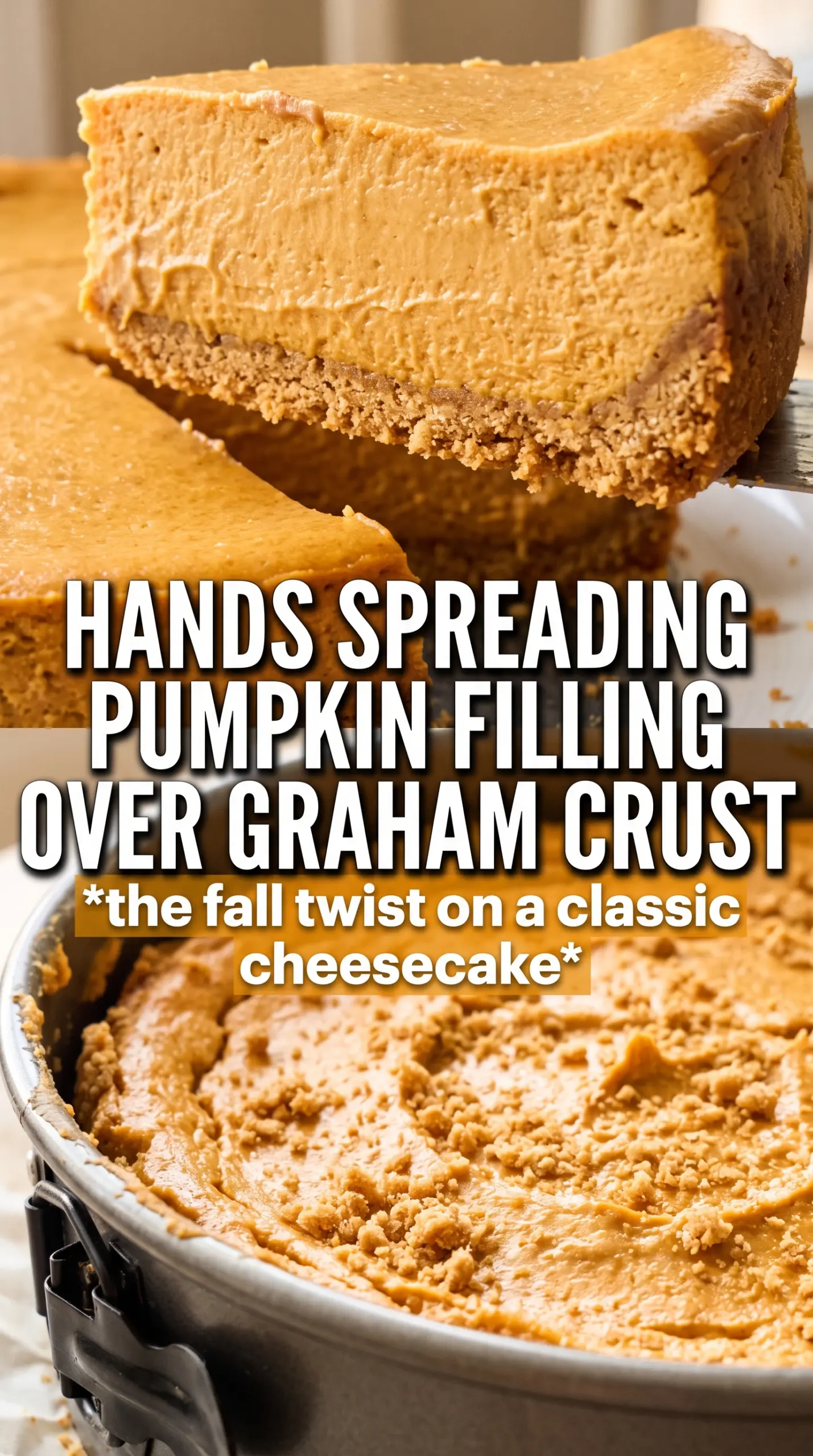
- Gingersnap crumbs: These bring spice and crunch that graham crackers can’t match. If you swap in graham crackers, the crust gets milder and a little sweeter, which is fine, but you lose that warm snap under the filling.
- Cream cheese: This is the body of the cheesecake, and full-fat brick cream cheese gives the smoothest, richest result. Use it softened to room temperature so it beats without lumps.
- Brown sugar plus granulated sugar: The white sugar sweetens cleanly, while brown sugar adds a deeper caramel note that makes the pumpkin taste fuller. Packed brown sugar matters here; loosely filled sugar won’t give you the same depth.
- Pumpkin puree: Use pure pumpkin, not pumpkin pie filling. Pie filling already contains sugar and spice, which throws off the texture and makes the cheesecake too sweet.
- Sour cream: This loosens the filling just enough and adds a slight tang that keeps the dessert from tasting heavy. If you need a substitute, full-fat Greek yogurt works, but the filling will taste a little brighter and less silky.
- Eggs: They set the custard. Add them one at a time so the batter stays emulsified instead of turning thin and broken.
Building the Filling So It Stays Velvety
Press and pre-bake the crust first
Mix the gingersnap crumbs, sugar, and melted butter until every crumb looks damp, then press the mixture firmly into the bottom of a 9-inch springform pan. A measuring cup helps pack it evenly. Bake it for 10 minutes so it sets into a firm base instead of turning soggy under the filling.
Beat the cream cheese until it has no resistance
Start with softened cream cheese and both sugars, and beat until the mixture looks glossy and completely smooth. If you still see little beads or streaks of cream cheese, keep mixing before anything else goes in. Once the eggs are added, overmixing traps too much air and can lead to cracks, so the base needs to be perfectly smooth first.
Add the pumpkin last and stop mixing as soon as it looks uniform
Beat in the eggs one at a time, then add the pumpkin puree, sour cream, pumpkin pie spice, cinnamon, and vanilla. The batter should look thick, pale orange, and silky. Scrape the bowl well so no streaks of plain cream cheese hide at the bottom, but don’t keep whipping once everything is combined.
Bake until the center still moves a little
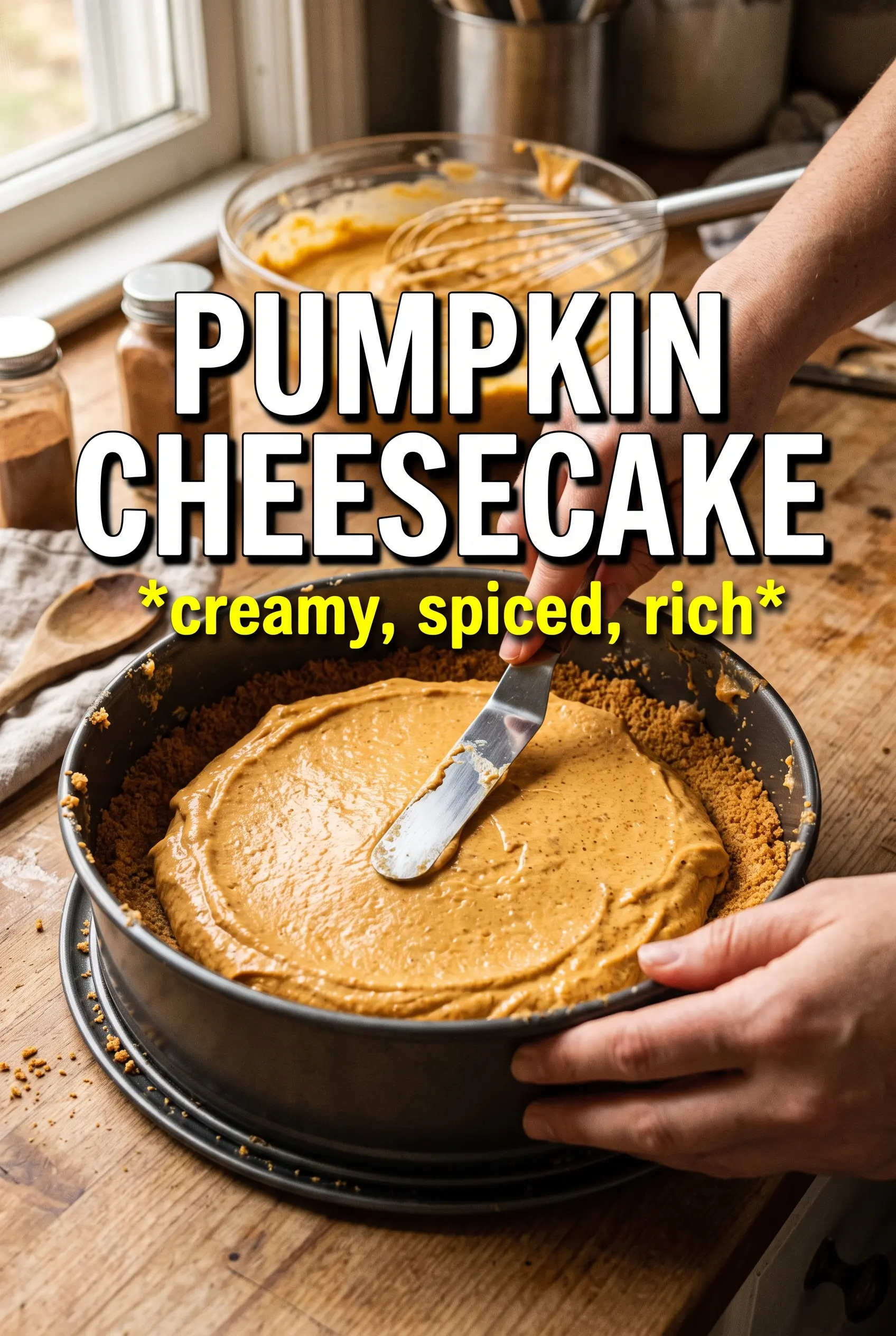
Pour the filling over the crust and place the springform pan in the water bath. Bake until the edges are set and the center has a slight wobble when you nudge the pan. If the middle is completely firm in the oven, it’s already overbaked; it should finish setting as it rests, then firm up fully in the fridge.
Cool it slowly, then chill it long enough
Turn the oven off, crack the door, and let the cheesecake sit for an hour before moving it to the counter. That slow cooldown is a big part of why the top stays smooth. After it cools completely, refrigerate it for at least 6 hours, though overnight gives the cleanest slices and the best texture.
Three Ways to Adjust the Cheesecake Without Losing the Texture
Gluten-Free Crust Swap
Use certified gluten-free gingersnap cookies or gluten-free graham crackers in the crust. The filling stays exactly the same, so the texture barely changes, but you still get a sturdy base with that same spicy crunch.
Dairy-Free Version
Use dairy-free cream cheese and a thick dairy-free sour cream alternative. The cheesecake will still set, but it won’t taste quite as rich or tangy as the original, so the spice becomes a little more pronounced.
Extra-Spiced Holiday Version
Increase the pumpkin pie spice slightly and add a pinch of ground ginger to the filling. That pushes the cheesecake toward a warmer, bolder finish, but don’t overdo it or the spice will drown out the pumpkin.
Storage and Reheating
- Refrigerator: Store covered for up to 5 days. The crust softens a little after day one, but the filling stays creamy.
- Freezer: Cheesecake freezes well. Chill it fully, wrap individual slices tightly, then freeze for up to 2 months. Thaw in the refrigerator overnight.
- Reheating: This cheesecake is served chilled, not reheated. Let slices sit at room temperature for 10 to 15 minutes before serving so the texture tastes creamy instead of firm and cold.
Questions I Get Asked About This Pumpkin Cheesecake
Pumpkin Cheesecake
Ingredients
Equipment
Method
- Preheat oven to 325°F, then press gingersnap crumbs mixed with sugar and melted butter into a 9-inch springform pan.
- Bake the crust for 10 minutes, then remove to cool slightly while you prepare the filling.
- Beat the softened cream cheese with both sugars until completely smooth.
- Add eggs one at a time, mixing until each egg is incorporated before adding the next.
- Mix in pumpkin puree, sour cream, pumpkin pie spice, cinnamon, and vanilla extract until the batter is uniform.
- Pour the filling over the crust in the springform pan.
- Place the springform in a water bath, then bake for 60 to 65 minutes until the edges are set and the center has a slight wobble.
- Turn the oven off and crack the oven door, then rest the cheesecake in the oven for 1 hour to gently set.
- Cool the cheesecake completely at room temperature.
- Refrigerate for 6 hours or overnight until fully chilled and firm.
- Serve with whipped cream and a dusting of cinnamon.