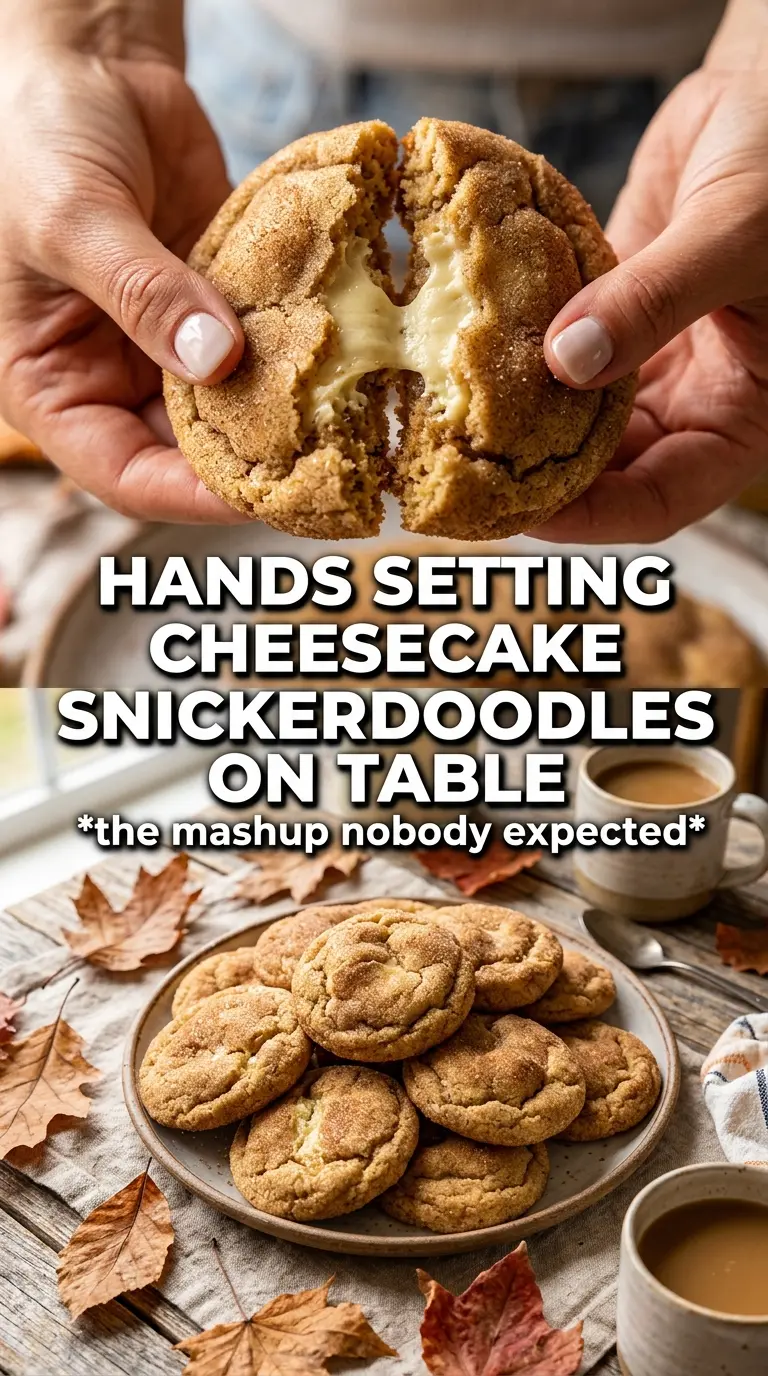
Pumpkin cheesecake snickerdoodle cookies bake up with crackly cinnamon-sugar tops, soft pumpkin-spiced centers, and a cool tangy cheesecake middle that turns every bite into a little surprise. The outer edges set just enough to hold their shape, while the filling stays creamy and the dough bakes up tender instead of cakey. That contrast is what makes these cookies worth repeating.
The key is keeping the pumpkin under control. Blotted pumpkin adds flavor and color without watering down the dough, which helps the cookies stay chewy and lets the cream cheese center stay distinct. Freezing the filling first matters too; if you skip that step, the filling softens too quickly and leaks into the dough before the cookies have a chance to seal.
Below, you’ll find the trick for wrapping the filling cleanly, why the cookies need a full cool-down before you move them, and a few smart swaps if you want to change the spice profile or make them a little easier for a crowded baking day.
The filling stayed tucked inside and the cookies came out with those perfect crackly tops. I chilled the cream cheese balls like you said and none of them leaked.
Save these pumpkin cheesecake snickerdoodle cookies for the batch-baking days when you want a crackly cinnamon sugar cookie with a creamy center.
The Trick to Keeping the Cheesecake Center From Leaking Out
The filling has to start firm and stay cold until the dough is sealed around it. That frozen teaspoon-sized ball gives you enough time to wrap the cookie and pinch the dough closed before the cream cheese softens and escapes. If the filling is soft going in, the dough slides around it instead of holding together, and you end up with a puddle on the pan instead of a neat stuffed cookie.
The other place people lose these cookies is with the pumpkin itself. Pumpkin adds moisture fast, and too much of it turns the dough sticky and heavy. Blotting it on paper towels pulls off the extra liquid, which keeps the cookies thick enough to cradle the filling while still baking up soft.
What Each Ingredient Is Actually Doing in These Cookies
- Cream cheese — This is the filling that gives the cookies their tangy center. Use full-fat cream cheese for the best texture; low-fat versions can turn loose and watery once baked.
- Blotted pumpkin — Pumpkin gives the dough color, warmth, and moisture, but only if you remove some of the water first. Press it between paper towels until it looks dry on the surface, or the dough will spread too much and lose that soft, chewy bite.
- Cream of tartar and baking soda — This is the snickerdoodle backbone. Cream of tartar gives the cookie its classic tang and helps create that slightly crackly exterior, while baking soda helps the dough rise and brown.
- Butter and sugar — Cream them until light and fluffy so the cookies bake with a tender crumb instead of a dense one. Cold butter won’t trap enough air, and melted butter will make the dough too loose to hold the filling.
- Flour — The dough needs enough structure to seal around the filling. If you pack the flour into the cup, the cookies can turn dry, so spoon and level it instead.
Building the Dough, Stuffing the Centers, and Baking Until the Edges Set
Mix the pumpkin dough base
Beat the butter and sugar until the mixture looks pale and fluffy, then add the blotted pumpkin, eggs, and vanilla. The dough should look smooth before the dry ingredients go in, not curdled or grainy. If the pumpkin was still wet, the mixture may look loose at this stage, and that extra moisture only gets worse later, so blotting matters.
Fold in the dry ingredients
Stir in the flour, cream of tartar, baking soda, cinnamon, nutmeg, and salt just until no dry streaks remain. Overmixing at this point builds too much gluten and makes the cookies bready instead of soft. The finished dough should feel soft but scoopable, not sticky enough to smear across your fingers.
Wrap the frozen filling cleanly
Scoop about 2 tablespoons of dough, flatten it in your hand, and place a frozen cream cheese ball in the center. Bring the dough up and around the filling, then pinch the seams closed so no white filling shows through. If you leave a thin spot, it usually splits open in the oven and the filling leaks onto the pan.
Roll, bake, and cool completely
Roll each stuffed ball generously in the cinnamon-sugar mixture, then bake at 375°F until the edges are set and the tops are cracked, about 11 to 13 minutes. They’ll look a little underdone in the center when they come out, and that’s right. Let them cool on the pan first, then move them once the filling firms up; warm cookies are delicate and the center needs that cooling time to set properly.
How to Adapt These for Different Kitchens and Different Crowds
Gluten-Free Version
Use a good cup-for-cup gluten-free flour blend that includes xanthan gum. The cookies will be a little more delicate, but the texture still works because the filling keeps the centers soft. Don’t swap in almond flour alone; it won’t give you enough structure to seal around the cheesecake filling.
Dairy-Free Direction
Use plant-based butter for the dough and a dairy-free cream cheese that holds its shape when frozen. The flavor will be a little less tangy, and some dairy-free cream cheeses soften faster, so keep the filling balls frozen solid before stuffing. This swap works best if you bake the cookies one tray at a time and chill the shaped dough briefly before baking.
Extra-Spiced Cookie Dough
Add another 1/2 teaspoon of cinnamon or a pinch of cloves if you want the spice to read more warmly against the cream cheese filling. Keep the pumpkin pie spice modest in the filling, though, or the center starts tasting busy instead of creamy and clean. This is the variation I use when I want the cookies to smell as good as they taste.
Storage and Reheating
- Refrigerator: Store in an airtight container for up to 5 days. The filling stays creamy, but the cookies soften a bit as they sit.
- Freezer: Freeze baked cookies for up to 2 months, layered with parchment. You can also freeze the stuffed unbaked dough balls and bake straight from frozen, adding 1 to 2 minutes.
- Reheating: Warm baked cookies at room temperature for the best texture, or give them 5 to 8 seconds in the microwave if you want the center softer. Long reheating makes the filling greasy and the cookie dry.
Questions I Get Asked About This Recipe

Pumpkin Cheesecake Snickerdoodle Cookies
Ingredients
Equipment
Method
- Mix cream cheese, powdered sugar, pumpkin pie spice, and vanilla until smooth, then portion into 24 teaspoon-sized balls. Place on a tray and freeze for 30 minutes, until firm and scoopable.
- Beat butter and sugar until light and fluffy. Add blotted pumpkin, eggs, and vanilla, mixing until incorporated.
- Whisk flour, cream of tartar, baking soda, cinnamon, nutmeg, and salt together. Fold the dry ingredients into the wet mixture just until a soft dough forms.
- Scoop about 2 tablespoons of dough and flatten it in your hand. Place one frozen cream cheese ball in the center, then wrap and seal the dough around it to fully enclose the filling.
- Roll each sealed cookie generously in the cinnamon sugar mixture made from sugar, cinnamon, and pumpkin pie spice. Press lightly so the coating adheres.
- Bake at 375°F for 11-13 minutes on a sheet pan, until the edges look set and the centers are slightly soft. The tops should stay lightly pale with cinnamon-sugar texture.
- Cool cookies completely on the pan or a rack for the filling to firm up as they cool. Letting them cool fully helps the cheesecake center slice cleanly.