Big, craggy pumpkin cathead biscuits are the kind of breakfast that land on the table with a little drama: golden tops, tender edges, and a soft center that pulls apart in steamy layers. The pumpkin gives them a warm color and a plush crumb, but it doesn’t weigh them down when the dough is handled the right way. Finished with whipped maple butter, they hit that sweet-salty line that makes people reach for a second biscuit before they’ve finished the first.
The trick here is keeping the butter cold and the dough barely mixed. Cathead biscuits are meant to be rough and oversized, not kneaded into a smooth dough, and that loose texture is what gives you those tall, rustic mounds instead of dense little rounds. Pumpkin puree adds moisture, so the buttermilk gets stirred in just until the flour disappears and no more. If you overwork it, the biscuits bake up heavy instead of airy.
Below you’ll find the timing that keeps the centers tender, the ingredient choices that matter most, and a few smart swaps if you need to work around what you have on hand.
The biscuits came out tall and fluffy with those crisp golden edges, and the maple butter melted right into the split centers. I was worried the pumpkin would make them heavy, but they stayed light and tender.
Save these pumpkin cathead biscuits with whipped maple butter for the mornings when you want a big, fluffy biscuit with a sweet maple finish.
The Secret to Tall Cathead Biscuits Is Not Stirring Them Smooth
Cathead biscuits get their name from the size, and that size only works when the dough stays shaggy and loose. The biggest mistake is treating biscuit dough like bread dough and mixing until it looks even. That develops gluten, which tightens the crumb and steals the lift you want from the baking powder and baking soda.
Pumpkin changes the texture a little because it brings extra moisture and body. That means the dough may look slightly wetter than a plain biscuit dough, and that’s fine as long as it still holds in rough mounds. Drop them into the skillet without shaping them neatly; those uneven edges bake into the craggy, golden corners that make cathead biscuits worth the effort.
What the Pumpkin, Buttermilk, and Cold Butter Each Bring to the Pan
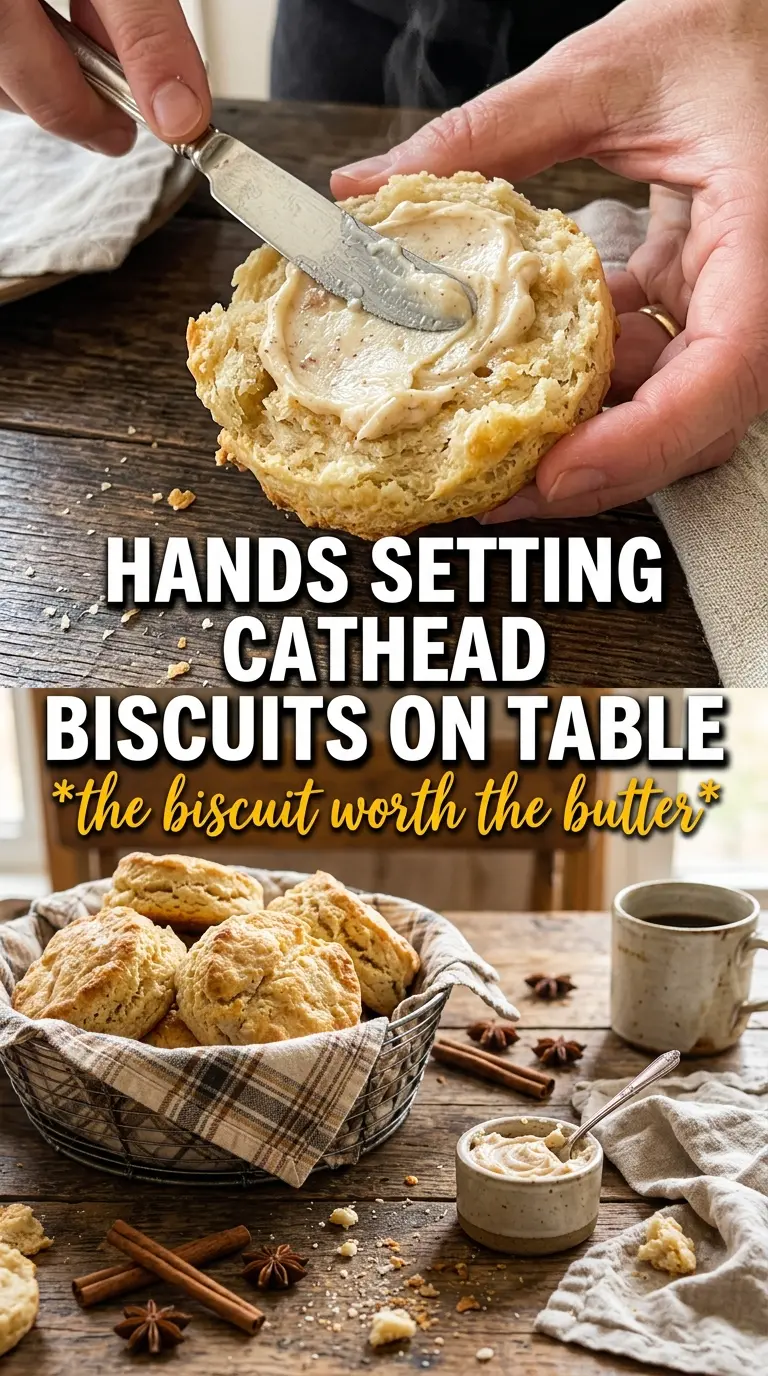
- Pumpkin puree — This is here for moisture, color, and a soft, plush crumb. Use plain pumpkin puree, not pumpkin pie filling, or you’ll end up with extra sugar and spices that throw off the balance.
- Cold unsalted butter — The butter needs to stay in little pieces so it melts in the oven and leaves pockets behind. Salted butter works in a pinch, but cut back the added salt a little if you use it.
- Buttermilk — The acidity wakes up the baking soda and gives the biscuits a gentle tang that keeps the pumpkin from tasting flat. If you don’t have buttermilk, use milk mixed with a little lemon juice or vinegar, but expect a slightly less tender result.
- Whipped maple butter — Softened butter beaten with maple syrup and cinnamon is what makes these taste finished instead of just baked. Pure maple syrup matters here; the flavor is too simple to hide behind a blend.
How to Move Fast Without Melting the Butter
Set Up the Pan First
Heat the oven to 425F before you start mixing, and grease the cast iron skillet so it’s ready the moment the dough is. A hot oven gives the biscuits their first burst of lift, and waiting around after the dough comes together gives the butter time to soften. If your kitchen is warm, chill the cubed butter for a few extra minutes before you start.
Keep the Dough Rough
Whisk the dry ingredients first, then cut in the butter until you have a crumbly mixture with visible bits of butter still showing. Stir the pumpkin and buttermilk together separately so they blend evenly, then add them to the flour mixture and stir just until the flour disappears. If you keep mixing after that point, the dough tightens and the biscuits bake up tough instead of airy.
Drop, Don’t Shape
Scoop eight large mounds into the skillet, using about a 1/3 cup for each one. Cathead biscuits are supposed to look rustic and uneven, so don’t smooth the tops or tuck in the sides. Leave a little space between them so the edges can brown instead of steaming together.
Bake Until the Tops Are Deep Gold
Bake for 18 to 20 minutes, until the tops are golden and the edges look set. The biscuits should feel light when you lift one, and the bottoms should have a deep color from the skillet. If they still look pale on top, give them another minute or two; underbaked biscuit centers taste gummy, especially with pumpkin in the dough.
Whip the Butter While They’re Hot
Beat the softened butter, maple syrup, and cinnamon until fluffy and pale. Serve it right away with the biscuits split open, because the warmth of the biscuits starts to melt the butter into the crumb and turns the whole thing into breakfast worth slowing down for. If the butter sits too long, it firms up again, so keep it at room temperature until serving.
Three Ways to Make These Biscuits Fit Your Morning
Dairy-Free Version
Use a plant-based butter that holds firm when chilled, and swap the buttermilk for unsweetened nondairy milk plus 1 tablespoon lemon juice. The biscuits will still rise and brown, but the flavor is a touch less rich, so the maple butter matters even more.
Make Them Savory-Sweet
Cut the sugar in half and serve them with plain butter, ham, or fried eggs instead of the maple topping. You still get the pumpkin and spice in the biscuit itself, but the flavor leans more toward brunch bread than dessert-like breakfast.
Make-ahead Dough for a Busy Morning
Mix the dry ingredients and butter ahead of time, then keep that mixture chilled until you’re ready to add the pumpkin and buttermilk. Once the wet ingredients go in, bake right away for the best lift. The dough doesn’t hold well for long because the leaveners start working as soon as they hit moisture.
Storage and Reheating
- Refrigerator: Store leftover biscuits in an airtight container for up to 3 days. They soften a little as they sit, especially because of the pumpkin.
- Freezer: Freeze baked biscuits tightly wrapped for up to 2 months. Thaw at room temperature before reheating so the centers warm evenly.
- Reheating: Warm in a 325F oven for about 8 to 10 minutes. The mistake to avoid is microwaving them too long, which turns the crumb rubbery and wipes out the crisp edges.
Answers to the Questions Worth Asking
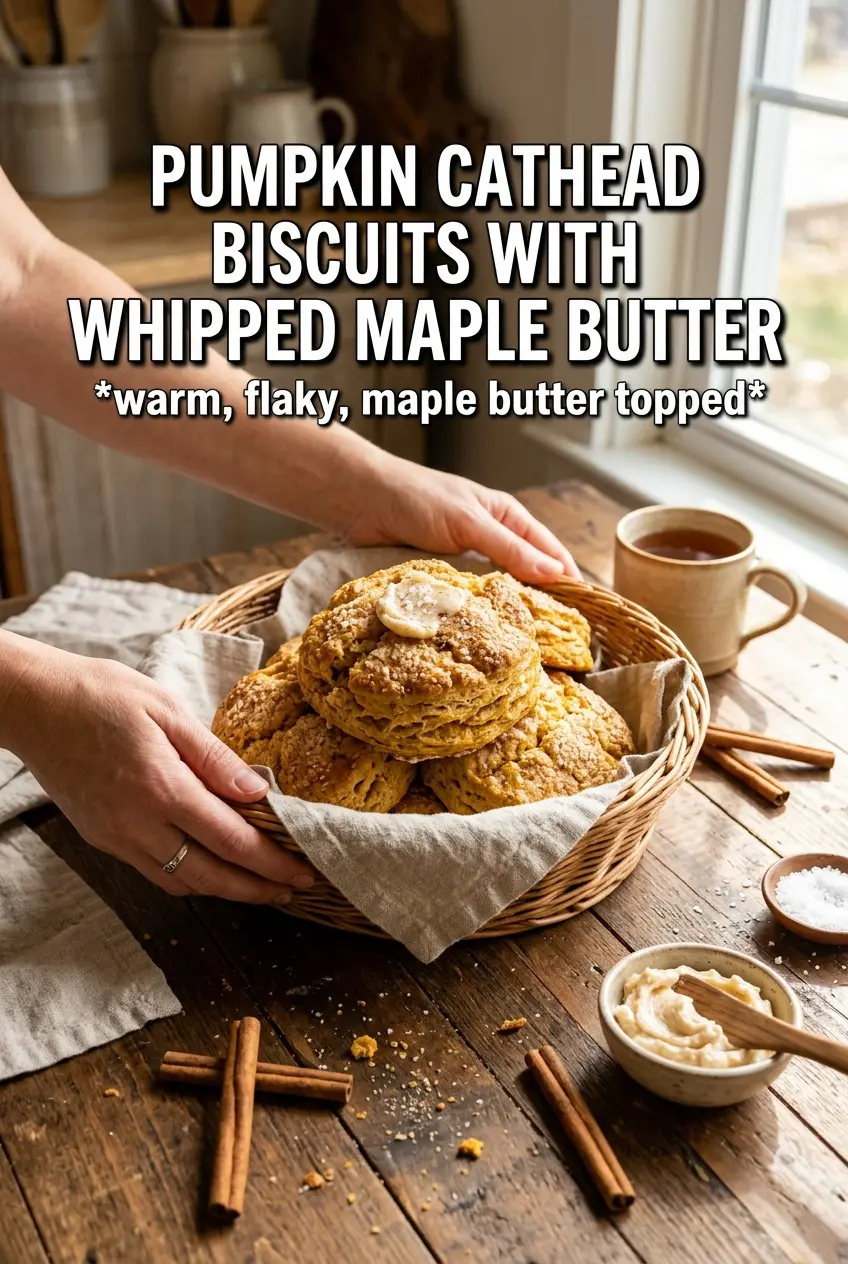
Pumpkin Cathead Biscuits With Whipped Maple Butter
Ingredients
Equipment
Method
- Preheat oven to 425F and grease a 10-inch cast iron skillet.
- Whisk together all-purpose flour, baking powder, baking soda, cinnamon, nutmeg, salt, and sugar.
- Cut in cold unsalted butter until the mixture looks crumbly.
- Stir pumpkin puree and cold buttermilk together, then add to the flour mixture until just combined.
- Drop 8 large mounds (about 1/3 cup each) into the skillet.
- Bake 18-20 minutes until golden, with visibly risen tops.
- Serve immediately with whipped maple butter.
- Beat softened butter, maple syrup, and cinnamon until light and fluffy.