Pumpkin carbonara lands in that sweet spot between cozy and sharp, with a sauce that clings to every strand of pasta instead of pooling at the bottom of the bowl. The pumpkin softens the richness of the yolks and parmesan without turning the dish into a cream sauce, and the pancetta keeps it from tasting heavy. What you get is silky, peppery, salty pasta with just enough autumn flavor to feel different, but still unmistakably carbonara.
The key here is treating the pumpkin like part of the emulsified sauce, not as an added puree. It gets whisked with the egg yolks, parmesan, nutmeg, and black pepper, then loosened with hot pasta water only after the pan is off the heat. That pause matters. If the skillet is too hot, the eggs scramble before they can turn glossy. If the sauce seems tight, a spoonful or two more pasta water usually fixes it.
Below you’ll find the small details that make this dish work every time, from the heat control that keeps the sauce smooth to the variation I use when I want to stretch it for a larger dinner.
The sauce went silky instead of clumpy, and the pumpkin gave it this almost velvety texture without hiding the parmesan. I added the pasta water in small splashes like you said and it came together fast.
Save this pumpkin carbonara for a pasta night that feels rich, peppery, and glossy without using cream.
The Trick That Keeps Pumpkin Carbonara Silky Instead of Scrambled
Carbonara lives or dies by heat control, and pumpkin makes that even more important because the puree thickens fast once it hits the yolks. The pan has to come off the burner before the egg mixture goes in. If the skillet is still over flame, the eggs seize into little bits instead of turning into a glossy sauce.
The other mistake is using too little pasta water. Pumpkin gives body, but pasta water gives the sauce movement and helps the parmesan melt into the eggs. Add it a splash at a time and keep tossing. You’re looking for a sauce that coats the pasta in a thin, shiny layer, not a heavy paste.
- Pulling the pan off the heat is not optional here. It’s the difference between a smooth sauce and breakfast eggs on spaghetti.
- Finely grated parmesan melts more cleanly than coarse shreds. A box grater can work in a pinch, but the finer you grate, the less likely you are to get grainy bits.
- Reserve more pasta water than you think you’ll need. The starch helps the sauce emulsify and keeps the pumpkin from tasting dense.
What Each Ingredient Is Actually Doing in This Dish
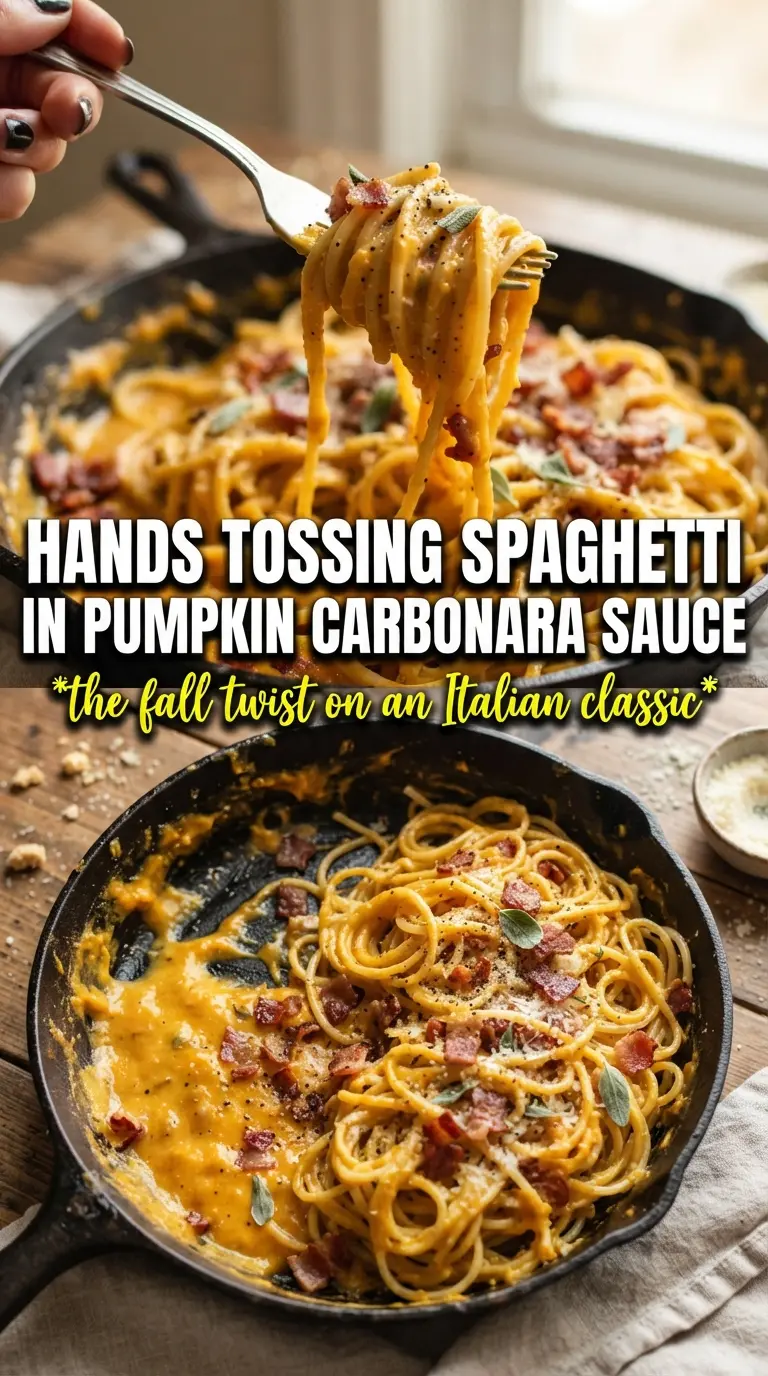
- Pumpkin puree — This adds body, color, and a subtle sweetness that rounds out the salty cheese and pancetta. Use plain canned pumpkin, not pumpkin pie filling. Homemade puree works too, but it needs to be thick and not watery or the sauce turns loose.
- Egg yolks — Yolks are what make the sauce rich and glossy. Whole eggs can work, but the sauce will be lighter and a little less lush. If you want the classic carbonara feel with a pumpkin twist, keep the yolks.
- Parmesan — This is the backbone of the dish. Freshly grated parmesan melts best and gives the sauce its salty, nutty depth. Pre-grated cheese often has anti-caking agents that can make the sauce clingy or grainy.
- Pancetta or thick-cut bacon — This brings the smoky-salty bite that keeps the pumpkin from tasting flat. Pancetta gives a cleaner Italian flavor, while bacon adds more smoke. Either way, cook it until the fat renders and the edges crisp so the texture stands up in the finished pasta.
- Nutmeg and black pepper — Nutmeg nudges the pumpkin toward savory instead of sweet, and black pepper is part of the carbonara identity. Don’t underdo the pepper. It should show up in the final bowl.
Building the Sauce Before the Eggs Set
Render the Pancetta Slowly
Start the pancetta in a large skillet over medium heat and let the fat render out before the pieces crisp. If the heat is too high, the outside burns before the fat has time to melt, and you lose both texture and flavor. Once the pancetta is crisp, add the garlic and cook just until fragrant, about a minute. Garlic goes from sweet to bitter fast in hot fat, so don’t walk away here.
Whisk the Sauce in a Separate Bowl
Combine the yolks, pumpkin puree, parmesan, nutmeg, and black pepper in a bowl until smooth. It should look thick and a little grainy from the cheese, but not clumpy. This prep matters because once the pasta is in the pan, everything moves fast. If the mixture is sitting there already blended, you can add it all at once and start tossing immediately.
Toss Off Heat, Then Loosen
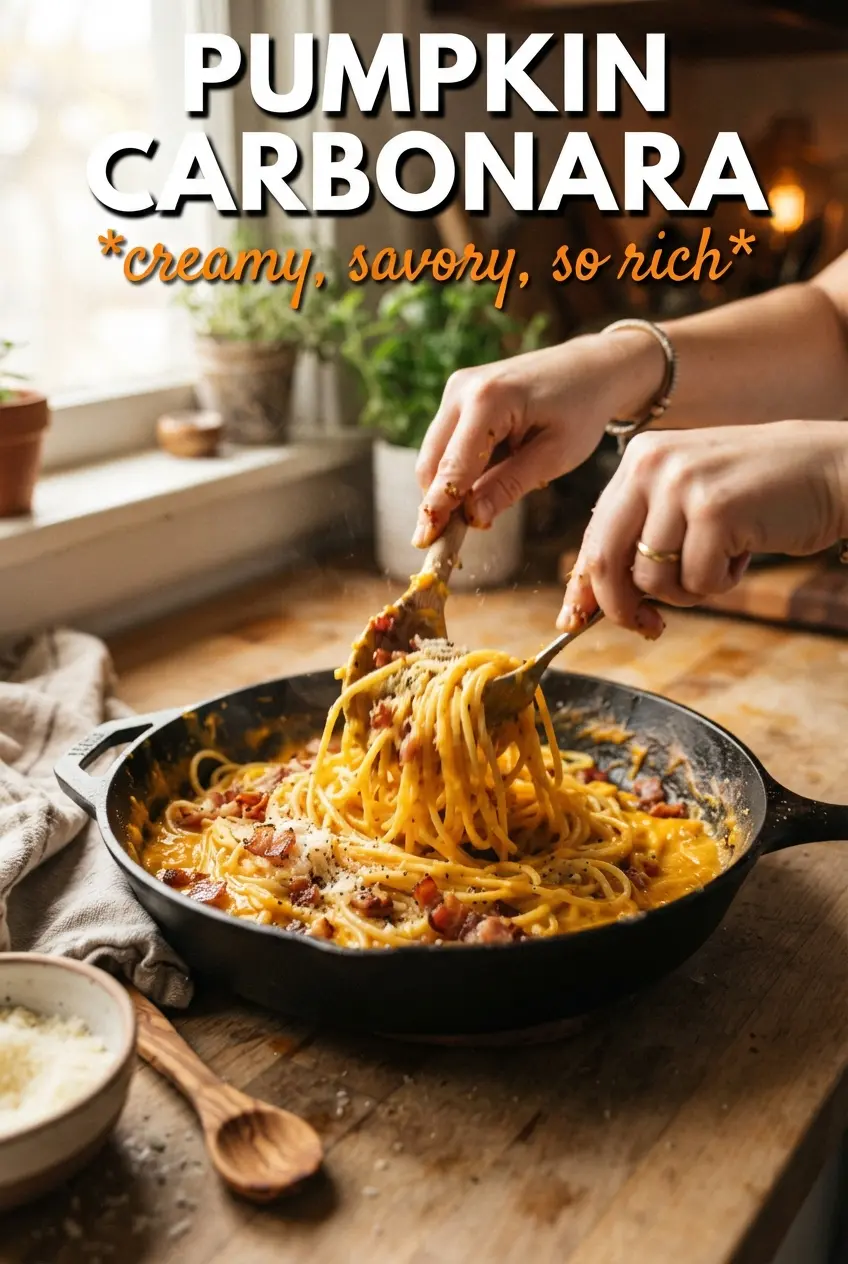
Add the hot drained pasta to the skillet with the pancetta, then take the pan off the burner completely before adding the egg mixture. Toss constantly so the residual heat does the cooking. Add pasta water a splash at a time until the sauce turns silky and coats the noodles. If it tightens up too fast, another spoonful of hot water usually brings it back without thinning the flavor.
Serve Before It Tightens
This pasta waits for no one. Once the sauce turns glossy, get it into bowls and top it with more parmesan and plenty of black pepper. As it sits, the sauce will thicken from the cheese and yolks, which is normal, but it’s best at the table when it’s still fluid and spoonable.
Make It Gluten-Free
Use a sturdy gluten-free spaghetti or rigatoni that holds up to tossing. Gluten-free pasta can go soft fast, so pull it when it still has a little bite and finish it in the sauce just long enough to coat. The sauce behaves the same way, but the timing gets a little tighter.
Make It Vegetarian
Skip the pancetta and build the base with olive oil, garlic, and a pinch of smoked paprika if you want a little depth. You’ll lose the salty meaty bite, so add an extra spoonful of parmesan and be generous with black pepper. The dish still turns out rich, but it reads more like a savory pumpkin pasta than a true carbonara.
Use Bacon Instead of Pancetta
Thick-cut bacon gives you a smokier, more familiar flavor and a little extra grease in the pan. Drain off excess fat if the pan looks greasy before you add the pasta, or the sauce can feel heavy. Bacon works beautifully here, but it pushes the dish farther from classic carbonara flavor.
Storage and Reheating
- Refrigerator: Store leftovers in an airtight container for up to 3 days. The sauce thickens as it chills, so the pasta won’t be quite as silky the next day.
- Freezer: I don’t recommend freezing this one. Egg-based sauces tend to separate and turn grainy after thawing.
- Reheating: Warm it gently in a skillet over low heat with a splash of water to loosen the sauce. High heat is the fastest way to turn the eggs dry and the parmesan stringy.
Questions I Get Asked About This Recipe
Pumpkin Carbonara
Ingredients
Equipment
Method
- Bring a large pot of water to a boil and salt it very well, then cook the spaghetti (or rigatoni) until al dente. Before draining, reserve 1 cup of pasta cooking water for the sauce.
- In a large skillet over medium-high heat, cook the diced pancetta (or thick-cut bacon) until crisp. Add the minced garlic and cook for 1 minute, then remove the skillet from the heat.
- In a bowl, whisk together the 4 egg yolks, pumpkin puree, parmesan, nutmeg, and black pepper until smooth and uniform. Keep the mixture ready so you can toss quickly after heating the pasta.
- Add the hot drained pasta to the pancetta pan, then remove from heat completely. Quickly pour in the egg mixture while tossing continuously.
- If the sauce looks tight, add reserved pasta water in a splash at a time while tossing until a silky sauce forms and coats the pasta. Continue tossing off the heat to avoid scrambling the eggs.
- Serve immediately with extra finely grated parmesan and a generous crack of black pepper on top.