Deep, tender pumpkin bundt cake earns its place on the table when the crumb stays soft for days and the edges bake into a fine golden crust that slices cleanly. The cream cheese glaze settles into every ridge, giving each bite a little tang to balance the warm spice and sweet pumpkin.
The trick is in the batter. Butter and sugar need a full, fluffy whip so the cake bakes up lighter than most dense pumpkin loaves, and the flour should be folded in just until it disappears. Overmixing tightens the crumb fast. Sour cream keeps the cake rich without making it heavy, and pumpkin puree adds moisture without turning the center gummy.
Below, I’ve included the pan prep that keeps a bundt from sticking, plus the glaze texture that drapes instead of running off the cake completely. If bundt cakes have ever made you nervous, this version is a good one to trust.
The cake came out incredibly moist and the cream cheese glaze thickened just enough to stay on the ridges instead of sliding off. I also appreciated that it released cleanly from the pan after 20 minutes cooling.
Save this pumpkin bundt cake for the kind of dessert that slices cleanly, stays moist, and finishes with a thick cream cheese glaze.
The Reason This Bundt Releases Cleanly Instead of Sticking
A bundt pan is unforgiving. The design looks beautiful, but every ridge gives batter a place to cling if the pan isn’t prepared with care. For this cake, greasing alone isn’t enough. You need a thorough coating of fat and flour in every curve, then a little patience before turning it out. That resting time matters because the cake needs to set slightly as it cools and pull away from the pan on its own.
The other thing that keeps this recipe on track is temperature. A 325°F oven gives the center time to bake through before the edges dry out, which is especially important with pumpkin batter. If you rush it at a higher heat, the crust sets too fast and the middle can sink or stay wet around the tube.
- Baking at 325°F gives the cake time to rise evenly without doming or splitting into a dry outer shell.
- Cooling for 20 minutes in the pan helps the structure firm up enough to release cleanly, but not so long that the cake starts to sweat and stick.
- Flouring the pan well is what protects the ridges; the little extra dusting pays off when the cake slides out intact.
What Each Ingredient Is Actually Doing in This Cake
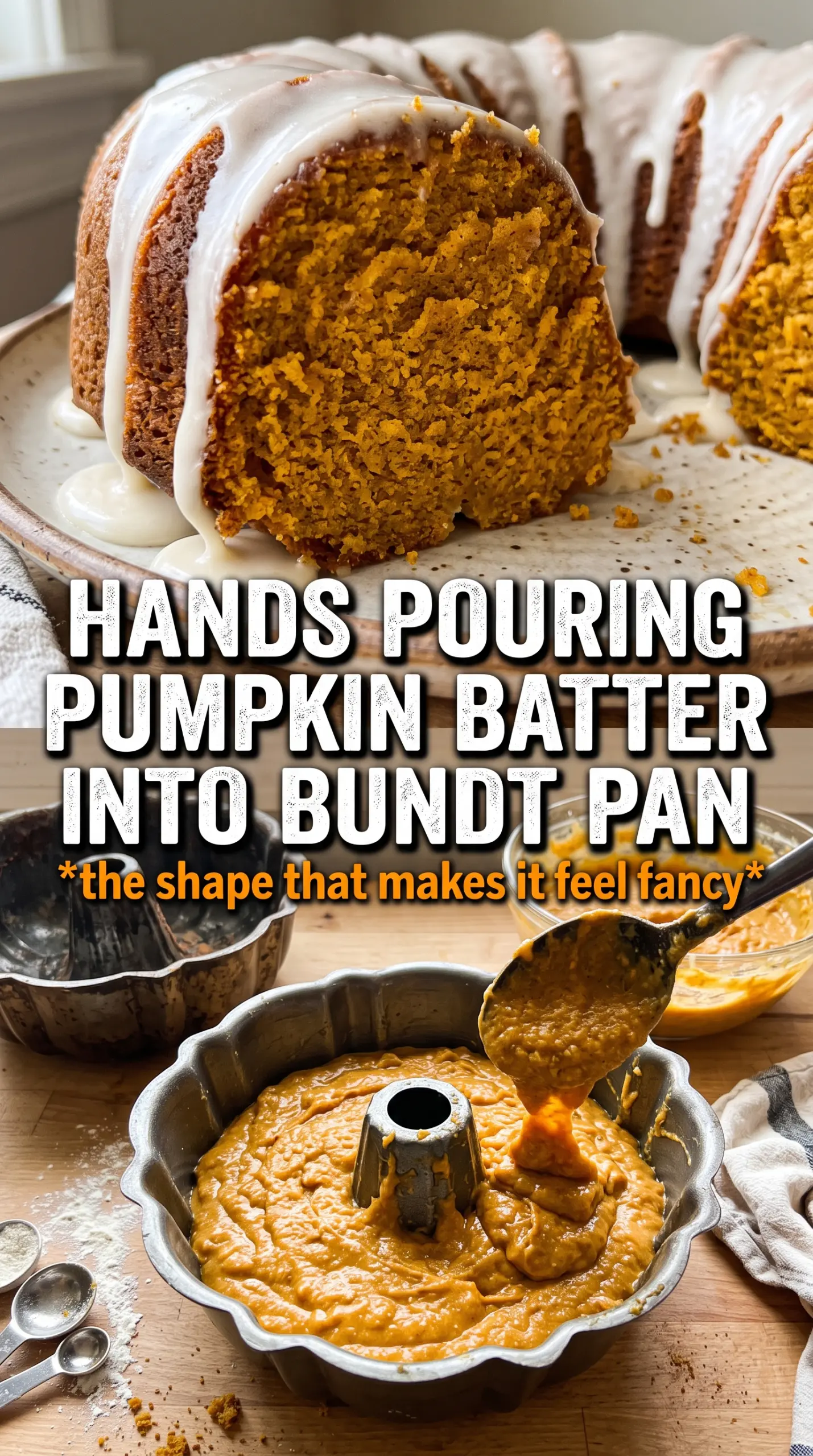
- Pumpkin puree brings moisture, color, and that dense, plush crumb people want in a pumpkin cake. Use pure pumpkin, not pumpkin pie filling, or the sweetness and spices will throw off the balance.
- Sour cream is the difference between rich and heavy. It adds tenderness and a little tang, and plain Greek yogurt works if that’s what you have, though the cake will be slightly less lush.
- Butter and sugar need to be beaten until light and fluffy. That step traps air and keeps the cake from baking up too tight.
- Pumpkin pie spice and cinnamon work together here instead of competing. The pie spice adds the mixed warm notes, and the extra cinnamon sharpens the finish.
- Cream cheese glaze should be soft enough to drizzle but thick enough to sit on top of the cake. If it looks thin, add powdered sugar a spoonful at a time instead of pouring in more milk.
Building the Batter Without Losing the Texture
Whipping the Butter and Sugar Properly
Start with butter that’s soft but not oily. Beat it with the sugar until it looks pale, fluffy, and almost whipped cream-like around the edges of the bowl. That air is part of what keeps the cake from feeling like a brick. If the mixture still looks grainy and heavy, keep going a little longer before you add the eggs.
Adding the Pumpkin Without Breaking the Emulsion
Add the eggs one at a time, letting each one disappear before the next goes in. Then mix in the pumpkin, sour cream, and vanilla. The batter may look a little loose or slightly curdled at this point, and that’s fine. It comes back together once the flour goes in. The failure to watch for here is overbeating after the wet ingredients are added, which knocks out the air you just built.
Folding in the Dry Ingredients
Stir the flour mixture in on low speed or by hand until no dry streaks remain. Stop there. A few small flour traces are better than a batter that’s been worked too much, because overmixing makes the crumb tough and can give you tunnels in the finished cake. Spoon the batter into the pan and tap it once or twice on the counter to level it and release big air pockets.
Knowing When the Cake Is Done
Bake until a toothpick inserted in the thickest part comes out clean or with a few moist crumbs, usually around 60 to 70 minutes. The top should feel set and spring back lightly when touched. If the top is browning too quickly but the center still needs time, tent it loosely with foil for the last stretch of baking. Don’t judge this cake by color alone, because pumpkin cakes can look finished before the middle has actually baked through.
Make It Without Dairy
Use a dairy-free butter substitute for the cake and swap the sour cream for full-fat coconut yogurt or a plain unsweetened plant-based yogurt. The crumb will still be moist, but the flavor will be a little less buttery, so keep the vanilla and spice in place. For the glaze, use a dairy-free cream cheese and add milk slowly until it drips in thick ribbons.
If You Want a Stronger Spice Finish
Add another 1/2 teaspoon of cinnamon or a pinch of cloves for a deeper spice profile. Don’t overdo it with cloves, though, because they can take over quickly and make the cake taste sharp instead of warm.
Turning It Into Cupcakes
This batter bakes well as cupcakes at the same temperature, usually in about 18 to 22 minutes. The texture will be a little lighter and you’ll lose the bundt’s crisp edges, but you gain easy portioning and faster cooling.
Storage and Reheating
- Refrigerator: Store covered for up to 5 days. The glaze will firm up a bit, but the cake stays moist.
- Freezer: Freeze the unglazed cake, tightly wrapped, for up to 2 months. Thaw overnight in the refrigerator before glazing.
- Reheating: Bring slices to room temperature or warm them for 10 to 15 seconds in the microwave. Don’t overheat glazed slices or the frosting will melt and slide off.
Questions I Get Asked About This Recipe
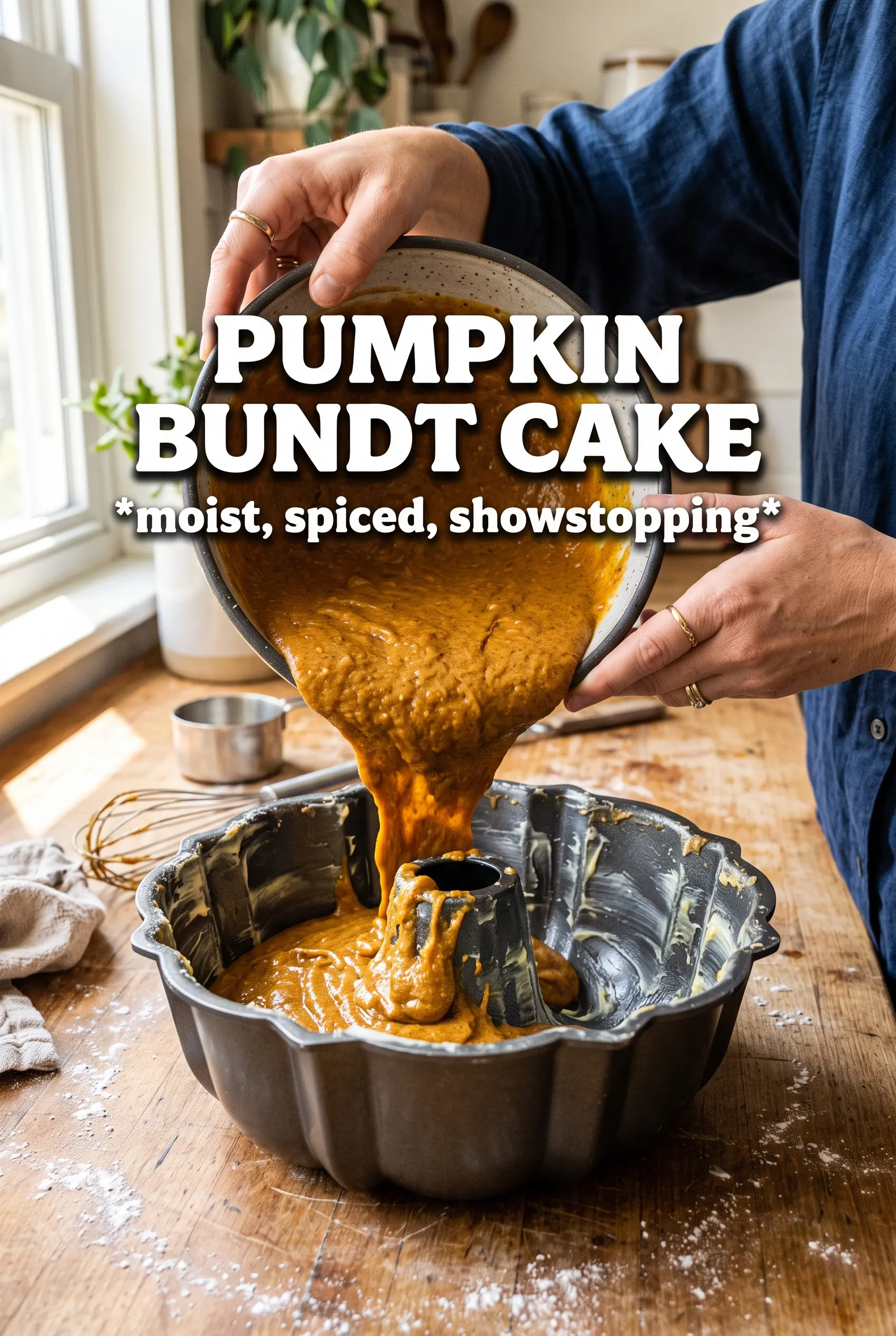
Pumpkin Bundt Cake
Ingredients
Equipment
Method
- Preheat oven to 325F, then grease and flour a 10-inch bundt pan very well and set it aside.
- Whisk all-purpose flour, baking powder, baking soda, pumpkin pie spice, cinnamon, and salt in a bowl until evenly combined.
- Beat unsalted butter and granulated sugar until very light and fluffy, then add eggs one at a time and mix until smooth.
- Add pumpkin puree, sour cream, and vanilla, then fold in the flour mixture until just combined, without overmixing.
- Pour the batter into the prepared bundt pan and bake at 325F for 60-70 minutes until a toothpick comes out clean.
- Cool the cake in the pan for 20 minutes, then invert onto a rack and cool completely.
- Beat cream cheese until smooth, then beat in powdered sugar, 3 tablespoons milk, vanilla, and cinnamon until glossy.
- Drizzle the glaze generously over the cooled cake so it settles into the ridges.