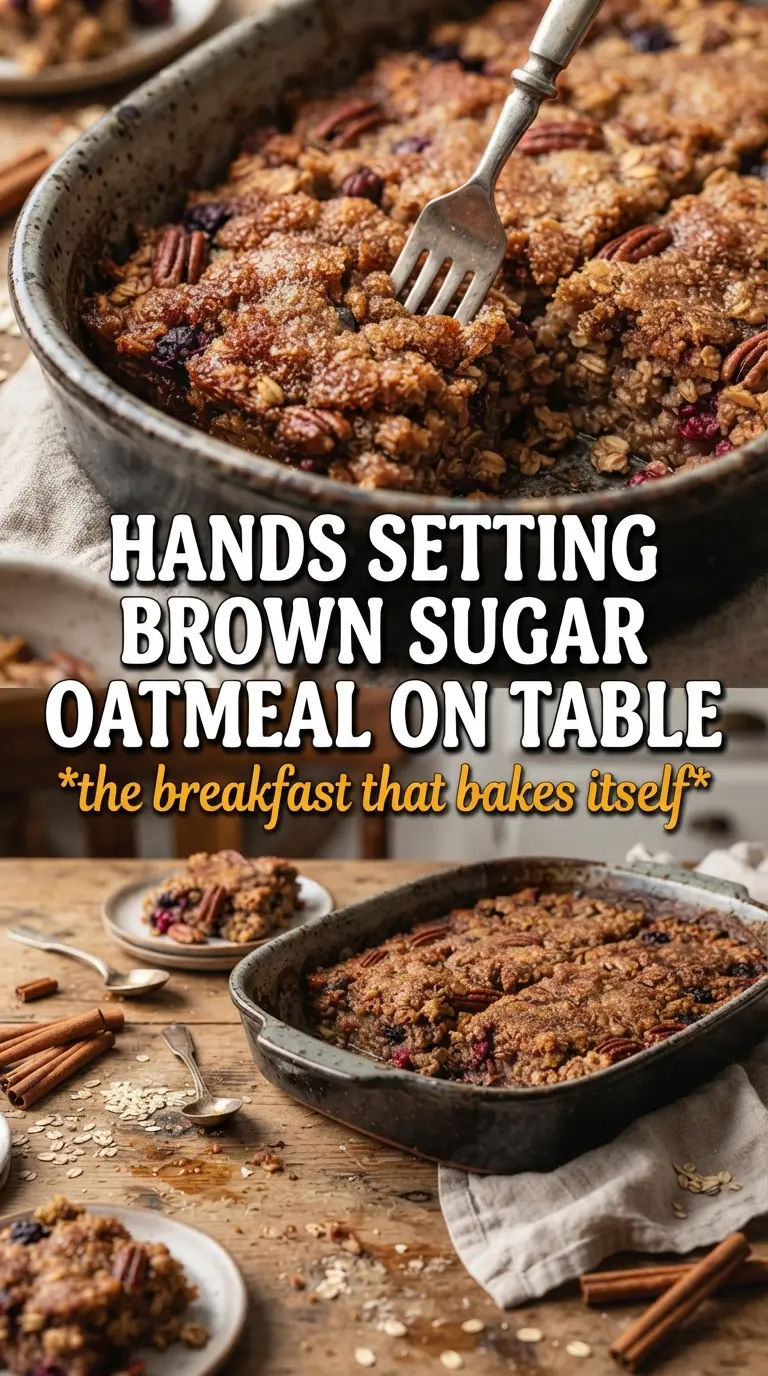
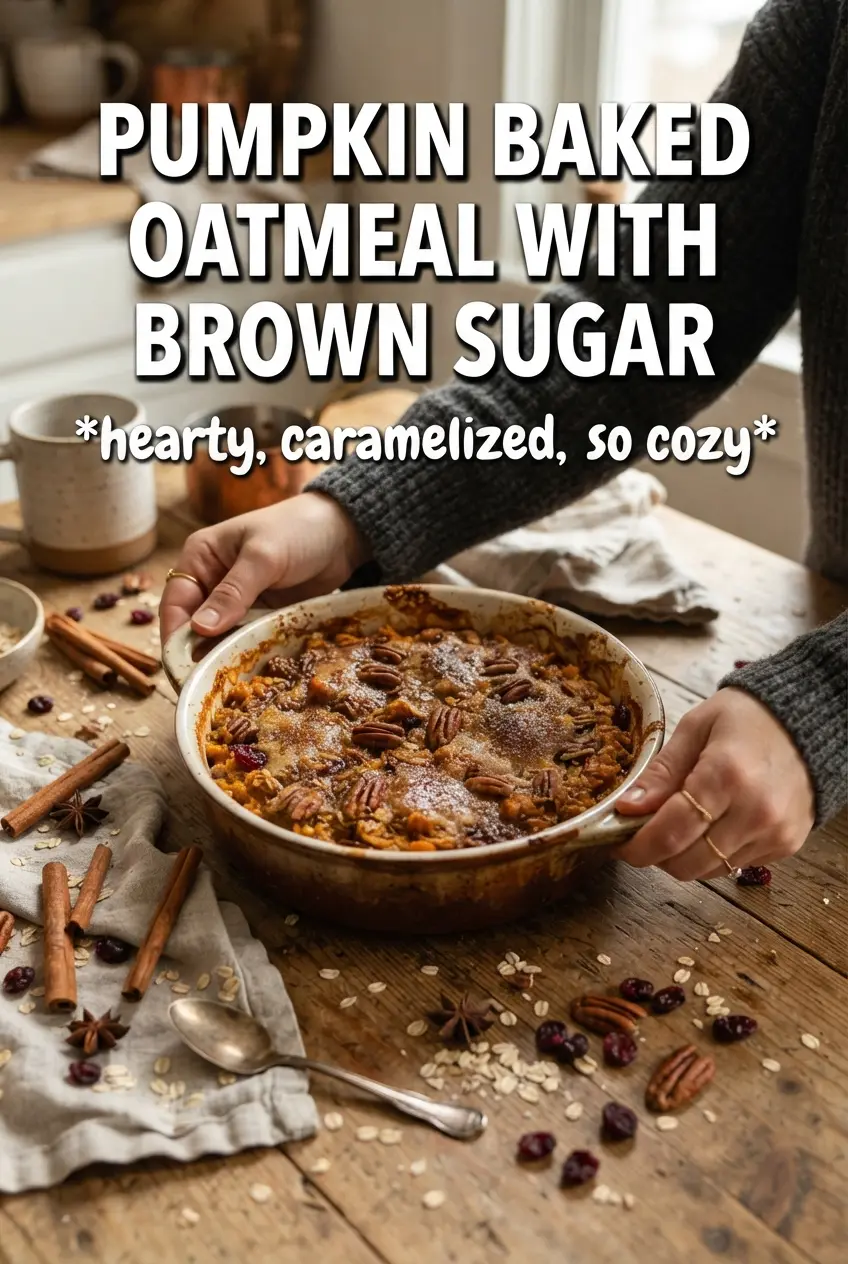
Warm pumpkin baked oatmeal comes out tender in the middle, lightly crisp at the edges, and finished with a brown sugar top that melts into a caramelized crust as it bakes. It eats like breakfast, but the texture is closer to a soft bread pudding with enough structure to slice cleanly once it rests for a few minutes. That top layer is what makes this version worth repeating — the oats stay creamy underneath while the sugar on top turns glossy and crackly in the oven.
The balance matters here. Pumpkin puree brings moisture and body, while eggs and baking powder keep the casserole from turning heavy or dense. I use old-fashioned rolled oats because they hold their shape better than quick oats, and the whole milk gives the bake a richer, custardy texture. The pecans add a little crunch, but the real payoff is the contrast between the soft center and that browned, almost brûléed finish.
Below you’ll find the timing cues that matter most, the swap I use when I want to make it dairy-free, and the small detail that keeps the top from going soggy.
The center baked up creamy instead of mushy, and that brown sugar on top turned into the best little crust after 40 minutes. I served it with a splash of cream and my kids asked for seconds before I’d even sat down.
Pumpkin baked oatmeal with brown sugar gets that caramelized top and creamy center every time — save this one for easy breakfasts that feel special without extra work.
The Reason the Top Gets Crisp Instead of Watery
The common mistake with baked oatmeal is treating it like stovetop oats and adding too much liquid. That gives you a pan that looks set on top but stays loose underneath, especially in the center. This version uses enough eggs and oats to hold together, and the brown sugar goes on after the batter is poured so it can caramelize instead of dissolving into the mix.
The other thing that matters is the bake time. Pull it when the center is just set and the top has turned deep golden, because it continues to firm up as it rests. If you wait until the whole pan feels dry in the oven, it usually ends up chalky by the time it reaches the table.
What Each Ingredient Is Actually Doing in This Bake
- Old-fashioned rolled oats — These are the backbone of the dish. Quick oats break down too much and make the texture pasty, while rolled oats stay distinct and give you a spoonable, sliceable bake.
- Pumpkin puree — Use plain pumpkin puree, not pumpkin pie filling. Pie filling already contains sugar and spice, which throws off both the seasoning and the sweetness of the brown sugar topping.
- Whole milk — The fat content helps the oatmeal bake into a creamy custard-like texture instead of a dry casserole. Lower-fat milk works in a pinch, but the result is a little less plush.
- Eggs — They set the bake and keep it from collapsing into a wet slab. Don’t skip them unless you’re using a tested egg-free substitute, because they do more structural work than anything else here.
- Maple syrup and brown sugar — Maple syrup sweetens the base without making it cloying, and the brown sugar on top gives you that caramelized finish. If you only use one sweetener, the flavor loses depth.
- Pecans — They add crunch and keep each bite from feeling one-note. Walnuts work too, but pecans match the pumpkin and brown sugar better.
Building the Custard So It Bakes Up Creamy, Not Soggy
Whisk the Pumpkin Base Until It Looks Smooth
Start by whisking the pumpkin puree, milk, eggs, maple syrup, brown sugar, melted butter, spices, baking powder, vanilla, and salt until the mixture looks even and no streaks of egg remain. This is the point where the texture is decided, because the oats will only absorb what’s in the bowl once they go in. If the batter looks lumpy before the oats are added, those streaks stay in the finished pan.
Let the Oats Sit in the Liquid
Stir in the rolled oats and move straight to the baking dish. The oats should look fully coated and a little loose, not dry or clumped together. They’ll absorb liquid as the pan heats, which is why the batter seems thinner than you might expect before it goes into the oven.
Watch the Top, Not Just the Timer
Scatter the pecans over the surface, then sprinkle the remaining brown sugar evenly over the top so it melts into a crust instead of sinking into pockets. Bake until the center is set and a knife inserted near the middle comes out with only a few moist crumbs. If the top browns too fast before the middle is done, lay a loose sheet of foil over the dish for the last 10 minutes.
Serve It Warm for the Best Texture
Give the pan 5 to 10 minutes before cutting in. That short rest lets the oats finish absorbing the hot custard so the squares hold together instead of slumping on the plate. A drizzle of maple syrup or a splash of cream right before serving makes the brown sugar topping taste even deeper and softer.
How to Change This Without Losing the Texture
Dairy-Free Version
Swap the whole milk for full-fat oat milk or unsweetened almond milk, and use melted coconut oil instead of butter. Oat milk gives the closest creamy result; almond milk works, but the bake will be a little lighter and less rich.
Nut-Free Baking Dish
Leave out the pecans and add the same amount of pepitas or nothing at all. The topping will be softer without the nuts, so the brown sugar crust becomes the main textural contrast.
Extra-Sweet Brunch Version
Add an extra tablespoon of maple syrup and a handful of chopped apples or dried cranberries to the batter. That pushes the dish closer to dessert, but it also adds a little moisture, so keep an eye on the center and let it rest before serving.
Make It Gluten-Free
Use certified gluten-free rolled oats. The rest of the recipe already fits naturally, and the texture stays the same as long as the oats are still old-fashioned and not quick-cooking.
Storage and Reheating
- Refrigerator: Store covered for up to 4 days. The top softens a little, but the center stays creamy.
- Freezer: It freezes well. Cut into portions, wrap tightly, and freeze for up to 2 months so you can reheat single servings without drying out the whole pan.
- Reheating: Warm individual pieces in the microwave with a splash of milk or cream, or cover the pan with foil and heat in a 325F oven until hot. The biggest mistake is blasting it uncovered, which dries out the oats before the middle warms through.
Answers to the Questions Worth Asking
Pumpkin Baked Oatmeal With Brown Sugar
Ingredients
Equipment
Method
- Preheat oven to 375F and grease an 8x8 or 9x9 baking dish so the oatmeal releases easily.
- Whisk pumpkin puree, whole milk, eggs, maple syrup, 3 tablespoons brown sugar, melted unsalted butter, pumpkin pie spice, cinnamon, baking powder, vanilla, and salt until smooth and evenly combined.
- Stir in old-fashioned rolled oats, then pour the mixture into the prepared baking dish.
- Scatter chopped pecans over the top and sprinkle the remaining 3 tablespoons brown sugar evenly across the surface for caramelization.
- Bake for 35-40 minutes at 375F until the oatmeal is set and the top is caramelized golden.
- Serve warm with a drizzle of maple syrup or cream for added richness.