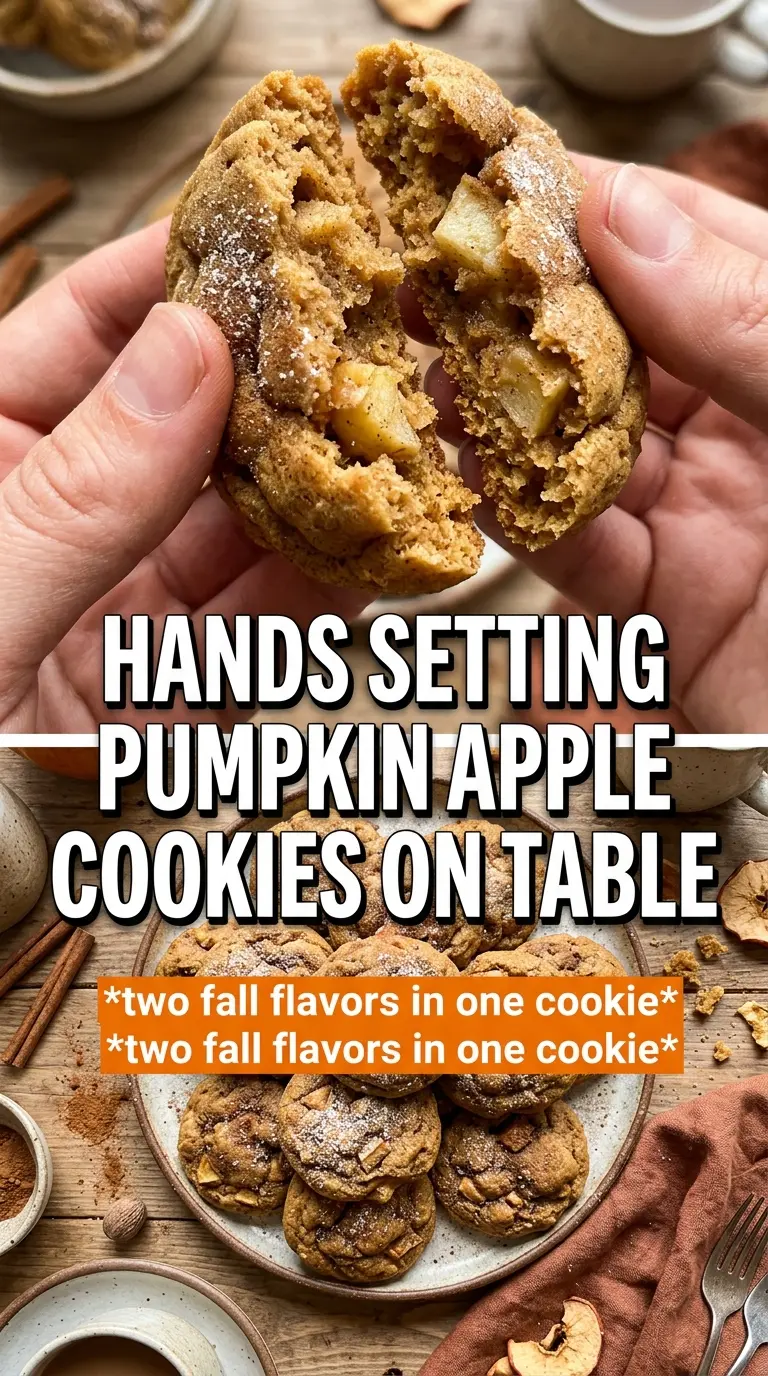
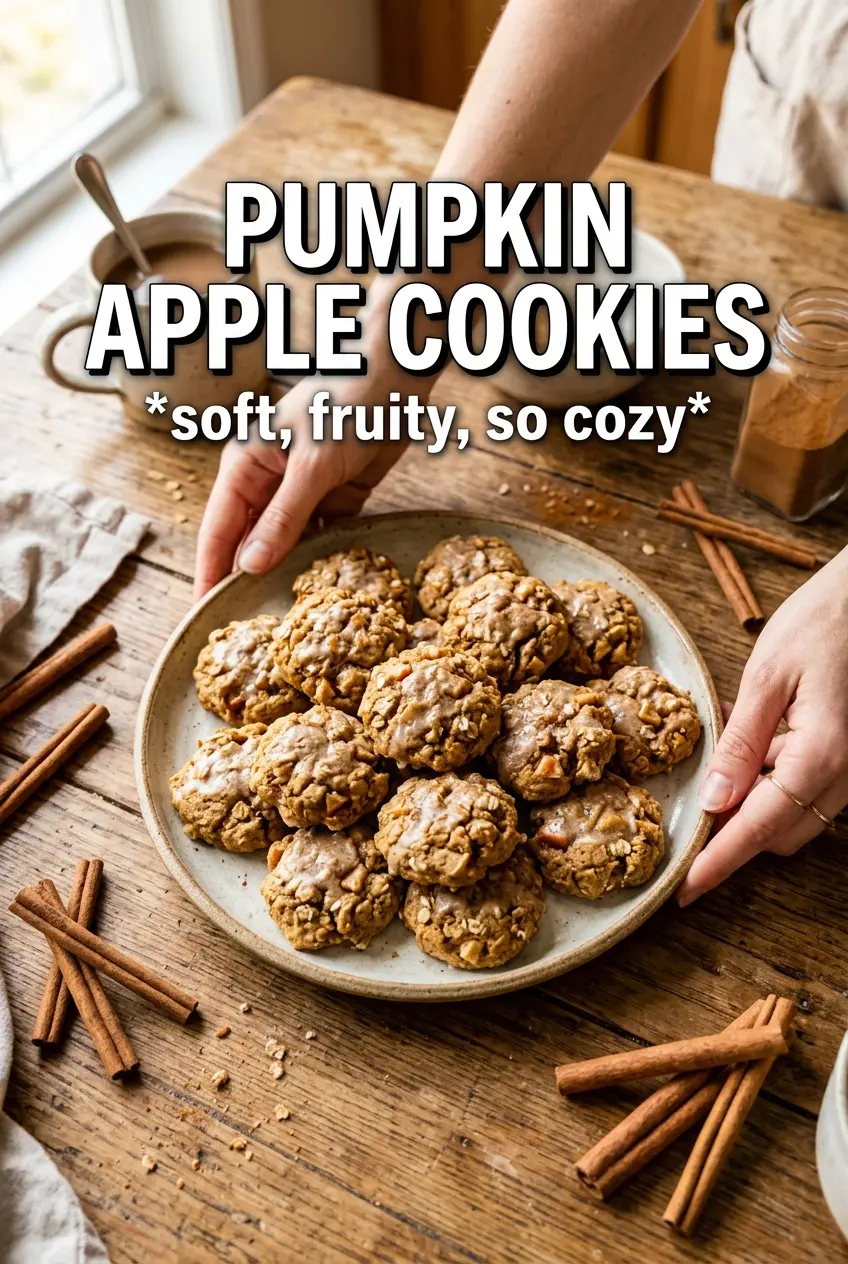
Pumpkin apple cookies land in that sweet spot between soft pumpkin spice cookies and tender apple-studded bakery cookies, with a center that stays plush instead of turning cakey. The apples bake into little juicy pockets, the pumpkin gives the dough a warm color and gentle richness, and the caramel drizzle pulls the whole batch into dessert territory without making them heavy.
The trick is drying both the pumpkin puree and the diced apple before they go into the dough. Pumpkin brings a lot of moisture, and fresh apple can leak enough juice to make the cookies spread oddly or bake up gummy in the middle. Once those two are blotted well, the dough stays scoopable, the edges set properly, and the cookies keep their soft bite after cooling.
Below you’ll find the small details that matter most here, including how fine to dice the apple, when to stop mixing, and how to keep the caramel drizzle from disappearing into the cookies instead of sitting on top.
I was worried the apples would make these soggy, but blotting them first worked. The cookies baked up soft and thick, and the caramel on top stayed put after they cooled.
Like these pumpkin apple cookies? Save them to Pinterest for soft, caramel-drizzled cookies with real apple pieces and a warm pumpkin spice finish.
The Two Pieces of Moisture Control That Keep These Cookies Soft, Not Gummy
Most pumpkin cookies go sideways because the dough starts out wetter than it looks. Pumpkin puree carries a lot of water, and chopped apple adds even more once it heats up in the oven. If both go in straight from the bowl, the cookies can puff, spread, and then sink into a dense middle that never quite sets.
Blotting is the step that changes the whole batch. Press the pumpkin puree between paper towels until it looks thicker and slightly matte, then pat the diced apple dry after peeling and cutting it very fine. That small dice matters because big apple chunks release pockets of moisture and can leave little wet spots around the cookie.
- Pumpkin puree — Use plain pumpkin puree, not pumpkin pie filling. Pie filling is already sweetened and spiced, and it throws off both texture and flavor. After blotting, it should still look soft but not loose.
- Apple — A firmer apple like Honeycrisp, Fuji, or Granny Smith holds its shape best. Peel it and dice it very small so it bakes into the dough instead of creating empty pockets.
- Brown sugar — This is doing more than sweetening; it keeps the centers soft and adds a little chew. Granulated sugar helps the edges set, so using both gives you balance instead of a one-note cookie.
What Each Ingredient Is Actually Doing in This Recipe
- Primary ingredient (the star) — Quality matters most. Choose the best you can find.
- Cooking medium (oil, butter, or broth) — This carries flavors and prevents dryness.
- Seasonings (salt, pepper, spices, herbs) — Layer flavors so nothing overpowers. Build depth gradually.
- Aromatics (garlic, onion, herbs) — Cook with fat to bloom flavors. Become the foundation.
- Supporting ingredients — Complement the main ingredient without overpowering it.
- Sauce or liquid (if applicable) — Brings flavors together. Balance richness with acid.
- Acid (lemon, vinegar, wine, or other) — Brightens and prevents flat-tasting results.
- Final finish (garnish, glaze, or sauce) — Prevents one-dimensional taste and adds visual appeal.
Building the Dough So the Apples Stay Evenly Suspended
The dough comes together like a standard drop cookie, but the order matters. Cream the butter and sugars until the mixture looks lighter and fluffy, then add the blotted pumpkin, egg, and vanilla. That sequence helps the fat hold the moisture instead of letting it separate in the bowl.
Once the flour mixture goes in, stop mixing as soon as the last streak disappears. Overmixing tightens the dough and makes the cookies bake up tougher, especially once the apple goes in. Fold the apple in by hand at the end so it stays distributed without getting crushed.
Creaming the Butter and Sugar
Beat the softened butter with both sugars until the mixture looks pale and a little airy. It should feel smooth, not greasy, and you should no longer see gritty sugar clinging to the bowl. If the butter is too cold, the dough stays dense; if it is melted, the cookies spread too fast.
Bringing in the Pumpkin
Add the blotted pumpkin puree, egg, and vanilla after the butter base is ready. The mixture may look slightly curdled for a moment, and that is fine. It comes back together once the dry ingredients are added. What you don’t want is a loose, glossy batter; that means the pumpkin wasn’t dried enough.
Folding in Flour and Apple
Stir in the flour mixture just until no dry patches remain, then fold in the dried apple. The dough should be soft enough to scoop but thick enough to hold a mound on the spoon. If it seems sticky, chill it briefly rather than adding extra flour, which would make the cookies dry and dull.
Baking Until the Centers Set
Drop 1 1/2-tablespoon portions onto lined baking sheets and bake until the edges look set and the centers still look slightly soft. The tops should lose their raw sheen, but they don’t need to look fully dry in the oven. Pull them at 10 to 12 minutes, then let them finish setting on the sheet so they stay tender instead of overbaking.
Make Them More Apple-Forward
Use a tart apple and keep the dice very fine. That gives you more apple flavor in every bite without creating wet pockets. The cookies will taste brighter and a little less sweet, which is nice if you plan to add a generous caramel drizzle.
Dairy-Free Version
Swap the butter for a plant-based baking stick with a similar fat content. Coconut oil works in a pinch, but the cookies spread more and lose some of the classic buttery flavor, so a baking stick gives the closest result.
Gluten-Free Adaptation
Use a cup-for-cup gluten-free flour blend that includes xanthan gum. The texture will be slightly more delicate, but the cookies still bake up soft and thick if you don’t overmix the dough. Let them cool on the pan before moving them.
Storage and Reheating
- Refrigerator: Store in an airtight container for 4 days. The apple softens a little on day two, but the cookies stay tender.
- Freezer: Freeze baked cookies without the caramel drizzle for up to 2 months. Thaw at room temperature and drizzle after they come back to room temp.
- Reheating: If you want them warm, microwave one cookie for 8 to 10 seconds. Heat longer and the apple turns mushy and the cookie loses its soft-baked texture.
Questions I Get Asked About These Pumpkin Apple Cookies
Pumpkin Apple Cookies
Ingredients
Equipment
Method
- Preheat oven to 375°F and line baking sheets with parchment or liners to prevent sticking.
- Blot the pumpkin puree and the very finely diced apples dry so the dough stays thick and bakes up without excess moisture.
- Beat the softened butter with the brown sugar and granulated sugar until creamy and fully combined.
- Add the blotted pumpkin puree, then beat in the egg and vanilla until smooth.
- Mix the all-purpose flour, baking soda, pumpkin pie spice, cinnamon, nutmeg, and salt, then fold the flour mixture into the wet ingredients just until no dry streaks remain.
- Fold in the blotted diced apples to evenly distribute the fruit pieces throughout the dough.
- Scoop 1-1/2 tablespoon rounds onto the lined baking sheets, leaving space between cookies for spreading.
- Bake at 375°F for 10-12 minutes, until the edges look set and the centers no longer look wet.
- Cool the cookies completely before drizzling with caramel so the topping sets on top.