Pumpkin Alfredo pasta with sage lands on the table with that rare mix of comfort and polish: silky sauce, wide noodles, crisp-edged sage, and enough Parmesan to keep every bite savory instead of sweet. The pumpkin gives the sauce body and a gentle earthiness, while the cream and butter keep it plush and spoon-coating. It tastes like something you’d order at a restaurant, but it comes together in the same time it takes to boil the pasta.
The key is treating the pumpkin like the base of a real cream sauce, not a puree you dump in at the end. A little pasta water loosens the sauce just enough so it clings to the pappardelle without turning gluey, and the nutmeg stays in the background where it belongs. Frying the sage in butter first does two jobs at once: it flavors the fat and gives you those crisp leaves for the finish.
Below, I’ve laid out the exact moment to add the cheese, the one place people usually add too much liquid, and a few smart swaps if you want to make this your own.
The sauce turned out silky and coated the pappardelle perfectly, and the crispy sage with the toasted walnuts made it taste a lot fancier than the 20 minutes it took.
Love the silky pumpkin Alfredo sauce and crispy sage finish? Save it to Pinterest for the nights you want pasta that feels rich, cozy, and a little special.
The Trick to Keeping Pumpkin Alfredo Smooth, Not Grainy
Pumpkin puree can make a sauce taste rich and velvety, but it can also turn pasty if it gets too hot too fast or if the cheese goes in before the base is relaxed. That’s the mistake to avoid here. The pumpkin, cream, and butter need a short simmer so the puree loses its raw edge and the sauce thickens into something that can hold Parmesan without seizing.
Use low to medium-low heat once the cheese goes in. High heat can make the dairy tighten up and the sauce start to look broken or grainy. If it ever feels too thick, loosen it with pasta water a splash at a time. The starch in the water helps the sauce emulsify, which is why plain water never gives you the same finish.
- Pumpkin puree — Use plain pumpkin puree, not pumpkin pie filling. Pie filling is already sweetened and spiced, and it throws the whole dish off.
- Heavy cream — This gives the sauce its velvet texture and keeps it stable. Half-and-half can work in a pinch, but the sauce will be thinner and a little less luxurious.
- Parmesan — Grate it yourself if you can. Pre-shredded cheese often has anti-caking agents that keep it from melting as smoothly.
- Fresh sage — This is worth using fresh, not dried. Frying the leaves in butter turns them crisp and aromatic, and that texture is part of the final dish.
What Each Ingredient Is Actually Doing in This Dish
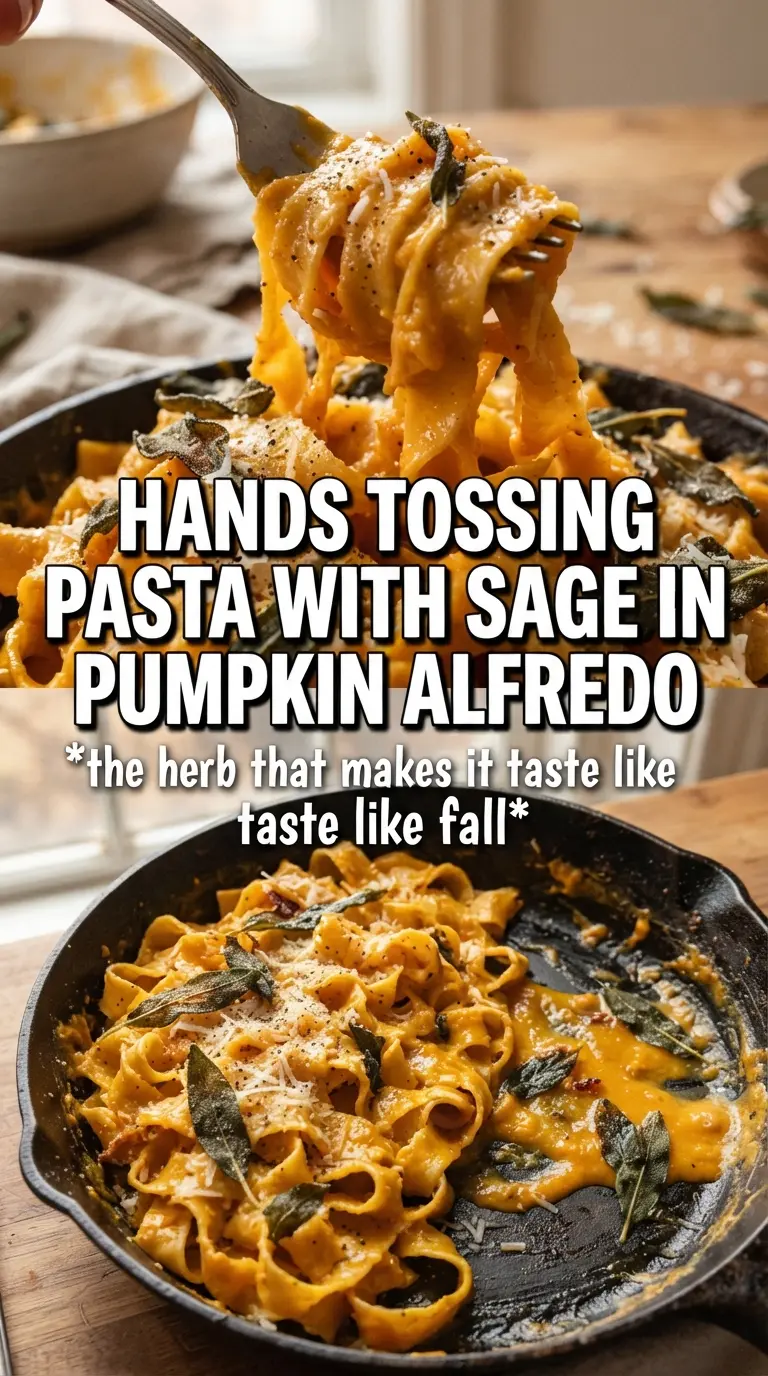
- Pappardelle — Wide noodles are the right call because they catch the thick sauce without disappearing into it. Fettuccine works too, but thinner pasta won’t feel as substantial.
- Butter — Half of it is for frying the sage, and the rest builds the sauce. Don’t skip the butter step where the garlic cooks; that fat carries the garlic flavor into the whole pan.
- Garlic — It should soften and smell fragrant, not brown. Once garlic browns, it turns bitter and can fight with the sweetness of the pumpkin.
- Walnuts — They add crunch and a toasty finish that keeps the dish from feeling one-note. If you don’t want nuts, leave them out, but you’ll lose that contrast.
- Nutmeg — A small amount is enough. It doesn’t make the dish taste like baking; it just deepens the cream sauce and supports the pumpkin.
Building the Sauce Before the Pasta Goes In
Frying the Sage Until It Stays Crisp
Start with the sage leaves in melted butter and watch for the bubbling to calm down. That’s the moisture cooking out. The leaves should darken a shade, shrink slightly, and feel crisp within seconds, so pull them as soon as they stop looking soft. If they go from crisp to burnt, the butter was too hot, and the leaves will taste bitter instead of grassy and fragrant.
Cooking the Pumpkin Base Until It Tastes Round
Add the garlic to the same pan and cook it just until fragrant, then stir in the pumpkin, cream, and nutmeg. Let that mixture simmer gently for about 4 minutes so the pumpkin loses its canned, flat edge and the sauce starts to look glossy. If the sauce is boiling hard, drop the heat; agitation can make it sputter and can also make the cream separate. You want slow bubbles, not a rolling boil.
Melting in the Parmesan Without Breaking the Sauce
Take the pan off the heat or keep it on the lowest burner setting before adding the Parmesan. Stir until it melts into the sauce, then add the pasta and a splash of reserved water if the sauce clings too tightly. The sauce should coat the noodles in a smooth layer, not sit in a puddle underneath them. If it looks thick and sticky, it needs more pasta water, not more cream.
Finishing the Bowl With Contrast
Toss the pasta until every ribbon is coated, then taste for salt and pepper after the cheese has gone in. Parmesan adds salt, so seasoning too early can overshoot. Finish with the crispy sage, toasted walnuts, and a final shower of cheese while the pasta is still hot enough to wake everything up.
Three Ways to Make This Pumpkin Alfredo Work for Your Kitchen
Dairy-Free Version
Swap the butter for olive oil or a dairy-free butter and use a rich unsweetened oat or cashew cream. You’ll lose a little of the classic Alfredo richness, but the sauce will still be creamy if you keep the heat low and finish with a good pinch of salt.
Gluten-Free Pasta Swap
Use a sturdy gluten-free pasta shape that can hold up to tossing in sauce, then pull it just shy of done before draining. Gluten-free noodles can go soft fast, and if you cook them all the way before saucing, they’ll fall apart when you toss everything together.
Make It a Little Lighter
Use half cream and half whole milk, but expect a thinner sauce and more careful simmering. The tradeoff is a less luxurious texture, so you’ll want to lean on the Parmesan and pasta water to help the sauce cling.
Add Protein Without Overloading the Sauce
Shredded rotisserie chicken or seared Italian sausage both work well here. Add the protein at the very end so it warms through without soaking up all the sauce, which is what happens if it simmers in the pan too long.
Storage and Reheating
- Refrigerator: Store leftovers in an airtight container for up to 3 days. The sauce will thicken as it sits.
- Freezer: I don’t recommend freezing this one. Cream sauces with Parmesan and pumpkin can turn grainy after thawing.
- Reheating: Warm it gently in a skillet over low heat with a splash of milk or water, stirring often. Microwaving on high is the fastest way to separate the sauce and overcook the pasta.
Questions I Get Asked About This Recipe
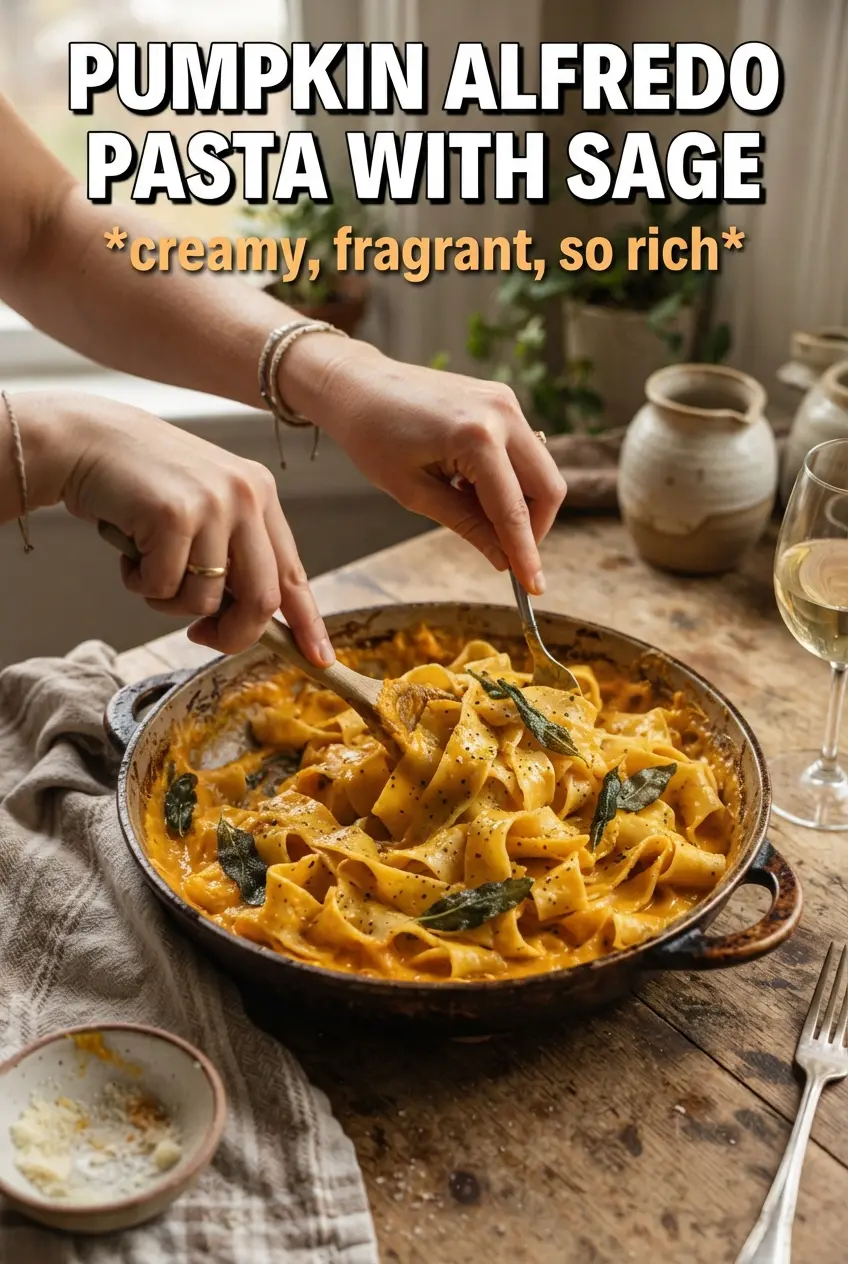
Pumpkin Alfredo Pasta With Sage
Ingredients
Equipment
Method
- Bring a Dutch oven of salted water to a boil and cook the pappardelle until al dente. Reserve 1 cup of pasta water before draining.
- In a cast iron skillet, melt 2 tablespoons of the unsalted butter over medium heat and fry the fresh sage leaves until crisp, about 1 to 2 minutes. Transfer the leaves to a plate to drain and cool.
- In the same skillet, add the remaining butter and sauté the minced garlic until fragrant, about 30 to 60 seconds. Stir in the pumpkin puree, heavy cream, and nutmeg, then simmer for 4 minutes over medium-low heat with gentle bubbling.
- Stir in the grated parmesan until melted and smooth. Add the cooked pasta and toss, adding pasta water as needed until the sauce coats the noodles.
- Season the pasta with salt and pepper to taste, then plate and top with the crispy sage leaves, toasted walnuts, and extra parmesan.