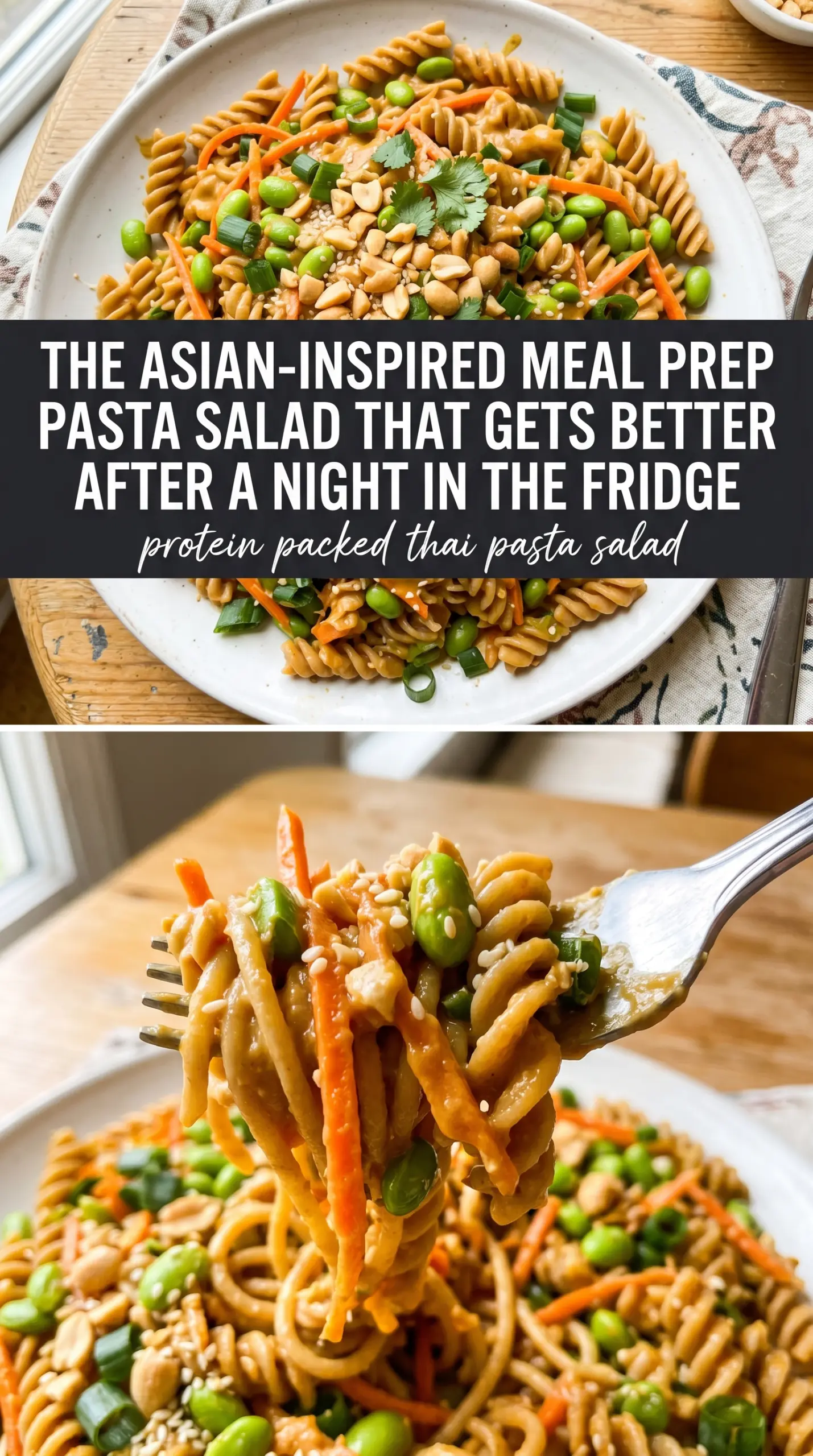
Protein packed Thai pasta salad has the kind of creamy, crunchy, savory-sweet balance that makes it disappear fast at lunch and hold up beautifully for meal prep. The dressing clings to every noodle, the cabbage stays crisp, and the chicken turns it from a side dish into a full meal without feeling heavy.
What makes this version work is the dressing ratio and the cold rinse on the pasta. Protein pasta can go gummy if it keeps cooking from its own heat, so rinsing it stops the cooking and keeps the texture firm enough to stand up to the peanut sauce. The peanut butter gives body, the rice vinegar brightens everything up, and a little water loosens the dressing just enough to coat instead of clump.
Below, you’ll find the small details that matter most: how to keep the dressing smooth, why the salad needs time in the fridge, and the easiest swaps if you want to make it dairy-free, vegetarian, or even more meal-prep friendly.
The peanut dressing thickened up perfectly after chilling, and the cabbage stayed crunchy instead of getting soggy. I used chickpea pasta and it held together great for lunch all week.
Save this protein packed Thai pasta salad for a creamy, high-protein meal prep lunch with crunchy vegetables and peanut-ginger dressing.
The Dressing Needs More Than Just Peanut Butter
The biggest mistake with Thai-style pasta salads is making the dressing too thick and then trying to force it onto cold noodles. Peanut butter by itself turns pasty once it hits chilled pasta, especially with protein pasta that already has a dense, sturdy bite. The fix is simple: whisk in enough water to get a pourable, spoon-coating consistency before it ever touches the bowl.
Rinsing the pasta under cold water matters more here than it does in a hot pasta dish. It stops the cooking, clears off extra starch, and keeps the noodles from sticking into one heavy mass. The salad also needs the full chill time so the dressing can settle into the pasta and the vegetables can soften just slightly without losing their crunch.
- Protein pasta — Edamame or chickpea pasta gives this salad its high-protein backbone and a firmer chew than wheat pasta. Cook it just to al dente; overcooked protein pasta gets soft fast once it sits in dressing.
- Peanut butter — Natural or standard peanut butter both work, but the smoother the peanut butter, the easier the dressing comes together. If yours is very thick, loosen it with a splash of warm water before adding the other ingredients.
- Rice vinegar — This is what keeps the dressing from tasting flat or heavy. Lime juice can stand in if needed, but it brings a sharper finish and less of that mellow, rounded tang.
- Chicken breast — This is the ingredient that turns the salad into a full meal. Rotisserie chicken works in a pinch, but plain cooked chicken breast keeps the peanut dressing front and center instead of competing with extra seasoning.
What Each Ingredient Is Actually Doing in Protein Packed Thai Pasta Salad
- Fresh vegetables (vibrant, crisp, quality) — Start with fresh, brightly colored vegetables. Wilted vegetables make everything taste tired.
- Acid (vinegar, lemon juice, or lime) — The acid prevents oxidation and prevents flat taste. It’s essential for brightness.
- Oil (quality matters for flavor) — Good olive oil adds freshness. Cheap oil makes the salad taste flat.
- Salt (enhances all other flavors) — Proper seasoning makes vegetables taste more like themselves. Don’t undersalt.
- Fresh herbs (tender ones added last) — Fresh herbs add complexity and brightness. Add them right before serving.
- Protein or hearty elements (if using) — These should complement without overwhelming the vegetables. Keep the salad light.
- Dressing applied just before serving — Don’t dress early or the vegetables release liquid and wilt. Timing is everything.
- Taste and adjust (check for balance) — The salad should taste bright and assertive. Add more acid or salt if needed.
How to Keep the Noodles Coated, Not Clumped
Cooking and Cooling the Pasta
Cook the protein pasta according to the package directions and stop at the first sign of al dente, not after it turns fully soft. Drain it, then rinse under cold water until it feels cool all the way through. That rinse keeps the noodles from sticking together and prevents carryover cooking, which is the fastest way to end up with a mushy salad. Let it drain well before mixing so the dressing doesn’t slide off into a watery puddle.
Whisking the Peanut-Ginger Dressing
Whisk the peanut butter, soy sauce, rice vinegar, honey, ginger, and garlic until the mixture looks glossy and smooth. Add water a tablespoon at a time until it flows off the whisk in a thick ribbon. If the dressing looks separated or grainy, it usually means the peanut butter is too cold or too thick; keep whisking and loosen it gradually instead of dumping in a lot of water at once. You want it bold enough to taste on its own, because the pasta and vegetables will soften that punch a little once everything chills.
Building the Salad and Letting It Rest
Combine the pasta, chicken, cabbage, carrots, and bell pepper in a large bowl before adding the dressing. Toss thoroughly so the peanut sauce gets into the folds of the noodles and coats the vegetables evenly. The hour in the fridge is not optional if you want the best texture; it gives the cabbage a little tenderness, lets the garlic calm down, and helps the dressing cling instead of pooling at the bottom.
How to Adapt This for Different Diets and Lunch Plans
Make It Vegetarian
Leave out the chicken and add extra cabbage, shredded carrots, or shelled edamame for more body. The salad still eats like a full meal because the protein pasta and peanut dressing carry the structure, but you lose the savory chicken flavor, so a little extra soy sauce or a squeeze of lime helps it feel complete.
Make It Gluten-Free
Use certified gluten-free protein pasta and swap in tamari for the soy sauce. The flavor stays nearly the same, but tamari usually tastes a little rounder and less sharp than regular soy sauce, which works well with the peanut dressing.
Turn It Into Meal Prep
Pack the peanuts and cilantro separately and add them right before eating so they stay crunchy and fresh. If you’re making it more than a day ahead, hold back a spoonful or two of dressing and stir it in after the salad comes out of the fridge, since protein pasta absorbs sauce as it sits.
Use Almond Butter Instead of Peanut Butter
Almond butter works, but the dressing tastes milder and less classic Thai-inspired. It still gets creamy, though you may need a little more vinegar and salt to bring the flavor back into focus.
Storage and Reheating
- Refrigerator: Store in an airtight container for up to 4 days. The cabbage softens a little, but the salad stays sturdy enough for lunch.
- Freezer: I don’t recommend freezing this salad. The vegetables lose their crunch and the peanut dressing turns grainy after thawing.
- Reheating: Serve it cold or let it sit at room temperature for 10 to 15 minutes. Reheating breaks the texture and can make the peanut dressing oily, which is the opposite of what you want here.
Answers to the Questions Worth Asking
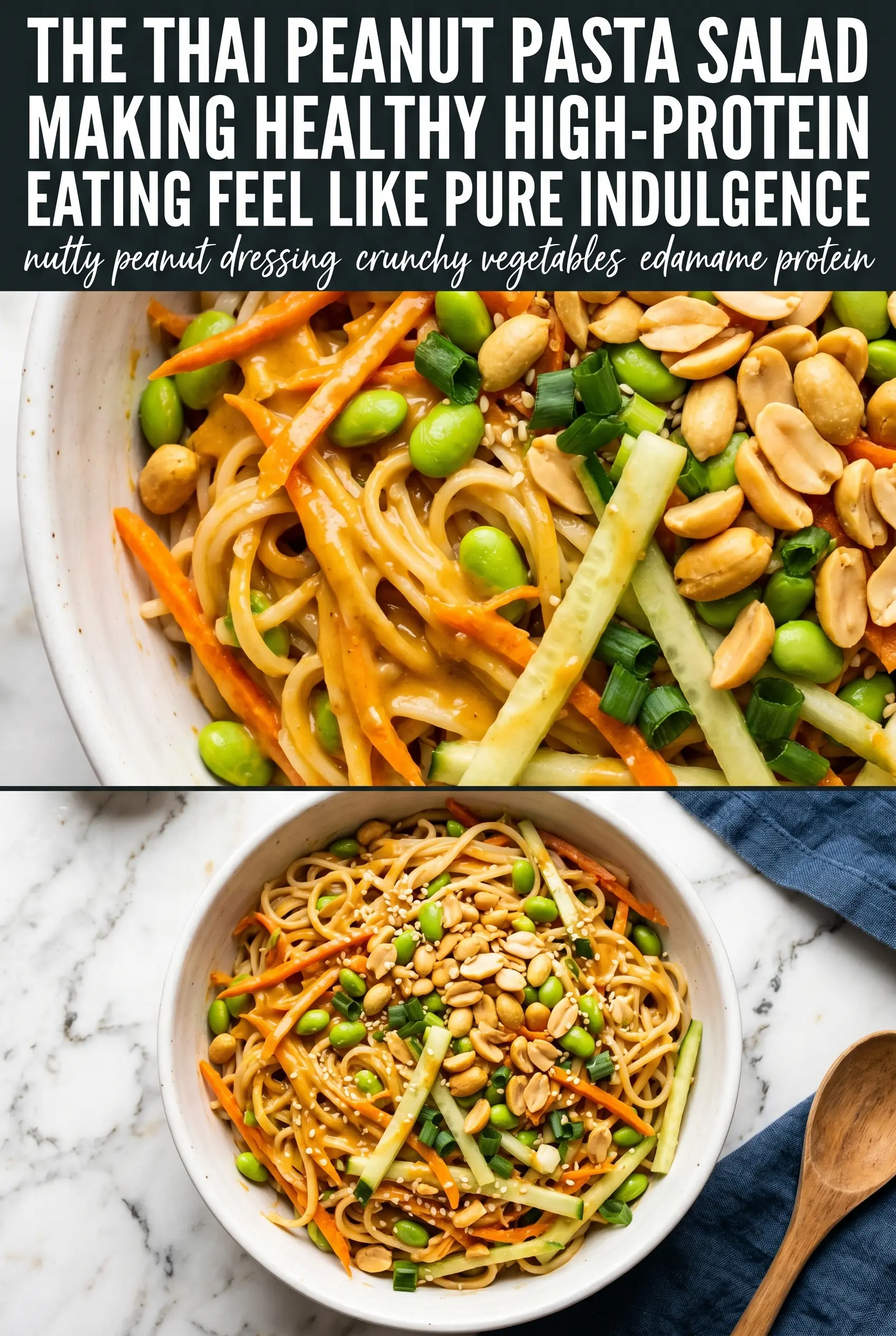
Protein Packed Thai Pasta Salad
Ingredients
Method
- Cook protein pasta according to package directions, then drain and rinse with cold water to stop cooking and cool it down fast.
- Whisk together peanut butter, soy sauce, rice vinegar, honey, ginger, and garlic, adding water to thin until the dressing reaches a pourable, creamy consistency with no lumps.
- Combine pasta, chicken, cabbage, carrots, and bell pepper in a large bowl so the vegetables are evenly distributed.
- Pour peanut dressing over the salad and toss thoroughly to coat every bite with a creamy layer.
- Refrigerate for at least 1 hour, then top with crushed peanuts and cilantro and serve with lime wedges for bright flavor.