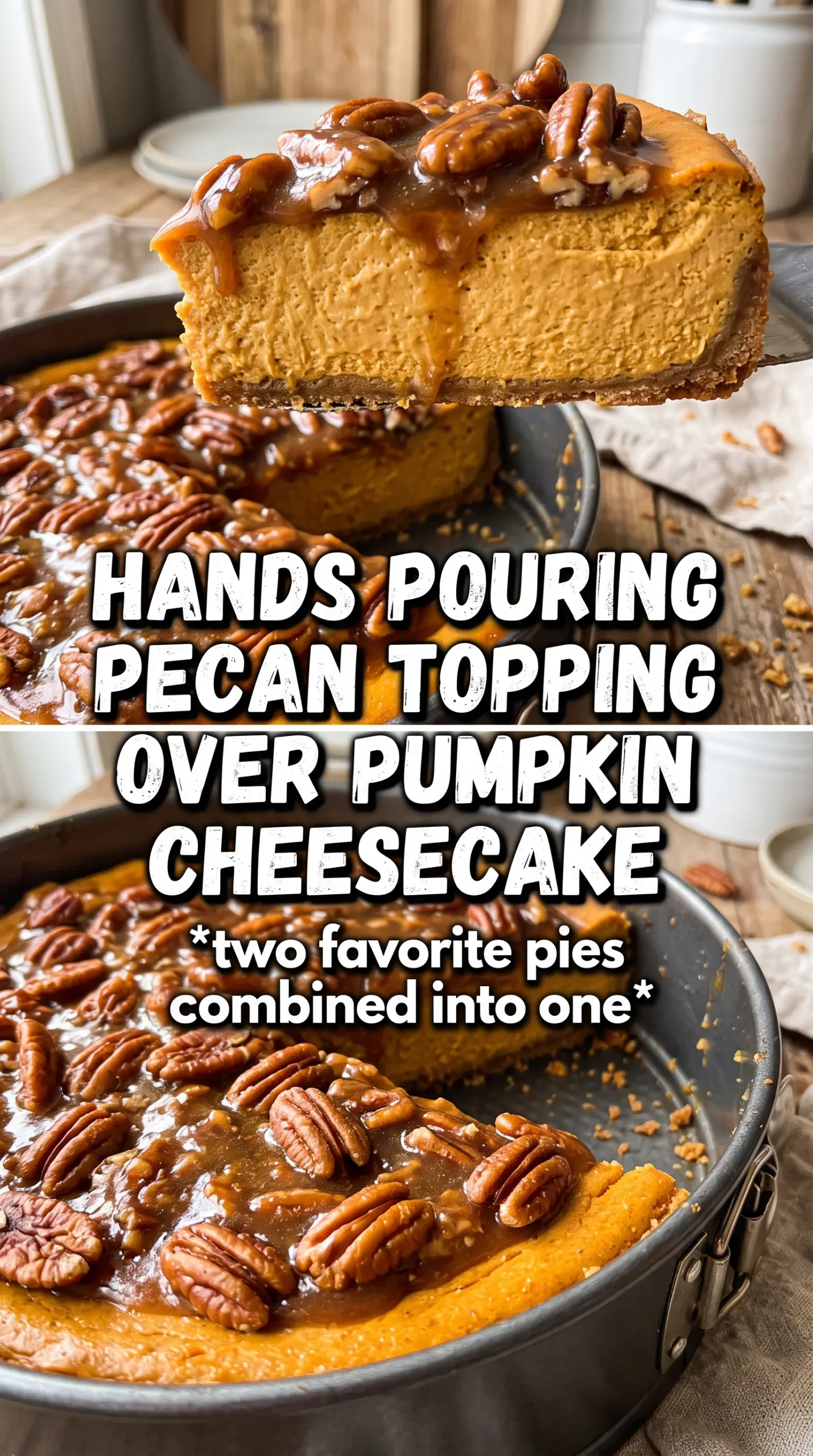
Pecan pie pumpkin cheesecake lands in that sweet spot where the filling stays silky, the crust brings a warm spiced crunch, and the pecan topping adds a glossy, sticky finish that cuts cleanly instead of sliding off the slice. Each bite gives you the richness of cheesecake, the cozy depth of pumpkin, and the caramel nuttiness of pecan pie all at once. It looks like a holiday dessert, but the real reason it earns a spot in the rotation is how well the layers balance each other.
The gingersnap crust matters here because it holds up under a dense filling and gives the whole dessert a deeper spice than a plain graham crust would. The cheesecake base stays smooth when the cream cheese, sugar, and eggs are mixed gently and the oven does the rest; too much air is what leads to cracks and a puffy center that sinks later. The water bath helps the custard bake evenly, which is what keeps the texture creamy from edge to center instead of dry around the rim and loose in the middle.
Below, I’ll walk through the part that keeps the topping from turning runny and the small timing choice that makes slicing much cleaner after chilling.
The pecan topping set up with that glossy, candy-like finish and the cheesecake layer stayed perfectly smooth after chilling overnight. I was worried the crust would get soggy, but it held its crunch all the way through the next day.
Save this pecan pie pumpkin cheesecake for the dessert table when you want a gingersnap crust, creamy pumpkin filling, and sticky pecan topping in one slice.
The Water Bath Is What Keeps the Center Creamy, Not Custardy and Dry
Cheesecake cracks for two main reasons in a dessert like this: too much heat and too much air. The water bath slows the bake down so the eggs set gently, which keeps the center smooth instead of turning grainy at the edges while the middle still sloshes around. That even heat also helps the pumpkin layer bake in the same rhythm as the cream cheese layer, so the filling finishes as one unified slice instead of two textures fighting each other.
The other place people get into trouble is overmixing after the eggs go in. Once the eggs are added, mix only until the batter looks smooth and uniform. If you beat it hard, you whip in air that puffs during baking and then collapses as it cools, which is how those deep center cracks happen later.
What Each Layer Is Actually Doing in This Cheesecake
- Gingersnap crumbs — These bring spice and structure. They’re sturdier than graham crackers and better matched to the pumpkin filling, which keeps the crust from tasting flat. Crush them fine enough that they pack tightly, or the base will crumble when you slice it.
- Cream cheese — Use full-fat blocks, not spreadable tubs. The lower-water versions from a tub can make the batter loose and uneven, and they don’t bake into the same dense, velvety texture.
- Pumpkin puree — Use plain pumpkin puree, not pumpkin pie filling. The filling already contains sugar and spices, which would throw off the balance here and make the cheesecake taste muddy instead of clean and spiced.
- Sour cream — This is what keeps the filling tangy and soft. If you swap it, the cheesecake loses that classic creamy finish; plain Greek yogurt is the closest substitute, though it makes the batter a little sharper.
- Heavy cream in the topping — This is what turns the brown sugar and butter into a pourable pecan pie layer instead of a hard candy shell. Don’t replace it with milk unless you want a thinner, less glossy topping.
Building the Layers So the Cheesecake Slices Cleanly
Pressing and Prebaking the Crust
Mix the gingersnap crumbs, sugar, and melted butter until the texture feels like damp sand and holds together when you squeeze it. Press it firmly into the springform pan, especially along the bottom edge where loose crumbs tend to break apart first. Bake it for 10 minutes so it sets before the filling goes in; if you skip that step, the crust can turn soft underneath the cheesecake.
Mixing the Filling Without Whipping It Full of Air
Beat the cream cheese and sugar until completely smooth before adding the eggs, pumpkin, sour cream, spices, and vanilla. Scrape the bowl often so there aren’t pockets of unmixed cream cheese hiding in the batter. Once the eggs go in, stop as soon as the mixture looks even; if it becomes fluffy, it will bake up, crack, and then fall as it cools.
Baking Until the Center Still Jigs Just a Little
Pour the batter over the crust and set the pan in a water bath before baking. You’re looking for the edges to look set while the center still has a small wobble when you nudge the pan, not a liquid wave. If you wait until the middle is firm in the oven, it will overbake by the time it cools, and cheesecake that’s baked too far loses that creamy sliceable texture.
Cooking the Pecan Topping to the Right Thickness
Melt the butter and brown sugar together first, then add the cream and corn syrup and let it simmer for about 3 minutes. The mixture should thicken slightly and look glossy before the pecans go in. If it’s still thin when you pull it off the stove, it will run off the cheesecake instead of staying in a thick layer on top.
Gluten-Free Version
Swap the gingersnap crust for a gluten-free gingersnap cookie crumb or a gluten-free graham-style crumb. The filling and pecan topping are already naturally gluten-free, so the texture changes mostly live in the base. Press the crust firmly and bake it fully so it still holds up under the weight of the cheesecake.
Dairy-Free Adaptation
Use dairy-free cream cheese, dairy-free butter, and a thick plant-based cream in place of the sour cream and heavy cream. The cheesecake won’t be quite as rich or tangy, but it will still set well if you use a brand that bakes firmly. Chill it overnight before slicing, because dairy-free fillings usually need more time to firm up cleanly.
Extra-Pecan, More Candy-Like Topping
If you want a thicker pecan layer, increase the pecans by about half a cup and let the topping cool a little longer before spooning it over the cheesecake. You’ll get a chunkier slice with more crunch and less drip. Don’t rush the cooling step or the topping will slide down the sides instead of settling on top.
Storage and Reheating
- Refrigerator: Store covered for up to 5 days. The crust softens a little over time, but the filling stays creamy.
- Freezer: Freeze without the pecan topping for the best texture. Wrap the chilled cheesecake tightly, freeze up to 2 months, then thaw overnight in the refrigerator and add the topping before serving.
- Reheating: Don’t reheat this dessert. Cheesecake is meant to be served chilled, and warming it will loosen the filling and make the pecan topping run.
Questions I Get Asked About This Recipe
Pecan Pie Pumpkin Cheesecake
Ingredients
Equipment
Method
- Preheat the oven to 325°F. Press gingersnap crumbs into a 9-inch springform pan and mix with melted butter and sugar so the base looks even and compact.
- Bake the crust at 325°F for 10 minutes until lightly set and fragrant. Remove and let it cool slightly while you prepare the filling.
- Beat the cream cheese and sugar until smooth, then beat in eggs one at a time. Add pumpkin, sour cream, pumpkin pie spice, cinnamon, and vanilla and mix until the batter is silky.
- Pour the cheesecake filling over the baked crust and smooth the top. Set the springform in a water bath (place on a sheet pan with hot water around the pan).
- Bake at 325°F for 65–70 minutes until the center is just set and the edges look slightly puffed. Cool completely after baking, keeping the water bath setup in the oven only for the bake.
- Refrigerate the cooled cheesecake for 6 hours until fully firm. The surface should feel stable when gently nudged.
- Melt unsalted butter with brown sugar in a saucepan over medium heat until bubbling. Stir in heavy cream and corn syrup, then simmer for 3 minutes until glossy.
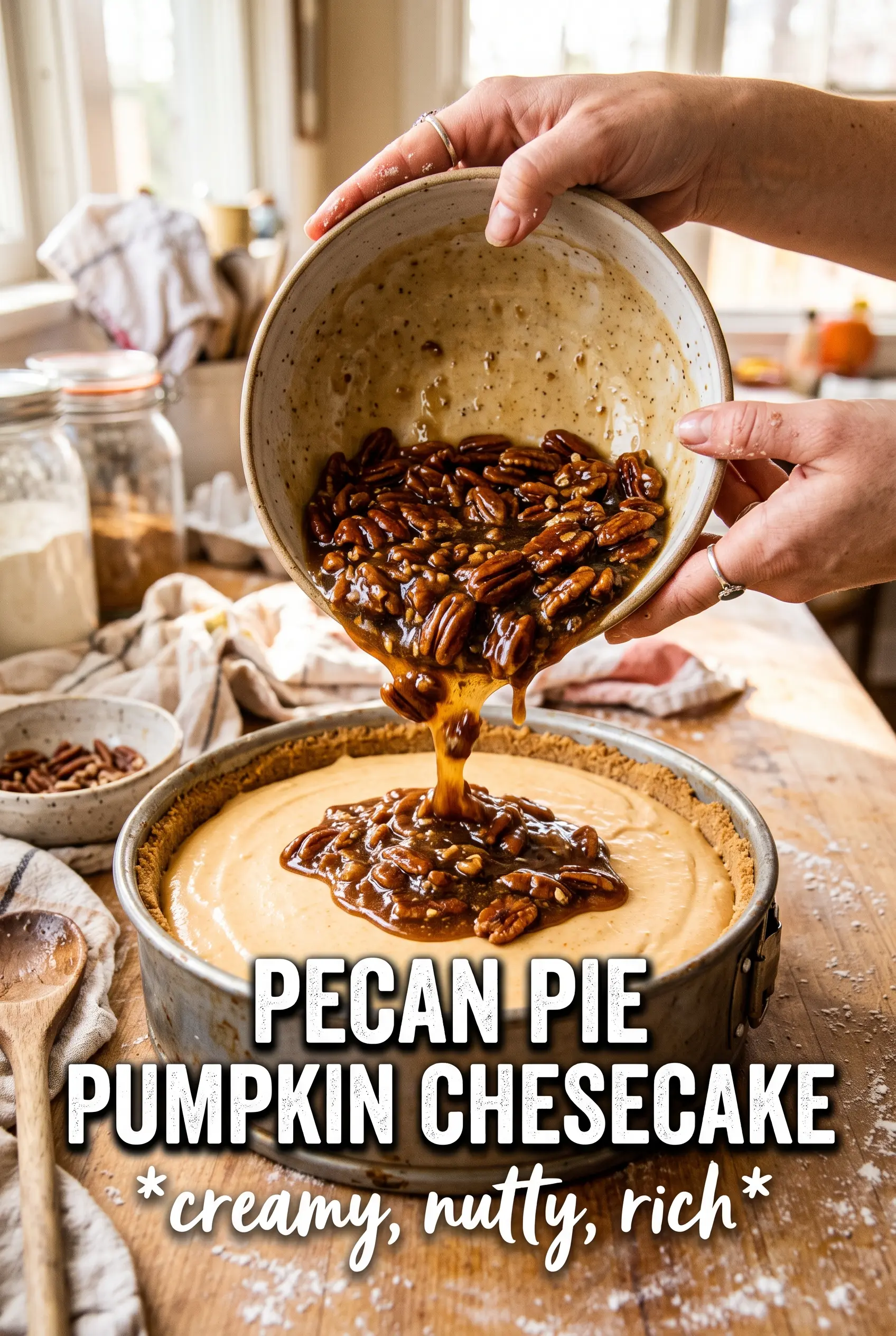
- Stir in pecan halves, vanilla, and salt and cook until everything is coated. Cool the topping for 15 minutes until thickened but still pourable.
- Pour the pecan topping over the chilled cheesecake right before serving. Let it cascade naturally and set briefly so it stays in place on each slice.