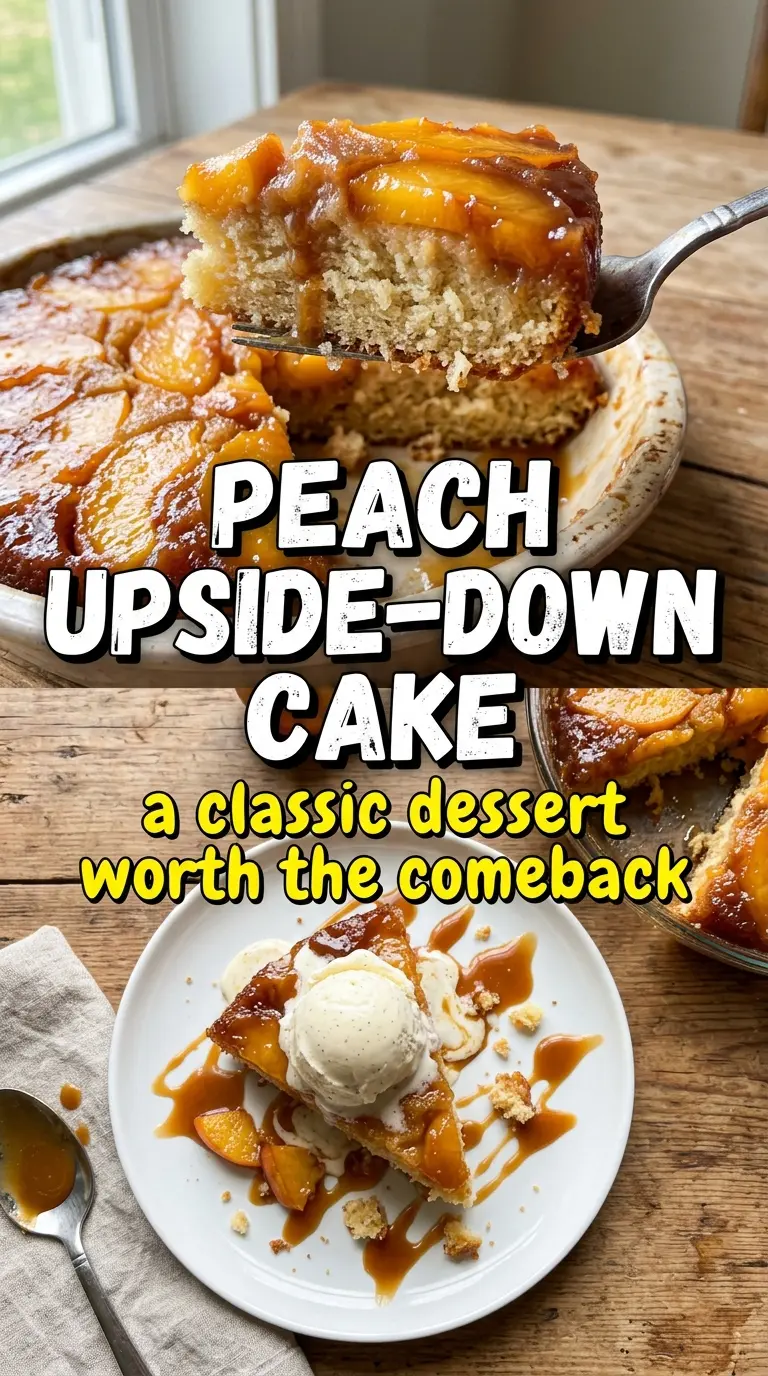
Caramelized peach upside-down cake bakes into something you can slice cleanly but still serve warm and soft, with a brown sugar topping that slips into the cake instead of sitting on top like an afterthought. The peaches keep their shape, the glaze turns glossy and amber, and every piece gets that buttery edge where fruit, sugar, and cake meet.
The part that makes this version work is the balance: enough butter to carry the caramel, enough brown sugar to create a sticky topping without turning it syrupy, and enough structure in the batter to hold the fruit in place when you flip it. I like using ripe but still firm peaches, because they soften in the oven without dissolving into jam. A little cinnamon in both layers ties the whole cake together without taking over the peach flavor.
Below you’ll find the small timing detail that matters most when you invert the cake, plus a few swaps for when you only have sour cream, milk, or a cast iron skillet on hand.
The caramelized peaches came out in perfect little rings and the cake flipped cleanly after 10 minutes. I used sour cream and the crumb stayed super moist without getting heavy.
Save this peach upside-down cake for the day you want glossy caramelized peaches and a buttery cake that flips out cleanly.
The Part That Keeps the Peaches From Sliding Into a Mess
The biggest mistake with upside-down cake is rushing the flip. If you invert it too soon, the caramel is still loose and the peach layer can smear across the plate. If you wait too long, the sugar sets hard in the pan and the fruit can stick. That 10-minute rest is the sweet spot: the cake firms enough to hold together, but the topping is still warm and flexible.
The other detail that matters is how you arrange the peaches. Overlapping them in tight concentric circles creates a stable top that looks polished when unmolded and gives the batter a base to bake against. Leave gaps and the caramel puddles unevenly, which makes the finished cake patchy instead of glossy.
- The butter layer — Melting the butter in the pan before adding the brown sugar gives you an even caramel base without dirtying another bowl. A skillet or heavy cake pan both work, but a cast iron skillet holds heat best and helps the sugar bubble evenly.
- Brown sugar — Packed brown sugar is what creates that sticky amber glaze. Light or dark brown sugar both work; dark brown sugar gives a deeper molasses note and a darker finish.
- Peaches — Use ripe peaches that still feel firm when you press them. Overripe fruit breaks down too much and turns the top mushy. If your peaches are very juicy, slice them a little thicker so they keep their shape.
- Cinnamon — Just enough cinnamon rounds out the caramel without making the cake taste like spice cake. It belongs in both the topping and the batter, but keep it measured so the peaches stay front and center.
What the Batter Is Doing Beneath the Caramel
The batter is a simple butter cake, and that matters because it needs to be sturdy enough to support the fruit but tender enough to soak up a little of the peach syrup. Softened butter and granulated sugar are creamed first to build air, which gives the crumb lift. If the butter is too cold, the batter stays dense; if it’s melted, the cake loses that fine, plush texture.
Milk makes the crumb lighter, while sour cream adds a little extra richness and a softer bite. Either one works, but sour cream gives the cake a more velvety finish and keeps it moist a bit longer. Flour, baking powder, and salt handle the structure, and the salt keeps the topping from tasting one-note sweet.
- All-purpose flour — This gives the cake enough structure to unmold cleanly. Cake flour makes it softer, but it can be too delicate for the weight of the peach topping.
- Milk or sour cream — Milk gives you a classic tender crumb. Sour cream makes the cake richer and a touch denser in a good way, which is my pick if you want a bakery-style texture.
- Vanilla — Don’t skip it. Vanilla deepens the butter flavor and keeps the cake tasting rounded instead of flat.
- Butter, softened — Softened butter creams properly with sugar, which is what gives the cake its lift. If you substitute oil, the texture will be more moist and less plush, and you’ll lose some of the buttery flavor that belongs in this cake.
Building the Cake So It Flips Cleanly
Making the Caramel Base
Start by melting the butter in the oven right in the pan, then swirl it so every corner is coated. Sprinkle the brown sugar and cinnamon over the butter in an even layer, but don’t stir; the sugar needs to sit on the butter so it can melt into a smooth caramel. If you stir now, you’ll get clumps instead of a glossy base.
Arranging the Peaches
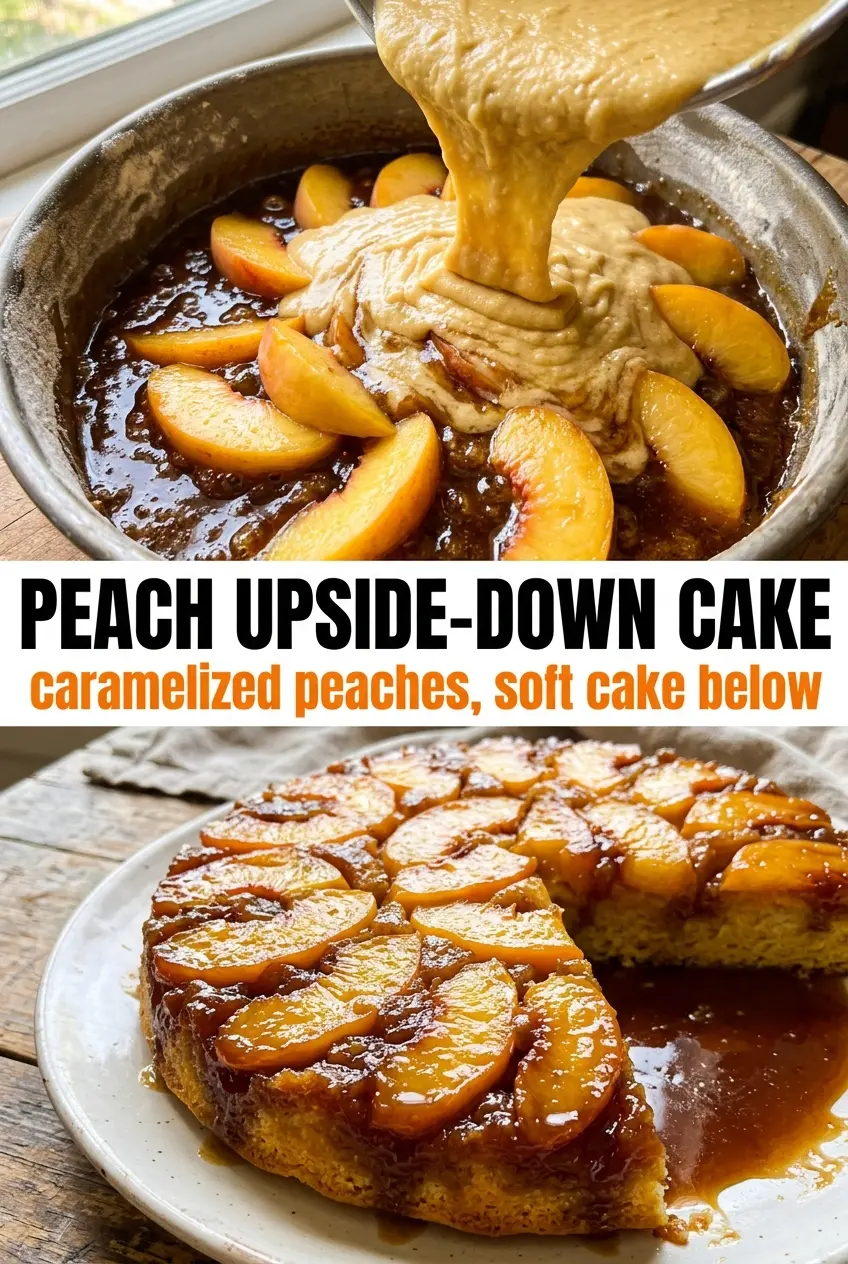
Lay the peach slices in overlapping circles, working from the outside in. Press them gently into the sugar so they sit flat, but don’t pack them so tightly that the batter can’t settle around them. Any loose, uneven pile will show up after baking as gaps in the top of the cake.
Mixing the Batter
Cream the butter and sugar until the mixture looks pale and fluffy, not just blended. Add the eggs one at a time, then the vanilla. Alternate the dry ingredients with the milk or sour cream, mixing just until the flour disappears. If you beat the batter too long at this stage, the cake turns tight instead of soft.
Baking and Inverting
Pour the batter gently over the peaches and spread it to the edges without disturbing the pattern underneath. Bake until the top springs back and a toothpick comes out clean, with the sides just starting to pull away from the pan. Cool the cake in the pan for exactly 10 minutes, then run a thin knife around the edge and flip it onto a plate in one confident motion. If you wait too long, the caramel sets and the peaches can stick behind.
Use Plums or Nectarines Instead of Peaches
Plums and nectarines both work with the same method. Nectarines are a straight swap, while plums bring a sharper, more tart edge that plays well with the brown sugar. Keep the slices thick enough to hold their shape, since thinner fruit softens faster during baking.
Make It Dairy-Free
Use a good dairy-free butter substitute that behaves like real butter in baking, then replace the milk with unsweetened oat milk. The cake will still hold together and caramelize, but the topping will taste a little less rich and the crumb will be slightly less tender than the original.
Swap in Sour Cream for a Denser Crumb
If you want a tighter, more luxurious crumb, use sour cream instead of milk. The batter will be thicker and the finished cake will slice more cleanly once cool, which is useful if you’re serving it on a platter rather than straight from the pan.
Bake It in a Cast Iron Skillet
A 9-inch cast iron skillet gives you the best caramelization and makes the cake feel a little rustic in the best way. It holds heat longer, so start checking a minute or two early if your oven runs hot. The crust on the edges will be deeper golden than it is in a standard cake pan.
Storage and Reheating
- Refrigerator: Store covered for up to 4 days. The topping will firm up in the fridge, but the cake stays moist.
- Freezer: Freeze individual slices tightly wrapped for up to 2 months. The peach texture softens a bit after thawing, but the cake still tastes good.
- Reheating: Warm slices in a 300°F oven for 10 to 12 minutes. The microwave makes the caramel runny and can turn the crumb gummy, so the oven is the better choice.
Questions I Get Asked About This Cake
Peach Upside-Down Cake
Ingredients
Equipment
Method
- Preheat the oven to 350°F, then place a 9-inch round cake pan or cast iron skillet in the oven just long enough to be ready for the butter coating. Watch for the pan to heat so the butter melts quickly when added.
- Melt the 5 tbsp butter in the hot pan (either on the stove or directly in the oven), swirl to coat, then sprinkle brown sugar and cinnamon evenly over the butter. The surface should look evenly covered and lightly speckled.
- Arrange the peach slices in overlapping concentric circles over the brown sugar layer, then set aside. Fill the pan in a tight pattern so the rings stay visible after flipping.
- In a mixing bowl, beat the softened butter and granulated sugar until fluffy, about 2 minutes. The mixture should look paler and thicker, forming ribbons when you lift the beaters.
- Beat in the eggs one at a time, then mix in the vanilla extract. Stop when the batter looks smooth and glossy with no streaks.
- Alternately mix in the flour mixture (all-purpose flour, baking powder, salt, and 1/2 tsp cinnamon) and the whole milk or sour cream, starting and ending with the flour. Mix just until combined for a tender crumb.
- Pour the batter gently over the peach arrangement and smooth the top. The peaches should stay in place beneath a thin, even layer of batter.
- Bake at 350°F for 38-42 minutes until a toothpick comes out clean and the cake pulls away from the sides. Look for a lightly golden top and a set center that springs back when lightly touched.
- Cool in the pan for exactly 10 minutes, then invert onto a plate. You should see caramelized brown sugar and amber-glazed peach slices release cleanly, forming concentric rings.
- Serve warm with vanilla ice cream. The glaze should glisten as the first slice is lifted to reveal the moist interior.