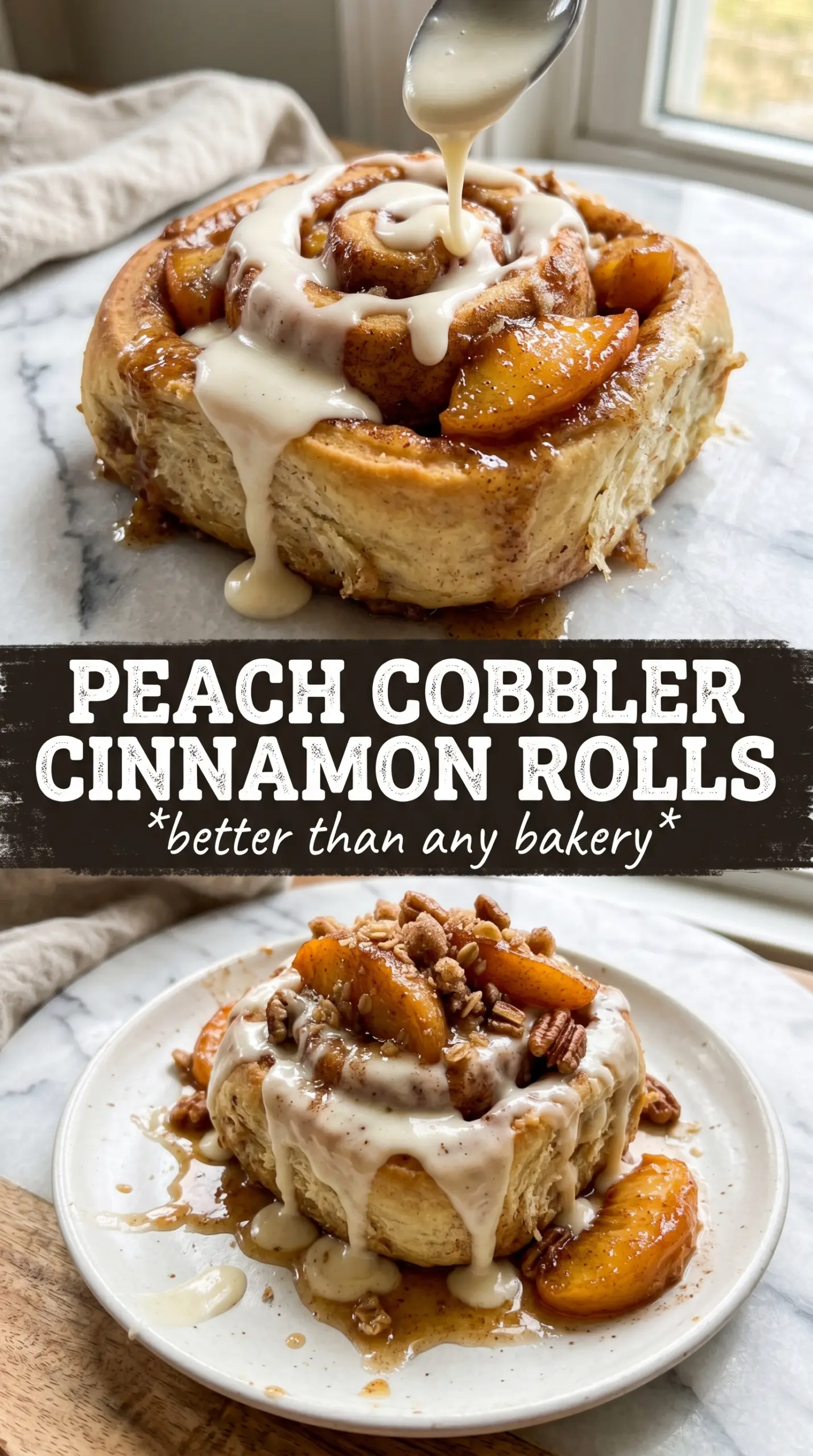
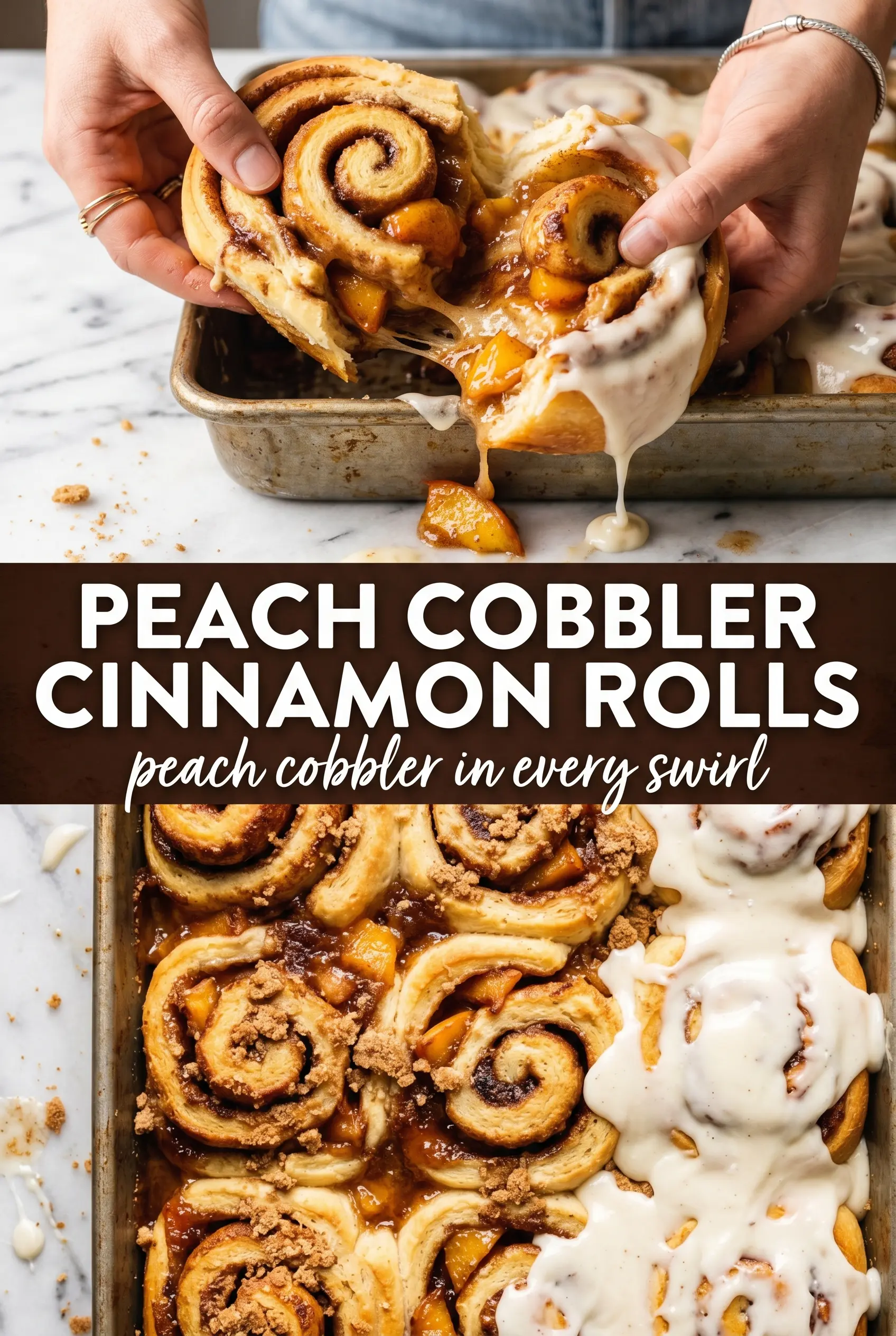
Peach Cobbler Cinnamon Rolls bake up soft and spiraled, with jammy fruit tucked into every layer and a thick glaze that melts into the warm rolls instead of sliding right off. The peach filling brings the same comfort as a good cobbler, but here it’s wrapped in tender yeast dough and finished with a vanilla cream cheese glaze that pools in all the right places.
The texture works because the peaches are diced small and scattered evenly, so the filling stays in the roll instead of bursting out of the pan. A tight roll and a full second rise matter here. That’s what gives you clean spirals, fluffy centers, and rolls that lift apart instead of baking into one dense slab. The cream cheese glaze also gets a little extra cream so it stays pourable and settles into the swirls while the rolls are still warm.
Below you’ll find the part that makes the biggest difference if you’ve ever had homemade cinnamon rolls turn out heavy, plus a few smart swaps if your peaches are especially juicy or you want to prep ahead.
The dough rose beautifully and the peach filling stayed tucked into the spirals instead of leaking all over the pan. The glaze soaked into the warm rolls and made them taste like peach cobbler meets cinnamon rolls.
Save these peach cobbler cinnamon rolls for the morning when you want soft swirls, jammy peaches, and a thick cream cheese glaze in one pan.
The Trick to Keeping the Peach Filling Inside the Spirals
The biggest failure point in fruit-filled cinnamon rolls is a filling that turns watery and escapes while the rolls bake. Peaches are juicy by nature, so the job is to keep the fruit in small pieces and keep the roll tight enough to hold the filling in place. If the peaches are cut too large, they slice through the dough layers and leave gaps that open up in the oven.
This version works because the softened butter, brown sugar, and cinnamon create a sticky base that clings to the dough before the peaches go on top. The fruit settles into that layer instead of sliding around. A 12×18-inch rectangle also matters because it gives you enough surface area for thin, even layers, which means each roll bakes at about the same rate.
- Active dry yeast — Warm milk wakes it up fast, and the little pinch of sugar in the first step gives it something to feed on. If the mixture doesn’t look foamy after 5 minutes, stop there and start over.
- Butter — Melted butter goes into the dough for richness, but softened butter is what makes the filling stick. Don’t swap in oil for the filling; it won’t trap the cinnamon sugar the same way.
- Peaches — Fresh ripe peaches are worth it here. Frozen peaches bring too much water unless you thaw and drain them well, and canned peaches tend to get mushy. Dice them small so they melt into the swirls instead of tearing through them.
- Cream cheese — This gives the glaze its thickness and slight tang. Full-fat cream cheese gives the best body, but reduced-fat will work in a pinch if you add the cream slowly and stop when the glaze is thick but pourable.
What Each Ingredient Is Actually Doing in This Recipe
- Primary ingredient (the star) — Quality matters most. Choose the best you can find.
- Cooking medium (oil, butter, or broth) — This carries flavors and prevents dryness.
- Seasonings (salt, pepper, spices, herbs) — Layer flavors so nothing overpowers. Build depth gradually.
- Aromatics (garlic, onion, herbs) — Cook with fat to bloom flavors. Become the foundation.
- Supporting ingredients — Complement the main ingredient without overpowering it.
- Sauce or liquid (if applicable) — Brings flavors together. Balance richness with acid.
- Acid (lemon, vinegar, wine, or other) — Brightens and prevents flat-tasting results.
- Final finish (garnish, glaze, or sauce) — Prevents one-dimensional taste and adds visual appeal.
Getting the Dough, Filling, and Glaze to Work as One
Waking Up the Yeast
Stir the yeast into warm milk with a pinch of the sugar and let it sit until the top looks foamy, about 5 minutes. The milk should feel warm, not hot; too much heat will kill the yeast before the dough even starts. Once it blooms, mix in the rest of the sugar, melted butter, eggs, and vanilla, then add the flour and salt until a shaggy dough forms.
Kneading Until the Dough Turns Smooth
Knead for 6 to 8 minutes until the dough feels elastic and smooth, not sticky and ragged. It should spring back slowly when pressed with a fingertip. If it stays sticky enough to coat your hands heavily, add flour a tablespoon at a time; too much flour will give you dry rolls, which show up most after baking when the edges feel tough.
Filling and Rolling Without Gaps
Roll the dough into a neat rectangle and spread the softened butter edge to edge. Sprinkle the brown sugar and cinnamon evenly, then scatter the diced peaches across the surface so every slice gets fruit. Roll from the long side as tightly as you can without tearing the dough, because loose rolling leaves empty channels that bake into wide gaps.
Baking Until the Centers Set
Place the rolls cut-side up in a greased 9×13-inch pan and let them rise until puffy, then bake at 375°F until golden on top and set in the middle, 25 to 30 minutes. If the tops brown too fast, tent the pan loosely with foil for the last few minutes. The rolls should look deeply golden at the edges and spring back lightly when touched in the center.
Glazing While They’re Still Warm
Beat the cream cheese, powdered sugar, cream, and vanilla until smooth, then drizzle it over the rolls after a short 10-minute cool-down. Warm rolls absorb the glaze better, so it slips between the spirals instead of sitting on top in a thick cap. If the glaze seems too thick, add cream a teaspoon at a time until it ribbons off the spoon.
How to Adapt These Rolls for Different Kitchens and Schedules
Use frozen peaches when fresh aren’t available
Thaw the peaches first and drain off as much liquid as possible before dicing them smaller. Frozen fruit works, but the filling will be looser, so don’t skip the soft butter layer that helps hold everything in place.
Make them dairy-free
Use a plant-based milk, dairy-free butter, and a dairy-free cream cheese for the glaze. The rolls will still rise and bake well, but the glaze will taste a little less tangy, so a tiny splash of lemon juice helps bring back some brightness.
Make the rolls the night before
Assemble the cut rolls in the pan, cover tightly, and refrigerate overnight after the second rise starts. In the morning, let them sit at room temperature while the oven heats so they can finish puffing before baking. Cold dough straight from the fridge bakes unevenly and can stay doughy in the center.
Storage and Reheating
- Refrigerator: Store leftovers covered for up to 4 days. The rolls soften a bit as they sit, but the flavor stays good.
- Freezer: Freeze baked rolls without glaze for up to 2 months. Wrap tightly, then thaw overnight in the fridge before reheating and glazing.
- Reheating: Warm individual rolls in the microwave for 20 to 30 seconds or cover the pan with foil and heat in a 300°F oven until warmed through. Don’t reheat too long or the dough turns dry before the glaze melts.
Questions I Get Asked About These Peach Cobbler Cinnamon Rolls
Peach Cobbler Cinnamon Rolls
Ingredients
Equipment
Method
- In a bowl, activate the yeast in warm milk with a pinch of sugar for 5 minutes until foamy, then mix in the remaining sugar, melted butter, eggs, and vanilla.
- Stir in the flour and salt, then knead for 6-8 minutes until smooth and elastic.
- Cover and let the dough rise for 1 hour until doubled in size.
- Roll the dough into a 12x18-inch rectangle, then spread the softened butter evenly over the surface.
- Sprinkle the brown sugar and cinnamon over the butter, then scatter the diced peaches evenly across the dough.
- Roll tightly from the long side, then cut into 12 rolls and place them in a greased 9x13 pan.
- Let the rolls rise for 30 minutes until puffy.
- Bake at 375°F for 25-30 minutes until golden on top and cooked through.
- Cool the rolls for 10 minutes so the glaze stays thick rather than running off completely.
- Beat the glaze ingredients until smooth, then drizzle over the warm rolls so it pools between every swirl.
- Serve warm.