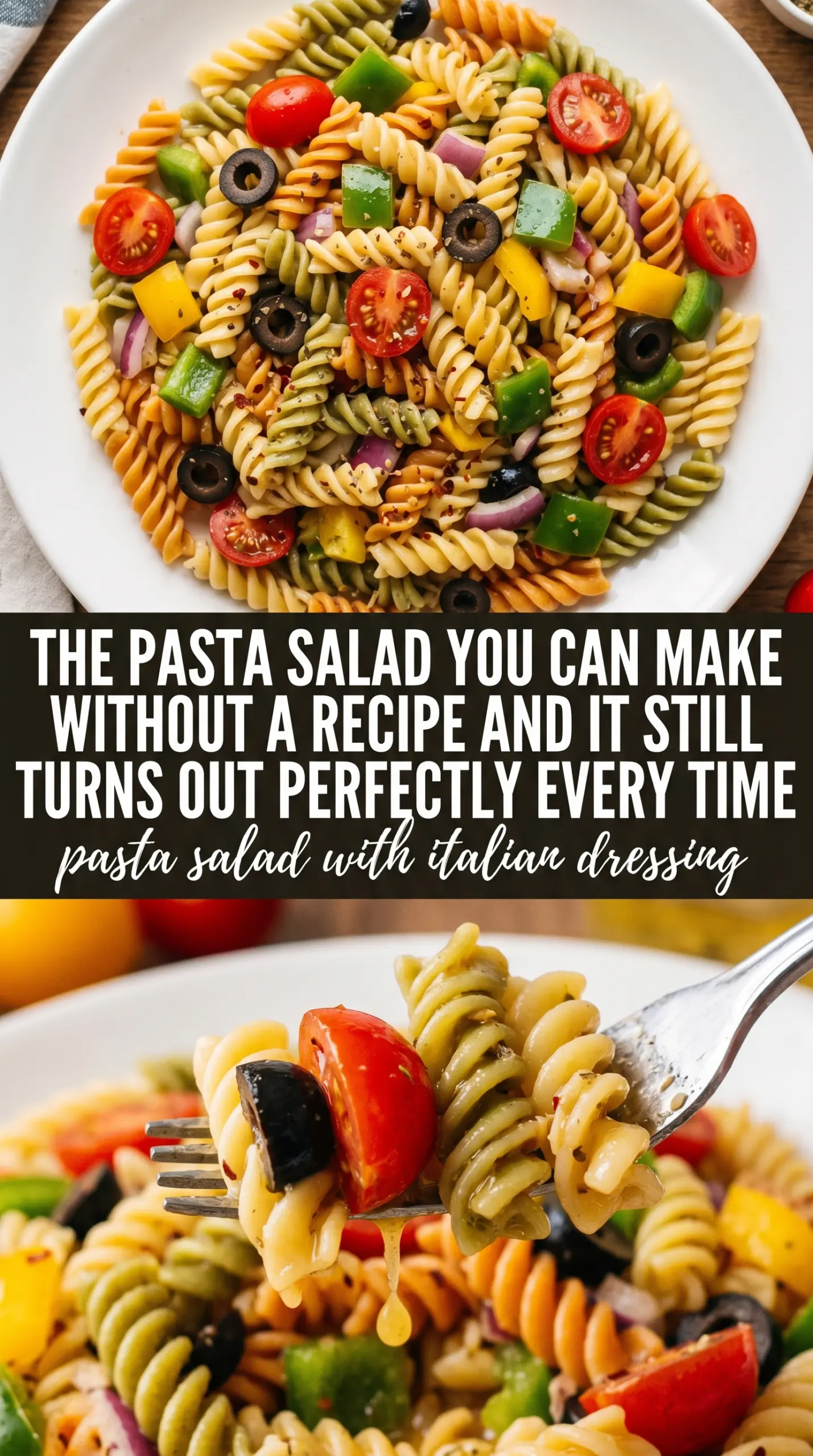
Cold pasta salad only works when the noodles stay springy, the vegetables stay crisp, and the dressing gets a chance to settle into every ridge of the pasta. This version does that without any fussy steps. The rotini catches the Italian dressing, the Parmesan gives it a salty edge, and the vegetables keep it from tasting flat or heavy.
The big difference here is timing. The pasta gets rinsed cold so it stops cooking right away, then it sits long enough for the dressing to soak in instead of pooling at the bottom of the bowl. A full rest in the fridge matters here. Right after mixing, it will taste a little sharp and loose. After two hours, the flavors round out and the pasta absorbs just enough dressing to make the whole bowl taste seasoned, not soggy.
Below, I’ll walk through the one step people usually rush, the ingredient swaps that still keep the salad balanced, and the best way to fix it if the pasta drinks up more dressing than you expected.
I always had trouble with pasta salad turning gummy or dry, but this one held up perfectly after chilling. The rotini stayed firm, and the dressing soaked in just enough that I didn’t need to add much extra before serving.
Like this Italian dressing pasta salad? Save it for potlucks, cookouts, and make-ahead lunches when you need a crisp, tangy side that travels well.
The Reason This Pasta Salad Needs the Full Chill, Not Just a Quick Toss
The biggest mistake with pasta salad is serving it before the noodles have had time to absorb the dressing. Straight from the bowl, it can taste slick and separate. After chilling, the rotini pulls in some of that Italian dressing, which gives every bite a more even, seasoned taste instead of leaving the flavor on the surface.
Rinsing the pasta under cold water is doing two jobs here: it stops the cooking and it cools the pasta fast enough that the vegetables stay crisp when you mix everything together. If you skip that rinse, the residual heat will soften the cucumbers and onions more than you want. The salad still tastes fine, but the texture turns muddled fast.
What Each Ingredient Is Actually Doing in Pasta Salad With Italian Dressing
- Fresh vegetables (vibrant, crisp, quality) — Start with fresh, brightly colored vegetables. Wilted vegetables make everything taste tired.
- Acid (vinegar, lemon juice, or lime) — The acid prevents oxidation and prevents flat taste. It’s essential for brightness.
- Oil (quality matters for flavor) — Good olive oil adds freshness. Cheap oil makes the salad taste flat.
- Salt (enhances all other flavors) — Proper seasoning makes vegetables taste more like themselves. Don’t undersalt.
- Fresh herbs (tender ones added last) — Fresh herbs add complexity and brightness. Add them right before serving.
- Protein or hearty elements (if using) — These should complement without overwhelming the vegetables. Keep the salad light.
- Dressing applied just before serving — Don’t dress early or the vegetables release liquid and wilt. Timing is everything.
- Taste and adjust (check for balance) — The salad should taste bright and assertive. Add more acid or salt if needed.
What the Bottled Dressing Is Doing Better Than a Homemade Toss Here
- Italian dressing — Bottled dressing brings salt, acid, oil, and herbs in one step, which matters in a cold pasta salad where every ingredient needs help from the dressing to taste complete. A homemade vinaigrette can work, but it often tastes thinner after chilling unless it’s aggressively seasoned.
- Rotini pasta — The spirals trap dressing in a way that smooth pasta can’t. Penne works in a pinch, but rotini gives you more of that coated, clinging texture that makes pasta salad feel fully dressed instead of lightly moistened.
- Parmesan cheese — The cheese adds a salty finish and helps round out the bottled dressing. Grated Parmesan blends in cleanly; shredded Parmesan can clump and disappear less evenly.
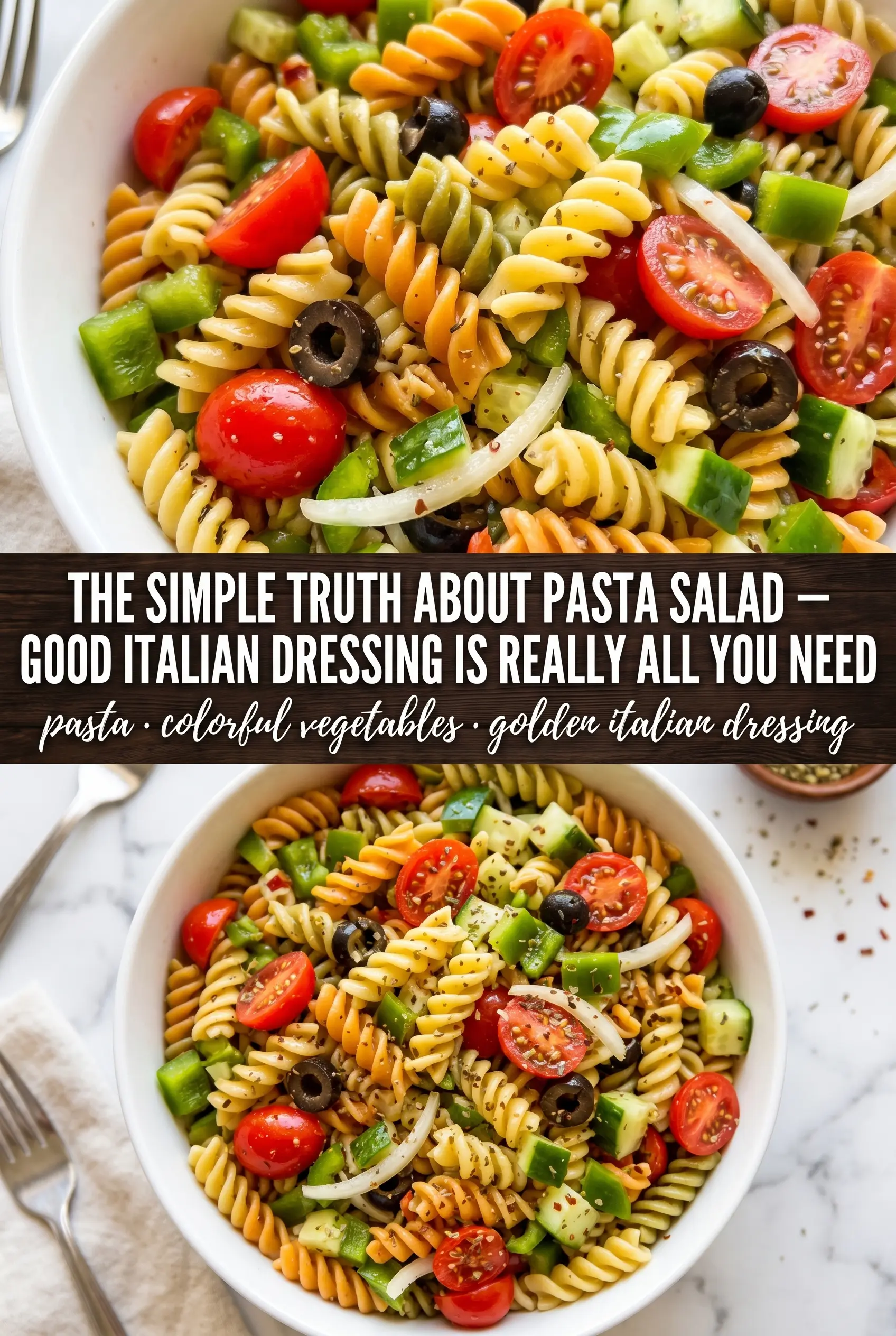
- Fresh vegetables — The tomatoes, cucumber, pepper, and onion each bring a different texture, which keeps the salad from tasting like dressed pasta alone. Dice everything to a similar size so the salad eats evenly and the dressing distributes well.
Building the Salad So It Stays Crisp and Coated
Cooking the Pasta Just to Tender
Cook the rotini until it’s just tender, not soft. Pasta salad needs a little firmness because it keeps absorbing dressing while it chills. If the pasta goes too far on the stove, it turns mushy after refrigeration and the whole bowl loses structure. Drain it well, then rinse under cold water until it’s no longer warm to the touch.
Mixing the Vegetables Before the Dressing Goes In
Combine the pasta with the vegetables first so they’re evenly distributed before the dressing hits the bowl. This keeps the heavier ingredients from sinking and the dressing from landing in one wet spot. If your onions taste too sharp, dice them small so their bite spreads through the salad instead of taking over one forkful at a time.
Letting the Dressing Settle During the Chill
Add the Italian dressing, Parmesan, and seasoning, then toss until every piece looks lightly coated. The salad needs that two-hour rest so the pasta can take on flavor and the vegetables can marinate without going soft. Right before serving, toss again and check the bowl. If it looks dry, add a splash more dressing instead of stirring in a big pour all at once.
How to Adapt This Pasta Salad for Different Crowds and Pantry Situations
Make It Gluten-Free Without Losing the Bite
Use a sturdy gluten-free rotini and cook it just to al dente. Gluten-free pasta can soften fast after chilling, so stop cooking a minute early and rinse it well. The dressing and vegetables stay the same, but the texture is best if you serve it the day you make it.
Dairy-Free Version
Leave out the Parmesan or use a dairy-free Parmesan-style topping if you have one you trust. You’ll lose a little of the savory depth, so taste the salad after chilling and add a pinch more Italian seasoning or a little extra dressing to bring the flavor back into balance.
Swap in What’s in the Crisper Drawer
Broccoli florets, diced celery, or chopped carrots all work here if you want more crunch. Keep the pieces small so they soften slightly in the dressing and don’t overpower the pasta. If you use a watery vegetable like zucchini, salt it lightly and blot it dry first so the bowl doesn’t turn loose.
Stretch It for a Bigger Potluck Bowl
Double the vegetables before you double the dressing. Pasta salad that feeds a crowd needs enough fresh ingredients to keep it lively, or it starts tasting like plain pasta with oil on it. Add a little dressing at a time after chilling so you don’t swamp the bowl.
Storage and Reheating
- Refrigerator: Store covered for up to 4 days. The pasta will soften a little and the dressing may sink to the bottom, so toss before serving.
- Freezer: Don’t freeze this salad. The vegetables go watery and the pasta texture turns odd once thawed.
- Reheating: This salad is meant to be served cold. If it has been in the fridge a while, let it sit at room temperature for 10 to 15 minutes and stir in a small splash of dressing to wake it back up.
Questions I Get Asked About This Pasta Salad
Pasta Salad With Italian Dressing
Ingredients
Method
- Cook rotini pasta according to package directions, then drain and rinse with cold water to stop the cooking and keep it firm. Spread it out briefly so it cools quickly before mixing.
- Combine rotini pasta, cherry tomatoes, cucumber, green bell pepper, red onion, and black olives in a large bowl so the vegetables are evenly distributed.
- Add Italian dressing, Parmesan, and Italian seasoning and toss until everything is coated, with vegetables visible and the dressing clinging to the pasta.
- Refrigerate the pasta salad for at least 2 hours so the flavors develop and the salad thickens slightly as it chills. Cover the bowl to prevent drying.
- Toss again before serving and add more Italian dressing if needed to loosen and re-coat the pasta evenly.