Parmesan pumpkin fritters hit the skillet with a crisp, salted crust and a soft, savory center that tastes far more put together than the short ingredient list suggests. The edges turn lacy and golden, the parmesan adds a nutty bite, and the pumpkin stays mild enough to carry garlic, chives, and a little nutmeg without getting muddy.
The trick is moisture control. Pumpkin puree can look thick in the bowl and still leak enough water to make the batter slump in the pan, so blotting it dry changes everything. Once the mixture comes together, it should hold its shape when scooped but still spread just a little as it fries. That balance gives you fritters that cook through before the crust burns.
Below you’ll find the small details that matter: how dry the pumpkin needs to be, how hot the skillet should feel, and why these are best cooked in small batches. There’s also a simple way to adapt them if you want a gluten-free version.
I blotted the pumpkin like you said and the fritters held together perfectly. The parmesan made the edges extra crispy, and the sour cream on top was the best part.
Save these Parmesan Pumpkin Fritters for the side dish that fries up crisp, savory, and perfect with cool sour cream.
The Dry Pumpkin Trick That Keeps These Fritters Crisp
Most pumpkin fritters fail for one reason: the pumpkin is too wet. Even thick puree can carry enough moisture to turn the batter loose, and once that happens you get soft, pale rounds that soak up oil instead of crisping in it. Blotting the puree between paper towels is not busywork. It’s the difference between a fritter that holds a clean edge and one that slumps into the pan.
The other piece that matters is heat. Medium is the sweet spot here. If the oil is too cool, the fritters absorb it before the outside sets. If it’s too hot, the parmesan browns before the center has time to cook through. You want steady bubbling as soon as the batter hits the skillet and a deep golden crust that releases without sticking.
- Dry pumpkin puree — This is the backbone of the texture. Freshly canned pumpkin can vary, so blotting it well matters more than the brand you buy.
- Finely grated parmesan — Fine grating helps it melt into the batter and form a crisp, savory shell. Coarse shreds won’t bind as neatly.
- Flour — Just enough to give structure without making the fritters bready. Too much turns them heavy and dull.
- Chives or sage — Chives stay bright and fresh; sage leans earthy and more classic with pumpkin. Use whichever fits the rest of your meal.
What Each Ingredient Is Actually Doing in the Batter
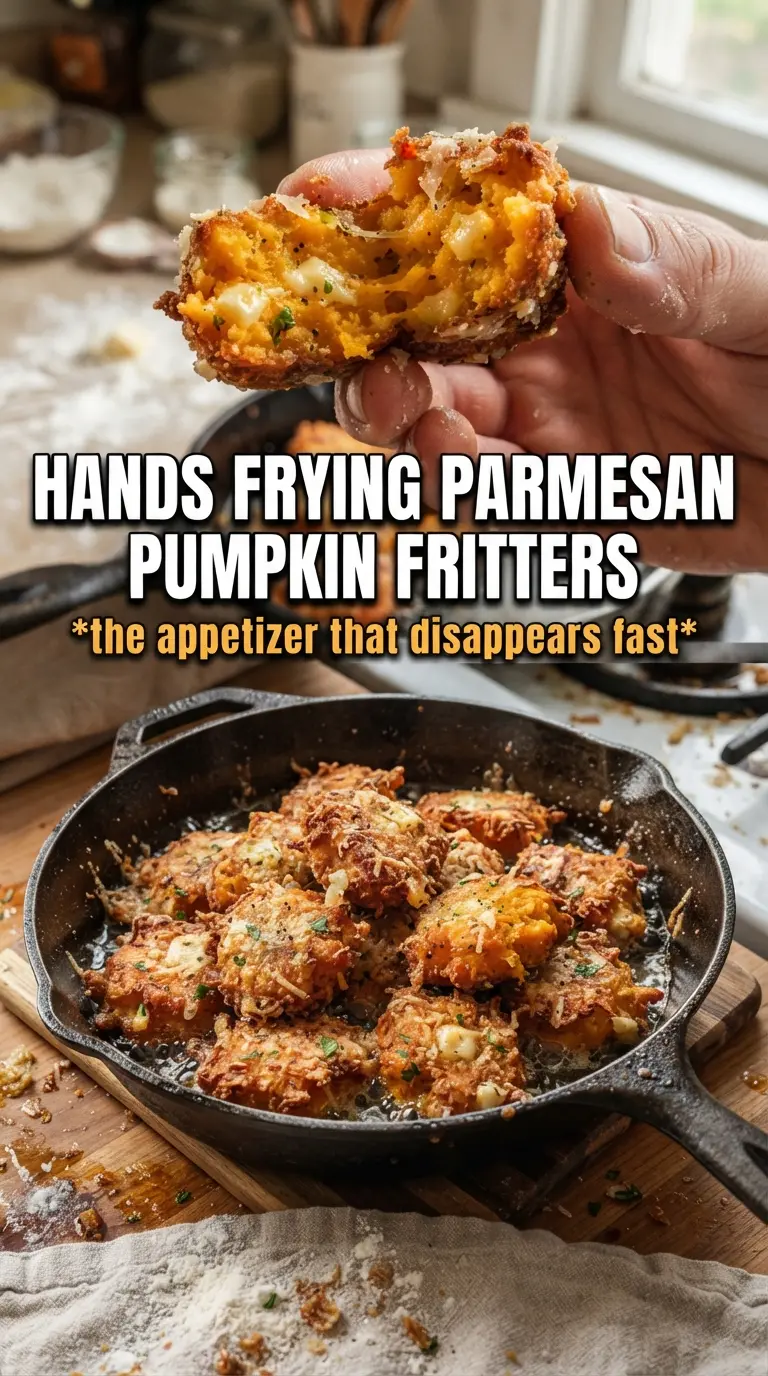
- Pumpkin puree — Gives the fritters their body and subtle sweetness. Canned puree works well, but it has to be blotted dry before it meets the eggs.
- Eggs — They hold the batter together and help the edges set in the pan. Without enough egg, the fritters can fall apart when you flip them.
- Parmesan — Adds salt, depth, and the crusty bits you want on the outside. A block grated finely at home melts and fries better than the pre-shredded kind.
- All-purpose flour — Provides just enough structure to let you scoop and flatten the batter. For gluten-free fritters, a cup-for-cup gluten-free flour blend works better than almond flour, which makes them fragile.
- Chives or sage — Chives keep the flavor light and grassy, while sage gives you a deeper, more autumn-leaning finish. Both work; choose based on what you’re serving alongside.
- Nutmeg — Use it sparingly. It should round out the pumpkin, not make the fritters taste like dessert.
Getting the Batter Into the Pan Without Losing the Crisp Edge
Dry the Pumpkin First
Spread the pumpkin puree on a stack of paper towels and press more towels over the top until the surface looks matte instead of glossy. If it still smears like wet custard, keep blotting. This is the stage that decides whether the fritters hold or spread into soft pancakes. You want pumpkin that feels dense and scoopable, not wet enough to leave a puddle behind.
Mix Just Until the Batter Comes Together
Stir the pumpkin, eggs, parmesan, flour, herbs, garlic, salt, pepper, and nutmeg until you no longer see dry flour. Stop there. Overmixing makes the batter looser and can push the flour into a gummy paste, which gives you dense centers instead of tender fritters. The mixture should be thick enough to mound on a spoon.
Fry in Small Batches
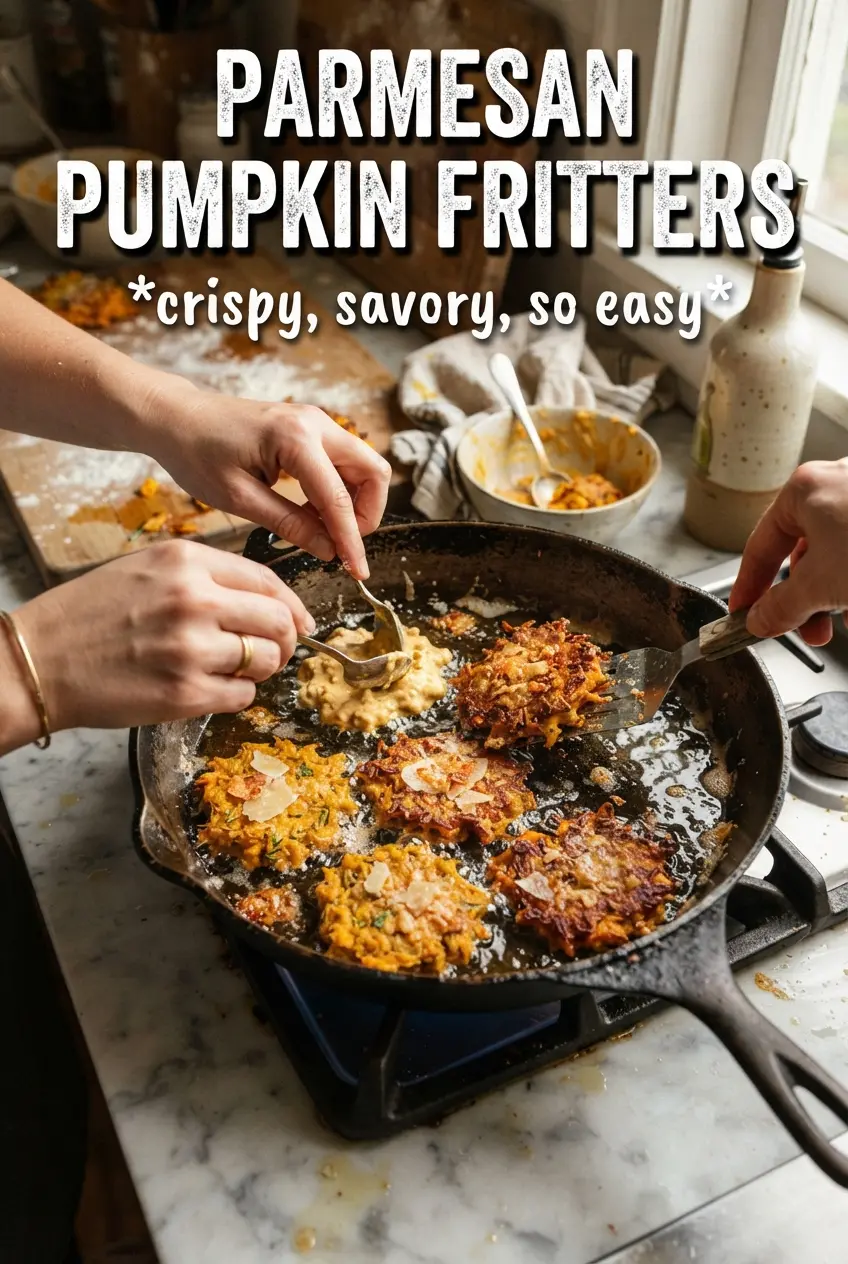
Heat the oil over medium heat until it shimmers. Drop about 3 tablespoons of batter per fritter, then flatten each one slightly with the back of a spoon. Leave room between them so steam can escape; crowded fritters soften instead of crisping. Cook until the bottoms are a deep golden color before flipping, and don’t rush the turn or they’ll tear.
Drain and Serve Right Away
Move the fritters to paper towels as soon as they come out of the skillet. That quick drain keeps the crust from turning greasy while you finish the rest of the batch. Serve them while the edges are still crisp, with sour cream and a pinch of extra chives. They’re at their best in that first warm minute when the parmesan crust is still snappy.
Gluten-Free Version
Swap the all-purpose flour for a cup-for-cup gluten-free blend. The fritters still crisp well, but they’ll be a little more delicate when you flip them, so let the first side set fully before turning.
Sage Instead of Chives
Use finely minced sage for a deeper, woodsy flavor that leans more savory than fresh. Sage browns faster than chives, so keep the skillet at medium and watch the edges closely.
Make Them Smaller for Appetizers
Use 1 to 2 tablespoons of batter per fritter for a party tray or snack plate. Smaller fritters cook faster and get crispier at the edges, but they also need a little less time in the pan to avoid overbrowning.
Storage and Reheating
- Refrigerator: Store in an airtight container for up to 3 days. The crust softens a bit, but they still reheat well.
- Freezer: Freeze on a sheet pan until solid, then move to a freezer bag for up to 2 months. Reheat from frozen for the best texture.
- Reheating: Warm in a 400°F oven or air fryer until hot and crisp again. Skip the microwave if you want the edges to stay crunchy instead of turning soggy.
Answers to the Questions Worth Asking
Parmesan Pumpkin Fritters
Ingredients
Equipment
Method
- Blot the pumpkin puree extremely dry between paper towels to remove excess moisture.
- Combine blotted pumpkin puree, eggs, parmesan, all-purpose flour, minced chives or sage, minced garlic, salt, black pepper, and nutmeg until just combined.
- Heat olive oil in a cast iron skillet over medium heat until shimmering.
- Drop 3-tablespoon portions into the skillet and flatten slightly.
- Cook the fritters 3-4 minutes per side until golden and crispy, flipping once.
- Work in batches and drain the finished fritters on paper towels.
- Serve the fritters hot with sour cream and extra chives.